What Is the Emergency Phone Number in Puerto Rico?
When you are in the middle of a high-stress crisis—whether it is a medical emergency in a San Juan high-rise or a sudden car accident on a winding road in the Cordillera Central—knowing exactly who to call is the difference between rapid resolution and total disaster. This guide explains Puerto Rico's emergency numbers, how the local dispatch system functions, and the cultural nuances every newcomer must understand to stay safe.
The Universal Emergency Number in Puerto Rico
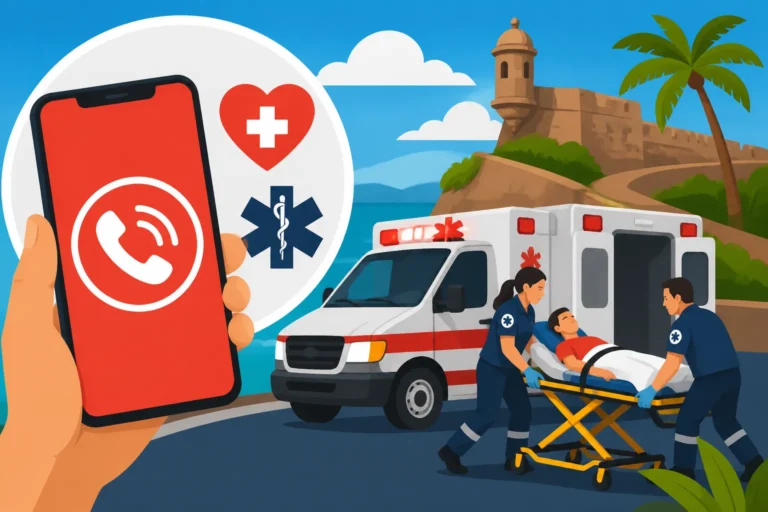
If you are coming from the United States mainland or Canada, you will be relieved to know that the primary emergency number in Puerto Rico is 911. This is the centralized system designed to handle all life-threatening situations, including medical crises, fires, and active crimes. However, simply knowing the three digits is only the beginning of navigating the local administrative landscape, which often operates with its own set of rules and logistical hurdles.
How the 911 System Functions Locally
The 911 system in Puerto Rico is managed by the Emergency Systems 9-1-1 Service Bureau. When you dial these digits, your call is routed to a Public Safety Answering Point (PSAP). Because Puerto Rico is a U.S. territory, the infrastructure mirrors the mainland, but the reality on the ground can feel quite different. For instance, while technology has improved, the dispatchers are tasked with managing a massive volume of calls with varying levels of infrastructure reliability.
One of the most significant hurdles for expats is the local addressing system. In many parts of the island, particularly outside of the metro areas, traditional street numbers and names are replaced by kilometer markers (e.g., Carr. 187 KM 4.2). If you find yourself in an emergency, being able to identify your location using these markers is vital. If you are a digital nomad or a frequent traveler using SafetyWing for your health coverage, you likely already appreciate the importance of having a backup plan, but in a 911 situation, your immediate geographic coordinates are your most valuable currency.
Language Barriers and Bilingual Dispatch
While Spanish is the primary language of Puerto Rico, 911 dispatchers are generally required to be bilingual. However, in moments of high adrenaline, communication can still break down. If your Spanish is limited, it is essential to stay calm and clearly state "English" or "Inglés" as soon as the dispatcher answers.
It is a common frustration for newcomers to find that "bilingual" does not always mean "fluent." You might encounter a dispatcher whose English is functional but basic. In these cases, use short sentences. Instead of saying, "I think my neighbor might be having some sort of cardiovascular event and I'm really worried," say, "Medical emergency. Possible heart attack. Address is…" This directness reduces the chance of a misunderstanding during the critical first seconds of the call. Understanding How Puerto Rico's Health System Works: Public vs Private Explained (2027) can also help you understand why dispatchers might ask specific questions about your location and the type of facility you need to reach.
Essential Non-Emergency and Utility Numbers
Not every problem requires a lights-and-siren response. In fact, one of the quickest ways to experience expat burnout in Puerto Rico is by trying to use 911 for things that are merely inconveniences. On the island, utility failures are frequent enough that they deserve their own spot on your refrigerator’s contact list.
Power and Water Emergencies
If you wake up and your taps are dry or your air conditioning has hummed to a halt, do not call 911. For power outages or dangerous downed lines, you must contact LUMA Energy. LUMA is the private entity responsible for the island's electricity transmission and distribution. Their emergency line is typically the first number residents call after a storm.
For water leaks or total loss of service, you contact the Autoridad de Acueductos y Alcantarillados (AAA). Dealing with these agencies can be an exercise in patience. Unlike the mainland, where a power outage might be resolved in an hour, Puerto Rico’s grid is notoriously fragile. Having these numbers saved avoids the panic of searching for them when your phone battery is at 10% and the lights are out. For those still getting settled, The Newcomer's Guide to Setting Up Utilities (LUMA/AAA) in Puerto Rico provides a deeper look into managing these daily essentials.
Local Police Stations and Civil Defense
Sometimes you need to report a non-violent crime, such as a stolen bicycle or a minor fender bender where no one is hurt. In these cases, calling the local "cuartel" (police station) directly is often faster than going through the 911 queue. Each municipality, from Carolina to Cabo Rojo, has its own precinct.
Additionally, the Puerto Rico Emergency Management and Disaster Administration Agency (NMEAD) is the body that handles large-scale disasters like hurricanes or earthquakes. They have regional zones across the island. If you are living in a flood-prone area, knowing the number for your regional NMEAD office is part of being a responsible resident. This is particularly true if you are concerned about Emergency Medical Care in Puerto Rico: What Every Resident Needs to Know during the peak of hurricane season when 911 lines may be overwhelmed.
| Agency Type | Primary Contact Number | Best Used For |
|---|---|---|
| Life-Threatening Emergency | 911 | Medical crises, fires, crimes in progress |
| LUMA Energy | 1-844-888-5862 | Power outages, downed lines, electrical sparks |
| AAA (Water) | 787-620-2482 | Burst pipes, water main breaks, no water service |
| Poison Control | 1-800-222-1222 | Accidental ingestion of toxins or chemicals |
| PR Police (General) | 787-343-2020 | Non-emergency reporting and tips |
Navigating Medical Emergencies as an Expat
When a health crisis strikes, the "where" is often as important as the "who." Puerto Rico has a tiered medical system that can be confusing for those used to the standard "ER or Urgent Care" binary of the mainland.
Hospital ERs vs. CDTs
In Puerto Rico, you will frequently see signs for "CDT" (Centro de Diagnóstico y Tratamiento). These are community-based clinics that offer diagnostic services and emergency care for non-life-threatening issues. They are often the first stop for locals because they are more numerous and sometimes less expensive than a full-scale hospital emergency room.
However, if you are experiencing a major trauma or a severe cardiac event, you want a private hospital ER. Hospitals like Auxilio Mutuo or Ashford Presbyterian in San Juan are favored by expats for their high standards of care and higher likelihood of having English-speaking staff. If you are a visitor, you might wonder Can Tourists Access Emergency Care in Puerto Rico? and the answer is yes, though the billing process can be a headache without the right insurance. This is where having a policy with SafetyWing can be a lifesaver, as they are accustomed to handling international claims for travelers and expats who find themselves in local emergency rooms.
Ambulance Services and Costs
Wait times for municipal ambulances can be significantly longer than what you might expect in a major U.S. city. In some rural areas, residents often choose to drive themselves or a loved one to the hospital rather than wait for a 911-dispatched vehicle.
There are also private ambulance companies that operate on the island. Some residents pay a monthly subscription for these services to ensure a faster response. It is important to know that How Much Does an Ambulance Cost in Puerto Rico? can vary wildly depending on whether the service is public or private and what level of life support is required. If you call 911 and a municipal ambulance arrives, the cost is often lower, but the equipment might be older. If you call a private service, be prepared for a bill that could reach several hundred dollars, often requiring upfront payment or a specialized insurance plan.
Regional Variations in Safety and Response
The experience of an emergency in the metropolitan area of San Juan is worlds apart from an emergency in the mountain town of Utuado or the island-municipality of Vieques.
San Juan and the Metro Area
In San Juan, Guaynabo, and Bayamón, the 911 response is generally the most robust. There are multiple high-end hospitals and a higher density of police and fire stations. If you are living in a popular expat neighborhood like Condado or Miramar, you might be asking What Should I Do in a Medical Emergency in San Juan? to ensure you get to the right facility. In these areas, your biggest hurdle is often traffic. A five-mile drive to the hospital can take 45 minutes during "tapon" (rush hour). Dispatchers are aware of this and may direct ambulances through alternative routes, but it is a factor you must consider when deciding whether to wait for help or start driving.
Rural Areas and the Islands
If you have moved to the "Isla del Encanto" to get away from it all, remember that "all" includes rapid emergency services. In the center of the island, roads are narrow and prone to landslides. An ambulance might take a significant amount of time to reach a remote finca.
On the islands of Vieques and Culebra, the situation is even more complex. Major emergencies often require a "medevac" (medical evacuation) by helicopter or plane to the main island. This is an incredibly expensive procedure. Travelers and expats living on these smaller islands should ensure their insurance specifically covers medical evacuation. Many people find that SafetyWing provides that specific peace of mind, as their plans often include provisions for emergency medical evacuation which is a necessity in these beautiful but isolated locations. You should also familiarize yourself with Understanding Emergency Numbers (911) and Ambulance Care in Puerto Rico specifically as it relates to the outlying islands.
Practical Steps to Prepare Before an Emergency
Validation of your frustration is necessary here: the administrative side of Puerto Rico can be exhausting. But being prepared is the only way to mitigate the stress of a crisis.
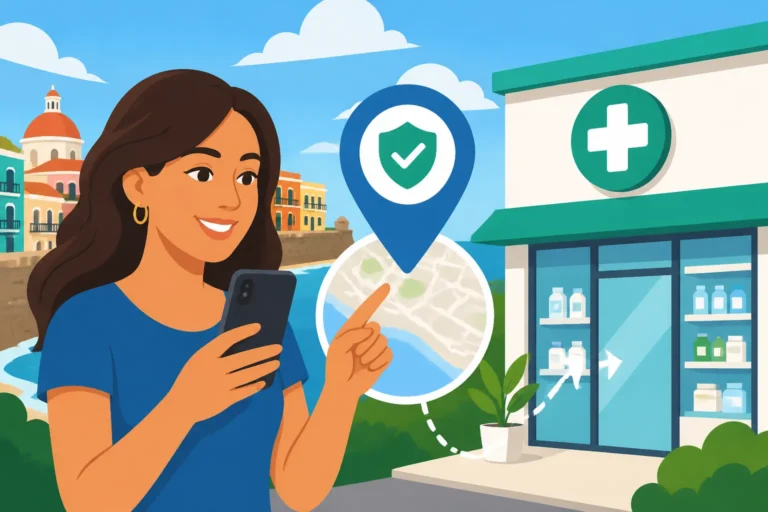
- Pin Your Location: Use your smartphone to save the GPS coordinates of your home. If you have to call 911 and struggle to explain your location in Spanish, you can read the coordinates or use them to guide a private ambulance via a messaging app.
- Know Your Nearest CDT: Do not wait for an emergency to find out where the closest clinic is. Drive there once during the day so you know the route and where to park.
- Carry Your Insurance Card: Whether you have local insurance or an international plan, keep a physical copy and a digital photo of your card. If you are transitioning between systems, understanding The Complete Guide to Healthcare in Puerto Rico for New Residents (2027) can help you figure out which card you should be carrying.
- Learn the "Emergency Spanish" Basics: You don't need to be fluent, but you should know how to say "I need an ambulance" (Necesito una ambulancia) and "There is a fire" (Hay un fuego).
- Keep a Backup Battery: Given the frequency of power outages, a charged power bank is a piece of medical equipment in Puerto Rico. If your phone is dead, you can’t call for help.
When you are dealing with the stress of a move, it is easy to put these things off. But as someone who has seen the confusion in the eyes of new residents when the power goes out and a family member starts feeling ill, I promise that twenty minutes of preparation today is worth more than ten hours of panic tomorrow. Understanding the Difference Between Mainland and Puerto Rico Health Plans is part of that preparation, ensuring that you aren't surprised by coverage gaps when you are already in a vulnerable state.
If you are ever traveling back to the mainland or to other islands, you should also know How Do I Handle a Medical Emergency While Traveling Off-Island from Puerto Rico to ensure your coverage follows you. And for those curious about the financial hit of a trip to the hospital, researching How Much Does an Emergency Room Visit Cost in Puerto Rico? can help you set aside a proper emergency fund.
Disclaimer
This guide is for informational purposes only and does not constitute legal or medical advice. Emergency procedures and contact numbers in Puerto Rico can change based on government updates or changes in private utility contracts. Always verify local emergency protocols with official municipal or state authorities. Neither the author nor this publication is responsible for any outcomes resulting from the use of the information provided in this article. In a true life-threatening emergency, always dial 911 immediately.