How Much Does an Emergency Room Visit Cost in Puerto Rico?
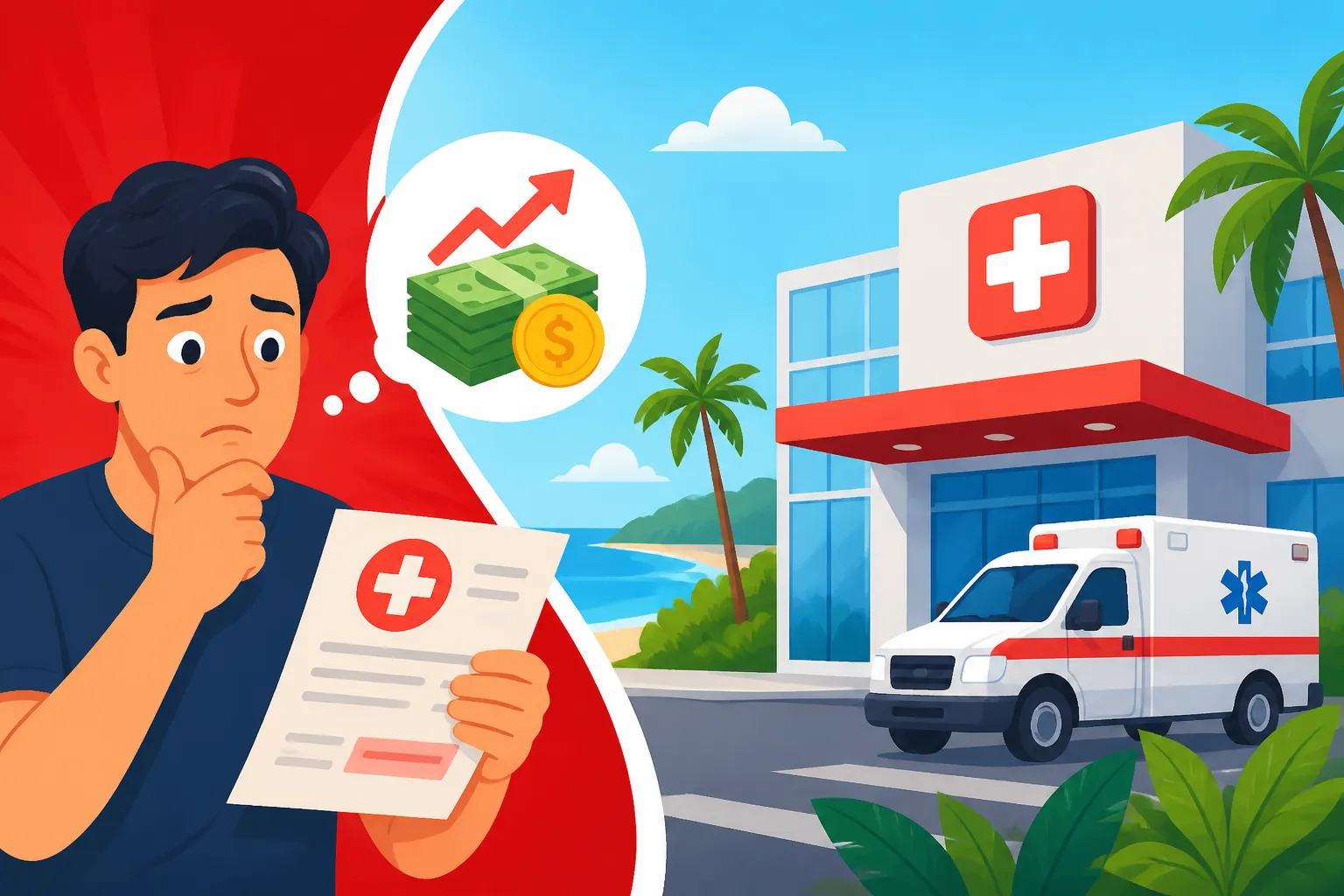
Landing yourself in an emergency room in Puerto Rico, especially without a solid grasp of the local healthcare system, can feel like navigating a maze blindfolded. The immediate concern is always your health, of course, but right on its heels is the gnawing question: "How much is this going to cost me?" This guide is here to shed light on the often-murky waters of emergency room expenses in Puerto Rico, breaking down what you can expect and how to prepare financially for the unexpected.
Decoding the Costs: What to Expect from an ER Visit in Puerto Rico
The sticker shock from an emergency room visit is a universal experience, but in Puerto Rico, there are unique factors that shape the final bill. Unlike some mainland U.S. states where costs might be more standardized, here, they can vary significantly based on the facility, the severity of your condition, and whether you have insurance. It’s not always as simple as a flat fee.
Average Costs Without Insurance
If you find yourself needing emergency care without any health insurance coverage in Puerto Rico, prepare for a hefty bill. For a minor issue, like a cut requiring stitches or a bad fever, you might be looking at anywhere from $500 to $1,500. This often includes the facility fee, the doctor's fee, and any basic labs or imaging. However, these are just initial estimates.
For something more serious—say, a suspected appendicitis, a broken bone needing a cast, or chest pains—the costs can easily skyrocket into the thousands, often ranging from $3,000 to $10,000 or even higher. This figure rapidly accumulates with every test performed: blood work, X-rays, CT scans, ultrasounds, and specialist consultations. It’s a sobering reality, and it’s why understanding How Much Does Health Insurance Cost in Puerto Rico in 2026? is so crucial for new residents. Even without local insurance, temporary solutions like SafetyWing can be a godsend for visitors or those in transition, offering a safety net for these unforeseen expenses.
Public vs. Private Emergency Rooms
Puerto Rico operates a dual healthcare system: public and private. The emergency rooms at public hospitals or Centros de Diagnóstico y Tratamiento (CDTs) generally cater to those with the government-sponsored health plan, known as the Vital Plan, or those without private insurance who cannot afford private care. While theoretically more affordable or even free for eligible Vital Plan beneficiaries, the public system often comes with significantly longer wait times and, at times, more basic facilities. You might find yourself waiting for hours, even with a serious condition, because resources are stretched thin. For a deeper dive, explore How Puerto Rico's Health System Works: Public vs Private Explained (2027).
Private hospitals, such as Auxilio Mutuo, Ashford Presbyterian Community Hospital, or Pavia Hospital in San Juan, offer more modern facilities, a wider range of specialists, and typically much shorter wait times. The trade-off, of course, is the cost. These private ERs are where you'll encounter the higher end of the expense spectrum, especially if you're self-paying. They're equipped for complex emergencies and often preferred by those with robust private health insurance plans.
Factors That Significantly Impact Your Emergency Room Bill
An emergency room bill isn't a single line item; it's a compilation of every service, test, and professional fee associated with your visit. Understanding what contributes to this total can help demystify the charges, even if it doesn't make them any easier to swallow.
Severity of Condition and Services Rendered
This is perhaps the biggest determinant of your ER bill. A minor laceration that just needs cleaning and a few stitches is going to be far less expensive than a complex trauma case involving multiple fractures, internal injuries, or a cardiac event. The "level" of emergency assigned to your case, based on the resources required, directly impacts the facility fee. More critical conditions necessitate more intensive staff time, more advanced equipment, and specialized medical interventions.
Think of it this way: walking in with a nasty cough might get you a quick check-up, perhaps a flu test, and a prescription. That's one tier. Arriving via ambulance with a suspected stroke, requiring immediate neurological assessments, a stat CT scan, and potentially admission to an intensive care unit, is an entirely different ballgame. Each procedure, each minute of staff attention, and every piece of medical equipment used adds to the cumulative cost.
Diagnostic Tests and Procedures
Modern medicine relies heavily on diagnostics, and these are often major cost drivers in an ER. If you need blood tests, a urine analysis, an X-ray for a suspected break, an MRI for soft tissue damage, or a CT scan for internal bleeding, each of these services is billed separately. The type and number of tests ordered depend entirely on your symptoms and the doctor's assessment. For example, if you come in with abdominal pain, you might get blood work, a urine test, and an ultrasound, or potentially even a CT scan if the doctors suspect something more serious like appendicitis or kidney stones.
Imagine a hypothetical scenario: you slip on a wet floor in Old San Juan and think you've sprained your ankle. An X-ray to rule out a fracture is standard protocol. If it's just a sprain, the bill is manageable. But what if the X-ray is inconclusive, and they recommend an MRI to check for ligament tears? That’s another thousand dollars, easily, tacked onto your bill. This cascade of diagnostic tests, while necessary for accurate diagnosis and treatment, can quickly inflate the total cost.
Professional Fees and Specialist Consultations
Beyond the facility charges and diagnostic tests, you’ll also be billed for the medical professionals who attend to you. This includes the emergency room physician, any nurses, and potentially consulting specialists. If your case requires a cardiologist, an orthopedic surgeon, a neurologist, or any other specialist to evaluate your condition while you're in the ER, each consultation will have its own professional fee. These aren't minor charges; specialist fees can range from hundreds to thousands of dollars depending on the specialty and the complexity of the evaluation.
Consider a situation where you present with severe abdominal pain. The ER doctor might call in a general surgeon for an immediate consultation to rule out a surgical emergency. If the surgeon performs an examination and advises on a course of action, that consultation is billed. If, after that, they decide you need an endoscopy, that's another procedure with its own set of fees. It's a layer-cake of charges, each justified by the expertise and time provided, but collectively adding up to a substantial sum. For information on how to seek out more routine specialist care, read How Specialist Referrals Work Under Puerto Rico Health Plans.
Navigating Payment and Insurance After an ER Visit
Once the immediate medical crisis is over, the financial reality sets in. Dealing with the aftermath of an ER visit, particularly the billing, can be confusing and stressful. Understanding your options and what to expect from your insurance is key.
Understanding Your Health Insurance Coverage
If you have health insurance, whether a local Puerto Rico plan or a plan from the mainland that offers coverage here, your first step is to contact your provider. It’s absolutely critical to understand your specific plan’s emergency room benefits, including your deductible, co-pay, and co-insurance. Many plans have a separate, often higher, co-pay for ER visits compared to urgent care clinics. Also, check if the hospital you visited is "in-network." Out-of-network care almost always results in higher out-of-pocket costs.
For new residents, securing local coverage is essential. There are many options, from employer-sponsored plans to individual plans you purchase directly. Understanding Health Insurance in Puerto Rico: Plans, Costs and Options Explained (2026) can help you navigate this. Even if you have a mainland plan, it might only cover emergencies in Puerto Rico, and you’ll want to clarify the extent of that coverage. For instance, sometimes a mainland PPO might treat a Puerto Rico hospital as out-of-network, leaving you with a larger portion of the bill. It’s always best to be proactive and understand your policy before an emergency arises.
Payment Options and Financial Assistance
If you don't have insurance, or if your insurance covers only a portion of the bill, you'll be responsible for the remainder. Don't panic immediately; hospitals often have financial counselors who can discuss payment plans. It's always worth asking if they offer any discounts for prompt payment in full or if there are options to pay in installments. Sometimes, they might even have programs for low-income patients, but this is more common in public facilities.
Many private hospitals also understand that large, unexpected bills can be a burden. They might offer a reduced rate if you can pay a significant portion upfront, or structure a monthly payment plan that fits your budget. It’s important to communicate openly with the hospital's billing department. Ignoring the bill won’t make it go away and could impact your credit. For visitors or those between insurance plans, a travel medical insurance like SafetyWing can bridge this gap, covering eligible emergency costs and preventing you from bearing the full financial weight alone. Learning How Do I Pay for Hospital Care in Puerto Rico? is a vital piece of information for all newcomers.
Avoiding the ER for Non-Emergencies
One of the biggest financial mistakes people make is using the emergency room for issues that aren't true emergencies. ERs are designed for life-threatening conditions. For less severe issues—a common cold, a minor rash, a twisted ankle that doesn't look broken—an urgent care clinic (often called a CDT or Centro de Diagnóstico y Tratamiento in Puerto Rico) or even a primary care doctor's office is a far more appropriate and significantly cheaper option.
Urgent care clinics can handle many common ailments that don't require immediate, life-saving intervention. Their co-pays and facility fees are typically much lower than an ER's. You'll save money and often have a much shorter wait time. Knowing Can I See a Doctor on the Same Day in Puerto Rico? can help you find these alternatives. If you're wondering if your condition warrants an ER visit, consider if it's life- or limb-threatening. If not, a CDT or your doctor's office is usually the better first stop.
Preparing for the Unexpected: Tips for Newcomers and Tourists
The best defense against a crippling ER bill is preparation. For those of us living here or just visiting, taking a few proactive steps can save a lot of heartache and money down the line.
Have Your Information Ready
In an emergency, every second counts. Make sure you, or someone with you, has easy access to vital information. This includes your health insurance card (physical or digital copy), identification (driver's license or passport), a list of any medications you’re currently taking, known allergies, and contact information for an emergency contact. Having a small card in your wallet with this information can be a lifesaver.
It’s not just about getting treated; it’s about ensuring smooth administrative processing. When you're in distress, fumbling for details or trying to remember policy numbers is the last thing you want. Hospitals need this information for accurate billing and to access your medical history if you've been seen there before. This small act of preparedness can drastically reduce stress in a high-pressure situation. Always know What Should I Do in a Medical Emergency in San Juan? before you need to act.
Research Local Facilities and Insurance Options
Don't wait until you're clutching your stomach in pain to figure out which hospital is best or what your insurance covers. Before you even need it, research the private hospitals in your area – for example, The Guide to Choosing a Private Hospital in Puerto Rico (2027). Understand which ones are generally well-regarded and which ones your specific insurance plan might prefer.
For new residents, make it a priority to sort out your health insurance. Whether it's through your employer, a private plan, or investigating eligibility for Understanding the Vital Plan (Government Health Plan) in Puerto Rico (2027), having coverage is non-negotiable. If you're a tourist or a temporary resident, consider travel medical insurance. Providers like SafetyWing offer flexible plans that specifically cover emergency medical expenses and unexpected injuries or illnesses while abroad or as an expat, providing invaluable peace of mind. Even if you're only visiting, knowing Can Tourists Access Emergency Care in Puerto Rico? is essential.
Understand Emergency Transportation Costs
Remember, the cost of an ambulance ride to the ER is a separate bill that can also be quite significant. In Puerto Rico, an ambulance ride can easily run a few hundred dollars, even for a relatively short distance. This fee is often not fully covered by all insurance plans, or it might be subject to its own co-pay and deductible. For more details on this, check out How Much Does an Ambulance Cost in Puerto Rico?.
So, if you can safely get to an urgent care center or ER by private vehicle without exacerbating your condition, that might be a more cost-effective option than calling an ambulance. However, for true emergencies – chest pain, severe bleeding, suspected stroke or heart attack, major trauma – always call 911 immediately. Your health and safety are paramount, and emergency services are there for a reason. Understanding Emergency Numbers (911) and Ambulance Care in Puerto Rico is a must-know.
| Service/Condition | Estimated Cost (Without Insurance, USD) | Notes |
|---|---|---|
| Minor Illness (e.g., Flu, UTI) | $500 – $1,500 | Basic exam, labs, perhaps a prescription. Better to seek urgent care if possible. |
| Simple Laceration/Stitches | $800 – $2,000 | Exam, wound cleaning, local anesthesia, stitches, follow-up advice. |
| Suspected Sprain/Fracture | $1,500 – $3,500 | Exam, X-ray, splint/cast, pain medication. MRI adds significant cost. |
| Abdominal Pain (Diagnostic) | $2,500 – $6,000 | Exam, blood tests, ultrasound/CT scan. Cost varies based on complexity and imaging. |
| Chest Pain (Cardiac Workup) | $5,000 – $10,000+ | EKG, blood tests (cardiac enzymes), possibly chest X-ray, specialist consult. Can escalate quickly. |
| Complex Trauma | $10,000 – $50,000+ | Multiple diagnostics, specialist consultations, procedures, potential surgery, and admission. |
Please note: These are rough estimates and can vary widely based on the hospital, specific tests, and individual patient needs. They are provided for informational purposes only and do not constitute medical or financial advice.
Disclaimer
The information provided in this article is for general informational purposes only and does not constitute medical, legal, or financial advice. While we strive to provide accurate and up-to-date information, healthcare costs and regulations in Puerto Rico can change. Always consult with a qualified healthcare professional for medical advice, and with an insurance or financial advisor for personalized guidance regarding your specific situation. We do not endorse any specific healthcare provider, insurance company, or financial product.