The Newcomer’s Guide to Setting Up Utilities (LUMA/AAA) in Puerto Rico
Ah, the joys of setting up house in paradise! You've just arrived, the sun is shining, the coqui are singing, and then reality hits: you need electricity and water. For new residents, navigating the utility companies here, particularly LUMA Energy and the Autoridad de Acueductos y Alcantarillados (AAA), can feel like a labyrinth designed specifically to test your patience. It’s a rite of passage, really, one that often involves copious paperwork, unexpected detours, and more than a few deep breaths. But don't you worry, this comprehensive guide is here to walk you through the nitty-gritty of getting your essential services connected, deciphering those bills, and keeping your cool when things inevitably get a little… island time.
Understanding the Puerto Rico Utility Landscape: LUMA and AAA
When you first land in Puerto Rico, you quickly learn that managing your home isn't quite the same as on the mainland. The island's utilities, particularly electricity and water, are managed by distinct entities, and understanding their roles is the first step to a smoother setup. You're not just dealing with generic utility companies; you're engaging with specific, publicly-owned or managed corporations with their own unique procedures, challenges, and, let's be honest, reputations.
The Dynamics of Electricity with LUMA Energy
For decades, the Puerto Rico Electric Power Authority (PREPA) was the sole provider of electricity, a public corporation with a long and complex history. After years of financial struggles, infrastructure challenges, and devastating hurricane seasons, the power transmission and distribution system was privatized. Now, LUMA Energy operates this crucial service. For newcomers, this means navigating a relatively new, still-evolving system. You might hear old-timers grumble about PREPA, but as a newcomer, LUMA is your reality.
LUMA Energy is responsible for maintaining the electrical grid, restoring power, and, critically for you, connecting and billing for electricity services. Their main offices are located across the island, with a significant presence in San Juan, like the one in Santurce. When dealing with LUMA, be prepared for a process that, while increasingly digitized, often requires in-person visits and patience. It's a critical service, and honestly, the stability of your power is often a topic of daily conversation among residents. For a deeper dive into the overall cost of living, you might want to check out The Complete Guide to Cost of Living in Puerto Rico (2026).
Water Service with Autoridad de Acueductos y Alcantarillados (AAA)
The Autoridad de Acueductos y Alcantarillados, or AAA (pronounced "Ah-Ah-Ah"), is Puerto Rico’s public corporation responsible for providing drinking water and managing wastewater services across the island. Unlike electricity, water services have remained under public management, and AAA has its own set of operational quirks. While generally reliable, service interruptions can occur, especially in more rural areas or during heavy rain seasons.
Setting up your water service with AAA typically follows a similar bureaucratic path to LUMA, though often with fewer headline-making sagas. You'll interact with their regional customer service centers, usually needing to provide proof of residency, identification, and property ownership or lease agreements. It's not uncommon to encounter language barriers if your Spanish isn't fluent, so bringing a local friend or translator can be a lifesaver. Keep in mind that maintaining good water quality and preventing leaks are ongoing efforts for AAA, and residents often rely on filters or bottled water as a personal preference, not just for taste but sometimes for peace of mind.
Setting Up Your Electricity Service with LUMA Energy
Alright, let's talk about getting those lights on! This is often the first hurdle for many expats, and it can feel a bit like a bureaucratic scavenger hunt. Don't worry, we've all been there.
The Application Process for LUMA Energy
The initial step is to determine if you need a new connection or simply need to transfer service into your name. If the previous tenant or owner had an active account, you might be able to simply transfer it, which is generally quicker. If the power is off, or it's a new build, you'll need a new connection. For a transfer, you’ll typically start by visiting a LUMA Energy service center. They do have an online portal, but for initial setup, especially as a newcomer, an in-person visit is highly recommended to clarify any potential issues on the spot. Make sure to call ahead or check their website for current office hours and required documentation.
When you go to the service center, be prepared for a wait. Bring a book, your phone, and definitely your patience. You’ll be given a number and eventually directed to a representative. This is where having all your ducks in a row with documentation becomes paramount. If you're renting, you might want to read our guide on How to Sign a Lease and Understand Tenant Law in Puerto Rico to ensure you have all your rental agreement documents in order.
Required Documents for LUMA Service
This is critical, so pay close attention. You cannot have too many documents. Seriously, bring everything.
Here’s a general list, but understand that individual circumstances or a particular agent might request something additional:
- Valid Photo ID: Your U.S. driver's license or passport will work. If you have a Puerto Rico ID, even better.
- Social Security Card: Or a copy of your Social Security number.
- Proof of Residency: This is where it gets fun.
- Lease Agreement (Contrato de Arrendamiento): If renting, this is your primary document. It should be signed by both you and the landlord. Ensure it clearly states your name and the property address.
- Property Deed (Escritura): If you've purchased a home, a copy of your deed or purchase agreement is necessary.
- Utility Bill in Previous Resident's Name (if transferring): Sometimes helpful to show there was active service.
- Proof of Mailing Address: Even if it’s a temporary one, something official like a bank statement or a letter from your new Puerto Rico bank can help.
- Property Information: The address and, if possible, the meter number of the property. Your landlord or real estate agent should be able to provide this.
- Deposit: LUMA typically requires a deposit, which can vary depending on the property type and estimated consumption. Be ready to pay this on the spot, usually via credit card or ATH Movil (Puerto Rico's local payment app).
It's always a good idea to have both original documents and several photocopies. Why? Because sometimes they'll ask for copies, and sometimes they'll only accept originals, and sometimes they'll demand both. Just roll with it.
Common Roadblocks and How to Overcome Them
Oh, the roadblocks! They’re not designed to make your life difficult, but sometimes it certainly feels that way. One common issue is a prior outstanding balance on the meter from a previous tenant. Even though it's not your debt, LUMA sometimes ties the debt to the meter, not just the person. You might have to present your lease or deed to prove you’re a new resident and not liable for the old debt. Be firm but polite, and be prepared to escalate if necessary. Ask to speak to a supervisor if you hit a wall.
Another common frustration is the wait time for actual service connection. While paperwork might be processed in a day, it could take several days, or even a week or more, for a technician to physically connect your service, especially during peak moving seasons or after an island-wide event. This is where planning ahead is crucial. If you know your move-in date, try to initiate the process well in advance. And if you're feeling overwhelmed by all the logistics of moving, services like Sirelo can help streamline other aspects of your relocation, giving you one less thing to stress about.
Getting Your Water Service Connected with Autoridad de Acueductos y Alcantarillados (AAA)
Once the lights are on, it’s time to ensure you have running water – arguably even more critical! The process for AAA is quite similar to LUMA, requiring the same level of preparation and patience.
The Application Process for AAA Service
Just like electricity, you'll need to figure out if you're initiating new service or transferring an existing one. Most often, you'll be transferring an account into your name at a property that previously had water service. Your first step should be to locate your nearest AAA customer service center. San Juan alone has several, and you can usually find their locations and hours on the AAA website. Again, an in-person visit is usually the most efficient way to handle the initial setup.
When you arrive, expect a system similar to LUMA, with numbered tickets and waiting areas. This is a common administrative experience across Puerto Rico, so mentally prepare for it. The representatives are generally helpful, but having all your information readily available will make their job, and yours, much easier. They’ll guide you through the forms and confirm the necessary details for your property.
Required Documents for AAA Connection
The documentation requirements for AAA mirror those for LUMA almost exactly. Redundancy is your friend here!
- Valid Photo ID: Your U.S. driver's license, passport, or Puerto Rico ID.
- Social Security Card: Or the number readily available.
- Proof of Residency:
- Lease Agreement: Essential if you’re renting. Make sure it's clear and current.
- Property Deed/Purchase Agreement: For homeowners.
- Utility Bill in Previous Resident's Name: Helpful if transferring an active account.
- Property Information: The exact address and, if known, the water meter number. Your landlord or real estate agent is your best resource for this.
- Deposit: AAA also typically requires a security deposit, which will be calculated based on the type of property and historical usage. Be ready to pay this at the office.
As with LUMA, bring originals and multiple copies of everything. It’s better to have extra than to have to leave and come back, extending your wait even further. Remember, many of these processes tie into establishing your overall residency. You can learn more about this in The Complete Guide to Moving to Puerto Rico: Your First 90 Days (2027).
Navigating Specific Water Service Challenges
While AAA often runs more smoothly than LUMA, you might encounter your own set of challenges. One common issue is that water service may have been disconnected for an extended period, and the meter might need replacement or repair. This can lead to delays as a technician needs to be dispatched. Also, sometimes the previous tenant might have an unpaid bill that, like electricity, gets attached to the property. Be ready to assert your status as a new, unaffiliated resident with your lease or deed.
Another thing to be aware of, especially if you’re moving into an older property, is that water pressure can sometimes be inconsistent, or you might experience brief service interruptions for maintenance in your area. While these are usually resolved quickly, it’s a good idea to always have some bottled water on hand, especially during hurricane season. Understanding How to Prepare Your Home for Hurricane Season in Puerto Rico is crucial, and includes utility preparedness.
Navigating Internet, Phone, and Other Essential Services
Once electricity and water are sorted, you’ll undoubtedly want to get connected to the outside world. Internet and phone services are generally more straightforward than LUMA and AAA, but it still helps to know your options.
Major Internet and Mobile Providers
Puerto Rico has several prominent providers for internet and mobile phone services, offering various packages and speeds.
Internet Providers:
- Liberty Puerto Rico: This is probably the biggest player on the island, offering cable internet, television, and phone bundles. They have extensive coverage, especially in urban and suburban areas. Their service can be quite reliable, and they often have promotions for new customers.
- Claro Puerto Rico: Another major telecommunications company, Claro offers fiber optic internet in many areas, as well as DSL and mobile services. If fiber is available in your area, it's often the fastest and most stable option.
- Optico Fiber: As the name suggests, Optico Fiber specializes in fiber-to-the-home services, providing very high-speed internet in specific, growing areas. If you're in a newly developed area or a high-demand zone, check their availability.
- HughesNet/Viasat: For those in very rural areas where cable or fiber may not reach, satellite internet options like HughesNet or Viasat are available, though they typically come with higher latency and data caps.
Mobile Phone Providers:
- Liberty Mobile: Following their acquisition of AT&T's wireless operations in Puerto Rico and the U.S. Virgin Islands, Liberty Mobile is a dominant force. They offer extensive coverage and various plans.
- Claro Mobile: Also a major player, Claro offers competitive mobile plans, often bundled with their internet services.
- T-Mobile/Sprint: These national carriers also have a presence and network coverage in Puerto Rico, operating much like they do on the mainland.
- Local smaller providers: There are also smaller, local providers or MVNOs that might offer specialized plans.
When you first arrive, having a reliable way to communicate is essential. Before you get a local SIM, a global eSIM service like Airalo can be a lifesaver, providing instant data connectivity for navigating, communicating, and managing logistics without relying on Wi-Fi or racking up roaming charges. This is especially helpful during those initial setup days. For more detailed information on setting up internet, check out How Do I Set Up Internet in My Puerto Rico Home?.
Choosing a Plan and Setting Up Service
Choosing the right plan really depends on your needs and your location. For internet, if you work remotely or have a family that streams a lot, fiber or high-speed cable from Liberty or Claro will be your best bet. Always check what's actually available at your specific address; what's available two streets over might not be at your doorstep. Online tools on their websites can help you check availability, or a quick call to their customer service lines can clarify.
For mobile, most visitors and new residents opt for plans from Liberty Mobile or Claro due to their broad coverage. If you're bringing an unlocked phone from the mainland, you can often simply get a local SIM card and sign up for a plan. Otherwise, you might need to purchase a new phone or get one on a contract. The good news is, competition among providers keeps prices somewhat reasonable, and you can often find good deals. For a deeper dive into mobile options, check out How to Set Up a Mobile Phone Plan in Puerto Rico.
Setting up service usually involves an online application or a visit to one of their retail stores. For internet, an installation appointment will be scheduled, where a technician comes to your home. For mobile, it's often as simple as walking into a store, picking a plan, and getting a SIM.
Trash Collection and Other Municipal Services
Don't forget about trash! Waste collection is typically handled by the municipality where you reside. When you rent or buy a home, these services are usually included as part of your property taxes or rent, and you won't need to set up a separate account. You'll simply follow the local schedule for pickup, which varies by town and neighborhood. Most areas have curbside pickup on specific days.
In some urban developments or gated communities, there might be private trash collection services or community dumpsters, so it's always good to ask your landlord, real estate agent, or neighbors about the local system. Also, keep an eye out for recycling options, which are becoming more prevalent but can still be less robust than what you might be used to on the mainland.
Understanding Your Utility Bills and Payment Options
Once you're all set up, the bills will start rolling in. Deciphering them and knowing how to pay is the next step in becoming a savvy Puerto Rico resident.
Deciphering Your LUMA and AAA Bills
Both LUMA and AAA send out monthly bills, and initially, they can look a bit different from what you're accustomed to. They are bilingual, usually with Spanish on one side and English on the other, or key information presented in both languages.
LUMA Energy Bill: You'll see your meter readings, consumption in kilowatt-hours (kWh), and the calculated charges. There will be a base charge, a consumption charge (which is tiered), and various surcharges and taxes. Look for the "Total a Pagar" (Total to Pay) and the due date. The bill will also show any previous balance, payments received, and the current amount due. Keep an eye on any "estimated" readings versus actual readings; sometimes, if a meter reader can't access your meter, an estimate is used, which might be adjusted on a subsequent bill.
AAA Water Bill: Similar to LUMA, your water bill will detail your water consumption in cubic meters, fixed charges, consumption charges, and wastewater charges. You might also see a "Cargo por Servicio" (Service Charge) and various local taxes. Again, the "Total a Pagar" and due date will be clearly marked. Like electricity, there might be tiered pricing for water, meaning the more you use, the higher the rate per unit. If your bill seems unusually high, check for leaks on your property – a common issue that can drive up costs.
Both bills will often include a payment stub that you can detach and use for in-person payments. Understanding What Is the Average Utility Bill for an Apartment in Puerto Rico? can help you budget.
Convenient Payment Methods
Puerto Rico has a robust system for paying bills, blending traditional and modern methods.
- Online Portals: Both LUMA Energy and AAA have online portals where you can register your account and pay your bills electronically using a credit card, debit card, or electronic funds transfer from your bank account. This is by far the most convenient method for most expats. You can often view your billing history and consumption data here too.
- ATH Móvil: This is Puerto Rico's ubiquitous local payment app, similar to Venmo or Zelle but integrated with local banks. Many utility companies, including LUMA and AAA, accept payments via ATH Móvil. You can also pay many other local businesses and even individuals with it.
- In-Person Payments: You can pay your bills at most utility service centers, often at designated payment windows. Additionally, many local banks, pharmacies (like CVS or Walgreens), supermarkets (like SuperMax or Amigo), and authorized payment centers (often labeled as "Pago de Utilidades" or similar) accept utility payments. Just bring your physical bill with the payment stub.
- Auto-Pay (Cargo Recurrente): Both companies offer options to set up automatic payments from your bank account or credit card. This is a fantastic way to avoid late fees and simply forget about the monthly hassle. Just ensure you monitor your bank statements to confirm payments are processed correctly. For more on this, look at How Do I Set Up Auto-Pay for My LUMA and AAA Bills?.
- Mail: While less common for expats, you can also mail a check or money order with your payment stub to the address provided on your bill. This method is slower and carries a higher risk of delay.
It’s always a good practice to keep records of your payments, especially confirmation numbers for online transactions or receipts for in-person payments, just in case there’s ever a discrepancy.
Coping with Outages and Service Interruptions
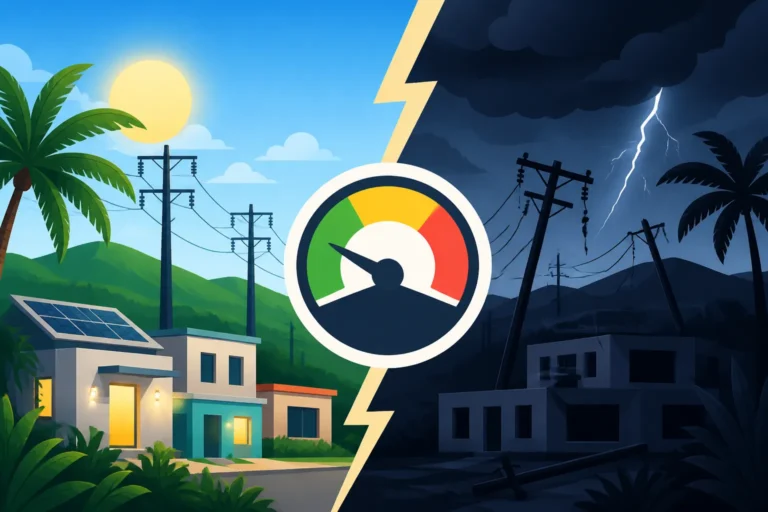
Let's be frank: outages happen. It's an unfortunate reality of island life, and something every newcomer learns to live with. Understanding how to react and prepare can make a world of difference.
What to Do During a Power Outage
When the lights go out, your first instinct might be frustration, and that's totally valid. My first few outages were certainly a test of my zen. But after a while, you learn to adapt.
- Check Your Neighbors: Is it just you, or is the whole block out? If it's just your home, check your circuit breakers first. If it's widespread, it's likely a grid issue.
- Consult LUMA's Outage Map: LUMA Energy has an online outage map (Sistema de Información de Interrupciones) that provides real-time updates on reported outages and estimated restoration times. This is your go-to resource. It's not always perfectly accurate, but it gives you a general idea.
- Report the Outage: If the outage isn't yet on the map or you want to ensure it's recorded, you can report it through LUMA's app, their website, or by calling their customer service line. Be prepared for potentially long wait times on the phone during large-scale outages.
- Disconnect Sensitive Electronics: Unplug sensitive electronics to protect them from power surges when the electricity comes back on.
- Preserve Perishables: Keep your refrigerator and freezer doors closed as much as possible to maintain temperature. A full freezer stays cold longer.
For significant, long-duration outages, especially during hurricane season, having a backup plan is not a luxury, it's a necessity. This is why many residents consider solar power or backup generators. Our guide on Understanding Solar Power and Backup Generators in Puerto Rico is an excellent resource for exploring these options.
Reporting Water Service Interruptions
Water outages are less frequent than power outages but do occur, sometimes due to maintenance, pipe breaks, or even power outages affecting pumping stations.
- Check Local Notices: AAA often posts notices on their social media channels or local news outlets about planned maintenance or unexpected interruptions in specific areas.
- Report the Issue: You can report a water outage or a major leak through the AAA customer service line or their online portal. Again, a quick check with neighbors can confirm if it's a localized issue or a wider problem.
- Conserve Water: If you know an outage is coming or have limited supply, conserve water by taking shorter showers, flushing less, and avoiding unnecessary washing.
- Boil Water Advisories: In rare cases, especially after a significant infrastructure event, AAA might issue a "boil water advisory" (Aviso de Hervir Agua). Pay attention to these and follow the instructions carefully to ensure your drinking water is safe.
Preparedness and Emergency Kits
Living in Puerto Rico means embracing a certain level of self-reliance, particularly regarding utilities.
- Emergency Lighting: Flashlights, battery-powered lanterns, and solar lights are essential. Forget candles, they're a fire hazard.
- Battery Power: Keep power banks charged for your phones and other small devices. A car charger is also a good backup.
- Water Storage: Have a supply of bottled drinking water on hand, enough for at least a few days per person.
- Non-Perishable Food: Stock up on canned goods, dry snacks, and other foods that don't require refrigeration or cooking.
- First Aid Kit: Always have a well-stocked first aid kit.
- Cash: ATMs might not work during power outages.
These preparations aren't just for hurricanes; they’re for any unexpected interruption that could last a few hours or a few days. It truly provides peace of mind.
Tips for Managing Utility Costs and Conservation
Utility costs, particularly electricity, can be a significant part of your budget in Puerto Rico. Being mindful of your consumption and taking steps to conserve can lead to noticeable savings.
Energy-Saving Tips with LUMA
Electricity in Puerto Rico is generally more expensive than on the mainland, largely due to reliance on imported fossil fuels. My first LUMA bill definitely raised an eyebrow! So, energy conservation isn't just good for the environment; it's good for your wallet.
- Air Conditioning Management: AC is often the biggest energy hog. Use it strategically. Set your thermostat to a comfortable but not frigid temperature (e.g., 75-78°F or 24-26°C), use timers, and ensure your home is well-sealed to prevent air leakage. Turn it off when you leave for extended periods.
- Efficient Appliances: If you're buying new appliances, look for energy-efficient models. An inverter AC unit, for instance, can drastically reduce consumption compared to older, non-inverter models.
- Lighting: Switch to LED bulbs. They consume far less energy and last much longer. Utilize natural light during the day.
- Unplug Phantom Loads: Many electronics consume a small amount of power even when turned off (phantom load). Unplug chargers, TVs, and other devices when not in use.
- Ceiling Fans: Embrace ceiling fans! They can make a room feel several degrees cooler, allowing you to raise your AC thermostat or even forgo AC on milder days and nights. They consume very little electricity compared to an AC unit.
- Insulation and Windows: Ensure your windows and doors are properly sealed. Good insulation, though not common in older Puerto Rico homes, can significantly impact cooling costs. Consider blackout curtains to block out direct sun.
Water Conservation Practices with AAA
While water bills are typically less shocking than electricity bills, conserving water is still important for environmental reasons and can help keep your costs down.
- Fix Leaks Promptly: Even a small drip can waste gallons of water over time. Regularly check faucets, toilets, and irrigation systems for leaks and repair them immediately.
- Mindful Usage: Take shorter showers. Turn off the tap while brushing your teeth or washing dishes. Run your washing machine and dishwasher only when they are full.
- Water-Efficient Fixtures: Consider installing low-flow showerheads and toilets.
- Outdoor Watering: If you have a garden, water early in the morning or late in the evening to reduce evaporation. Consider drought-tolerant plants.
Being aware of your consumption through the online portals of LUMA and AAA can really help you identify patterns and areas where you can cut back.
Troubleshooting Common Utility Issues and Getting Support
Despite your best efforts, sometimes things go awry. Knowing how to effectively troubleshoot common issues and where to turn for support can save you a lot of headaches.
Contacting Customer Service
When you have an issue, whether it's a billing discrepancy, a service question, or a prolonged outage, directly contacting the utility provider is your first step.
- LUMA Energy Customer Service: You can reach LUMA by phone, through their website's chat function, or via their mobile app. Their main customer service number is generally available 24/7 for outage reporting, but for account inquiries, specific hours apply.
- AAA Customer Service: AAA also has a dedicated customer service line and local offices. Their website often lists regional contact numbers.
When you call, have your account number, property address, and a clear description of your issue ready. Be polite but persistent. If you encounter a language barrier and your Spanish isn't strong, try to speak slowly, or ask if they have an English-speaking representative. Sometimes, calling back and getting a different agent can yield better results.
Escalation and Persistent Problems
If your issue isn't resolved through standard customer service channels, don't give up.
- Supervisors: Request to speak with a supervisor. Sometimes, a more experienced person can cut through red tape or provide options a front-line agent cannot.
- Consumer Protection: For unresolved disputes with utility companies, you can file a complaint with the Puerto Rico Public Service Regulatory Board (Junta Reglamentadora de Servicio Público, JRSP). This is the regulatory body that oversees utilities and consumer protection. Document all your interactions – dates, times, names of representatives, and summaries of conversations.
- Social Media: Sometimes, public complaints on social media (e.g., tagging LUMA or AAA on X/Twitter or Facebook) can get a faster response, especially for widespread issues.
- In-Person Visits: For complex account issues, an in-person visit to a service center, armed with all your documentation, can sometimes be the most effective way to get resolution, even if it means waiting.
The key is documentation and persistence. Keep a folder (digital or physical) with all your utility records, including dates of service calls, complaint numbers, and billing statements. This makes any escalation much easier.
Leveraging Online Resources and Community Support
Beyond official channels, there’s a wealth of unofficial support and information available.
- Utility Websites and Apps: Both LUMA and AAA have quite comprehensive websites and mobile apps. These are excellent resources for checking outage maps, paying bills, and finding general information. Learn to navigate them.
- Expat Facebook Groups: Puerto Rico has numerous active expat Facebook groups. These communities are invaluable for asking questions, getting recommendations, and hearing about others' experiences. Often, someone else has faced the exact same utility issue you're dealing with and can offer practical advice or even specific contact names. Just remember to take advice with a grain of salt and always verify information with official sources where possible.
- Local Neighbors: Your neighbors can be your best resource for local knowledge about utility quirks, preferred payment spots, or even who to call for specific issues in your area. Embrace the community spirit; that’s a big part of living here!
Navigating the utility setup and management in Puerto Rico is definitely a learning curve, but armed with the right information and a healthy dose of patience, you’ll be a pro in no time.
Required Documents for Utility Setup (LUMA & AAA)
Here's a handy table to help you keep track of the documents you'll need when setting up your electricity and water services. Remember, always bring originals and several copies!
| Document Type | LUMA Energy (Electricity) | AAA (Water) | Notes |
|---|---|---|---|
| Valid Photo ID | Required | Required | U.S. Driver's License, U.S. Passport, or Puerto Rico ID. Ensure it's current. |
| Social Security Card | Required | Required | Or proof of your Social Security number. |
| Proof of Residency | Required | Required | Lease Agreement (Contrato de Arrendamiento): If renting. Must be signed by all parties. Property Deed (Escritura): If homeowner. Property Purchase Agreement: If recent buyer and deed not yet finalized. |
| Property Address | Required | Required | Exact physical address of the property. |
| Meter Number | Recommended | Recommended | If available, helps expedite the process. Ask your landlord or real estate agent. |
| Security Deposit | Required | Required | Be prepared to pay this on the spot. Amounts vary. |
| Previous Bill (if transferring) | Helpful | Helpful | If service was active in the previous tenant's name, having their last bill can assist with account transfer, especially if the account is current. |
| Proof of Mailing Address | Sometimes Requested | Sometimes Requested | If your physical ID doesn't show your new PR address, a bank statement, or other official mail can sometimes be requested to prove your current mailing address. This is also key for establishing domicile when you move to Puerto Rico. |
Disclaimer
Please remember that while I strive to provide the most accurate and up-to-date information based on my experiences and available resources, utility policies and procedures in Puerto Rico can change. This guide is for informational purposes only and does not constitute official advice. Always consult the official websites of LUMA Energy and AAA, or contact their customer service directly for the most current requirements and processes. Individual situations may vary, and I strongly recommend verifying all critical information directly with the service providers.