Understanding Emergency Numbers (911) and Ambulance Care in Puerto Rico
Finding yourself in a medical crisis in a new country is a universal fear, but in Puerto Rico, the anxiety often stems from not knowing if the systems you relied on back home will function the same way. Whether you are navigating a sudden allergic reaction in the middle of San Juan or a fall while hiking in El Yunque, this guide provides the essential roadmap for accessing 911 services, understanding the complex ambulance landscape, and ensuring you receive care without financial or logistical surprises.
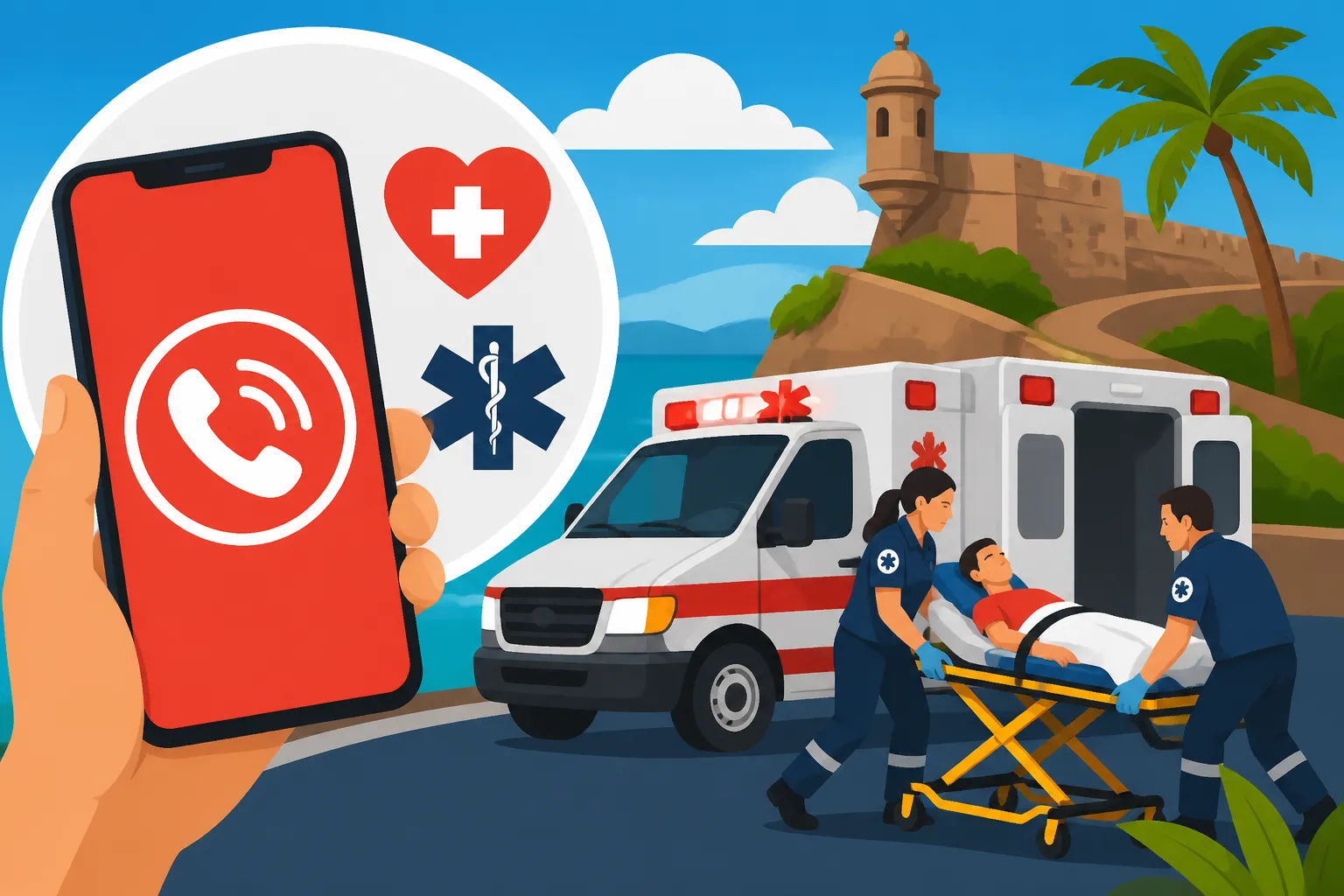
Dialing 911 in Puerto Rico: What to Expect
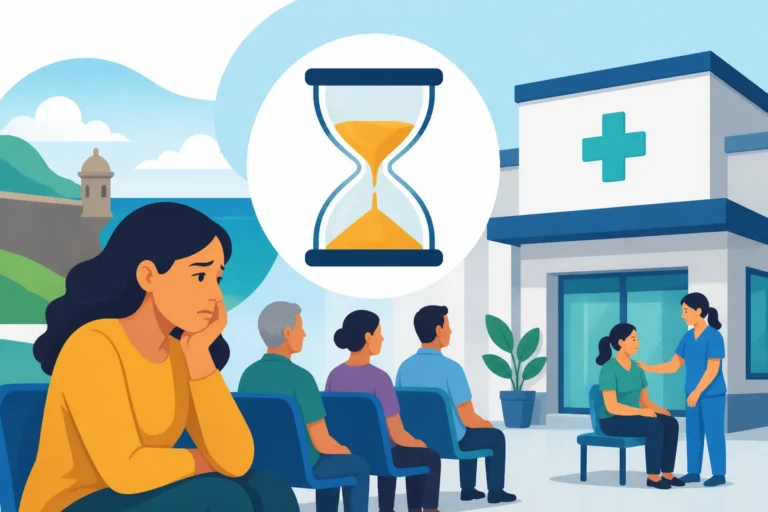
While Puerto Rico is a U.S. territory and utilizes the standard 911 emergency system, the experience of placing that call can feel significantly different than it does on the mainland. When you dial those three digits, your call is typically routed to a centralized dispatch center. However, the island's unique geography and infrastructure mean that the person on the other end might be managing a high volume of calls with varying levels of localized knowledge. It is vital to understand that while 911 is the primary gateway, it is not always the fastest route to help depending on your specific location and the nature of the emergency.
One of the first things you will notice is the dispatch protocol. The operators are trained to handle calls in both Spanish and English, but in high-stress situations, a language barrier can occasionally emerge. We recommend speaking slowly and clearly. If your Spanish is conversational, try to use it for location markers, as local street names and landmarks are often more recognizable to dispatchers in their native tongue. For those who are still in the transition period of moving, having a service like SafetyWing can provide a sense of security, as their support teams can sometimes assist in navigating the administrative aftermath of a medical crisis.
The dispatchers will ask a series of standard questions: What is the emergency? What is your location? What is the phone number you are calling from? In Puerto Rico, the "where" is often the most difficult part. Many residential areas, especially in the mountains or older sectors of San Juan, do not follow a traditional grid. You might find that your official address doesn't show up correctly on their mapping software. Because of this, you should always be prepared to provide landmarks—a specific supermarket, a brightly colored business, or a well-known intersection.
It is also worth noting that the Emergency Medical Care in Puerto Rico: What Every Resident Needs to Know suggests that you should not hang up until the operator tells you to do so. The system may experience delays in routing your call to the specific municipality’s emergency response team. Staying on the line ensures that the handoff between the central dispatcher and the local ambulance crew is successful. If you are a digital nomad or a frequent traveler, keeping a backup plan is essential. SafetyWing is often favored by those who are constantly on the move because it covers emergency medical evacuations, which can be a literal lifesaver if you are in a remote part of the island where local ambulances might face significant delays.
Language Barriers and Dispatch Realities
In the bustling metropolitan areas of San Juan, Guaynabo, and Bayamón, the chances of reaching a bilingual dispatcher are very high. However, if you are calling from a more rural municipality like Adjuntas or Jayuya, the dispatcher might struggle with complex English descriptions. This is a common frustration for newcomers who expect a seamless bilingual experience across the entire island. To mitigate this, many veterans of the expat community keep a "cheat sheet" on their refrigerator with basic medical terms in Spanish, such as "ataque al corazón" (heart attack) or "no puede respirar" (cannot breathe).
The dispatcher’s primary goal is to categorize your emergency into one of three tiers: life-threatening, urgent, or non-emergency. In Puerto Rico, the response time can vary wildly based on this categorization. For a life-threatening event, the state or municipal police are often dispatched alongside an ambulance. For non-life-threatening issues, you might find yourself waiting longer than you would expect on the mainland. This is where understanding How Puerto Rico's Health System Works: Public vs Private Explained (2027) becomes crucial, as it helps you decide whether to wait for 911 or find a way to get to a private clinic yourself.
Information You Must Have Ready for the Dispatcher
When the adrenaline is pumping, it is easy to forget basic details. You must be able to provide the "kilómetro" (kilometer) and "hectómetro" (hectometer) markers if you are on a highway or a rural road. Puerto Rico’s road system relies heavily on these markers (e.g., Highway 187, Km 4.2). If you are at home, have your "número de catastro" or a clear description of your house color and any unique features, like a specific type of gate or a large mango tree in the yard.
Furthermore, you should have a list of any pre-existing conditions and current medications ready. If the patient is an expat who hasn't yet integrated into the local medical record system, this information is vital for the paramedics. If you are utilizing a plan like SafetyWing, having your policy number and their 24/7 emergency contact number handy is also a smart move, as they can begin coordinating with the hospital while you are still in transit. For more on the paperwork side of things, check out What Documents Do I Need to See a Doctor in Puerto Rico.
Understanding Ambulance Services: Public vs. Private
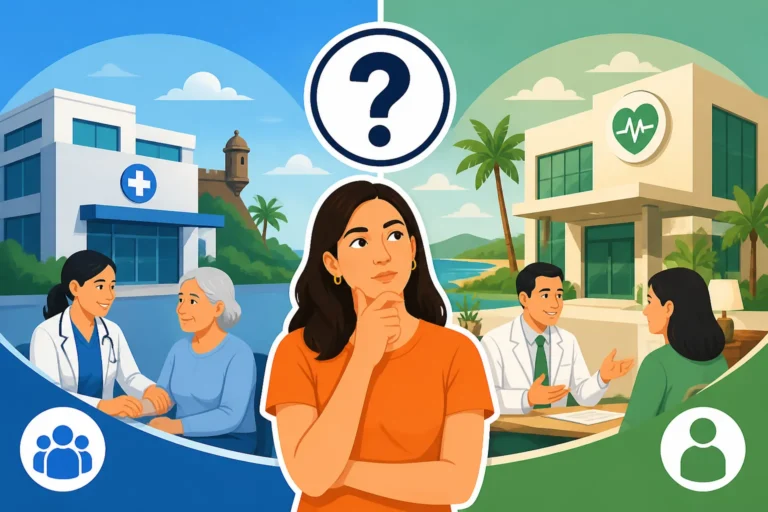
The ambulance system in Puerto Rico is a patchwork of state, municipal, and private providers. Understanding which one is showing up at your door—and why—can save you a lot of confusion when the bill arrives. The state-run Emergency Medical Services (Cuerpo de Emergencias Médicas) is the primary responder for 911 calls, but they are frequently supplemented by the OMME (Oficina Municipal de Manejo de Emergencias), which are municipality-specific response teams.
In many cases, if the state or municipal ambulances are tied up, the 911 dispatcher will route the call to a private ambulance company that has a contract with the government. This is where things get tricky for your insurance. Private ambulances are ubiquitous on the island, and you will often see them parked near major intersections or hospital entrances. These companies, such as Metromed or Aeromed (for air transport), operate as independent businesses. For a deeper dive into the facility side of this, you should read The Guide to Choosing a Private Hospital in Puerto Rico.
The quality of care is generally high across the board, as paramedics in Puerto Rico must meet rigorous certification standards similar to those in the U.S. states. However, the equipment in a municipal ambulance might be older than what you would find in a high-end private service. If you have a choice—which you rarely do in a 911 situation—most residents prefer private services for non-emergency transfers because of their reliability and newer fleets.
Municipal vs. State Emergency Management (OMME)
Each of the 78 municipalities in Puerto Rico has its own Emergency Management Office, known as OMME. These local heroes are often the first on the scene because they are stationed within the town limits. In smaller "pueblos," the OMME staff might also act as search and rescue or even help with clearing roads after a storm. They are deeply embedded in the community, which is a double-edged sword: they know the shortcuts, but they may also be stretched thin if there are multiple incidents in town.
The relationship between 911 and OMME is usually seamless, but it pays to know your local OMME’s direct phone number. In some coastal towns, residents often call the local OMME station directly because they know the 911 routing can take several minutes. While it is always advisable to use 911 for the official record, having the local number as a backup is a "pro-move" for long-term residents. For residents in the metro area, knowing What Should I Do in a Medical Emergency in San Juan can provide specific local numbers for these offices.
Private Ambulance Networks and Membership
Because of the potential for delays in the public system, some private ambulance companies offer membership programs. For a monthly or annual fee, you are guaranteed priority service from their fleet. This is particularly popular among the elderly and those with chronic health conditions. These companies often have direct lines that bypass the 911 system entirely.
If you are a newcomer covered by a global policy like SafetyWing, you might not need a private membership, but you should check if your policy covers "private ground ambulance" transport. Most do, as long as it is deemed medically necessary. The advantage of a private service is that they are often more willing to take you to a specific private hospital of your choice, whereas a 911 ambulance is generally required to take you to the nearest "stabilization point," which might be a public CDT (Centro de Diagnóstico y Tratamiento) rather than a full-service hospital like Ashford or Auxilio Mutuo. You can learn more about these options in the guide on How to Choose Between Auxilio Mutuo, Pavia and Ashford Hospitals.
| Service Type | Provider | Best For | Typical Billing |
|---|---|---|---|
| State EMS | Government | Life-threatening 911 calls | Covered by most local plans |
| Municipal OMME | Local Town | Local accidents, flooding, localized fires | Often free for residents, but varies |
| Private Ground | Private Companies | Hospital transfers, non-emergency, priority | Out-of-pocket or insurance claim |
| Air Ambulance | Aeromed/Private | Critical trauma, island-to-mainland | High cost, requires specialized coverage |
Costs and Billing for Emergency Transport
One of the most significant "culture shocks" for Americans moving to Puerto Rico is how ambulance billing is handled. On the mainland, you might receive a bill for $1,200 from your local fire department. In Puerto Rico, the costs can be lower, but the billing process is often more manual and confusing. If a state ambulance picks you up, the cost might be covered by your local health insurance (like Triple-S or MCS) with little to no co-pay. However, if a private company is dispatched via 911, they may be "out-of-network."
For those using international or nomad insurance like SafetyWing, the process usually involves paying the bill upfront or having the company coordinate a guarantee of payment with the provider. Since many ambulance companies in Puerto Rico are small businesses, they may not have the infrastructure to bill a foreign insurance company directly. Always keep every piece of paper the paramedics give you. This is the only way you will be able to successfully file for reimbursement later. To understand the broader context of medical costs, check out How Much Does an Ambulance Cost in Puerto Rico.
It is also important to understand the concept of the "stabilization fee." Even if the ambulance only drives you five miles to a local clinic, you are being charged for the paramedics' time, the supplies used (like IV starts or oxygen), and the "mileage." In Puerto Rico, these rates are regulated by the government, but private companies may add surcharges for specialized equipment. For a full breakdown of what to expect, refer to Understanding Co-Pays, Deductibles and Premiums in Puerto Rico.
In-Network vs. Out-of-Network Charges
Most local private health plans in Puerto Rico have a specific list of "preferred" ambulance providers. If the 911 system sends a company that isn't on that list, you might be left holding a bill for several hundred dollars. While federal "No Surprises Act" rules generally apply, the implementation in Puerto Rico can be slow. My advice? Don't argue with the dispatcher about which company is coming during an emergency, but do ask the paramedics for a "hoja de servicio" (service sheet) before they leave you at the hospital.
If you are a visitor or a new resident waiting for your local plan to kick in, having SafetyWing is a major advantage here. They are designed to handle "out-of-network" situations because, for a traveler, everything is out-of-network. This eliminates the stress of wondering if a specific ambulance company in Ponce or Mayagüez will be covered.
How Insurance Handles Ambulance Bills
When the bill eventually arrives in your mailbox—sometimes months later—don't panic. First, check it against your insurance's Explanation of Benefits (EOB). If you see a discrepancy, you will likely need to visit the ambulance company's office in person. In Puerto Rico, many administrative issues are solved much faster with a face-to-face conversation than over the phone.
If you are covered by Medicare, you should read Understanding Medicare and Medicare Advantage in Puerto Rico (2027) to see how they handle emergency transport. Generally, Medicare Part B covers ambulance services when other modes of transportation could endanger your health, but the rules for "Advantage" plans in Puerto Rico can be quite specific regarding which private fleets they contract with.
Navigating the CDTs and Hospital Emergency Rooms
In Puerto Rico, an ambulance won't always take you to a massive, 500-bed hospital. Instead, they might take you to a CDT. A "Centro de Diagnóstico y Tratamiento" is a local medical center that sits somewhere between an urgent care clinic and a small hospital. They are designed to stabilize patients and handle minor emergencies like stitches, dehydration, or uncomplicated fractures.
If your condition is critical, the ambulance will bypass the CDT and head for a "Hospital de Trauma" or a specialized facility. For many expats, the CDT experience can be jarring because the facilities often look dated. However, the doctors and nurses there are used to working with limited resources and are incredibly proficient at triage. If you are in the metro area, you are likely to be taken to a facility like Centro Médico—the island’s primary trauma center—which, while visually overwhelming, offers world-class trauma care. For more information on navigating these facilities, see Navigating the Puerto Rico Healthcare System: A Newcomer's Roadmap (2027).
The Role of CDTs in Local Neighborhoods
CDTs are the backbone of Puerto Rican healthcare. Every town has at least one. For non-life-threatening emergencies, it is often advised to skip 911 and just drive to the local CDT. The wait times are usually shorter than a major ER, and the cost is significantly lower. If you have a plan like SafetyWing, they typically cover these visits as "urgent care," provided they meet the medical necessity criteria.
The challenge with CDTs is that they aren't always open 24/7. Some close at 9:00 PM or 11:00 PM. Before you move into your new home, drive to the nearest CDT and check their hours. If you find yourself in a situation where you need care after hours and the CDT is closed, you’ll then need to know Where Is the Nearest CDT or Public Clinic in Caguas or whichever city you reside in.
Choosing the Right Hospital ER in San Juan vs. Rural Areas
If you have the luxury of choice—for instance, if you are driving yourself or a loved one—where you go matters. In San Juan, Ashford Presbyterian in Condado is a favorite for expats because of the high density of English-speaking staff. Auxilio Mutuo in Hato Rey is known for its excellent specialists and comprehensive facilities.
In rural areas, your options are much more limited. You will likely be taken to a "Hospital Regional." These facilities are competent but may lack the specialized equipment for complex cardiac or neurological events. In those cases, the patient is often stabilized and then transferred via a private ambulance or helicopter to San Juan. This transfer is another reason why having robust insurance like SafetyWing is vital; the cost of a secondary transfer can often exceed the cost of the initial emergency care. For more on handling emergencies while away from the metro hub, read How to Handle a Medical Emergency While Traveling Off-Island from Puerto Rico.
Practical Tips for Emergency Preparedness
Living in Puerto Rico requires a certain level of self-reliance. You cannot always assume that an ambulance will arrive in ten minutes, especially during a heavy tropical downpour or after an earthquake. Preparation is not just about having a first-aid kit; it’s about having a logistical plan.
One of the most effective things you can do is to "drop a pin" on your digital maps for your home and keep that coordinate saved. If you have to call 911, you can read the GPS coordinates to the dispatcher. This is far more accurate than trying to explain that you live "three houses down from the bakery that used to be a pharmacy." Also, consider how your insurance will interact with local providers. If you are a nomad, SafetyWing is a fantastic bridge, but you should still know where your local "in-network" clinic is for your primary PR-based plan.
Creating an Emergency Folder
I keep a physical folder near my front door. It contains copies of my ID, my health insurance cards (including my SafetyWing digital certificate), a list of my allergies, and my "last will and medical power of attorney." If I am unconscious when the paramedics arrive, this folder goes with me. Parameds in Puerto Rico are trained to look for this kind of information, and having it in Spanish and English is even better.
You should also include a list of emergency contacts who are on the island. While your mom in Ohio needs to know what’s happening, the paramedics need someone who can show up at the hospital in 20 minutes to sign papers or provide history. If you are still building your network, look into How to Find and Register with a Primary Care Doctor in Puerto Rico to establish those local medical ties early.
Location Identification: The Plus Codes Trick
Since many addresses in Puerto Rico are non-standard, I recommend learning your "Google Plus Code." It’s a short alphanumeric code derived from latitude and longitude. Most modern dispatch systems can use these to pinpoint your exact location even if there is no street name. Practice finding yours and writing it on your emergency "cheat sheet."
Additionally, if you live in a gated community (urbanización), make sure the security guards have your name on file and know that you might have an emergency. There have been tragic instances where ambulances were delayed at a gate because the guard didn't have authorization to let them in. Communication is your best tool for speeding up response times.
Emergency Dental and Mental Health Access
Emergency care isn't just about broken bones or heart attacks. Dental emergencies and mental health crises are just as urgent and require a different set of numbers. For dental issues, you won't typically call 911 unless there is significant facial trauma or airway obstruction. Instead, you need to find a "Dentista de Turno" (dentist on call).
Similarly, Puerto Rico has adopted the 988 Suicide & Crisis Lifeline, which provides 24/7, free, and confidential support. The operators are incredibly compassionate and can help navigate the local mental health system, which can be difficult to access during a crisis. For a broader look at these services, you can consult How to Access Mental Health Services in Puerto Rico.
Finding 24/7 Dental Care
Most dental offices in Puerto Rico operate on standard business hours. However, some large clinics in San Juan offer emergency slots. If you have a severe toothache at 2:00 AM on a Sunday, your best bet is often the ER at a large hospital like Auxilio Mutuo, where they may have a dentist on call or can at least provide pain management and antibiotics until Monday morning. You can find more details in How to Access Emergency Dental Care in Puerto Rico.
The 988 Suicide & Crisis Lifeline
The 988 system in Puerto Rico is a vital resource. It is linked to the local PAS line (Programa de Ayuda Sicosocial), which is run by ASSMCA (Administración de Servicios de Salud Mental y Contra la Adicción). They can dispatch mobile crisis units in some areas, which is a much more appropriate response than a police car for someone experiencing a mental health breakdown. If you are supporting a friend or family member, knowing this number can prevent a situation from escalating into a physical emergency.
Disclaimer
The information provided in this guide is for educational and informational purposes only and does not constitute professional medical or legal advice. While we strive to provide accurate and up-to-date information regarding emergency services in Puerto Rico, protocols and contact numbers can change. Always verify emergency procedures with local authorities and your insurance provider. In the event of a life-threatening emergency, dial 911 immediately. We do not guarantee the response times or service quality of any third-party providers mentioned in this article.