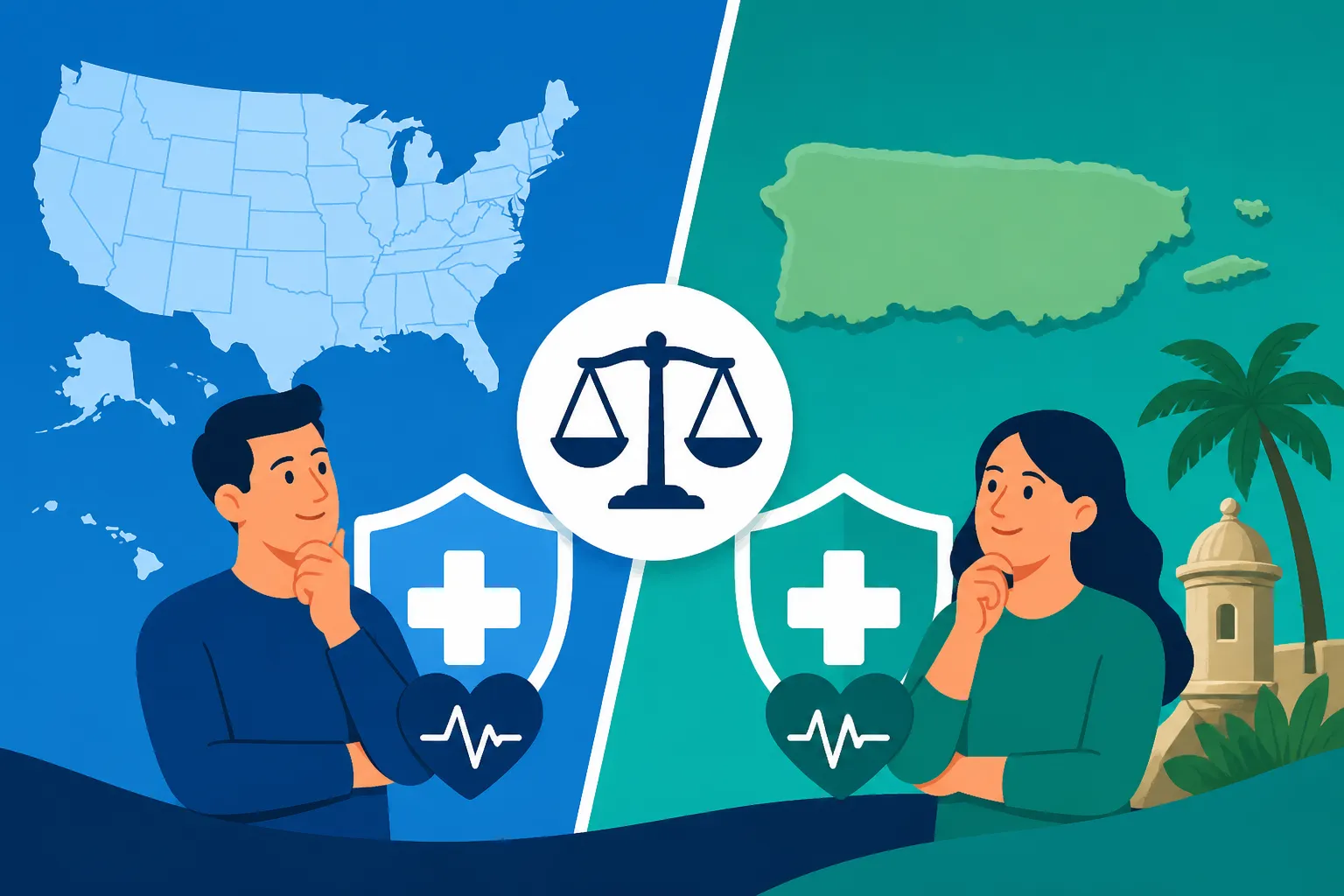
Understanding the Difference Between Mainland and Puerto Rico Health Plans
One of the most jarring experiences for new residents moving from the U.S. mainland to Puerto Rico is walking into a doctor’s office in Condado or Guaynabo and realizing their premium "nationwide" PPO plan is essentially useless for anything other than an emergency room visit. This guide solves the confusion by detailing the structural, financial, and cultural differences between mainland and island health plans to ensure your transition is seamless and your coverage is valid.
The Fundamental Structure of Health Plans in Puerto Rico
When I first arrived on the island, I assumed that because Puerto Rico is a U.S. territory, the healthcare system would be a mirror image of what I left behind in Florida. I quickly learned that while the federal framework—like the Affordable Care Act (ACA)—technically applies, the local implementation is entirely different. In Puerto Rico, health insurance is almost exclusively dominated by local carriers rather than the "Big Five" you see on the mainland. You won't find many people carrying a standard UnitedHealthcare or Aetna card issued by a local employer; instead, you will become very familiar with names like Triple-S, MCS, and FirstMedical.
The Role of the Affordable Care Act (ACA) on the Island
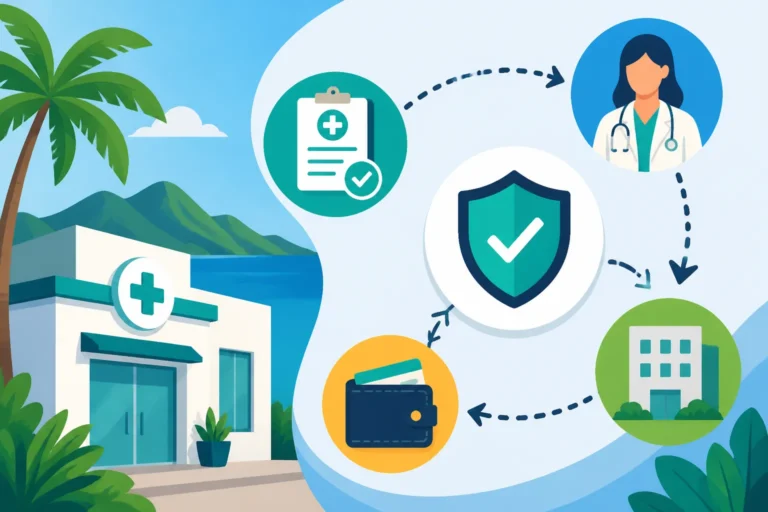
It is a common misconception that the ACA works exactly the same here as it does in the states. While Puerto Rico residents are exempt from the individual mandate (and the associated tax penalties), the island does not have its own health insurance exchange like the federal Marketplace (Healthcare.gov). This means you cannot simply hop online, compare subsidized plans, and pick one based on your income levels.
Instead, residents must go directly to private insurers to purchase "individual plans." This creates a unique dynamic where the protections of the ACA—such as coverage for pre-existing conditions and the inclusion of essential health benefits—are present, but the delivery system is localized. If you are curious about how these regulations impact your specific situation, reading about Understanding ACA Marketplace Options for Puerto Rico Residents can help clarify why your mainland experience won't translate directly. The lack of a federal exchange often means the burden of research falls squarely on your shoulders, which can be overwhelming when you’re also trying to figure out how to get your water bill paid.
Local Insurers vs. National Carriers
On the mainland, your insurance card likely has a logo that is recognized in all 50 states. In Puerto Rico, the market is "insular" in every sense of the word. Triple-S is an affiliate of Blue Cross Blue Shield, which provides some comfort to newcomers, but it is managed independently. This local control means that the "In-Network" lists are specifically tailored to the island’s geography.
For those who are in the middle of a move and haven't yet secured a local plan, or for those who travel frequently back to the mainland, relying solely on a local plan can be risky. During these transitional periods, many expats utilize SafetyWing to ensure they have global travel medical coverage that fills the gaps while they navigate the local bureaucracy. It’s important to remember that while a local plan covers you excellently at a hospital in San Juan, its utility might drop significantly the moment you land in New York or Miami, unless you have a specific "travel" rider attached to your policy.
Key Differences in Coverage and Networks
The way you interact with a doctor in Puerto Rico is fundamentally different from the mainland. On the mainland, the PPO (Preferred Provider Organization) model is king, allowing for significant flexibility in choosing specialists. In Puerto Rico, the system leans heavily toward a managed care model, even within private plans. You will often hear the term "Plan Médico" used instead of "health insurance," and this reflects a more holistic, though often more bureaucratic, approach to care.
The Concept of the Red de Proveedores
The "Red de Proveedores" or provider network in Puerto Rico is arguably more rigid than what most mainlanders are used to. On the mainland, if a doctor is out-of-network, you might still see them and pay a higher co-insurance. In Puerto Rico, if a doctor is not in your specific "Red," they may simply refuse to see you because the administrative cost of billing a non-contracted insurer is too high for their small office staff.
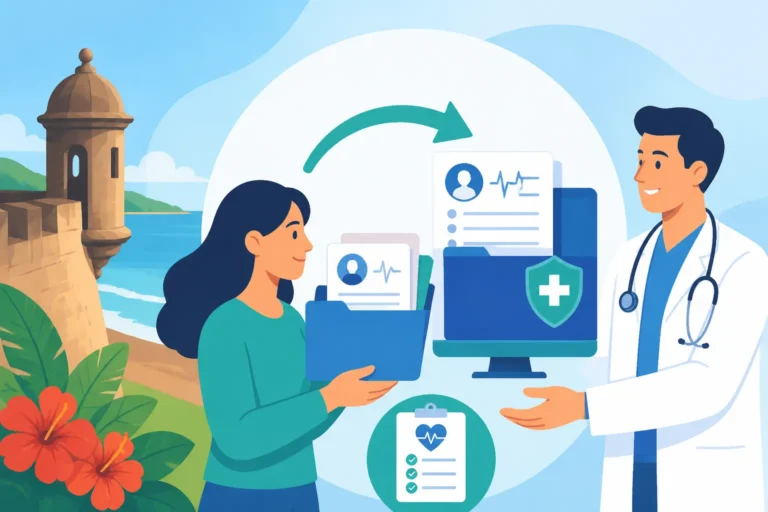
This leads to the "no hay citas" (there are no appointments) phenomenon that frustrates so many newcomers. Because the networks are concentrated, the most popular doctors within a specific local plan's network can have wait times of three to six months. This is why How to Find and Register with a Primary Care Doctor in Puerto Rico is such a critical step to take the moment you receive your local ID card. You cannot wait until you are sick to find a doctor; the network limitations require a proactive approach that most mainlanders aren't accustomed to.
Referrals and Pre-authorizations: The Gatekeeper Model
On the mainland, many high-end plans allow you to go directly to a dermatologist or a cardiologist without a "permission slip." In Puerto Rico, the gatekeeper model is the standard. Even under many private plans, you will need a "referido" (referral) from your primary care physician (PCP) for almost everything.
I remember the first time I tried to get an MRI in Hato Rey. I had my insurance card and my specialist's order, but the imaging center wouldn't touch me without a specific authorization code from the insurance company. This "pre-auth" culture is much more pervasive here. To navigate this, you need to understand How Specialist Referrals Work Under Puerto Rico Health Plans because without that physical or electronic referral, you will likely be asked to pay the full "private rate" out of pocket, which can be a shock to the system.
| Feature | US Mainland Plans (Standard) | Puerto Rico Health Plans (Private) |
|---|---|---|
| Primary Insurers | United, Aetna, Cigna, BCBS | Triple-S, MCS, FirstMedical, Humana |
| Marketplace | Healthcare.gov (Subsidies available) | Direct from Insurer (No federal subsidies) |
| Referral Requirement | Often not required for PPOs | Almost always required (Gatekeeper model) |
| Coverage Area | Nationwide (usually) | Primarily Island-wide (Limited US coverage) |
| Average Premiums | Higher ($500 – $1,200+ individual) | Lower ($150 – $400 individual) |
Medicare and Medicaid (Vital) Differences
For retirees and low-income residents, the differences between the mainland and Puerto Rico are even more pronounced. The funding mechanisms for these programs differ significantly because of Puerto Rico’s status as a territory, which directly impacts the "richness" of the benefits you receive.
Why Medicare Advantage Dominates the Island
If you are a senior moving to the island, you will notice that almost everyone is on a Medicare Advantage (MA) plan (Part C) rather than traditional Medicare. In fact, Puerto Rico has some of the highest Medicare Advantage penetration rates in the entire United States. The reason is simple: traditional Medicare (Parts A and B) often leaves significant gaps that are expensive to fill with "Medigap" policies, which are not as common or affordable here.
Local insurers have mastered the art of bundling "extra" benefits into MA plans to attract the island’s aging population. You’ll see plans offering "silver sneakers" programs, dental, vision, and even transportation to appointments. However, you must be careful—standard Medicare Part B does not automatically cover you in Puerto Rico the same way it does in the states unless you specifically enroll and pay the premium. For a deep dive into this, check out Understanding Medicare and Medicare Advantage in Puerto Rico (2027). It is one of the most complex transitions you will make as a retiree.
Understanding the Vital Plan for Residents
Medicaid in Puerto Rico is known as "Plan Vital." Unlike the mainland, where Medicaid is a joint federal-state program with relatively stable funding, Puerto Rico’s Medicaid is funded via a block grant, which often leads to "funding cliffs." The eligibility requirements are also much stricter in terms of income than in many mainland states.
Vital is a managed care system where the government pays private insurers (like Triple-S or FirstMedical) to manage the care of the participants. While the coverage is comprehensive, the wait times and provider access can be challenging. If you are moving here with a lower income, you should investigate Understanding the Vital Plan (Government Health Plan) in Puerto Rico (2027) as soon as possible, as the application process requires local documentation that can take weeks to gather.
The Cost Reality: Premiums vs. Out-of-Pocket Expenses
The good news for newcomers is that health insurance premiums in Puerto Rico are generally much lower than on the mainland. Some families save upwards of $8,000 a year just by switching to a local Puerto Rican plan. However, "cheap" doesn't always mean "better," and you have to look at the total cost of care.
Why Premiums Are Generally Lower in Puerto Rico
The lower cost of premiums is driven by several factors, including lower provider reimbursement rates (doctors in PR are paid significantly less by insurance than their mainland counterparts) and a lower overall cost of living for administrative staff. A high-quality private plan for an individual might cost $250 per month, whereas a similar plan in New York or California could easily exceed $700.
However, you must be prepared for the "hidden" costs. Because reimbursements are low, many top-tier specialists have opted out of insurance networks entirely. They operate on a "cash only" basis. If you want to see the best cardiologist in San Juan, you might have to pay $200 for the visit upfront and then file for reimbursement yourself. Understanding The Cost of Healthcare in Puerto Rico: A Complete Breakdown for Newcomers (2026) will help you budget for these out-of-network expenses that aren't common in the mainland's "all-in" PPO culture.
Co-pays and Special Services
While premiums are low, co-pays can be a bit of a mixed bag. Standard office visits often have very low co-pays ($10–$20), but specialized diagnostic tests or brand-name prescriptions can be surprisingly expensive. The pharmacy system here also operates differently. You’ll find that Prescription Medications and Pharmacies in Puerto Rico: The Complete Guide is essential reading because some medications that are tiered as "preferred" on the mainland might be "non-preferred" here, or simply unavailable due to supply chain issues.
For digital nomads or those who haven't yet established residency, these costs can be even more volatile. Using a service like SafetyWing provides a safety net during those first 90 days when you are neither a "visitor" nor a "bona fide resident" in the eyes of local insurers. It prevents a simple ear infection or a minor trip to the ER from becoming a $1,500 out-of-pocket disaster.
Practical Navigation for Newcomers
Navigating the transition requires more than just picking a plan; it requires changing your expectations about how medical offices function. On the mainland, efficiency is a selling point. In Puerto Rico, the "culture of care" is more personal, but also significantly slower.
Finding English-Speaking Doctors and Coordination
If your Spanish is still in the "Duolingo stage," finding an English-speaking provider is paramount. Most doctors in Puerto Rico were trained on the mainland or in local schools that use English-language textbooks, so their technical English is usually excellent. However, the front-desk staff—the people you need to talk to for appointments and referrals—may only speak Spanish.
This is a major hurdle for new residents. You may find yourself needing to physically visit an office just to make an appointment because nobody is answering the phone or the "online portal" is broken. For help with this, it is wise to point readers toward How to Find an English-Speaking Doctor in Puerto Rico. It’s not just about the doctor; it’s about finding a practice that understands the needs of the expat community.
Transitional Coverage and Emergency Care
What happens if you get sick the week you land? Your mainland insurance will likely cover an emergency room visit at a hospital like Ashford Presbyterian in Condado, but they won't cover a follow-up visit with a local GP. This "coverage gap" is where many people get into trouble.
You need to know What Happens If I Get Sick Before My Insurance Starts in Puerto Rico? to avoid massive bills. Many people keep their mainland insurance for the first few months, but you must verify if your provider considers Puerto Rico "out of country" or "domestic." Surprisingly, some mainland insurers treat the island as an international destination, which changes your deductible structure entirely. Again, this is why many savvy movers keep a SafetyWing policy active during the relocation phase; it offers a layer of protection that local and mainland plans often miss during the "hand-off" period.
Comparing Public vs. Private Options
In Puerto Rico, the line between public and private healthcare is often blurred because the private sector manages much of the public's care. However, for a newcomer, where you choose to go for treatment matters immensely in terms of wait times and quality of amenities.
Private Hospitals and Specialized Care
If you have a private local plan or are paying cash, you will likely head to hospitals like Auxilio Mutuo, Pavia, or San Jorge Children's Hospital. These facilities are comparable to mainland hospitals in terms of technology and specialist availability. They are "private" in the sense that they are for-profit or non-profit entities that primarily serve the insured or those who can pay.
Choosing the right facility for your needs—whether it's for a routine procedure or something as significant as childbirth—is a major decision. I highly recommend reading The Guide to Choosing a Private Hospital in Puerto Rico before you have an actual need for one. Knowing which hospital is the "trauma center" versus the "cardiac center" can save precious time in an emergency.
Public CDTs and Community Clinics
On the other side of the spectrum are the CDTs (Centros de Diagnóstico y Tratamiento). These are community health centers that serve as the backbone of the island's public health system. While they are a godsend for rural communities, they can be overwhelming for a newcomer. The wait times are long, and the facilities are often dated.
However, in an emergency in a remote area like El Yunque or the center of the island, a CDT might be your only option. Understanding How Puerto Rico's Health System Works: Public vs Private Explained (2027) will give you the perspective needed to navigate these facilities without panic. They are an essential part of the fabric of the island, and even as a private-pay patient, you might find yourself in one if you’re exploring the beautiful "Isla del Encanto" far from the metropolitan areas of San Juan.
Disclaimer
This guide is intended for informational purposes only and does not constitute medical, legal, or financial advice. Health insurance laws and provider networks in Puerto Rico are subject to frequent changes. Always verify coverage details directly with your insurance provider and consult with a qualified professional regarding your specific healthcare needs and residency status.