Can My Children Attend School in Puerto Rico Right Away?
Moving to a new place is always an adventure, full of excitement and a good dose of administrative headaches. But when you’re relocating with children, the biggest question often looming over your head, right after "where will we live?", is "where will they go to school, and can they start right away?" It’s a completely valid concern, and one that many families grapple withe in Puerto Rico. This guide aims to pull back the curtain on enrolling your children in the local school system, offering a realistic look at what "right away" actually means on the island and how to navigate the process.
The Short Answer: Yes, But With a Few (Ahem) Puerto Rico Kinks
Technically, yes, your children can attend school in Puerto Rico "right away" once you’ve established residency and gathered the necessary documents. However, the interpretation of "right away" might differ slightly from what you're used to on the mainland. This isn't a place where you walk into a school office one morning and expect your child to be in class by afternoon. Patience, preparation, and persistence are your best friends here.
Understanding the Initial Hurdles and What "Right Away" Really Means
When you move to Puerto Rico, especially from the mainland U.S., you'll quickly realize that while it's a U.S. territory, many administrative processes operate on their own unique island timeline. This isn't necessarily a bad thing, but it's something to be aware of when it comes to getting your kids settled in school. "Right away" often translates to "as soon as all the required paperwork is meticulously gathered, verified, and processed, which could take a few weeks to a month, depending on the school and the time of year."
One of the biggest initial hurdles is simply understanding the local system. It's not just about finding a school; it's about navigating the culture of enrollment. Forget about those streamlined online portals you might be accustomed to. Here, it’s often about showing up in person, sometimes multiple times, with physical documents in hand. The friendly staff at the schools are doing their best, but they operate within a system that values careful, often manual, verification. This means that even if you have everything perfectly organized, there might be internal processing times that feel glacial compared to what you're used to. It's a common expat frustration, so know you're not alone if you feel like you're caught in a bureaucratic tango.
Navigating the Enrollment Process: Public vs. Private Schools
The first major decision you'll face is whether to enroll your children in a public or private school. Both have distinct enrollment processes, advantages, and challenges that are important to understand before you even set foot in an office.
Public School Enrollment: The Nitty-Gritty Details
The public school system in Puerto Rico is overseen by the Department of Education (Departamento de Educación). These schools generally operate primarily in Spanish, with English taught as a second language. For many expat families, especially those whose children aren't already bilingual, this can be a significant adjustment.
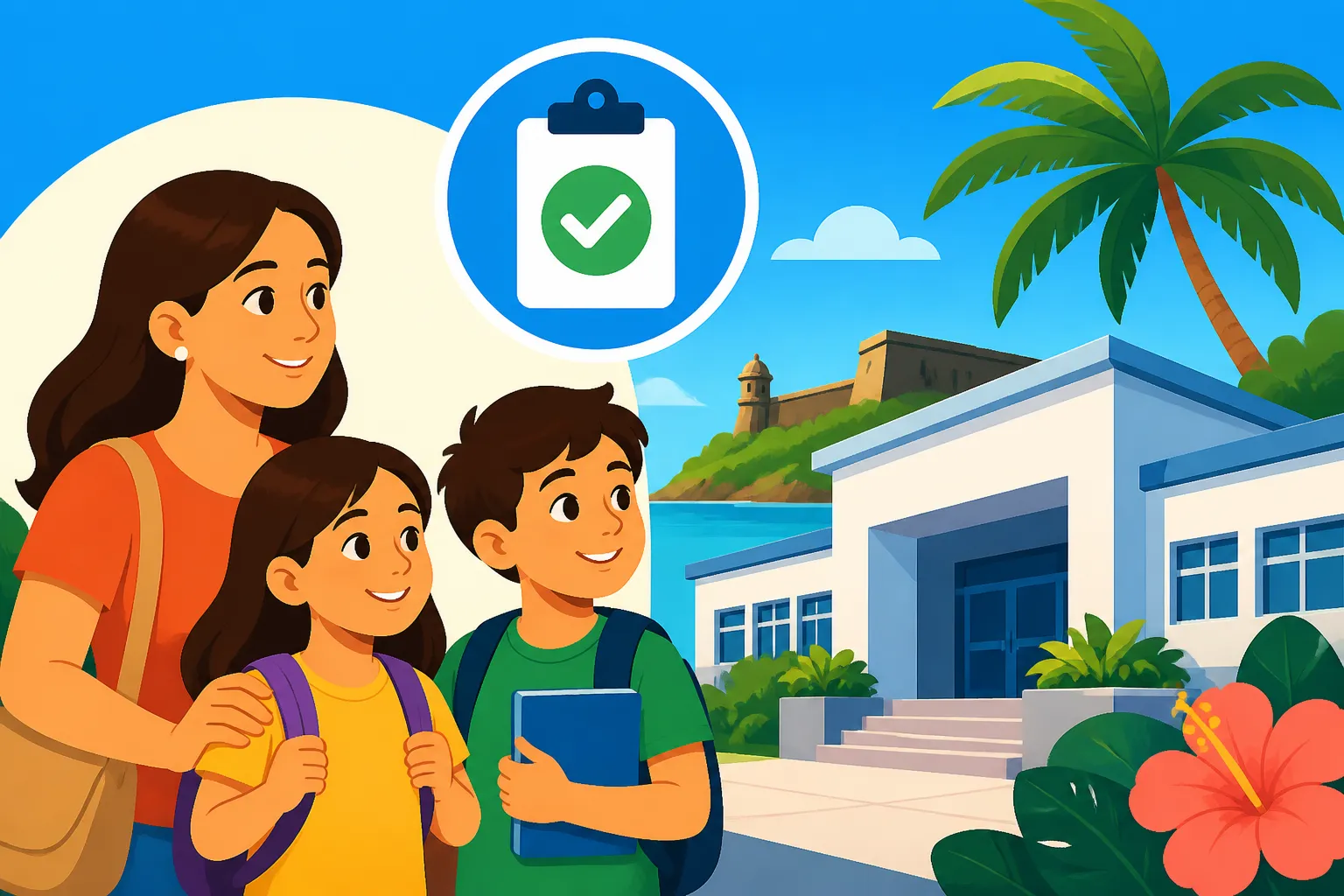
The enrollment process for public schools typically involves registering at the local school corresponding to your bona fide residency in Puerto Rico. You'll need to physically go to the school with a comprehensive stack of documents. We’re talking birth certificates, up-to-date immunization records (the infamous Formulario Verde or "Yellow Card"), academic transcripts from previous schools, and crucially, solid proof of your local residency. Think utility bills, a lease agreement, or a property deed in your name. For a comprehensive overview of the public system, you might find "Understanding the School System Public, Private, Charter in Puerto Rico" particularly useful.
A word to the wise: the public school system can be incredibly under-resourced in many areas, and while teachers are dedicated, class sizes can be large, and facilities may not always be what you're used to. The enrollment periods are usually set in late spring and summer for the upcoming academic year, but there are provisions for mid-year transfers. However, expecting a seamless "right away" enrollment during the school year can be challenging. You might experience delays due to school capacity, missing documents (or perceived missing documents), or simply the time it takes for administrative staff to process new student information. Don't be surprised if you need to follow up multiple times, and always, always be polite and patient. A little por favor and gracias go a long way.
Private School Enrollment: A (Potentially) Smoother Path
For many expat families, private schools offer a more familiar and often smoother enrollment experience, primarily due to their typically better resources and, importantly, more robust bilingual programs. Institutions like Saint John's School in Condado, Baldwin School in Guaynabo, and Commonwealth-Parkville School (CPS) in Guaynabo are popular choices, known for their rigorous curricula and often having a significant percentage of their instruction in English.
The private school enrollment process tends to be more structured. You'll usually start with an application form, which often comes with a non-refundable application fee. Following that, your child might need to take entrance exams, undergo interviews, and provide academic records from their previous schools. Unlike public schools, private schools often have specific enrollment periods that can run much earlier in the academic year, sometimes even a year in advance for highly sought-after spots. If you're moving mid-year, you'll need to check if they have any available openings, which can be scarce.
While the administrative process can still involve a fair amount of paperwork, private schools generally have more dedicated admissions staff who are accustomed to working with expat families and international transfers. They might be more proactive in guiding you through the required documentation and answering your questions. However, this convenience comes at a cost; private school tuition in Puerto Rico can be substantial. For families interested in the financial aspects and a comparison of options, our guide on "Are Private Schools Better Than Public Schools in Puerto Rico?" offers further insights.
Essential Documentation: Get Your Papers in Order!
This is where the rubber meets the road. Without the correct documents, your children absolutely cannot attend school. It’s a non-negotiable step that demands meticulous attention to detail.
The Paper Trail: What You Absolutely Need
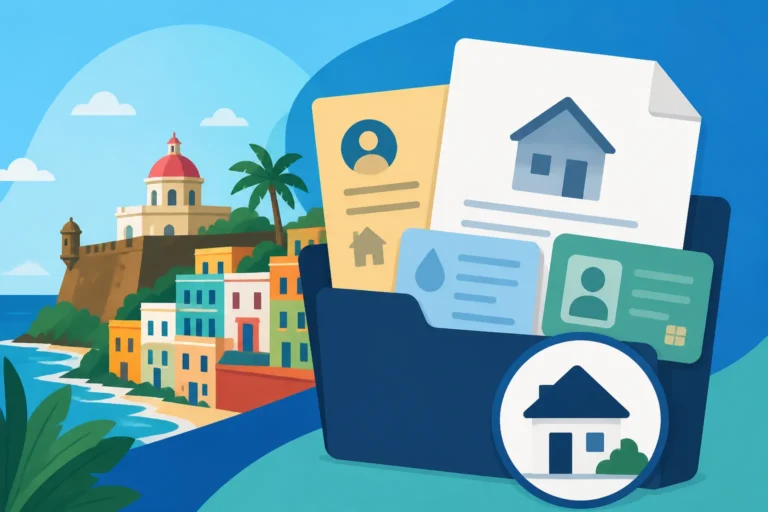
Prepare for a significant paper trail. Here’s a detailed list of what you’ll likely need, and please, for your sanity, bring originals and multiple photocopies of everything. They often want to see the original but keep a copy.
- Official Birth Certificate: This is fundamental. Make sure it's an original or certified copy.
- Up-to-Date Immunization Records (Formulario Verde/Yellow Card): This is probably the most critical document beyond their birth certificate. Puerto Rico has specific immunization requirements, and you'll need to translate your mainland records onto the Puerto Rico Department of Health's official "Formulario Verde." This usually needs to be done by a local pediatrician or health clinic. This can take a few days to arrange, so factor that into your "right away" timeline. You can learn more about this in our guide on "Understanding Childhood Vaccination Requirements in Puerto Rico".
- Academic Transcripts/Records from Previous Schools: Official records detailing your child's grades, courses, and attendance are crucial. For younger children, a simple letter confirming their enrollment and grade level from their previous school might suffice. If coming from an international school that isn't U.S.-accredited, you might need to get these translated and potentially evaluated, though this is less common for U.S. mainland transfers.
- Proof of Residency: This is paramount. Schools need to verify that you live within their district (for public schools) or generally on the island. Acceptable documents include:
- A utility bill (LUMA for electricity, AAA for water) in your name. Setting these up is a whole other adventure, but essential for proof of address. Our guide to "The Newcomer's Guide to Setting Up Utilities LUMA/AAA in Puerto Rico" can help.
- A signed lease agreement or property deed.
- A government-issued ID with your Puerto Rico address.
- Parent/Guardian Identification: Your valid photo ID (e.g., driver's license, passport).
- Social Security Card (for the child, if applicable): While not always strictly required for enrollment, it's good to have on hand for administrative purposes.
It’s often easier to gather these documents before you even start packing your boxes. Many expat families use international moving services like Sirelo to help streamline their logistics, including getting essential documents for school enrollment ready and securely transported. They understand the nuances of cross-territory moves.
Overcoming Language Barriers in School Records
If your child is coming from a school system where English or Spanish wasn't the primary language of instruction for their official documents, you will need certified translations. While Puerto Rico is a bilingual island, official government and educational documents are generally in Spanish. Most schools will accept English transcripts, but having key documents like birth certificates and immunization records officially translated to Spanish can expedite the process and prevent unnecessary delays. Always check with the specific school beforehand to confirm their exact requirements.
This can be a surprising hiccup for many. Even coming from the U.S. mainland, if your child's old school uses terminology that isn't standard, it might lead to questions. Just be prepared to explain or provide additional context. For specific details on getting your children into the school system, take a look at "How to Enroll Your Child in a Puerto Rico School".
Beyond Enrollment: Integrating Your Child into Puerto Rico's Education System
Getting enrolled is just the first step. The real journey begins with helping your child adapt to a new educational environment, a new language (potentially), and a new culture.
Language Adaptation and Support
For children accustomed to an English-only environment, the language barrier in public schools can be significant. Even in bilingual private schools, the Spanish immersion aspect is strong. Younger children often adapt quickly, soaking up Spanish like sponges. Older children, however, might face a steeper learning curve, which can lead to frustration and academic challenges initially.
Unfortunately, formal English as a Second Language (ESL) programs, particularly in public schools, might not be as robust or as widely available as you'd find on the mainland. Many schools simply don't have the resources for dedicated, structured ESL support. This often means that learning Spanish is largely through immersion, which, while effective, can be overwhelming. Consider supplementary Spanish lessons outside of school to give your child a head start or additional support. There are local tutors available, and some online programs cater specifically to children learning Spanish.
Cultural Differences and Social Integration
School culture in Puerto Rico can also differ. Parental involvement, while valued, might be expressed differently. Communication from schools can sometimes be less frequent or less detailed than what you're accustomed to. Building relationships with teachers and other parents, even if it requires a little effort and practicing your Spanish, will be invaluable for your child’s social integration.
After-school activities and sports are great avenues for making friends and feeling at home. Encourage your children to participate, even if they initially feel shy due to language barriers. The warmth and openness of Puerto Rican children and families often shine through, and these shared experiences can quickly break down barriers. Remember that the transition affects your kids too, and it’s a big part of the overall experience of "The Complete Guide to Moving to Puerto Rico: Your First 90 Days (2027)".
Financial Considerations for Schooling in Puerto Rico
Money is always a factor, and education costs are no exception. Understanding these expenses will help you budget and plan for your children's schooling.
Costs for Public vs. Private Education
While public education is technically "free," there are always associated costs. You'll need to budget for uniforms (many public schools require them), school supplies, textbooks (sometimes), field trips, and transportation. These can add up.
Private schools, as mentioned, come with significant tuition fees. These can range from a few thousand dollars to well over $15,000-$20,000 per year, per child, depending on the school's reputation, grade level, and programs offered. Beyond tuition, expect additional fees for application, enrollment, technology, extracurricular activities, uniforms, and books. It’s crucial to get a full breakdown of all costs upfront when considering private options. You can generally learn more about all aspects of schooling in our "Schools and Education in Puerto Rico: A Complete Guide for Families" pillar article.
Health Coverage and School Requirements
While not a direct enrollment cost, having robust health coverage for your children is a non-negotiable part of their schooling in Puerto Rico. Schools need to know your child is covered, and having that up-to-date Formulario Verde is a testament to their health status. Beyond that, accidents happen, and kids get sick. You’ll want peace of mind knowing they can access medical care without undue financial stress.
If you’re relocating from the mainland, your previous insurance might not cover you adequately here. For families seeking comprehensive international health insurance, especially if you foresee needing care both on the island and potentially abroad, a provider like Cigna Global could be a good fit, offering flexible plans that cater to expat needs. Otherwise, you’ll need to explore local plans. Understanding the nuances of healthcare costs and insurance in Puerto Rico is essential for any newcomer. We’ve covered these topics extensively in our resources like "The Cost of Healthcare in Puerto Rico: A Complete Breakdown for Newcomers (2026)" and "How to Get Health Insurance When You Move to Puerto Rico". Remember to familiarize yourself with "Understanding Co-Pays, Deductibles and Premiums in Puerto Rico" to avoid surprises.
Public vs. Private School Enrollment at a Glance
| Feature | Public School | Private School |
|---|---|---|
| Primary Language | Primarily Spanish (English as a second language) | Often bilingual (English & Spanish), some English-dominant |
| Tuition Cost | Free (but expect fees for uniforms, supplies, trips) | Significant tuition fees (can range from $5,000 – $20,000+ annually) |
| Enrollment Period | Late spring/summer for fall, mid-year possible but complex | Varies widely, often earlier (fall/winter for next academic year), limited mid-year |
| Required Documents | Birth certificate, Formulario Verde, academic records, proof of residency, parent ID | Birth certificate, Formulario Verde, academic records, proof of residency, parent ID, application, entrance exam scores |
| Process | In-person at local school, often bureaucratic, slower | Application, entrance exams, interviews, more streamlined, dedicated admissions staff |
| Resources/Facilities | Varies greatly, often limited | Generally better funded, more resources and facilities |
| Bilingual Support | Limited formal ESL programs | Often robust bilingual programs and support |
| Curriculum | Governed by PR Department of Education | Can follow local or international curricula (e.g., U.S. standards, IB) |
Final Thoughts: Prepare, Be Patient, and Embrace the Journey
So, can your children attend school in Puerto Rico right away? Yes, with an asterisk. "Right away" means as soon as you are prepared, have all your ducks (and documents) in a row, and are ready for the unique pace of the island's administrative systems. It's a process that demands preparation, patience, and a good sense of humor.
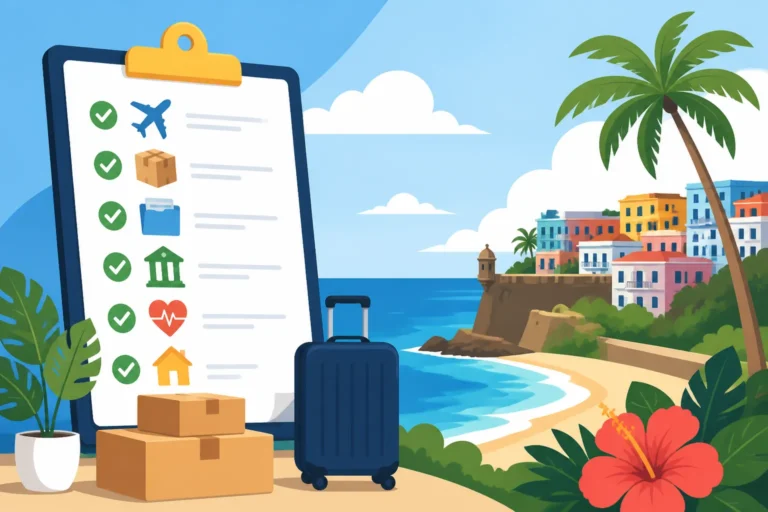
Start gathering your documents well in advance. Prioritize getting that Formulario Verde updated. Research both public and private options in your desired area, understanding the language and financial implications of each. And most importantly, prepare your children for the exciting, sometimes challenging, but ultimately enriching experience of going to school in beautiful Puerto Rico. It’s all part of the grand adventure of living here!
Disclaimer
The information provided in this guide is intended for general informational purposes only and does not constitute legal, financial, or educational advice. While we strive to provide accurate and up-to-date information, regulations and procedures in Puerto Rico can change without notice. It is highly recommended to consult with relevant local authorities, school administrations, and professionals for personalized advice regarding your specific situation and children's enrollment. We do not assume any liability for actions taken based on the information contained herein.