Are Private Schools Better Than Public Schools in Puerto Rico?
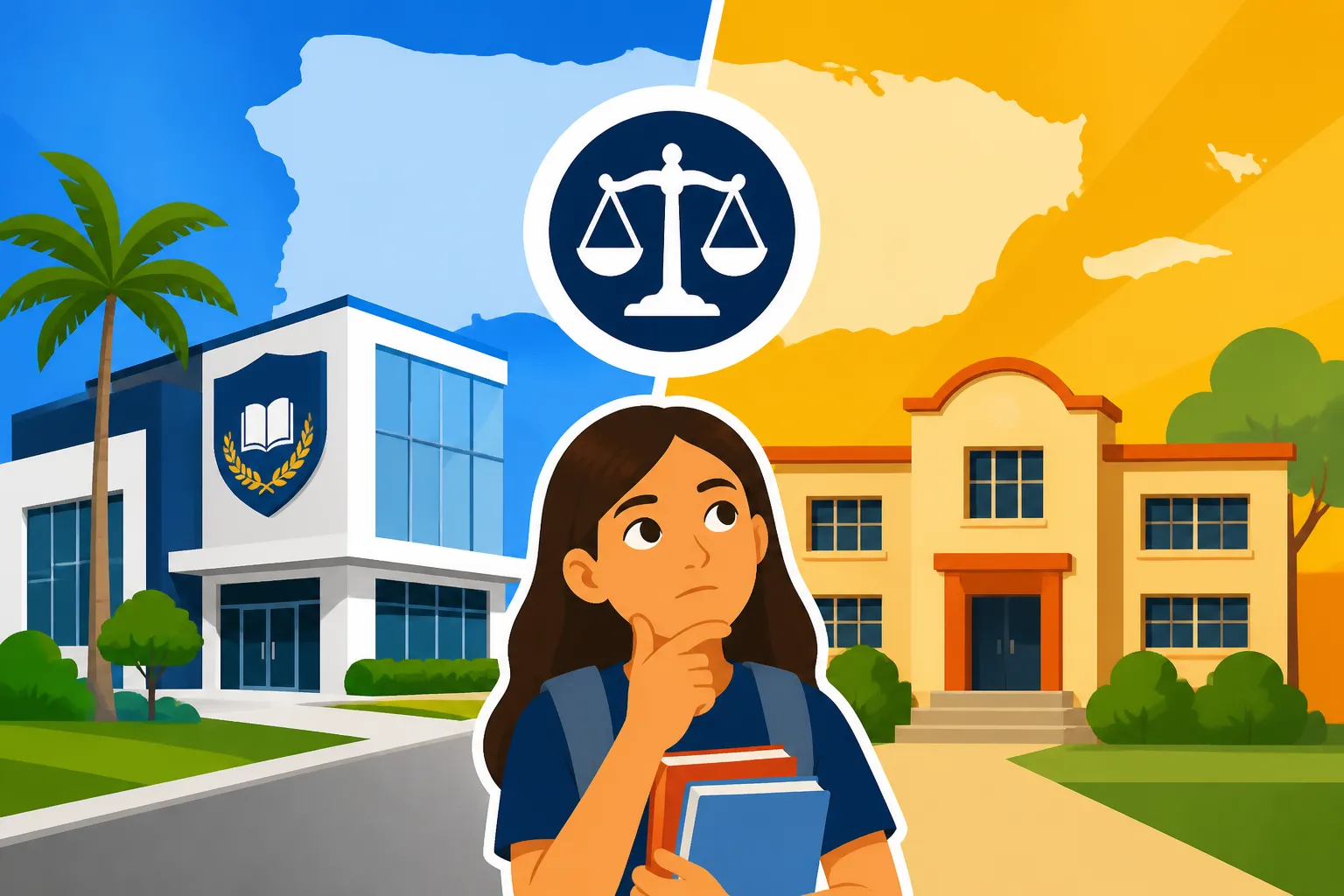
Okay, let's talk schools. Expat parents in Puerto Rico often face the constant questions and anxieties around education. You've landed in a beautiful place, but navigating the school system here, whether public or private, comes with its own unique set of challenges and considerations. This guide isn't here to tell you one is definitively "better" than the other – that's a deeply personal decision – but rather to peel back the layers and give you the real lowdown on what to expect from both, so you can make the best choice for your children.
Understanding the Public School System in Puerto Rico
When you first start looking into schools in Puerto Rico, the public system might seem like the obvious choice for many, especially those who appreciate the idea of a free, community-based education. But before you jump in, it’s crucial to understand the reality on the ground. The public school system here, overseen by the Puerto Rico Department of Education (Departamento de Educación de Puerto Rico, or DEPPR), serves the vast majority of local students and is a vibrant, if sometimes struggling, part of the island's infrastructure.
The Curriculum and Language Landscape
The curriculum in public schools generally adheres to the standards set by the DEPPR, which, for subjects like math, science, and history, align with many of the broader educational goals you'd find on the mainland, though with a distinct Puerto Rican cultural and historical focus. However, the most significant difference, and often the biggest hurdle for expat families, is the language of instruction. Public schools are overwhelmingly taught in Spanish.
For some families, this is precisely what they're looking for – full immersion into the Spanish language and Puerto Rican culture. It's an incredible opportunity for your children to become truly bilingual and deeply integrated into their new home. Imagine your child coming home, excitedly telling you about a traditional bomba y plena performance at school or explaining a local historical event with passion. These are the rich cultural experiences the public system offers. However, for children who arrive with little to no Spanish, the transition can be incredibly tough. While some schools might have a few English-speaking teachers, or even dedicated bilingual programs, these are not universal, and the default assumption is that students will operate in Spanish from day one. It's a sink-or-swim situation for many, and while resilient kids often rise to the challenge, it's a significant stressor on both children and parents.
Facilities, Resources, and Community Connection
The facilities and resources available in public schools vary wildly across the island. In some municipalities, particularly those with strong local government support or recent federal funding, you might find schools with relatively modern amenities. But in many areas, particularly outside of the larger metropolitan hubs like San Juan, Caguas, or Ponce, schools can be quite old, and infrastructure issues are common. We're talking about things like inconsistent air conditioning, older textbooks, or limited access to technology. This isn't to say that dedicated teachers aren't making magic happen with what they have – they absolutely are – but it’s a reality check for parents accustomed to well-funded public schools stateside.
One of the beautiful aspects of the public system, though, is the deep community connection. These schools are often the heart of their neighborhoods, reflecting the local culture and fostering strong bonds among students and families. It’s a truly authentic Puerto Rican experience. You'll find parents and community members actively involved in school events, fundraising, and supporting the children. If you're looking for your family to truly integrate and understand daily life here, the public school route can provide that in spades. It’s not just about academics; it's about becoming part of the barrio. However, it's important to be prepared for the administrative hurdles that sometimes come with the system. Getting information, understanding schedules, or even just filling out enrollment forms can often require a good grasp of Spanish and a lot of patience. This is where leaning on local friends or colleagues, or even using a translation app, becomes essential. When I first moved, I found myself constantly needing to clarify things, and having my phone with an app like Airalo for consistent data coverage was a lifesaver for those quick translation moments.
Exploring Private School Options and Their Advantages
For many expat families, private schools in Puerto Rico often feel like the path of least resistance, especially if English is their primary language. These institutions typically offer a more familiar educational experience for those coming from the mainland U.S. or other international systems, bridging the cultural and linguistic gap that public schools might present.
Diverse Curricula and Bilingual Environments
Puerto Rico boasts a wide array of private schools, each with its own philosophy, curriculum, and target demographic. You’ll find everything from religiously affiliated schools (Catholic, Evangelical, etc.) that integrate faith into their daily lessons, to secular American-style academies, and even some schools that offer the International Baccalaureate (IB) program. Many of these schools operate on a U.S. academic calendar and follow curricula closely aligned with Common Core or other American state standards, making transitions easier if your child might eventually return to the mainland.
Crucially, a significant number of private schools are either fully bilingual or predominantly English-speaking. For example, institutions like St. John's School in Condado, Baldwin School of Puerto Rico in Guaynabo, or TASIS Dorado in Dorado are well-known for their English-dominant instruction, often with robust Spanish language programs integrated into the curriculum. This is a huge relief for parents whose children are not yet fluent in Spanish, allowing them to continue their education in a familiar linguistic environment while gradually picking up Spanish. My friends who enrolled their kids in these schools often remark how quickly their children adapted, largely because the language barrier wasn't an immediate academic obstacle. It allowed for a smoother integration period, letting them focus on making new friends and adjusting to island life. These schools often have a diverse student body, including a mix of local Puerto Ricans, other expats, and children of Act 20/22 (now Act 60) residents, creating a multicultural classroom experience.
Enhanced Facilities, Resources, and Stability
Generally speaking, private schools tend to have more modern facilities and a wider range of resources compared to many public schools. This can include updated technology, science labs, art studios, sports complexes, and extensive libraries. They often boast smaller class sizes, which can lead to more individualized attention from teachers – a huge plus for any student, but especially for those adjusting to a new environment. Many also offer a rich array of extracurricular activities, from competitive sports and debate clubs to theater and music programs, providing a holistic educational experience that goes beyond the classroom.
Another significant advantage of private schools is their relative stability. While public schools can sometimes be affected by budget cuts, political changes, or even teacher strikes, private institutions tend to maintain a more consistent environment. This predictability can be a major draw for expat families seeking continuity in their children's education. Of course, this all comes at a cost. Tuition fees for private schools in Puerto Rico can range from moderate to quite substantial, often comparable to private school costs in mid-to-high cost-of-living areas on the mainland. And it’s not just tuition; you also need to factor in uniforms, books, transportation, application fees, and extracurricular activity costs. It's worth exploring guides like How Much Are Private School Fees in San Juan? to get a realistic picture of these expenses. You should budget accordingly, as these costs can quickly add up.
Key Considerations for Choosing a School in Puerto Rico
Choosing the right school for your child in Puerto Rico is a deeply personal decision, and there’s no one-size-fits-all answer. Beyond the fundamental differences between public and private, there are several practical and emotional factors that every expat family should weigh carefully.
Language Immersion vs. Familiarity
This is often the primary deciding factor. Are you committed to full Spanish immersion for your child, even if it means a potentially challenging initial period? Or do you prioritize a familiar English-speaking environment to ease their transition, with Spanish learned as a second language? If your child is younger, say elementary school age, they often adapt to full immersion much faster than a middle or high schooler might. Teenagers, especially, can struggle with the academic demands of a new language while also navigating adolescence in a new country.
Consider the family's long-term goals. Do you plan to stay in Puerto Rico indefinitely, or is this a temporary relocation? If you anticipate moving back to the mainland U.S. within a few years, an American-style private school curriculum might offer a smoother re-entry into the U.S. system. Conversely, if you're planting roots here, deep immersion in the public system could truly enrich your family's experience. Don't underestimate the emotional toll a language barrier can take on a child, even a resilient one. It’s not just about learning words; it’s about participating, understanding jokes, making friends, and feeling competent.
Cost, Location, and Logistics
The financial aspect is a huge consideration. Public schools are free, but private schools come with significant tuition and other fees, which can vary widely. Make sure you understand the total annual cost, not just the base tuition. Our post, Understanding the Cost of Private Schools in Puerto Rico, dives into this in more detail.
Location also plays a critical role. Puerto Rico traffic can be legendary, especially during peak hours in metropolitan areas. A "short" drive can quickly turn into an hour-long ordeal. Living close to your child's school can drastically improve quality of life for everyone. This is where researching neighborhoods goes hand-in-hand with school selection. Our guide on How to Find a Home Near Good Schools in Puerto Rico? could be incredibly useful here. Some private schools offer bus services, but public school transportation is generally not provided, meaning you’ll be on pickup and drop-off duty. Also, think about after-school care. Are there options available, either through the school or independently, if both parents work?
Curriculum, Accreditation, and Special Needs Support
When evaluating private schools, ask about their accreditation. Many reputable private schools in Puerto Rico are accredited by U.S. regional accreditation bodies like the Middle States Association of Colleges and Schools (MSA-CESS), which can be important for college applications or if you move again. Understand their curriculum in detail. Does it align with your values and academic expectations? For public schools, while the DEPPR sets the standards, specific schools might have specialized programs (e.g., magnet schools focusing on arts or sciences).
For children with special educational needs, this is an area where you need to do extra diligence. Public schools are legally obligated to provide services, but the quality and availability can vary. Private schools, while sometimes having more resources, are not always mandated to provide the same level of support, and their offerings can differ significantly. It's essential to inquire specifically about their resources, methodology, and staff experience regarding any particular learning differences or disabilities your child may have. Don't just ask if they "support" special needs; ask for concrete examples and meet the support staff.
Cultural Integration and Extracurriculars
Consider the level of cultural immersion you desire. Public schools offer an undeniable deep dive into Puerto Rican culture and daily life. Your children will interact daily with local customs, traditions, and the Spanish language in its most authentic form. This can be an incredibly enriching experience. Private schools often have a more international or Americanized environment, which might feel more familiar but could mean less direct exposure to certain aspects of local culture.
Also, look at extracurricular activities. Do they offer sports, arts, clubs, or community service opportunities that align with your child’s interests? These activities are vital for social development and for building a sense of belonging in a new place. For example, some schools have strong athletic programs, while others might excel in robotics or drama. Consider what truly matters for your child's holistic development.
| Feature | Public Schools (Puerto Rico) | Private Schools (Puerto Rico) |
|---|---|---|
| Cost | Free; minimal fees for supplies/trips | Significant tuition, fees, uniforms, books, transportation |
| Language | Primarily Spanish instruction; limited bilingual programs | Often fully bilingual (English/Spanish) or English-dominant |
| Curriculum | Puerto Rico Department of Education standards | Varies: US Common Core, IB, religious curricula, local PR standards |
| Facilities/Resources | Varies widely; some excellent, many can be basic/older | Generally well-maintained, modern tech, broader facilities |
| Class Size | Often larger; can vary by region | Generally smaller, more individualized attention |
| Accreditation | Puerto Rico Department of Education | Many U.S. regional accreditations (e.g., Middle States), local |
| Cultural Immersion | Very high; deeply integrated into local community life | Varies; some aim for local immersion, others more international/familiar |
| Stability | Can be affected by public sector issues (strikes, budget cuts) | Generally more stable; less affected by public policy changes |
| Extracurriculars | Varies; often community-driven | Wide range of sports, arts, clubs, academic competitions |
| Special Needs | Legally mandated, but quality/availability can vary | Varies greatly by school; inquire directly and in detail |
Making the Right Decision for Your Family
Ultimately, the choice between public and private education in Puerto Rico hinges on what you prioritize for your family’s unique situation. There’s no universal "better" option; there's only the right option for your child.
If your family is eager for deep cultural immersion, your children are young enough to adapt quickly to a new language, and financial considerations are paramount, the public school system might be an incredible, enriching experience. It's a chance to truly become part of the local fabric, build strong community ties, and develop genuine bilingualism. Be prepared for potential bureaucratic challenges, and understand that resources might not always match what you're used to on the mainland. However, the dedication of many public school teachers and the warmth of the community can often outweigh these hurdles. Remember that learning Spanish can also be vital for other aspects of life, including finding work, so considering how your children's education can prepare them for the Puerto Rico Job Market for Newcomers is also a good idea.
On the other hand, if a familiar curriculum, English-language instruction, modern facilities, and a wider range of extracurricular activities are higher on your list, and you have the financial means, a private school will likely offer a smoother transition. These schools often provide a sense of stability and predictability that can be very comforting during an international move. They can also provide excellent preparation for higher education, including opportunities to Apply to the University of Puerto Rico as a Student, or even universities on the mainland. However, be mindful of potentially less organic cultural integration and ensure you're choosing a school that still values local culture and community connection, if that's important to you.
My advice as someone who's been through it: visit schools. Talk to other expat parents. Join local Facebook groups for expats in Puerto Rico and ask questions. You'll get raw, honest feedback there. When you're ready to start the enrollment process, especially for public schools, having all your child's Childhood Vaccination Requirements in Puerto Rico in order is critical. For any kind of school, the documentation can be a bit of a dance, so getting things like birth certificates and previous school records translated and apostilled (if necessary) ahead of time will save you headaches. Consider that How to Enroll Your Child in a Puerto Rico School is an administrative process that sometimes requires persistence. And as you embark on this journey, remember that adapting to a new country is a marathon, not a sprint. Your kids are likely to thrive wherever they feel loved, supported, and challenged, whether that's in a bustling public classroom or a more intimate private setting. It’s all about finding the best fit for their unique needs and your family’s overall goals on this beautiful island.
Disclaimer
Please remember that I am an expat blogger sharing personal experiences and general information. While I strive for accuracy and timeliness, the educational system in Puerto Rico, including policies, costs, and availability of services, can change. Always verify current information with official government sources (like the Puerto Rico Department of Education for public schools) and individual private institutions. This content is not a substitute for professional advice.