What Documents Do I Need to Prove Residency in Puerto Rico?
Moving to Puerto Rico, you quickly realize that while it's part of the U.S., proving you actually live here is a whole different ballgame than just packing your bags. The administrative hurdles can feel like an endless loop of "show me more paperwork!" This guide is here to cut through that noise, helping you understand precisely what documents you need to confidently prove your bona fide residency in Puerto Rico, both for federal tax purposes and for accessing vital local services.
Why Proving Residency is Absolutely Critical in Puerto Rico
Let's be honest, "residency" can feel like a fuzzy concept until you need to prove it. In Puerto Rico, establishing and documenting your residency isn't just a formality; it's the foundation for nearly every aspect of your new life here. From tax benefits to healthcare, and even just getting your internet connected, a clear paper trail is your best friend. Without solid proof, you could face unexpected tax liabilities, struggle to access local services, or even run into issues when trying to get a local driver's license.
Federal Tax Implications: The Bona Fide Resident Status
This is often the big one that brings many people to Puerto Rico in the first place: the potential tax advantages for bona fide residents. The IRS has specific criteria you must meet to be considered a bona fide resident, and it's not enough to just say you live here. You have to prove it, comprehensively. If you don't meet these stringent requirements, you could find yourself still on the hook for federal income taxes on your Puerto Rico-sourced income, entirely defeating the purpose of your move. The IRS looks at three main tests: the Presence Test, the Tax Home Test, and the Closer Connection Test. Each of these requires a collection of documents to back up your claim. This is why understanding Bona Fide Residency in Puerto Rico: The Definitive Tax Guide (2027) is so vital.
Accessing Local Services and Establishing Your Life
Beyond federal taxes, proving residency is your golden ticket to truly integrating into island life. Imagine trying to get a Puerto Rico driver's license without proof of address, or enrolling your kids in school. Even something as basic as setting up utilities or opening a local bank account can become a bureaucratic nightmare if you can't show you're a legitimate resident. The local agencies, known for their love of paperwork, will require concrete documentation that ties you directly to a physical address here. It's about more than just paperwork; it’s about establishing your roots and becoming a part of the community, which starts with being recognized as a resident.
Core Documents for Establishing Bona Fide Residency: The IRS Perspective
When the IRS comes calling, or rather, when you're preparing to file your taxes and claim bona fide resident status, you need to have your ducks in a row. These documents are your primary evidence, directly addressing the core requirements of the Presence, Tax Home, and Closer Connection tests.
Proof of Physical Presence: The 183-Day Rule
The Presence Test is probably the most straightforward: you need to be physically present in Puerto Rico for at least 183 days during the tax year. This means your travel records are paramount.
- Travel Records (Flights, Ferry Tickets): Keep meticulous records of all your entries and exits from Puerto Rico. Your airline tickets, ferry manifests, even passport stamps (though less common for US citizens coming from the mainland) are crucial. This isn't just about counting days; it's about proving you were here more often than not. I've heard stories of people trying to reconstruct these records months later, and it's a headache you absolutely want to avoid.
- Utility Bills (LUMA, AAA, Internet): Bills from LUMA (electricity), AAA (water), and your internet provider (like Liberty or Aeronet) are tangible proof that you maintain a home and are consuming services here. These bills should be in your name and reflect a consistent usage pattern. When I first moved here, getting The Newcomer's Guide to Setting Up Utilities (LUMA/AAA) in Puerto Rico sorted was one of the first things I did, not just for comfort, but for this very reason.
- Rental Agreements or Property Deeds: A signed lease agreement for your long-term rental or the deed to your purchased property is fundamental. It establishes your primary dwelling. Make sure it's a long-term lease, not a short-term vacation rental. If you're renting, refer to The Complete Guide to Renting an Apartment in Puerto Rico (2027) for details on what to look for in a lease.
Establishing Your Tax Home
Your "tax home" is essentially the general area of your principal place of business, employment, or post of duty, regardless of where you maintain your family home. If you have no regular or principal place of business because of the nature of your work, your tax home is where you regularly live. For bona fide residency in Puerto Rico, your tax home must be in Puerto Rico.
- Employment Contracts or Business Registration: If you're employed on the island, your employment contract, pay stubs, and even a letter from your employer confirming your physical work location are key. For the self-employed, your business registration documents with the Puerto Rico Department of State and your "Patente Municipal" (municipal license) prove your business operations are based here.
- Bank Account Statements from Puerto Rico Banks: While you might keep a mainland account, having a primary checking and savings account with a local bank like Banco Popular or Oriental Bank is strong evidence that your financial center of gravity is in Puerto Rico. All your regular transactions, deposits, and bill payments should ideally flow through this local account. You can learn more about this in How to Open a Bank Account at a Puerto Rico Bank as a Newcomer.
- Hacienda Registration Documents: Registering with the Departamento de Hacienda (Puerto Rico's Treasury Department) and obtaining a tax account number is a critical step. This directly links you to the local tax system and confirms your intent to file taxes here. This includes your quarterly estimated tax payments if you're self-employed, or payroll documents if you're an employee. This signals your commitment to the Puerto Rico tax system.
Demonstrating a Closer Connection to Puerto Rico
This is where things get a bit more subjective but are equally important. The Closer Connection Test requires you to prove that you have a stronger connection to Puerto Rico than to any other location. It's about showing that your personal and professional life is centered here.
- Puerto Rico Driver's License or Non-Driver ID: This is a huge one. Switching your driver's license to a Puerto Rico one from CESCO is a clear public declaration of your residency. It shows your intent to remain here and that you're engaging with local government services. Don't underestimate the weight of this document; it's often requested as primary proof of ID and address. Check out The Guide to Getting Your Puerto Rico Driver's License and ID (2027) for the steps.
- Voter Registration: Registering to vote in Puerto Rico solidifies your intent to be a permanent part of the community and engage in local civic life.
- Healthcare Records and Insurance Plans: Having a primary care physician in Puerto Rico, medical records from local clinics or hospitals, and enrolling in a Puerto Rico-based health insurance plan (like a private plan or even the government's Vital Plan if eligible) are powerful indicators. For expats, companies like Cigna Global offer plans that are often tailored to international residents, which can still provide important local care. Understanding Health Insurance in Puerto Rico: Plans, Costs and Options Explained (2026) is crucial here.
- Vehicle Registration and Marbete: If you own a car, registering it in Puerto Rico and obtaining your annual "marbete" (vehicle sticker) ties a significant asset to your new home.
- Social and Community Ties: While not official documents in themselves, evidence of social memberships (gym, clubs), volunteer work, school enrollment for children, or even letters from local friends confirming your presence can provide supporting context to the IRS, painting a picture of a life truly rooted in Puerto Rico.
Supporting Documents for Local Services and "Closer Connection"
Beyond the IRS's direct concerns, various local agencies and even private businesses will ask for proof of residency. These documents are generally used to confirm your local address and connection to the island.
Residential Proof for Everyday Life
These are the practical pieces of paper you'll constantly be asked for. Keep copies readily available, both physical and digital.
- Lease Agreement or Property Title: Again, your rental contract or property deed is the primary document for establishing your home address. It’s what you'll show to utilities, banks, and the CESCO when you're getting your driver's license.
- Utility Bills (Recent): A recent LUMA, AAA, or internet bill with your name and Puerto Rico address is standard proof of residency for almost any service. Many places will ask for a bill no older than 30-60 days.
- Bank Statements (Local): Your local bank statements, again, showing your Puerto Rico address, are frequently accepted as proof of residence, especially by other financial institutions or government offices.
Financial and Administrative Documentation
These documents reinforce your financial and administrative ties to Puerto Rico.
- Local Bank Account Statements: As mentioned, having your primary banking activity here is vital. It shows your financial center is indeed Puerto Rico.
- Puerto Rico Tax Filings (Planilla): Your annual "Planilla" (Puerto Rico income tax return) filed with Hacienda is irrefutable proof of your tax residency. Even if you don't owe taxes, filing is important for documentation. This is detailed in Filing Your Puerto Rico Tax Return with Hacienda: The Complete Walkthrough (2027).
- Mail Forwarding Cancellation/Change of Address: Canceling mail forwarding from your previous mainland address to Puerto Rico and updating your address with federal agencies (like the USPS, Social Security Administration, and IRS) shows a deliberate move, not just an extended vacation. Many movers, like Sirelo, can help coordinate the forwarding or shipping of your belongings, but it's your responsibility to update your official addresses.
- Social Security Administration Address Update: Informing the Social Security Administration of your new Puerto Rico address is another important administrative step that ties your federal benefits to the island, even if it doesn't change your eligibility for Understanding Social Security, Medicare and Retirement in Puerto Rico.
Personal and Professional Ties
These documents demonstrate the depth of your integration into the island's fabric.
- Children's School Enrollment Records: If you have children, their enrollment in a Puerto Rico school is powerful evidence of your family's settled life on the island.
- Professional Licenses (Transferred or Obtained Locally): If your profession requires a license (e.g., medical, legal, real estate), transferring your existing one or obtaining a new one in Puerto Rico is a strong indicator of intent to establish a long-term professional life here.
- Local Memberships and Affiliations: While less formal, proof of membership in local clubs, associations, or even a local gym can support your claim of a "closer connection" to the community here.
Putting It All Together: Maintaining Your Residency Proof
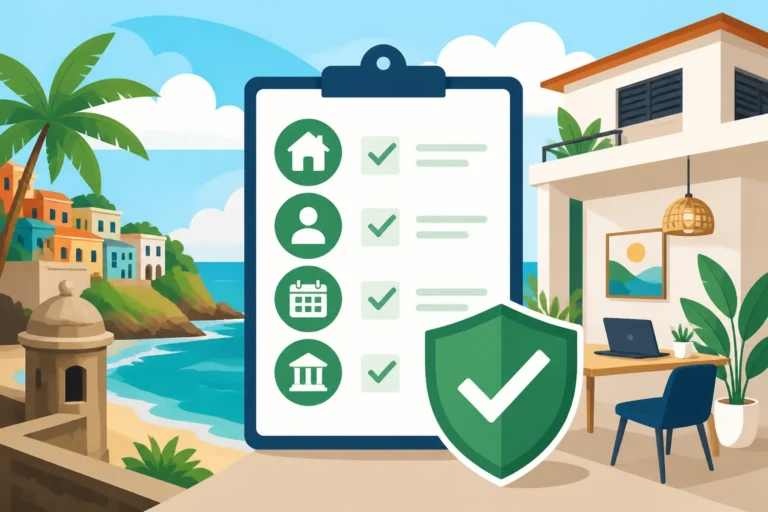
Gathering these documents isn't a one-time event; it's an ongoing process. You need to be diligent in collecting and organizing them year after year, especially if you want to maintain your bona fide resident status for tax purposes.
Creating a Centralized Documentation System
I cannot stress this enough: organize everything. Whether it's a dedicated physical binder or a cloud-based digital folder (or both!), create a system for your residency documents.
- Digital Copies: Scan every physical document and save it in a well-organized folder structure on your computer and a cloud service (e.g., Google Drive, Dropbox). Label files clearly with dates (e.g., "LUMA_Bill_2026-01.pdf").
- Physical Binder: Have a physical binder with tabs for each category (travel, utilities, banking, CESCO, etc.). Some agencies here still prefer physical copies, and it's always good to have backups.
- Regular Review: Set a reminder to review and update your documents quarterly. This ensures you're always prepared if an agency asks for recent proof or if you need to file taxes.
Annual Review and Update of Documents
Life happens, and sometimes things change. Maybe you move apartments, change banks, or your job situation shifts. Ensure your residency documents reflect your current reality.
- Address Updates: Every time your address changes, make sure you update it with all relevant agencies: LUMA, AAA, your bank, CESCO, Hacienda, the IRS, and any other federal or state agencies you deal with.
- New Contracts: If you renew a lease or change employment, make sure to save the new documents immediately.
- Travel Log: If you're frequently traveling off-island, keep a running log of your entries and exits to easily verify your 183 days of presence. This will be invaluable for when you How to Document Your Days in Puerto Rico for the Presence Test.
The Importance of Professional Guidance
Navigating residency, especially the tax implications, can be complex. Don't hesitate to seek professional help.
- Tax Professionals: A CPA or tax attorney specializing in Puerto Rico tax law can be invaluable, especially concerning bona fide residency and Act 60 benefits. They can ensure your documentation meets all federal and local requirements.
- Relocation Specialists: For the broader move, a relocation specialist can guide you through the various administrative steps, from setting up utilities to understanding local nuances. They can help you prepare for The Complete Relocation Checklist for Moving to Puerto Rico (2027).
Key Documents for Proving Puerto Rico Residency
| Document Category | Specific Examples | What it Proves |
|---|---|---|
| Physical Presence | Travel records (flight manifests, ferry tickets) | Confirms you meet the 183-day rule. |
| Residential Ties | Lease agreement, property deed | Establishes your primary dwelling in Puerto Rico. |
| Utility Connections | LUMA, AAA, internet bills | Shows consistent usage of local services at your PR address. |
| Financial Center | Local bank statements, PR tax filings (Planilla) | Indicates your primary financial activities are in Puerto Rico. |
| Local Identification | Puerto Rico Driver's License/ID, voter registration | Demonstrates intent for long-term residency and civic engagement. |
| Healthcare | PR health insurance policy, local medical records | Evidence of establishing local healthcare connections. |
| Professional/Family Ties | Employment contract, school enrollment records | Reinforces your professional and familial ties to the island. |
Ultimately, proving residency in Puerto Rico is about building a compelling narrative, backed by a strong paper trail, that clearly shows you've made this beautiful island your genuine home. Stay organized, be proactive, and don't be afraid to ask for help from those who know the ropes. It might seem daunting at first, but with a systematic approach, you'll navigate these waters successfully.
Disclaimer
The information provided in this guide is for general informational purposes only and does not constitute legal, financial, or tax advice. While we strive to provide accurate and up-to-date information, laws and regulations in Puerto Rico, especially concerning residency and taxation, can change frequently and are subject to individual interpretation by various government agencies. We strongly recommend consulting with qualified legal, tax, and financial professionals who specialize in Puerto Rico residency and tax laws for personalized advice regarding your specific situation.