Moving to Puerto Rico as a Foreign National: Visas and Residency Explained (2027)
Moving to Puerto Rico as a foreign national can feel like stepping into a beautiful, sun-drenched maze. You're trying to build a new life on an island that operates under U.S. federal law but with its own distinct flavor of bureaucracy and local customs. This comprehensive guide will demystify the complex world of visas and residency for non-U.S. citizens seeking to make Puerto Rico their home, offering practical advice and realistic expectations.
Understanding Puerto Rico's Unique Status for Foreign Nationals
Many people, even within the United States, don't quite grasp Puerto Rico's unique political status. It’s an unincorporated territory of the United States, which means while its residents are U.S. citizens, the island isn't a U.S. state. This status has profound implications for foreign nationals, shaping everything from immigration procedures to local governance and daily life. It's not a foreign country, but it's also not exactly like moving to Florida or California.
US Immigration Law vs. Puerto Rico's Specifics
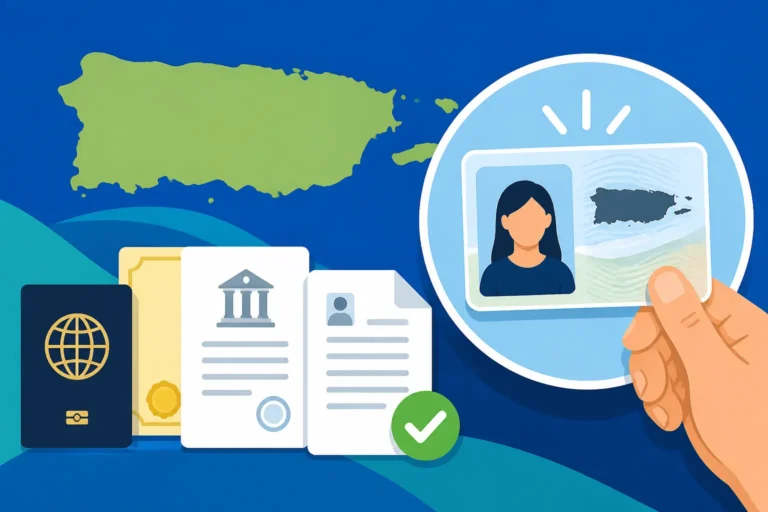
The first and most crucial point to understand is that U.S. immigration laws apply in Puerto Rico just as they do in the mainland United States. There isn't a separate "Puerto Rico visa" that’s distinct from a U.S. visa. If you are a foreign national, meaning you are not a U.S. citizen or a lawful permanent resident (Green Card holder) of the U.S., you will need a valid U.S. visa or other authorized status to enter and reside in Puerto Rico. This often comes as a surprise to newcomers who might think the island has its own independent immigration policy.
However, while federal immigration laws are consistent, the application and practicalities on the ground can feel different. Local agencies and services, from the Department of State to the Department of Labor, operate under Puerto Rico's local laws and regulations. You might find that some processes, while federally mandated, have unique local twists or require specific documents that reflect the island's administrative structure. It's this blend of federal oversight and local autonomy that creates the particular hurdles and frustrations many foreign nationals encounter. For instance, obtaining a local driver's license or setting up utilities like LUMA electricity or AAA water service, while seemingly straightforward, can involve navigating a system that speaks more Spanish than English, and isn't always designed with the nuances of international residency in mind.
Defining "Foreign National" in the Puerto Rico Context
When we talk about "foreign nationals" moving to Puerto Rico, we're referring to individuals who do not hold U.S. citizenship or permanent legal residency (a Green Card). This includes citizens of other countries who might be here on various types of temporary visas – whether for work, study, investment, or family reunification – as well as those who are seeking more permanent forms of residency. It’s important to distinguish this from U.S. citizens or Green Card holders who are moving from the mainland, as their legal pathways are entirely different; they generally have the right to move and reside freely without additional immigration hurdles.
For those who are foreign nationals, your ability to live, work, or study in Puerto Rico is entirely dependent on your U.S. immigration status. Without the appropriate visa, you cannot legally establish long-term residency. This means that if you’re hoping to leverage any local incentives, such as those offered under Act 60, you first need to ensure your underlying immigration status allows you to legally reside in a U.S. territory. Many foreign nationals mistakenly believe that because Puerto Rico is "different" from the mainland, there might be unique, easier avenues for residency. In reality, the legal gateways are strictly U.S. federal ones, requiring meticulous adherence to federal immigration policies before you even begin to think about local integration.
Visa Pathways for Foreign Nationals to Live in Puerto Rico
Since Puerto Rico operates under U.S. immigration law, the pathways for foreign nationals to live here are the same as those for residing anywhere else in the United States. This means you'll need a specific type of U.S. visa that permits long-term stay, typically requiring sponsorship or a substantial investment. The process can be lengthy and complex, often demanding significant documentation and patience. It's not a quick move; it's a planned immigration.
Employment-Based Visas
One of the most common routes for foreign nationals to reside in Puerto Rico long-term is through employment-based visas. These visas, such as the H-1B for specialty occupations, L-1 for intracompany transferees, or O-1 for individuals with extraordinary ability, require sponsorship from a U.S. employer. Finding a company in Puerto Rico willing and able to sponsor a foreign national can be challenging, as the local job market often has its own dynamics and preferences for local talent. You'll need an employer who understands the federal immigration process and is prepared to navigate the significant paperwork and legal fees involved.
For example, if you're a skilled professional, perhaps in the booming pharmaceutical or manufacturing sectors, a company might be willing to sponsor an H-1B visa. This typically involves proving that you have a bachelor's degree or its equivalent in a specialty occupation and that the employer was unable to find a qualified U.S. worker. The annual cap on H-1B visas and the lottery system make this a highly competitive process. Alternatively, if you're transferring within an international company that has a branch in Puerto Rico, an L-1 visa could be an option. Remember, securing such a visa is just the first step; you then need to maintain your employment and comply with all visa terms to remain legally in Puerto Rico.
Family-Based Visas
Another significant pathway involves family reunification. If you have immediate relatives who are U.S. citizens or lawful permanent residents living in Puerto Rico, they may be able to petition for you to immigrate. This includes spouses, parents, and unmarried children under 21. The process can be lengthy, with varying wait times depending on the relationship category and the petitioner's status. For example, spouses of U.S. citizens generally have a faster track than siblings of U.S. citizens.
The emotional aspect of these applications is often underestimated. You're not just filing forms; you're proving a genuine relationship to immigration authorities, which can feel intrusive and stressful. Once approved, you would typically adjust your status if you are already in the U.S. (or Puerto Rico) or go through consular processing at a U.S. embassy or consulate in your home country. This pathway highlights the strong familial ties within the Puerto Rican culture, where family is often the cornerstone of support and integration.
Investor Visas
For those with significant capital, investor visas offer a potential route. The EB-5 Immigrant Investor Program allows foreign nationals to obtain a Green Card by investing in a commercial enterprise in the United States that creates or preserves at least 10 full-time jobs for qualifying U.S. workers. The minimum investment amount is substantial, currently set at $800,000 for investments in targeted employment areas (TEAs) or infrastructure projects, or $1,050,000 elsewhere. While Puerto Rico does offer attractive investment opportunities, including various local tax incentives like some aspects of Act 60 for businesses, the EB-5 program itself is a federal one and doesn't have a specific "Puerto Rico version."
It's crucial to understand that Act 60 incentives, which often get much attention, are not immigration pathways. They are tax decrees designed to attract businesses and individuals who already possess legal U.S. residency status. A foreign national must first secure a U.S. visa (like an EB-5) that allows them to live in a U.S. territory before they can even consider applying for local tax benefits. This distinction is vital, as many mistakenly believe Act 60 offers a direct route to residency for non-U.S. citizens, which it absolutely does not.
Student Visas
If your intention is to pursue higher education, a student visa (F-1) could be your entry point. Puerto Rico has a robust higher education system, including the University of Puerto Rico system and various private institutions. To obtain an F-1 visa, you must first be accepted into a Student and Exchange Visitor Program (SEVP)-approved school in Puerto Rico. Once accepted, the school will issue you a Form I-20, "Certificate of Eligibility for Nonimmigrant Student Status," which is essential for your visa application.
Living as an international student in Puerto Rico can be an enriching experience, offering exposure to both American academic standards and a vibrant Caribbean culture. However, student visas come with strict limitations on employment, typically allowing only on-campus work or specific practical training opportunities. If you plan to work while studying, you must be fully aware of these restrictions to avoid violating your visa terms. Furthermore, maintaining your student status requires consistent enrollment and academic progress. This path is ideal for those genuinely committed to education, with the understanding that it’s a temporary stay unless you transition to another visa category post-graduation.
Establishing Legal Residency and Domicile in Puerto Rico
Once you've secured the appropriate U.S. visa allowing for long-term stay, your journey shifts from simply "being allowed in" to truly "establishing a life" in Puerto Rico. This involves more than just having a valid stamp in your passport; it means building bona fide connections to the island and integrating into its administrative and social fabric. It's about demonstrating intent and actual presence.
The Concept of Domicile
Establishing domicile is a critical legal concept, especially for tax purposes, but also for generally proving your intent to reside in a specific location. Domicile refers to the place where an individual has their true, fixed, permanent home and principal establishment, and to which, whenever absent, they have the intention of returning. For foreign nationals, proving domicile in Puerto Rico means more than just renting an apartment. It involves actions like transferring your driver's license, registering to vote (if eligible), opening local bank accounts at institutions like Banco Popular or Oriental Bank, enrolling children in local schools, and severing ties with previous residences.
This process can be a subtle but powerful demonstration of your commitment to Puerto Rico. Imagine a hypothetical scenario: you have an L-1 visa and a job transfer to a pharmaceutical company in Carolina. To establish domicile, you'll need to do more than just show up for work. You should get a Puerto Rico driver's license, update your mailing address with all official correspondence, and demonstrate that your primary center of life is now on the island. This isn’t just bureaucratic hoops; it’s about creating a clear, legal record that Puerto Rico is your home, not just a temporary stop.
Registering with Local Authorities
Beyond immigration, foreign nationals need to interact with various local authorities to properly establish themselves. This can include obtaining local identification, registering vehicles, and ensuring compliance with local municipal requirements. While your U.S. visa dictates your right to be in Puerto Rico, local registrations affirm your presence and participation in daily life. You'll likely encounter CESCO (Centro de Servicios al Conductor) for driver's licenses and vehicle registration, which can be an exercise in patience and preparedness.
The frustration often stems from the need to present multiple original documents, sometimes including certified translations if your home country's documents are not in English or Spanish. You might also need to register with the local tax authority, Hacienda, if you are employed or operating a business. Even setting up essential services like electricity with LUMA Energy or water with Autoridad de Acueductos y Alcantarillados (AAA) requires a local address and sometimes additional identification beyond your passport and visa. It’s a process that demands persistence and attention to detail, but successfully navigating it is key to a smooth integration.
Long-Term Stay Requirements and Maintenance
Maintaining your legal status in Puerto Rico as a foreign national requires continuous compliance with the terms of your U.S. visa. This means understanding expiration dates, renewal procedures, and any conditions tied to your specific visa type. For instance, an H-1B visa is tied to your employer; if you change jobs, your new employer generally needs to file a new H-1B petition on your behalf. Likewise, student visas require maintaining full-time enrollment.
Failing to adhere to these requirements can have severe consequences, including loss of status and potential deportation. It's a continuous responsibility. Additionally, if your long-term goal is to transition from a temporary visa to permanent residency (a Green Card), you'll need to be proactive. This often involves working with an immigration attorney to understand your options, whether it's through employer sponsorship, family petitions, or investment. Keeping meticulous records of your visa documents, entry/exit stamps, and any communication with immigration authorities is paramount for any future applications or status adjustments.
Practical Steps for Relocating as a Foreign National
Relocating to an island, especially one with a distinct culture and administrative rhythm like Puerto Rico, involves a unique set of logistical challenges. For foreign nationals, these challenges are often compounded by the need to operate within immigration parameters and potentially unfamiliar local systems. From finding a place to live to managing your finances, every step requires careful planning and execution.
Housing and Utilities
Finding appropriate housing is usually one of the first and most pressing concerns. Rental markets in popular expat areas like Condado, Dorado, or Rincón can be competitive, and landlords may have specific requirements for foreign nationals, sometimes asking for additional documentation or higher security deposits due to the perceived lack of a local credit history. It's not uncommon to encounter requests for several months' rent in advance, especially if you don't have a local co-signer or established financial history on the island. Websites and local real estate agents are your best bet.
Once you've secured a place, setting up utilities is next. This means connecting to LUMA Energy for electricity and AAA for water. The process can be cumbersome, involving visits to their offices, long wait times, and the need to present your lease agreement, valid ID (passport and visa), and a social security number or a tax identification number if you have one. It's a process that often tests your patience and highlights the importance of speaking some Spanish or bringing a local friend for translation. Don't be surprised if "island time" applies here; things might not happen as quickly as you're used to. For a more detailed walkthrough, you can refer to resources like The Newcomer's Guide to Setting Up Utilities (LUMA/AAA) in Puerto Rico.
Banking and Finances
Opening a bank account in Puerto Rico is essential for managing daily finances, paying bills, and receiving income. Banks like Banco Popular de Puerto Rico and Oriental Bank are the most common options. As a foreign national, you will typically need your passport, visa, proof of address (like a utility bill or lease agreement), and potentially a U.S. Taxpayer Identification Number (TIN) or Social Security Number, depending on your visa status and how long you intend to stay. Some banks might also require additional documentation proving your legal right to reside in the U.S. territory.
It can be a bit of a Catch-22: you need an address to open a bank account, but you might need a bank account to secure some housing. Persistence is key. Once your account is set up, you can streamline bill payments for utilities, rent, and other services. Understanding Puerto Rico's banking system and financial practices, including local payment apps like ATH Móvil, will greatly simplify your daily life. It’s important to remember that while the currency is the U.S. dollar, the banking infrastructure has its own local flair.
Healthcare Access
Healthcare is a critical consideration for any move, and for foreign nationals in Puerto Rico, it presents specific challenges. If your employment-based visa comes with employer-sponsored health insurance, that’s often your primary option. However, if you're on a student visa or an investor visa, or if your employer does not provide comprehensive coverage, you'll need to explore private health insurance options. Local plans are available, but eligibility might be tied to residency status beyond just having a visa.
Many foreign nationals opt for international health insurance providers like Cigna Global, especially in their initial years, to ensure comprehensive coverage that can extend beyond Puerto Rico if needed. Accessing the public healthcare system, known as the Vital Plan, is generally limited to U.S. citizens and lawful permanent residents who meet specific income requirements. This means that for many foreign nationals, private insurance or out-of-pocket payments will be the reality for medical care. It's vital to research your options thoroughly before arriving to avoid any gaps in coverage. For more information, read The Complete Guide to Healthcare in Puerto Rico for New Residents (2027).
Moving Belongings
Bringing your household goods and personal effects to Puerto Rico requires careful planning. As an island, shipping is the primary method, and it can be expensive and time-consuming. You'll need to work with reputable international moving companies. Consider the value and necessity of your items versus the cost of shipping. Sometimes, it's more economical to sell items on the mainland and purchase new ones in Puerto Rico, especially for large furniture or appliances.
Companies like Sirelo can help you compare quotes from various movers specializing in shipments to Puerto Rico, which can be invaluable for finding a reliable and cost-effective service. Be aware of customs regulations, even though it's a U.S. territory; there might still be specific requirements for certain items or agricultural goods. Creating a detailed inventory and ensuring proper insurance coverage for your shipment is crucial. Expect delays and be prepared for your belongings to arrive after you do. The logistical headache of moving your entire life across an ocean is significant, so planning well in advance is paramount. For a comprehensive overview, see The Complete Relocation Checklist for Moving to Puerto Rico (2027).
Financial and Tax Considerations for Non-US Citizens in Puerto Rico
Navigating the financial and tax landscape in Puerto Rico as a foreign national is one of the most complex aspects of relocation. You are simultaneously subject to U.S. federal tax laws (depending on your specific status and income source) and Puerto Rico's local tax system, administered by Hacienda. This dual layer of taxation requires careful attention and often professional guidance to ensure compliance and avoid unexpected liabilities.
US Federal Tax Implications
As a foreign national residing in Puerto Rico, your U.S. federal tax obligations are determined by your status as a resident alien or non-resident alien for federal tax purposes. Generally, if you meet the "substantial presence test" (you are present in the U.S. for at least 31 days during the current year and 183 days over a three-year period including the current year, and the two preceding years), you are considered a resident alien for tax purposes and are taxed on your worldwide income, similar to U.S. citizens. However, there are nuances for those residing in U.S. territories.
Income earned in Puerto Rico (Puerto Rico-source income) by bona fide residents of Puerto Rico is generally exempt from U.S. federal income tax. This is a significant advantage, but it hinges on meeting the "bona fide resident" tests, which include the presence test, tax home test, and closer connection test. For foreign nationals, proving bona fide residency can sometimes be tricky if their visa status implies a temporary rather than permanent intent to reside. It is crucial to understand that this exemption primarily applies to Puerto Rico-source income; any income earned from mainland U.S. sources or other foreign sources might still be subject to federal taxation. This is where professional tax advice becomes indispensable. Read Understanding Why PR-Source Income Is Exempt from Federal Tax for more information.
Puerto Rico Tax Obligations
Regardless of your U.S. federal tax status, if you are earning income, operating a business, or own property in Puerto Rico, you will be subject to Puerto Rico's local tax laws, administered by the Treasury Department (Hacienda). This includes income tax, sales and use tax (IVU), and property taxes (CRIM) if you own real estate. Puerto Rico has its own income tax brackets and filing requirements, which can be different from the federal system.
If you are employed, your employer will typically withhold Puerto Rico income tax from your wages. If you are self-employed or an independent contractor, you'll be responsible for calculating and paying estimated taxes to Hacienda. Additionally, businesses must register for and collect IVU (currently 10.5% at the state level, plus 1% municipal) on taxable goods and services. Navigating Hacienda's online portal, SURI, can be a challenge for newcomers, especially with limited Spanish proficiency. It’s highly recommended to consult with a local tax accountant who specializes in both federal and Puerto Rico tax laws for foreign nationals, as errors can lead to penalties. The intricacies of How Puerto Rico Taxes Work: Federal vs Local (Hacienda) Explained (2027) are quite extensive.
Banking and Financial Planning
Beyond basic bank accounts, foreign nationals in Puerto Rico should consider their broader financial planning. This includes understanding investment opportunities, retirement planning, and currency exchange. While the U.S. dollar is the official currency, some foreign nationals might have assets or income streams in other currencies that need careful management. You'll need to consider how your new tax situation in Puerto Rico impacts your global financial strategy.
It's also important to be aware of local financial regulations and consumer protections. While U.S. federal protections generally extend to Puerto Rico, understanding the local banking environment is key. For those considering investment visas or business ventures, understanding the local financial market and engaging with a local financial advisor who understands both the U.S. and Puerto Rico financial landscapes is crucial. This integrated approach ensures that your move is not only legally sound but also financially sustainable.
Integrating into Life and Culture in Puerto Rico
Moving to a new place is about more than just legalities and logistics; it's about finding your place in the community and embracing a new way of life. For foreign nationals in Puerto Rico, this often means navigating cultural differences, language barriers, and finding a supportive network. The warmth of the Puerto Rican people is legendary, but genuine integration takes effort.
Language and Cultural Immersion
Spanish is the predominant language in Puerto Rico, and while English is widely understood in tourist areas and professional circles, daily life, especially outside of San Juan, largely operates in Spanish. For foreign nationals, embracing the Spanish language is perhaps the single most impactful step towards true integration. Even basic conversational Spanish can transform your interactions, allowing you to connect more deeply with locals, navigate everyday tasks more easily, and truly appreciate the rich cultural tapestry of the island.
Cultural immersion goes beyond language; it means understanding social etiquette, local customs, and the rhythm of life. Puerto Rico has a vibrant culture rooted in Taíno, Spanish, and African influences, expressed through its music, food, festivals, and family values. It’s a culture where community ties are strong, and personal relationships often take precedence. Being open, respectful, and willing to learn will go a long way. Don't be afraid to try new foods, dance to bomba y plena, or simply sit and chat with your neighbors. This willingness to engage will not only enrich your experience but also help you feel more at home.
Education for Children
If you're moving with children, understanding the education system is paramount. Puerto Rico offers a mix of public, private, and some charter schools. The public school system operates primarily in Spanish, with some bilingual programs, but resources can vary significantly across the island. For many expat families, private schools, particularly those with English-language instruction or strong bilingual programs, are often the preferred choice. Schools like St. John's School or Commonwealth-Parkville School in the San Juan metropolitan area are popular options among international families.
Enrolling your child typically requires an array of documents, including birth certificates, vaccination records (which may need to be translated and validated by local health authorities), and previous academic transcripts. The cost of private education can be substantial, so it's essential to budget accordingly. Researching schools well in advance, visiting campuses, and understanding the curriculum will help ensure a smooth transition for your children. You can find more targeted information in our guide How to Enroll Your Child in a Puerto Rico School.
Social Integration and Community
Building a social network is crucial for feeling settled in a new country. For foreign nationals in Puerto Rico, this can mean seeking out expat groups, engaging in local community activities, or pursuing hobbies that connect you with like-minded individuals. There are various online forums and social media groups dedicated to expats in Puerto Rico where you can ask questions, share experiences, and organize meetups.
Beyond expat circles, consider joining local clubs, volunteer organizations, or sports leagues. This provides an excellent opportunity to meet Puerto Ricans and build authentic friendships. The island’s laid-back pace of life and emphasis on community often make it easier to strike up conversations and forge connections than in more reserved cultures. Participating in local festivals, trying out local restaurants, and exploring the island's natural beauty are also wonderful ways to connect with the island and its people. Remember, integration is a two-way street; the more you put yourself out there, the richer your experience will be.
Common Hurdles and How to Overcome Them
Every relocation journey has its bumps, and moving to Puerto Rico as a foreign national comes with its own unique set of challenges. From navigating the infamous bureaucracy to adapting to a new pace of life, expecting these hurdles can help you prepare and overcome them with a bit more grace and resilience.
Language Barriers
The language barrier is arguably the most significant hurdle for many foreign nationals. While many Puerto Ricans, especially in metropolitan areas and tourist hubs, speak English, critical administrative processes, forms, and everyday interactions outside these zones are primarily in Spanish. This can lead to misunderstandings, delays, and immense frustration when dealing with government agencies, utility companies, or even local service providers.
The best way to overcome this is proactive learning. Start with basic Spanish phrases before you arrive, consider enrolling in language classes upon arrival, and practice daily. Don't be shy about making mistakes; most locals appreciate the effort. For crucial appointments, consider bringing a trusted bilingual friend or hiring a professional translator. Apps like Google Translate are useful, but nothing beats human interaction. Embracing the language isn't just a convenience; it's a bridge to deeper cultural understanding and smoother daily operations.
Bureaucracy and "Island Time"
Prepare yourself for a unique administrative experience. Puerto Rico's bureaucracy can be notoriously slow, complex, and opaque, often requiring multiple visits to government offices, original documents (sometimes more than once), and seemingly endless waiting times. The concept of "island time" extends to administrative processes, meaning things often move at a slower pace than you might be accustomed to in more fast-paced Western countries. This is a source of constant frustration for newcomers, who often express disbelief at the inefficiency.
The key to overcoming this is patience, preparedness, and a flexible mindset. Assume every official interaction will take longer than expected, bring all possible documents (originals and copies), and maintain a positive attitude. Leveraging local experts, such as lawyers, accountants, or real estate agents who are familiar with the system, can significantly streamline processes. It’s also wise to make appointments whenever possible, although even then, flexibility is a virtue. Think of it as a marathon, not a sprint, and celebrate every small victory.
Adapting to the Pace of Life and Infrastructure
Life in Puerto Rico, outside of bustling San Juan, tends to be more relaxed and community-oriented than in many mainland cities. While this slower pace is often a draw, it can also be a challenge for those accustomed to hyper-efficiency and constant connectivity. Services might not always be instantly available, and infrastructure, particularly utilities and roads, can be less reliable than what you're used to. Power outages (apagones) are a reality, and while improvements are being made, they are still part of island life.
To adapt, embrace the slower pace. Learn to appreciate the emphasis on personal connection over strict schedules. Invest in backup solutions like a portable power bank or even a small generator for essential needs. Build resilience and problem-solving skills, and don't be afraid to ask neighbors or local friends for advice and support. Understanding that many of these challenges are simply part of the island experience, rather than personal affronts, will help you adjust and find the beauty in Puerto Rico's unique charm.
| Visa Type | Primary Purpose | Eligibility Considerations for Foreign Nationals | Key Challenges in Puerto Rico |
|---|---|---|---|
| H-1B | Specialty Occupation | Requires U.S. employer sponsorship; specific degree/skills. | Finding willing PR employers, competitive lottery. |
| L-1 | Intracompany Transfer | For employees transferring within an international company. | Company must have active PR branch, specific job roles. |
| EB-5 | Immigrant Investor | Significant capital investment ($800K-$1.05M+), job creation. | High capital requirement, complex federal process. |
| F-1 | Student | Acceptance into SEVP-approved PR school, proof of funds. | Limited work options, maintaining full-time enrollment. |
| Family-Based | Family Reunification | U.S. citizen/Green Card holder petitioner, proven relationship. | Long processing times, extensive documentation. |
Disclaimer
The information provided in this guide is intended for general informational purposes only and does not constitute legal, tax, or immigration advice. While we strive to provide accurate and up-to-date information, laws and regulations are subject to change. Foreign nationals seeking to move to Puerto Rico should consult with qualified immigration attorneys, tax advisors, and other relevant professionals to address their specific circumstances.