Can Green Card Holders Live in Puerto Rico?
Many Green Card holders eyeing a move to Puerto Rico often find themselves in a unique spot, wondering if their status, which grants them permanent residency in the U.S., extends seamlessly to the island. You might feel a bit lost in the maze of information, confusing Puerto Rico's status as a U.S. territory with that of a foreign country. This comprehensive guide is here to untangle that confusion, providing clear, realistic insights into how your Green Card empowers your relocation to the vibrant shores of Puerto Rico and what practical steps you'll need to take.
The Basics: Green Card Status and Puerto Rico
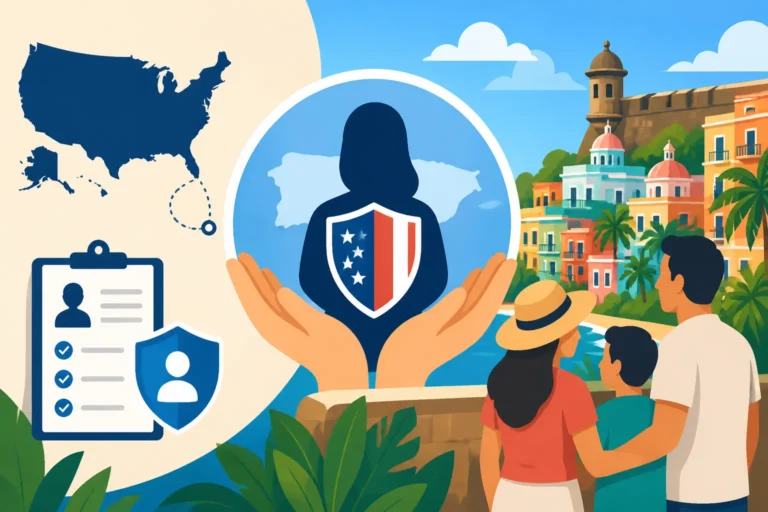
When you hold a Green Card, you are officially a Lawful Permanent Resident (LPR) of the United States. This status means you have the privilege to live and work permanently anywhere within U.S. jurisdiction. The beautiful thing about Puerto Rico is that it absolutely falls under that jurisdiction. It’s a U.S. territory, which means your Green Card is just as valid here as it would be in Florida, California, or any other state. This often comes as a relief to many who are considering the move but are unsure about immigration hurdles.
Understanding Puerto Rico's Status within the U.S. Immigration System
Let's cut through the noise: Puerto Rico is not a foreign country, nor is it subject to separate immigration laws from the rest of the United States. This might seem obvious to some, but many misconceptions circulate, even from folks born and raised on the mainland. People often assume that because it's an island with its own culture, language, and local government, there must be a different set of rules for entry and residency. Not so for Green Card holders!
Your Green Card fundamentally means you are a permanent resident of the U.S., and that includes every square inch of its territories. So, when you travel from, say, New York to San Juan, you're not passing through an international border. There are no immigration checks, no passport stamps (unless you're returning from an international destination through Puerto Rico), and certainly no need for a special visa or permit just to relocate here. You're effectively making a domestic move. This federal umbrella is what makes moving to Puerto Rico significantly less complicated for Green Card holders than, say, moving to Canada or Mexico.
This direct connection under U.S. federal law means that your rights and responsibilities as a Green Card holder remain unchanged. You continue to be under the purview of U.S. Citizenship and Immigration Services (USCIS) for any matters related to your Green Card, but your physical presence in Puerto Rico is fully recognized as being within the U.S. This understanding forms the bedrock of your seamless transition to island life.
What Your Green Card Means for Living in Puerto Rico
Your Green Card is your golden ticket to truly make Puerto Rico your home. It grants you the legal right to reside, work, and study indefinitely across the entire U.S., including its vibrant territories like Puerto Rico. This means you won't encounter any specific immigration-related barriers upon arrival. You can unpack your bags, breathe a sigh of relief, and start building your life here without fear of being asked for additional permits or facing deportation purely because of your move.
However, it's crucial to understand a key distinction, especially since Puerto Rico is often associated with certain tax incentives. While U.S. citizens can, under specific conditions (like establishing "bona fide residency" and meeting certain presence tests), exempt their Puerto Rico-source income from federal income tax, this particular tax benefit does not typically extend to Green Card holders in the same way. As a Green Card holder, you are generally subject to U.S. federal income tax on your worldwide income, regardless of where you reside within the U.S., including Puerto Rico. The tax rules here can get intricate, and it's definitely something you'll want to discuss with a qualified tax professional who specializes in both U.S. federal and Puerto Rico local tax law. You'll still be responsible for Puerto Rico's local income taxes on any income sourced from the island, just like any other resident.
The core takeaway is that your Green Card status allows for unrestricted movement and settlement. You’re not subjected to the complex residency requirements or visa processes that foreign nationals face when trying to move to Puerto Rico or the mainland U.S. Your path is much smoother, and you can focus your energy on the practicalities of setting up your new life, rather than grappling with immigration paperwork.
Practicalities of Relocating for Green Card Holders
While your Green Card handles the immigration side of things, the actual relocation to Puerto Rico still involves a whole host of practical considerations. Think of it less like an immigration hurdle and more like moving from one state to another, albeit with an ocean in between and a distinct culture awaiting you. Getting organized and understanding the local administrative processes will save you a lot of headaches, believe me.
Maintaining Your Green Card Status While in Puerto Rico
One of the most common anxieties Green Card holders face, even when moving domestically, is whether their new location might inadvertently jeopardize their permanent resident status. I can tell you unequivocally that living in Puerto Rico is considered living within the United States for all immigration purposes. You don't need to notify USCIS specifically that you're moving to Puerto Rico, just as you wouldn't if you moved from New York to Florida. Your permanent residency is maintained simply by residing within the U.S. and adhering to the standard Green Card requirements.
What are those standard requirements? Primarily, it's about not abandoning your permanent residency. This means:
- Don't stay outside the U.S. for too long: While living in Puerto Rico counts as being in the U.S., if you plan extensive travels outside the U.S. (e.g., spending more than six months or a year abroad), you might need to consider applying for a re-entry permit to avoid issues at re-entry.
- File your federal tax returns: As a Green Card holder, you are required to file U.S. federal income tax returns on your worldwide income annually. Moving to Puerto Rico does not change this obligation.
- Update your address with USCIS (Form AR-11): This is a critical, often overlooked step for all Green Card holders. Whenever you move to a new address within the United States, you are legally required to notify USCIS within 10 days by filing Form AR-11. This ensures that USCIS can always reach you with important notifications, and failure to do so can lead to penalties. It's a simple online form, but absolutely essential.
Beyond these federal immigration obligations, you'll also want to establish "bona fide residency" in Puerto Rico. This isn't about maintaining your Green Card, but rather about demonstrating your genuine intent to make Puerto Rico your primary home for local administrative purposes. This concept of How to Establish Bona Fide Residency in Puerto Rico (2027) usually revolves around factors like where you have your driver's license, bank accounts, register to vote, and where your family primarily resides. While the federal tax implications of bona fide residency are different for Green Card holders compared to U.S. citizens, establishing these local ties is still important for seamless integration into island life and accessing local services.
Important Steps for a Smooth Move
Moving anywhere can be a daunting task, and moving to an island, even a U.S. territory, comes with its own unique set of logistical puzzles. But with some thoughtful planning, you can make the transition much smoother. I've been there, done that, and trust me, anticipating these steps will save you a world of stress.
First off, planning is paramount. Don't underestimate the time it takes to pack up your life and ship it across the ocean. Many expats find great value in using specialized relocation services that understand the nuances of island moves. Platforms like Sirelo can be incredibly helpful for comparing moving companies, getting quotes for shipping your household goods, and finding reliable services that handle everything from packing to customs clearance. Moving boxes, furniture, and even vehicles to Puerto Rico requires careful coordination, and a professional service can navigate the port logistics for you.
Next, get your documents in order. Before you even set foot on the island, make sure you have all your essential paperwork readily accessible. This includes your Green Card, passport (even though not strictly required for domestic travel, it's always good to have), birth certificates, marriage certificates, Social Security cards, school records for your children, and comprehensive medical records. Having these organized will be invaluable when you start setting up local services.
One of the first things you'll want to do upon arrival is open a local bank account. While many mainland banks have branches or ATMs here, having an account with a local institution like Banco Popular or Oriental Bank makes day-to-day transactions infinitely easier. You'll need it for direct deposits, paying local bills, and using local payment apps like ATH Móvil, which is ubiquitous here. As a Green Card holder, the process for The Newcomer's Guide to Opening a Bank Account in Puerto Rico is generally straightforward, similar to opening an account on the mainland, requiring your ID and proof of address.
Driver's licenses and vehicle registration are another big one. If you plan to drive, you’ll need to either transfer your existing mainland driver's license or obtain a new Puerto Rico license at a CESCO (Driver Services Center). The requirements are specific, and you'll typically need to provide proof of residency, your Social Security card, and sometimes a medical certificate. Similarly, if you bring your car or buy one here, you’ll need to register and title it locally. Don’t delay on this, as the "marbete" (vehicle sticker) and inspections are required annually. You can learn more about this in How to Register and Title a Vehicle DTOP/CESCO in Puerto Rico.
Finally, setting up utilities like electricity (LUMA Energy) and water (AAA, Autoridad de Acueductos y Alcantarillados) will be among your immediate priorities once you’ve secured housing. The process often involves visiting local offices, providing your identification, lease agreement or proof of ownership, and potentially paying a deposit. It can be a bit of a bureaucratic dance, but it's a rite of passage for every new resident. To help navigate this, check out our guide on The Newcomer's Guide to Setting Up Utilities LUMA/AAA in Puerto Rico.
By tackling these administrative tasks systematically, you'll lay a solid foundation for your new life in Puerto Rico.
Day-to-Day Life and Local Integration
So, you've got your Green Card sorted, and the practicalities of moving are underway. Now comes the exciting part: settling into the rhythms of daily life in Puerto Rico. This is where the magic truly happens, but also where some unique island challenges and opportunities come into play. Integrating into a new community, especially one with a distinct culture and language, takes time and an open mind.
Navigating Local Requirements and Services
Even though your federal immigration status is clear, you'll quickly discover that Puerto Rico operates with its own set of local government agencies and regulations. One of the most significant areas you'll encounter is taxation. As a Green Card holder, you're still responsible for U.S. federal income tax on your worldwide income. However, Puerto Rico also has its own treasury department, Hacienda, which collects local income taxes on any income you earn from sources within Puerto Rico. This means you'll likely be filing two separate income tax returns: one federal (to the IRS) and one local (to Hacienda). It's a dual system that can be confusing at first, so understanding How Puerto Rico Taxes Work: Federal vs Local Hacienda Explained (2026) is crucial. You'll need to register with Hacienda to get your local tax ID and comply with local filing requirements, even if you’re also filing federally.
For employment, your Green Card grants you unrestricted work authorization, but the local job market has its own dynamics. While there are opportunities in various sectors, including tourism, pharmaceuticals, manufacturing, and growing tech industries, proficiency in Spanish is often a significant advantage, if not a requirement, for many roles. Networking, using local job boards, and even working with local recruiters can be effective strategies. Our guide on The Complete Guide to Working in Puerto Rico (2027) offers deeper insights into navigating the island's employment landscape.
Finding housing will be one of your first big tasks. The rental market can be competitive, especially in desirable areas like San Juan, Dorado, or Rincon. Be prepared for a mix of options, from modern condos to charming, older homes. Landlords often require one to two months' rent as a security deposit, along with proof of income and identification. Lease agreements are typically in Spanish, so having a trusted local or translator review them is a smart move. For a detailed breakdown of what to expect, check out The Complete Guide to Renting an Apartment in Puerto Rico (2027). Whether you rent or buy, understanding local housing laws is key.
And speaking of language, while many people in tourist areas and major cities speak English, particularly in business, learning Spanish is truly the key to unlocking the full experience of living here. It shows respect for the local culture, makes daily interactions smoother, and opens doors to deeper connections with your neighbors and community. Don't feel pressured to be fluent overnight, but embrace the journey of learning.
Healthcare and Other Essentials
Navigating healthcare in a new place is always a top concern, and Puerto Rico is no different. As part of the U.S. system, Puerto Rico adheres to federal healthcare standards, but the local health insurance market is distinct. Your mainland U.S. health insurance plan might not provide adequate coverage, or any coverage at all, once you're a resident here. You'll typically need to enroll in a local health plan.
There are two main avenues: the public health plan, known as the Vital Plan (which is Puerto Rico's version of Medicaid, primarily for low-income individuals and families), and private health insurance options. Many private insurers offer plans tailored to Puerto Rico residents, and it's essential to explore these to find one that fits your needs and budget. For those who might travel frequently or desire broader coverage options, sometimes international plans, such as those offered by Cigna Global, can complement local coverage, though a local plan is usually the primary choice for day-to-day residency. Our comprehensive guides, Health Insurance in Puerto Rico: Plans, Costs and Options Explained (2026) and How Puerto Rico's Health System Works: Public vs Private Explained (2027), can help you understand the landscape.
If you have children, understanding the school system will be paramount. Puerto Rico offers public, private, and some charter school options. Public schools are taught primarily in Spanish, while many private schools offer bilingual or English-only instruction. Researching the schools in your chosen area and understanding enrollment requirements will be a critical step. Our article on Schools and Education in Puerto Rico: A Complete Guide for Families is a great place to start.
When it comes to community, Puerto Rico is incredibly vibrant and welcoming, but like anywhere, you get out what you put in. Participate in local festivals, visit the panadería (bakery) for your morning coffee and pan de agua, frequent the local markets, and strike up conversations. These small steps are how you transition from being a newcomer to feeling truly at home. Engaging with your neighbors and embracing local customs will enrich your experience immeasurably.
Finally, let's talk about the cost of living. Many assume Puerto Rico is inherently "cheap," but that's not always the case, especially for imported goods and certain services. While some expenses, like property taxes, might be lower than in some mainland areas, others, such as electricity, can be surprisingly high. Groceries, depending on what you buy, can also add up. It’s important to have a realistic understanding of what your expenses will look like. For a detailed breakdown, consult The Complete Guide to Cost of Living in Puerto Rico (2026).
Living in Puerto Rico as a Green Card holder offers an incredible opportunity for a rich, fulfilling life without the immigration headaches that often accompany moves abroad. With thoughtful preparation and an adventurous spirit, you'll be enjoying the sazón of island life in no time!
Understanding Social Security, Medicare, and Retirement in Puerto Rico
For many Green Card holders, especially those nearing or in retirement, questions about Social Security, Medicare, and other retirement benefits are at the forefront of their minds when considering a move to Puerto Rico. The good news is, since Puerto Rico is part of the U.S. system, your Social Security and Medicare benefits generally follow you to the island. This is a huge relief for many and simplifies the financial planning for your later years.
If you're already receiving Social Security benefits, they will continue to be paid to you in Puerto Rico, just as they would on the mainland. There are no special forms or processes you need to go through with the Social Security Administration specifically because you're moving to the territory. You'll still need to update your address with them, of course, to ensure you receive any correspondence. Similarly, Medicare eligibility and coverage apply in Puerto Rico. You'll find Medicare Advantage plans (Part C) offered by local insurers that operate much like their mainland counterparts, often providing additional benefits beyond original Medicare. It's crucial to understand these plans and how they function locally, as they are specifically designed for residents of Puerto Rico. Our guide on Understanding Social Security, Medicare and Retirement in Puerto Rico delves into this in much greater detail, helping you navigate the specifics of your retirement finances on the island.
Disclaimer
This article is for general informational purposes only and does not constitute professional advice. Laws, prices and regulations vary by location and change over time. Consult a qualified professional for guidance on your specific situation.