How Do I Cancel My Mainland Voter Registration After Moving to Puerto Rico?
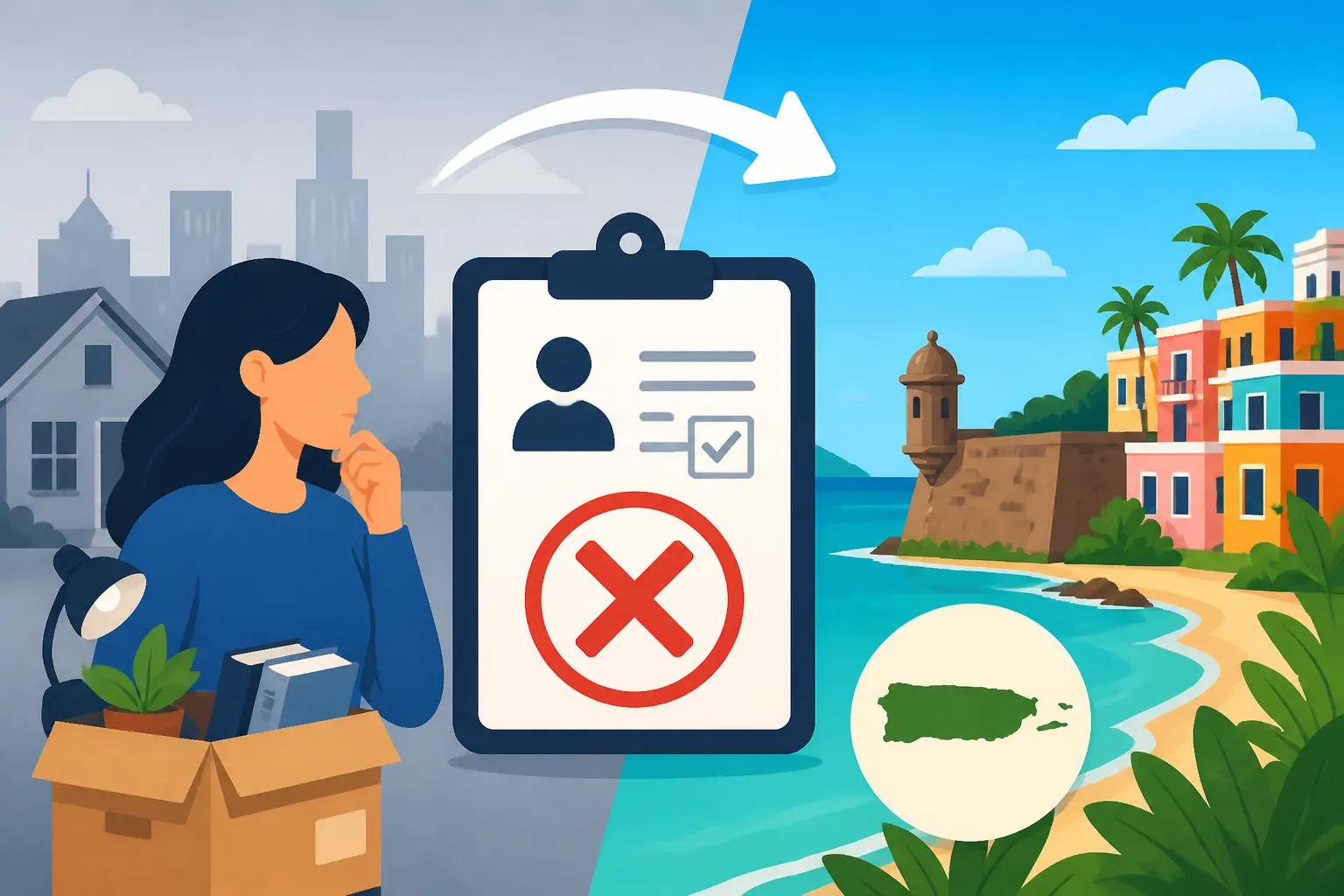
Moving to a vibrant new place like Puerto Rico is an exciting adventure, full of new discoveries and experiences. But amidst the thrill of finding your perfect beach spot or navigating the local colmado, you're probably facing a dizzying array of administrative tasks. One item that often slips under the radar but can lead to unnecessary complications is your voter registration from your previous US state. This guide will walk you through precisely why and how to properly cancel your mainland voter registration, ensuring a smooth transition to your new civic life on the island without any lingering bureaucratic headaches.
Why Bother Canceling Your Mainland Voter Registration?
It might seem like a small detail in the grand scheme of moving across an ocean, but properly deregistering from your former state is more important than you might think. Many folks assume that simply moving will automatically take care of it, or that it doesn't really matter. Let me tell you, as someone who’s been there, it absolutely does. It’s about more than just a checkbox; it’s about establishing clear residency and avoiding potential legal and civic entanglements.
The Legal and Practical Reasons
First and foremost, the core principle here is that you can only legally vote in one place for federal elections. When you establish bona fide residency in Puerto Rico, your primary legal domicile shifts. Maintaining an active voter registration in a state you no longer reside in can create a confusing paper trail, or worse, lead to accusations of voter fraud, even if unintentional. While it might seem unlikely, voter rolls are increasingly cross-referenced between states, and discrepancies can flag you for review. Imagine getting a letter from your old county elections office questioning your residency years after you've made Puerto Rico your home! That's a headache no one needs.
Beyond the legalities, there are practical considerations. Remaining on an old state's voter roll means you'll continue to receive jury summons, election-related mail, and other civic correspondence at your old address. This can burden previous landlords or new homeowners, and it clutters up your digital footprint if your old address is still tied to public records. For those truly embracing their new life here, it's about making a clean break and fully committing to your new community. This step is a small but significant part of truly establishing your new life here, much like setting up utilities or understanding local transport. For a broader overview of starting life here, you might find "The Complete Relocation Checklist for Moving to Puerto Rico (2026)" incredibly helpful.
Avoiding Confusion and Dual Voting Issues
The confusion surrounding mainland voter registration often stems from the unique status of Puerto Rico as a US territory. We are US citizens, but we vote for local Puerto Rico officials and do not vote for the US President or Vice President. However, we do participate in presidential primaries. This distinction can be baffling for newcomers. If you retain an active registration in, say, Florida or New York, there's a possibility you could mistakenly attempt to vote in federal elections there while also intending to vote in Puerto Rico's local elections or primaries. This unintentional dual participation is exactly what the electoral system aims to prevent.
Think of it this way: your voter registration is a formal declaration of your intent to participate in a specific jurisdiction's democratic process. By canceling your old registration, you're officially stating, "My civic home is now Puerto Rico." This helps to maintain the integrity of both your former state's electoral system and Puerto Rico's. It's an act of good citizenship that solidifies your move. Many comprehensive guides to relocating, like those you might find on platforms such as Sirelo, highlight these administrative necessities that often get overlooked. They understand that every detail counts when you're making such a significant life change.
Your Step-by-Step Guide to Mainland Voter Deregistration
Navigating the bureaucracy of two different jurisdictions can be frustrating, especially when each state has its own unique process. But don't fret; it's usually simpler than it sounds. The key is to be methodical and proactive.
Finding Your Specific State and County Requirements
This is where the rubber meets the road. There isn't a single, universal "cancel voter registration" button for all US states. Each state, and sometimes even individual counties within a state, will have its own procedures.
Here’s how you typically figure it out:
- Identify Your Last Registered State and County: This sounds obvious, but sometimes people have moved a couple of times before landing in Puerto Rico and might not be absolutely certain where their last active registration was. Check any old voter registration cards or past election mail.
- Visit Your State's Election Website: Every US state has an official Secretary of State or State Board of Elections website. This is your first and best resource. Look for sections titled "Voter Registration," "Manage Your Registration," "Update Your Information," or "Cancel Registration." Many states now allow you to check your registration status online by entering your name and date of birth.
- Find Your County Election Office Information: If the state website isn't clear, or directs you to local officials, search for your specific county's Board of Elections or Registrar of Voters office. They will have direct instructions.
- Look for Specific Forms or Instructions: Some states have a dedicated "voter registration cancellation form." Others might require you to send a written request, often needing to be notarized or include specific identifying information (like your old address, date of birth, and signature). Some states will even let you submit a request through an online portal.
A quick web search for "[Your State Name] voter registration cancellation" or "[Your County Name] election office" should get you started. Be sure you are on an official government website (.gov) to ensure accuracy and security.
Common Methods for Canceling Your Registration
Once you've identified your state's specific procedure, you'll likely encounter one of these common methods:
- Online Portal: Increasingly, states offer an online portal where you can update your registration, change your address, or sometimes, even cancel it. This is the easiest method if available. You'll typically need to verify your identity with some personal information.
- Mail-in Form: Many states require you to fill out a specific form (which you can usually download from their website) and mail it to your county election office. This form will ask for your current and previous addresses, your date of birth, and your signature. Sometimes, you might need to indicate a reason for cancellation, such as "moved out of state."
- Written Request: If no specific form is provided, you might need to write a letter to your county election office. This letter should clearly state your request to cancel your voter registration, include your full name, former address, date of birth, and be signed. It's a good idea to include a copy of a government-issued ID if they ask, and always keep a copy of the letter for your records.
- Automatic Deregistration: In some cases, registering to vote in your new jurisdiction (Puerto Rico, in this case) might automatically trigger a cancellation of your old registration through interstate compacts like ERIC (Electronic Registration Information Center). However, relying solely on this is risky because not all states participate, and the process isn't always immediate or foolproof. It’s always best to be proactive and confirm direct cancellation if possible.
- In-Person Visit: While less practical if you're already in Puerto Rico, you could cancel in person if you happened to be visiting your old state. You'd go to your county election office with identification.
When sending anything by mail, consider using certified mail with a return receipt. This provides proof that your request was received, which can be invaluable if any issues arise later.
Here's a quick reference table for common cancellation methods:
| Method | Typical Requirements | Pros | Cons |
|---|---|---|---|
| Online Portal | Personal info (name, DOB, SSN digits), digital signature | Quick, convenient, immediate confirmation | Not available in all states/counties |
| Mail-in Form | Downloaded form, personal info, signature, mail | Clear process, official record | Slower, requires postage, relies on postal service |
| Written Letter | Your written request, personal info, signature, mail | Simple if no form exists | Less standardized, might need more verification info |
| In-Person | Government ID | Instant confirmation, direct interaction | Requires travel to previous state |
| Automatic (via PR registration) | Register in PR | Easiest, no extra steps for you | Not guaranteed, not all states participate, can be delayed |
Re-establishing Your Civic Voice: Voting in Puerto Rico
Once you've cleaned up your mainland registration, it’s time to embrace your new civic responsibilities here. Voting in Puerto Rico is a crucial part of integrating into your community and having your voice heard on local issues that directly impact your daily life.
Eligibility and the Puerto Rico State Elections Commission (CEE)
As a US citizen residing in Puerto Rico, you are eligible to vote in local and territorial elections. This means you can cast ballots for Governor, Resident Commissioner (Puerto Rico's non-voting representative in the US Congress), local mayors, municipal assembly members, and legislative candidates. You also get to vote in the presidential primaries for the major US parties, which is a big deal for many. For a deeper dive into the nuances of our electoral participation, you might want to read "Understanding How US Citizenship Applies When Living in Puerto Rico".
The body responsible for elections here is the Comisión Estatal de Elecciones (CEE), or the State Elections Commission. They handle everything from voter registration to election day operations. You'll interact with them primarily through their local offices or their website.
To register to vote in Puerto Rico, you must:
- Be a US citizen.
- Be 18 years of age or older by the date of the next election.
- Have established a bona fide domicile in Puerto Rico. This is a crucial point that ties back to your overall residency. For more on this, check out "How to Establish Bona Fide Residency in Puerto Rico (2026)".
- Not have been declared mentally incompetent by a court.
- Not have lost your right to vote due to a felony conviction (unless your rights have been restored).
The Process for New Residents
The process to register to vote in Puerto Rico is relatively straightforward:
- Gather Your Documents: You'll typically need a valid form of identification, such as your Puerto Rico driver's license or a non-driver ID card. If you haven't obtained one yet, you should prioritize this. Check out "The Guide to Getting Your Puerto Rico Driver's License and ID (2026)" for details. You'll also need proof of domicile in Puerto Rico, which could be a utility bill (like a LUMA or AAA bill), a lease agreement, or a property deed.
- Visit Your Local CEE Office (Junta de Inscripción Permanente – JIP): There are CEE offices located in various municipalities across the island. You'll go in person to register. This allows them to verify your identity and domicile right there.
- Fill Out the Voter Registration Form: The CEE staff will guide you through the form. It will ask for personal information, your address in Puerto Rico, and your party affiliation if you wish to declare one.
- Fingerprints and Photo: As part of the registration process, the CEE will take your fingerprints and a photo. This is standard procedure and helps maintain the security and integrity of the voter rolls.
- Receive Your Voter Identification Card: Once your registration is processed, you will be issued an official voter identification card. Keep this safe, as it’s your proof of registration and is often required when you go to vote.
The entire process usually takes one visit, provided you have all the necessary documents. It’s a rewarding step that truly makes you feel like a part of your new community. Many expat groups and resources for newcomers, including those associated with health insurance providers like Cigna Global (who understand the paperwork involved in international moves), encourage new residents to complete this step promptly as a symbol of their integration into the island’s vibrant civic life.
What If I Don't Officially Cancel My Mainland Registration?
Let’s be honest, life on the island is fantastic, and sometimes these bureaucratic tasks get pushed to the back burner. It’s easy to think, "Oh, it'll just sort itself out." But ignoring your mainland voter registration can lead to some annoying, albeit usually not catastrophic, consequences.
Potential Pitfalls and Misconceptions
The most common misconception is that simply moving or registering in Puerto Rico will automatically remove you from your old state's voter rolls. While interstate data sharing programs exist, they are not foolproof, nor are they immediate. It can take years for an inactive registration to be purged, and during that time, you could still be considered an active voter in two places.
Here are some potential pitfalls:
- Jury Duty Summons: As mentioned earlier, if your old state still considers you a resident for voting purposes, you might receive jury summonses. Ignoring these can lead to legal issues, and responding to explain your move can be a hassle.
- Confusion for Your Old Address Residents: Your old landlord or the new residents of your former home might continually receive official election mail for you. This is simply inconsiderate and creates unnecessary work for others.
- Unintended Appearances on Voter Rolls: Publicly accessible voter rolls might still list you at your old address. While usually harmless, some individuals prefer a clean break from their prior residency.
- Challenges to Bona Fide Residency: While not the primary factor, maintaining an active voter registration in another state could, in rare and complex cases, be used as an argument against your intent to establish permanent domicile in Puerto Rico, especially if you're trying to qualify for specific tax incentives like those under Act 60. Though unlikely to be the sole deciding factor, it’s one less piece of evidence you want floating around that contradicts your declared residency. You can learn more about this by reviewing "Understanding Bona Fide Residency and the 183-Day Rule in Puerto Rico".
- "Phantom" Voting: In an age of heightened scrutiny around election integrity, having your name on two active voter rolls, even if you never intend to vote in both, can contribute to the perception of irregularities. Being proactive simply eliminates any possibility of being caught in such a narrative.
Maintaining Clarity for Your Residency Status
Ultimately, cancelling your mainland voter registration is a small but significant step in establishing clear, unambiguous residency in Puerto Rico. It aligns your civic identity with your physical and legal home. It’s a clear declaration of intent. When you’re making a life-altering move, especially one that impacts your tax situation or long-term planning, clarity is your best friend. Every document, every registration, and every official declaration should point towards Puerto Rico as your primary home.
This proactive step reinforces your commitment to your new life and reduces potential administrative headaches down the line. It ensures that when you do decide to explore opportunities like voting in Puerto Rico's local elections, applying for a Puerto Rico driver's license, or even diving into the local job market, every piece of your civic puzzle points to your new, vibrant life here on the island. For comprehensive support and resources during your move, platforms like Sirelo offer valuable insights, including checklists that prompt you to consider these often-overlooked details. This ensures you're not just moving your belongings, but truly settling into your new home, civic duties and all.
Disclaimer
The information provided in this guide is intended for general informational purposes only and does not constitute legal, financial, or tax advice. While we strive to provide accurate and up-to-date information, laws and procedures can change. We strongly recommend consulting with a qualified professional, such as an attorney or a tax advisor specializing in Puerto Rico residency, for advice tailored to your specific situation. This guide should not be used as a substitute for professional counsel.