What Is the Fastest Way to Establish Residency in Puerto Rico?
Oh, the burning question, isn't it? "How quickly can I actually make this home?" Moving to Puerto Rico, especially from the mainland US, often comes with this quiet assumption that it's just another state transfer. Then, reality hits. The administrative processes, the unique distinctions between federal and local, the forms… it can feel like a labyrinth. This guide is here to cut through the confusion and explain how to establish residency in Puerto Rico as efficiently as possible, focusing on what truly makes you a bona fide resident without unnecessary delays.
Understanding the Foundation of Puerto Rico Residency
Before we talk about speed, we absolutely need to nail down what "residency" actually means here, because it's not always what people expect. For most folks moving from the mainland, you're looking to become a "bona fide resident" of Puerto Rico. This isn't just a casual term; it's a specific legal designation by the IRS that has significant implications, especially for tax purposes, but also for everything from getting a driver's license to voting. This is what truly establishes your life here, and getting it right from day one is key to making the process as fast as possible.
What "Bona Fide Resident" Truly Means
Being a bona fide resident means that your primary home, your economic center, and your personal ties are all firmly planted in Puerto Rico. It’s not just about showing up; it’s about intending to stay and acting on that intention. The IRS uses a three-part test to determine bona fide residency, and while we often focus on the 183-day physical presence, it's really a holistic view of your life. The quicker you align all aspects of your life with these tests, the quicker your residency becomes undeniable. Think of it less as a checkbox exercise and more as building a new life.
This designation is especially critical if you're looking into any of the tax incentives, like those under Act 60. Even if tax incentives aren't your primary driver, having clear bona fide resident status streamlines countless other administrative tasks and avoids potential headaches down the line with both federal and local authorities. It truly is the bedrock of living here long-term.
Differentiating Residency and Domicile
Another crucial distinction that often trips up newcomers is the difference between residency and domicile. While related, they aren't quite the same, and understanding this can speed up your process. Residency primarily refers to where you physically live and the duration of that stay, often tied to tax laws like the 183-day rule. Domicile, however, is about your intent to make a place your permanent home. It's about where you consider your "true home" to be, where you intend to return after any absences.
You can be a resident of Puerto Rico without immediately changing your legal domicile, but to truly establish your life here quickly and permanently, you need to change both. Proving your domicile means taking definitive steps like registering to vote here, getting a local driver's license, opening local bank accounts, and even joining local community groups. These actions demonstrate your intent beyond just physical presence and accelerate the process of establishing deep roots. To delve deeper into this concept, you might want to read Understanding Legal Residency and Domicile in Puerto Rico (2027).
The Core Elements of Fast-Tracked Residency: The 183-Day Rule and Beyond
Okay, let's get down to the brass tacks of speeding things up. The absolute fastest way to establish your residency in Puerto Rico, particularly for US citizens, revolves around meeting the IRS's criteria for a bona fide resident. This isn't about finding a loophole; it's about being incredibly intentional and efficient in meeting those specific requirements right from the moment you decide to move.
The All-Important 183-Day Presence Test
The cornerstone of establishing residency quickly is the "Presence Test," more commonly known as the 183-day rule. This mandates that you must be physically present in Puerto Rico for at least 183 days during any given tax year. While it sounds simple, actually tracking those days can be tricky, especially if you're frequently traveling for work or visiting family on the mainland. The trick to doing this fast is to plan your move to maximize your in-island days right from the start.
Imagine you arrive in July. To meet the 183-day rule for that tax year, you would essentially need to be in Puerto Rico for the remainder of that year, only taking very short trips off-island. Keep detailed records – flight itineraries, hotel receipts, utility bills, anything that shows your physical presence. I know, it sounds like homework, but trust me, it saves headaches later. Many people try to estimate or backtrack, and it just creates unnecessary stress. Being meticulous here accelerates your ability to confidently claim bona fide residency. You can learn more about documenting your presence in How to Document Your Days in Puerto Rico for the Presence Test.
Establishing Your "Tax Home" Right Away
The second critical element for speedy residency, after the 183-day rule, is establishing your "Tax Home" in Puerto Rico. This means your main place of business or employment, or if you're retired or unemployed, your primary abode, must be in Puerto Rico. This is a common sticking point for remote workers who technically work for a mainland company. If your job could be performed anywhere, the IRS looks at where your actual work-related expenses are incurred and where your primary business connections lie.
To establish your tax home swiftly, you need to show a clear shift of your professional or financial center to the island. This means registering a local business if you're self-employed, getting an employment contract with a Puerto Rico-based company, or at least showing that your work (even if remote) is now managed from your Puerto Rico address. It’s not enough to just live here; your professional life needs to reflect your new base. This is where setting up a home office, getting local internet service, and establishing a clear Puerto Rico mailing address for business correspondence become paramount.
Cultivating a "Closer Connection" Immediately
Finally, the "Closer Connection Test" is where you really put the pedal to the metal on establishing your life here. This test is a bit more subjective than the others, asking if your personal and economic ties are stronger in Puerto Rico than in any other location. This is where the intent to stay truly shines, and it’s the most powerful way to accelerate your feeling of being home.
To satisfy this test quickly, you need to deliberately sever ties with your previous mainland home and forge new ones here. This means:
- Closing bank accounts on the mainland, or at least significantly reducing activity there, and opening robust local accounts (more on that later!).
- Registering your vehicle here and getting a Puerto Rico driver's license.
- Enrolling your children in local schools.
- Joining local clubs, community organizations, or churches.
- Getting involved in volunteer work.
- Establishing medical and dental care on the island.
- Even updating your address with federal agencies and changing your voter registration to Puerto Rico are powerful signals.
Think about it: the more aspects of your daily life are rooted here, the stronger your "closer connection" becomes. It's about building a life, not just inhabiting a space. The faster you do these things, the faster you meet this criteria and solidify your status.
Practical Steps to Solidify Your Residency Quickly
Now that you understand the core tests, let's talk actionable steps. From the moment you land, there are a series of things you can do to quickly and demonstrably establish your presence and intent, turning your relocation into a bona fide residency as efficiently as possible.
Setting Up Your Home Base and Utilities
The very first, most tangible step to establishing residency is securing a long-term home. Whether you're renting or buying, having a fixed address is fundamental. Avoid the temptation to stay in short-term rentals for too long, as this can delay the process of getting official documents. Once you have a lease or a deed, jump immediately on setting up utilities in your name. This includes electricity (LUMA Energy), water (Autoridad de Acueductos y Alcantarillados or AAA), and internet.
These utility bills are invaluable proof of your physical presence and intent to reside here. They show a consistent, tangible tie to the island. Don't underestimate their importance. It can be a bureaucratic process, so start it as soon as humanly possible. Sometimes it feels like you're jumping through hoops, but each completed step is a solid piece of evidence. For more guidance, check out The Newcomer's Guide to Setting Up Utilities (LUMA/AAA) in Puerto Rico.
Financial Foundations: Banking and Tax Registration
Next up, your financial life needs to move to Puerto Rico. Open a local bank account as soon as you arrive. Major banks like Banco Popular de Puerto Rico or Oriental Bank are popular choices. This is a critical step in demonstrating your economic ties to the island and for managing your daily finances. You'll need it for everything from paying bills to receiving direct deposits. The sooner your financial activity reflects your new home, the better. Read The Newcomer's Guide to Opening a Bank Account in Puerto Rico for a detailed walkthrough.
Equally important is registering with the Puerto Rico Treasury Department, known as Hacienda. Even if you're not yet employed, if you plan to earn income or operate a business, you’ll need to register. This proactively signals your intent to participate in the local economy and fulfills tax home requirements. It’s better to get this done early rather than waiting until tax season. Hacienda has an online portal called SURI that can be a bit intimidating at first, but it’s the gateway to your tax compliance here. For detailed steps, see How to Register with Hacienda and Get a Tax Account in Puerto Rico.
Driving and Identification: Your Local Credentials
One of the most immediate and impactful ways to show your new roots is to get a Puerto Rico driver's license or non-driver ID card. While your mainland license might be valid for a short period, transferring it is a definitive step in establishing your closer connection. The process is handled by the Department of Transportation and Public Works (DTOP) at one of the various CESCO centers across the island. It involves paperwork, potentially an eye exam, and often a wait, so don't put it off.
Having a local ID isn't just for driving; it's often requested for everything from opening accounts to proving your age. It's universally accepted as proof of local residency. Alongside your license, ensure you register any vehicles you bring or buy on the island with DTOP and get the required marbete (vehicle registration sticker) and ACAA insurance. These are tangible, undeniable proofs of your physical and economic ties to Puerto Rico. Consider reading How to Get a Puerto Rico Real ID Driver's License to prepare.
Integrating into the Community
Beyond the paperwork, actively integrating into the community accelerates your bona fide residency and, more importantly, makes Puerto Rico feel like home faster. This means:
- Healthcare: Find a primary care doctor and register with a local medical clinic or hospital network. This moves your critical health ties to the island. While you're getting settled, or if your mainland coverage isn't cutting it, exploring international health insurance options like Cigna Global might offer peace of mind.
- Education: If you have children, enrolling them in local schools (public or private) firmly plants your family’s roots here.
- Social Connections: Join local interest groups, clubs, gyms, or volunteer organizations. Participate in local events. This shows a genuine commitment to living here and builds your social network.
- Mail Forwarding: Set up a forwarding address with USPS from your old address to your new Puerto Rico one. This officially redirects your life here.
These steps aren’t just bureaucratic; they are foundational to living a full life here. The faster you build these connections, the faster you establish your residency in every sense of the word.
Common Pitfalls and How to Avoid Delays
Even with the best intentions, moving to a new place always has its challenges. Puerto Rico is no exception, and there are specific pitfalls that can unintentionally delay your residency efforts. Being aware of these common issues can help you navigate around them smoothly.
The Temptation of "Mainland Convenience"
One of the biggest traps newcomers fall into is holding onto mainland conveniences for too long. This might mean continuing to use your mainland bank account for most transactions, relying on your mainland driver's license past its grace period, or keeping your primary doctor off-island. While these might seem easier in the short term, they actively undermine your efforts to establish a closer connection to Puerto Rico.
The IRS looks for a clear break from your previous residency. If you maintain significant financial, personal, or professional ties to the mainland, it can complicate your bona fide residency claim. The fastest way to establish residency is to commit fully and shift your primary activities to Puerto Rico as quickly as possible. This means making a conscious effort to find local alternatives for everything you do.
Inadequate Record Keeping
As I mentioned with the 183-day rule, meticulous record-keeping is not just helpful; it's essential. Many people get so caught up in the excitement of moving that they neglect to properly document their presence or their new ties. This can become a huge problem if you ever need to prove your bona fide residency, whether for tax purposes or other administrative needs.
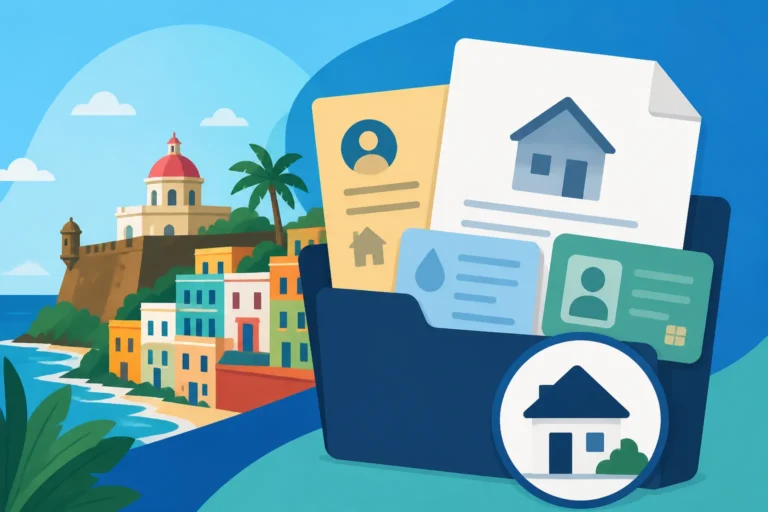
From the moment you arrive, start a dedicated "Puerto Rico Residency" folder, physical or digital. Keep copies of everything: boarding passes, utility bills, lease agreements, bank statements, CESCO receipts, school enrollment letters, property tax bills, and even receipts from local businesses. These documents are your evidence, and having them organized will save you immense time and stress if questions ever arise. Consider using a reputable moving service like Sirelo that often provides documentation support for your relocation.
Underestimating the Bureaucracy and Language Barrier
Let's be real: bureaucracy in Puerto Rico can be… an adventure. Things often move at a different pace than what you might be accustomed to, and Spanish is the primary language. Trying to rush through processes without patience or understanding can lead to frustration and delays.
The fastest way to navigate this is to be prepared. Research the requirements for each step thoroughly. Arrive at government offices with all necessary documents, including originals and multiple copies. Don't be afraid to ask for clarification, and if your Spanish isn't strong, consider bringing a friend or hiring a local assistant for complex tasks. Embracing the cultural nuances, including the pace of administrative processes, will make your journey far smoother and ultimately faster.
Ignoring the Long-Term View: Annual Compliance
Establishing residency isn't a one-and-done deal. To maintain bona fide resident status, especially for tax benefits like Act 60, you need to continue meeting the requirements year after year. This means consistently fulfilling the presence test, maintaining your tax home, and strengthening your closer connection.
Failing to adhere to annual compliance requirements can invalidate your residency status and lead to significant financial repercussions. The fastest way to ensure your residency sticks is to view it as an ongoing commitment. Continuously update your records, file your Puerto Rico tax returns (planillas) diligently, and ensure your life demonstrably remains centered on the island. This consistency is what truly solidifies your new life here.
Quick-Start Residency Checklist
To help you get started on the fastest track, here's a condensed checklist of immediate actions:
| Action Item | Purpose | Key Documents Needed | Estimated Time to Complete (after arrival) |
|---|---|---|---|
| Secure Long-Term Housing | Physical Presence, Tax Home | Lease/Deed, Proof of Funds | 1-4 weeks |
| Set Up Utilities (LUMA, AAA, Internet) | Physical Presence, Closer Connection | ID, Lease/Deed, Social Security Card | 1-3 days per utility |
| Open Local Bank Account | Closer Connection, Economic Ties | ID, SSN, Proof of PR Address | 1-3 days |
| Register with Hacienda (Tax Dept.) | Tax Home, Economic Ties | ID, SSN, Business Docs (if applicable) | 1-2 weeks |
| Transfer Driver's License/Get PR ID | Closer Connection, Proof of Residency | Old License, Birth Cert, SSN, Proof of PR Address | 1-2 visits to CESCO |
| Register Vehicle (if applicable) | Closer Connection, Economic Ties | Title, Bill of Sale, Proof of PR Address | 1-2 visits to CESCO |
| Enroll Children in School (if applicable) | Closer Connection, Family Ties | Birth Certs, School Records, Immunizations | 1-4 weeks (seasonal) |
| Find Local Healthcare Provider | Closer Connection, Well-being | ID, Insurance Info | 1-2 weeks |
| Update Mailing Address (USPS) | Closer Connection, Administrative | ID, Proof of Old/New Address | 1-3 days |
| Register to Vote (Puerto Rico) | Closer Connection, Civic Ties | ID, Proof of PR Address | 1 day |
This table provides a starting point, but each step often has nuances. The key is to approach each item with diligence and persistence.
Disclaimer
The information provided in this guide is for general informational purposes only and does not constitute legal, financial, or tax advice. Residency and tax laws are complex and subject to change. It is highly recommended to consult with qualified legal, tax, and financial professionals specializing in Puerto Rico law before making any relocation decisions.