How to Get a Puerto Rico Real ID Driver’s License
Oh, the Puerto Rico driver's license quest! It’s one of those rites of passage for every new resident, often fraught with a bit of confusion, a dash of waiting, and more than a few moments where you wonder if you have all the right papers. Getting your Puerto Rico Real ID driver's license is absolutely essential, not just for driving on our beautiful roads, but for so many other aspects of life here, from air travel to certain banking transactions. This guide will walk you through every step, demystifying the process and sharing some hard-won expat wisdom to help you navigate the system at CESCO and get that coveted card in your hand.
Understanding the Puerto Rico Real ID Driver's License
For many years, folks moving from the mainland were used to their state-issued driver's licenses being their primary form of identification everywhere. However, the federal Real ID Act, which came into full effect, changed the game. Now, you need a Real ID compliant license or another accepted form of ID to board domestic flights or enter certain federal facilities. This applies to Puerto Rico just as it does to any U.S. state.
What Makes It a "Real ID"?
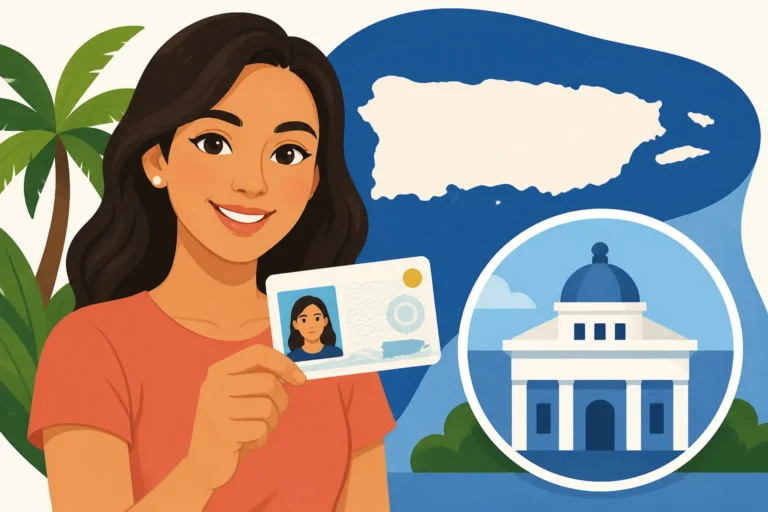
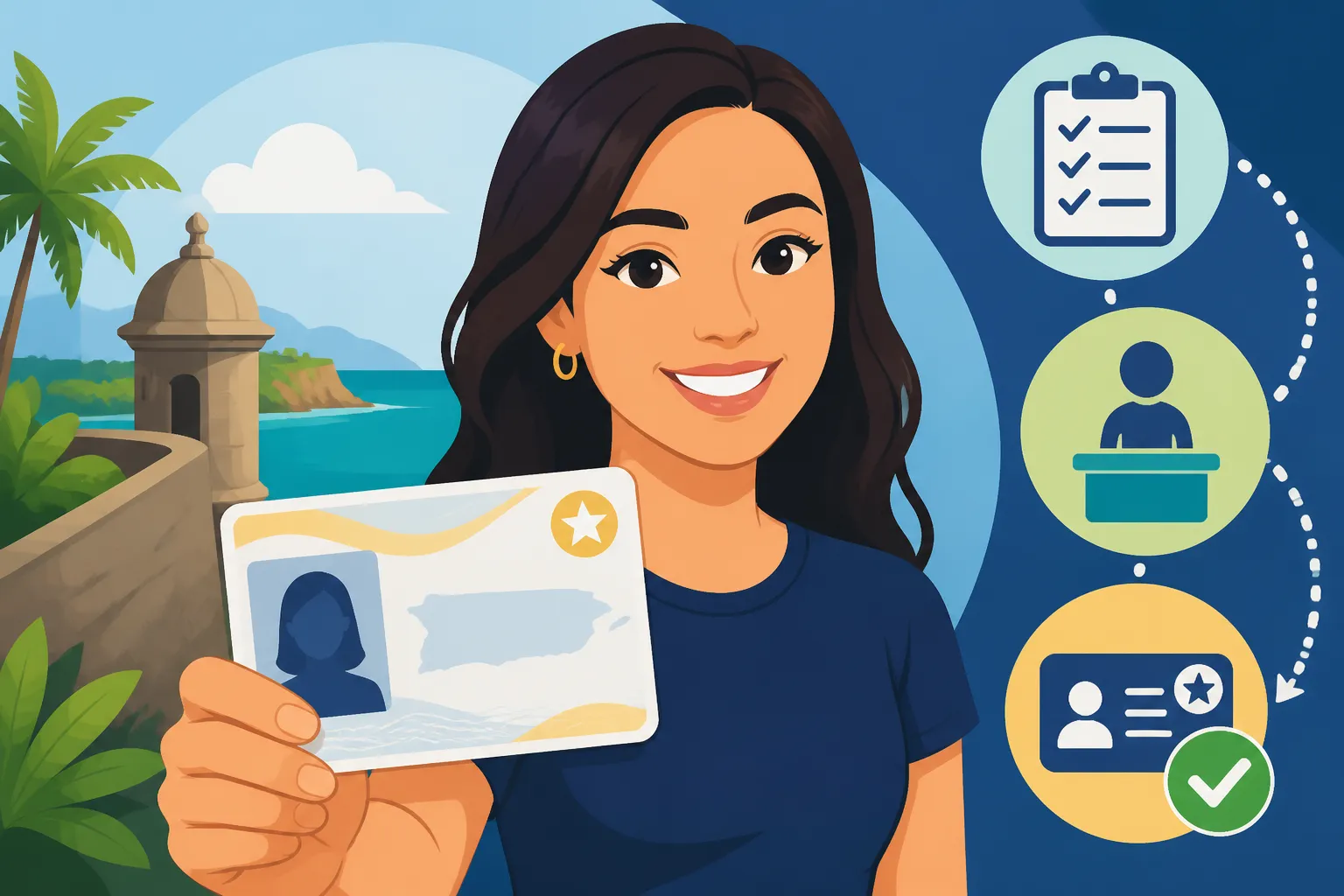
A Real ID compliant driver's license or identification card is designed to meet enhanced security standards set by the U.S. Department of Homeland Security. You'll typically spot a Real ID by a small star (usually gold or black, sometimes a cutout) in the upper right corner of the card. This star signifies that your identity, date of birth, Social Security number, and two proofs of address have been verified by the issuing agency. For us here in Puerto Rico, the Department of Transportation and Public Works (DTOP), through its service centers known as CESCO (Centros de Servicios al Conductor), is the entity responsible for issuing these compliant IDs.
The goal behind the Real ID Act was to improve the reliability and accuracy of state-issued identification documents to deter terrorism. While it might feel like another hurdle to jump through, especially when you're already juggling a dozen other relocation tasks, the Real ID is a crucial piece of the puzzle for seamless living in the U.S. system, even from our Caribbean shores. It’s not just a local thing; it's a federal mandate that touches many aspects of your daily life and travel.
Why You Need It as a New Resident
Beyond the obvious need to legally operate a vehicle, your Puerto Rico Real ID driver's license serves as your primary photo identification. Imagine trying to board a flight from San Juan to Miami, open a new bank account, or even just pick up a package at the post office – without a Real ID compliant document, you’re going to run into headaches. Many local banks, like Banco Popular or Oriental Bank, will ask for a Real ID to open an account or conduct certain transactions, especially for new customers. It's truly a foundational document for establishing your life here.
Think about the ease it brings. When you've established your residency here, and you're living in Dorado or Rincon, having a local ID that aligns with federal standards simplifies everything. You won't have to carry your passport for domestic flights or worry about being turned away from federal buildings. It integrates you into the administrative fabric, reducing friction in what can already be a challenging transition. So, while gathering the documents can feel like a scavenger hunt, the end result is well worth the effort for your peace of mind.
Key Differences from a Regular License
In truth, today, any new driver's license issued in Puerto Rico for eligible residents is designed to be Real ID compliant. The concept of a "regular" non-Real ID license is largely a thing of the past for new issuances, especially if you're a US citizen or permanent resident. Puerto Rico began issuing Real ID compliant licenses years ago, bringing it in line with mainland states.
However, if you're holding onto an older Puerto Rico driver's license that predates the Real ID compliance, you might notice it lacks that little star. In that case, you'll eventually need to renew or update it to a Real ID to avoid issues with federal agencies. For newcomers, the good news is that you'll be applying for a Real ID compliant license right from the start, so there isn't a "choice" between a Real ID and a non-Real ID – you're automatically getting the correct, federally recognized version. This simplifies things by removing a layer of decision-making, ensuring you get the most functional ID possible.
Eligibility and Documentation: The Paperwork Gauntlet
This is where the real adventure begins for many expats. Puerto Rico’s administrative processes, while familiar in concept, often have their own unique requirements and interpretations. Getting your documentation in order before you even step foot into a CESCO is half the battle. If you're looking for a broad overview of moving here, check out What Documents Do I Need to Move to Puerto Rico?.
Who Can Apply?
Generally, if you are a U.S. citizen or a foreign national legally residing in Puerto Rico, you are eligible to apply for a driver's license. For U.S. citizens, this process primarily involves proving your identity, legal presence, Social Security number, and Puerto Rico residency. Foreign nationals will need to provide proof of their lawful status in the U.S., such as a valid Green Card or an unexpired foreign passport with a valid U.S. visa accompanied by an I-94 arrival/departure record. The key here is legal presence and bona fide residency in Puerto Rico. If you’re trying to establish that bona fide residency, you might want to read more about Understanding Bona Fide Residency and the 183-Day Rule in Puerto Rico.
It's important to remember that CESCO follows federal guidelines, so there's no shortcut around proving your legal status. If your documents have an expiration date, like a visa or a temporary resident card, your driver's license will typically be issued with the same expiration date. This means you might need to renew it more frequently until you have more permanent residency documentation. Always check the specific requirements on the DTOP website or call CESCO directly, as rules can sometimes be updated.
The Essential Documents You Must Gather
Alright, buckle up. This is the crucial part. You cannot have enough documents. Seriously. When you go to CESCO, you need to bring originals, and often copies too, just in case. They like to see everything.
Here's a breakdown of what you'll typically need:
- Proof of Identity and Legal Presence: This is usually your birth certificate (original) or a valid, unexpired U.S. Passport. If you're a foreign national, your unexpired foreign passport with a valid U.S. visa and I-94 form, or your Green Card will serve this purpose.
- Proof of Social Security Number: Your Social Security card (original), or a W-2 form, or a pay stub with your name and SSN on it. They typically will not accept a printout from the Social Security Administration website. It needs to be one of the official documents.
- Proof of Puerto Rico Residency (Two different documents): This is where many newcomers stumble. You need two documents showing your name and your current physical address in Puerto Rico. This could be a utility bill (LUMA, AAA), a bank statement, a rental agreement, a property deed, or even a credit card statement. The critical thing is that they must be recent (usually within the last 60-90 days) and show a physical address, not a PO Box. If you just moved here, getting these documents can be tricky. Try to get a utility bill or a bank statement as soon as possible. Setting up your mailing address correctly is important; for more on this, see How to Set Up Your Mailing Address and USPS in Puerto Rico.
- Medical Certificate (Certificado Médico): This is unique to Puerto Rico and an absolute must. You need to obtain a medical certificate for a driver's license from a licensed doctor in Puerto Rico. This form (known as Formulario DTOP-DIS-260) certifies that you are medically fit to drive.
- Proof of Signature: This can usually be covered by your existing valid out-of-state driver's license, your passport, or another official photo ID.
Here's a quick reference table for common documents:
| Document Type | Accepted Forms (Bring Originals!) | Notes |
|---|---|---|
| Proof of Identity | – U.S. Birth Certificate (original) – U.S. Passport (unexpired) – Certificate of Naturalization – Foreign Passport + U.S. Visa + I-94 (for foreign nationals) – Permanent Resident Card (Green Card) |
Your primary form of ID. Ensure names match across all documents. |
| Proof of Social Security Number | – Social Security Card (original) – W-2 Form – Pay Stub with SSN – SSA-1099 Form |
Must be an official document showing your full SSN. They are strict about this. |
| Proof of Puerto Rico Residency (Two Required) | – Utility Bill (LUMA, AAA, Internet) – Bank Statement – Rental Agreement/Lease – Property Deed – Credit Card Statement – Pay Stub |
Must show your physical PR address and be recent (typically within 60-90 days). PO Boxes are generally not accepted. Names on documents must match your ID. This is often the trickiest part for new arrivals. |
| Medical Certificate | – Formulario DTOP-DIS-260 (completed by a PR-licensed doctor) | Crucial and specific to PR. Get this before your CESCO visit. |
| Proof of Signature | – Valid Out-of-State Driver's License – U.S. Passport – Other official photo ID |
Usually covered by other forms of ID, but good to have multiple forms. |
| Current Driver's License | – Your valid, unexpired driver's license from a U.S. state (if transferring) | Essential for the transfer process. If expired, you might need to apply as a new driver. |
Make sure your name appears exactly the same on all documents, or bring marriage certificates/court orders if there are legal name changes. This is where attention to detail really pays off!
Navigating the Medical Certificate Requirement
This specific requirement, the Certificado Médico, often catches mainlanders off guard because it’s not common in many U.S. states for a standard driver's license. To get it, you'll need to visit a licensed physician in Puerto Rico. This can be any general practitioner, but it must be a local doctor who can fill out the official DTOP-DIS-260 form.
What does it entail? Usually, a brief physical exam, including a vision test, and a review of your general health history to ensure you are fit to drive. The doctor will complete and sign the form, often affixing a stamp. This certificate is typically valid for a certain period (e.g., six months to a year), so don't get it too far in advance of your CESCO appointment. The cost for this medical exam varies, but expect to pay around $20-$50 out of pocket, as it's often not covered by basic health insurance plans since it's an administrative requirement rather than a medical necessity. Even if you have a robust plan from a provider like Cigna Global, it's best to confirm coverage for this specific administrative check-up with your local doctor's office. Make sure to call ahead and ask if they provide "Certificado Médico para licencia de conducir." Many clinics are familiar with the process.
The Step-by-Step Application Process at CESCO
Ah, CESCO. It's an institution here, and sometimes a source of great stories for expats. Navigating the CESCO system can be a lesson in patience and persistence, but it's entirely doable with the right preparation.
Making Your CESCO Appointment
Gone are the days when you could just show up at CESCO and expect to be served promptly. While some locations might still accommodate limited walk-ins, the official recommendation, and indeed the most efficient way, is to schedule an appointment online. You’ll use the CESCO Citas web portal or the CESCO Digital app.
Here’s the rub: appointments, especially at popular CESCO locations like the one in Carolina or Bayamón, can fill up fast. You might need to check the portal frequently for openings, sometimes even early in the morning, as new slots are released. Be flexible with the location if possible; a CESCO in a less densely populated area might have more availability. Once you get an appointment, print out the confirmation or save it on your phone. It’s your golden ticket. Without it, you might be turned away at the door. I recommend using the CESCO Digital app as it's generally more user-friendly and keeps track of your appointment and documents.
What to Expect During Your Visit
When your appointment day arrives, remember the mantra: arrive early and bring all your documents (originals and copies, neatly organized). Parking can be an issue at some CESCOs, so factor that in.
Upon arrival, you'll typically be directed to a waiting area. When your number is called, you'll approach a counter where a CESCO agent will meticulously review your documents. This is where any discrepancies or missing papers will become apparent. Be polite, patient, and clear. If you have any language barriers, consider bringing a Spanish-speaking friend, though many CESCO employees have some English proficiency.
After the document review, you'll usually move on to:
- Photo and Fingerprints: They’ll take your picture for the license and your fingerprints.
- Vision Test: A simple eye chart test is usually administered.
- Payment: You’ll pay the application fees.
- Written Test (if applicable): If you're a new driver or transferring an expired license, you'll need to pass a written exam on Puerto Rico traffic laws. More on this below.
- Road Test (if applicable): Again, for new drivers or those with specific situations.
If you are transferring a valid, unexpired driver's license from a U.S. state, you might be exempt from the written and road tests. This is a huge time-saver. Make sure to confirm this eligibility beforehand. If everything checks out and no tests are needed, they will typically print your temporary license right then and there. Your permanent Real ID card will be mailed to your Puerto Rico address within a few weeks. It's a massive relief when that temporary paper license is in your hand!
Fees and Payment Methods
The fees for obtaining a Puerto Rico driver's license are generally quite reasonable compared to some mainland states. For a first-time license or a transfer, you can expect to pay around $18 for the license itself, plus a few dollars for stamps and other minor administrative fees, bringing the total to roughly $20-$30. These fees can change, so it’s always best to check the most current amounts on the DTOP website or via the CESCO Digital app.
When it comes to payment, CESCO typically accepts cash, credit cards, and debit cards. However, always be prepared with cash, just in case their card machines are down or there's a specific fee that only takes cash. This is Puerto Rico, and being prepared for minor tech hiccups is just part of the local charm, right? Having small bills is always a good idea.
Transferring Your Mainland US Driver's License vs. New Application
This is a common question for folks moving from the mainland, and it significantly impacts your experience at CESCO. Many assume it's just a simple swap, but there are important nuances. For a more detailed guide on this specific process, consider looking at How to Transfer Your Mainland Driver's License in Puerto Rico.
Requirements for a Straight Transfer
The good news is that if you hold a valid, unexpired driver's license from any U.S. state or territory, you can generally transfer it to a Puerto Rico driver's license without having to take the written or road tests. This is a huge relief! The key here is "valid and unexpired." You still need to present all the same foundational documents required for any new application: proof of identity, SSN, two proofs of PR residency, and the medical certificate.
The CESCO agent will verify the validity of your existing license. If everything checks out, and your documents are complete, the process is streamlined significantly. You’ll go through the document review, get your photo taken, pay the fees, and walk out with a temporary license. This is by far the easiest path for new residents already holding a driver's license. So, if you're planning your move, make sure your current driver's license is up-to-date before you leave the mainland.
When a New Application Is Necessary
There are several scenarios where you might find yourself needing to go through the full "new driver" application process, which includes the written and potentially the road test:
- Expired Mainland License: If your U.S. state driver's license has expired, even by a day, CESCO will likely treat you as a new driver. This means you'll need to pass both the written and road tests.
- Lost License: If you've lost your mainland license and can't provide it, or can only provide a temporary paper one, CESCO might require you to go through the new application process. It’s always best to get a duplicate of your mainland license before you move if you know it’s lost.
- No Prior License: This is straightforward – if you've never held a driver's license before, you are a new driver and will go through the full process, including obtaining a learner's permit first.
- Certain Foreign Licenses: While some reciprocal agreements exist, most foreign licenses cannot be simply "transferred" like a U.S. state license. Foreign nationals usually need to apply as new drivers and complete all tests.
It's crucial to understand this distinction. Having to take the tests adds considerable time and preparation to the process, including studying the Puerto Rico driving manual and potentially needing a driving instructor for the road test.
Practical Tips for a Smooth Transfer
To maximize your chances of a smooth transfer, keep these tips in mind:
- Renew Before You Go: If your mainland license is nearing expiration, renew it before you move to Puerto Rico. This simple step can save you weeks of hassle and the stress of driving tests.
- Keep Originals and Copies: As mentioned, bring all originals and a set of copies for good measure. Sometimes CESCO likes to keep copies.
- Verify Your Address: Ensure the two proofs of address clearly show your name and physical Puerto Rico address. This is a frequent hang-up. If you've just arrived, try to get a utility bill or open a local bank account quickly to generate these documents.
- Patience is a Virtue: CESCO can be busy. There might be unexpected delays. Go with a positive attitude and plenty of patience. Think of it as part of your immersion into local life!
- Check Online First: Always check the DTOP website or the CESCO Digital app for the latest requirements and any announcements before your visit. Requirements can occasionally change.
Beyond the Basics: Driving Tests, Temporary Licenses, and Renewals
For those who do need to take the driving tests, or just to understand the lifecycle of your new Puerto Rico license, here’s what you need to know.
The Written Test: What to Study
If you're required to take the written test, it will cover Puerto Rico traffic laws, road signs, and safe driving practices. The test is available in both Spanish and English. While many concepts are similar to mainland U.S. driving laws, there are specific differences you need to be aware of. For example, some signs might be in Spanish, and the penalties for certain infractions can differ.
You can usually find the official Puerto Rico Driver's Manual (Manual del Conductor) online on the DTOP website. I strongly advise you to download and study this manual thoroughly. Don’t assume your mainland knowledge is sufficient. Many online practice tests are also available that can help you prepare. Focus on sections covering specific Puerto Rico regulations, speed limits, right-of-way rules, and road signs unique to the island. Remember, a common point of frustration for many is failing this test because they underestimate the differences. Don't be that person!
The Road Test: What to Expect and How to Prepare
The road test (examen práctico) is typically required for new drivers or those whose transferred license situation necessitates it. Here’s what you generally need:
- A Vehicle: You must provide a vehicle for the road test. This vehicle must be properly registered, insured, and in good working condition, with a valid marbete (vehicle sticker) and inspection. This often means borrowing a friend's car if you haven't had a chance to How to Register and Title a Vehicle (DTOP/CESCO) in Puerto Rico yet.
- A Licensed Driver: The vehicle must be accompanied by a licensed driver who is at least 21 years old and has held a valid Puerto Rico driver's license for at least three years. This person usually sits in the passenger seat during the test.
- The Test Itself: The actual test usually involves a short circuit of driving that assesses your basic skills, such as parallel parking, three-point turns, signaling, observing traffic laws, and general control of the vehicle. The CESCO examiner will give you instructions.
Preparation is key here. Practice driving in a variety of conditions, focusing on smooth operation and adherence to traffic laws. If your Spanish isn't strong, try to find an instructor or friend who can practice giving commands in Spanish, as the examiner might do so. Some driving schools in Puerto Rico offer lessons specifically geared towards passing the CESCO road test, which can be invaluable.
Renewing Your Puerto Rico Driver's License
Once you have your Puerto Rico driver's license, you’ll eventually need to renew it. Typically, a standard driver's license is valid for eight years, though some circumstances (like age or certain medical conditions) might require more frequent renewals.
The renewal process is generally simpler than the initial application. You’ll still need to bring proof of identity, your Social Security card, two proofs of Puerto Rico residency, and an updated medical certificate. You can usually schedule an appointment for renewal online via the CESCO Citas portal. Many CESCO locations have dedicated lines or sections for renewals, which can make the process quicker. Keep an eye on your license’s expiration date, as driving with an expired license carries penalties.
Common Pitfalls and Pro Tips for Expats
Newcomers often fall into a few common traps. Let's try to help you avoid them.
Language Barriers and Cultural Nuances
Puerto Rico is a bilingual island, but Spanish is the official language and the primary language of daily administration. While many CESCO employees speak English, particularly in metropolitan areas like San Juan, you cannot always count on it. If you're not comfortable speaking Spanish, consider bringing a friend or family member who can translate for you. This can alleviate stress and ensure there are no misunderstandings regarding your documents or the process.
Beyond language, there's a certain cultural pace. Things might move slower than you're accustomed to. Lines can be long, and waiting is often part of the experience. Adopt a patient, friendly demeanor; it goes a long way. Getting frustrated or demanding rarely speeds things up and can actually hinder your progress. A simple "Buenos días" and a smile can make a difference.
Avoiding Multiple Trips to CESCO
This is the holy grail of CESCO visits: getting everything done in one go. The absolute best way to avoid multiple trips is to triple-check your documents. Review the official DTOP website the day before your appointment. Call CESCO if you're unsure about a specific document.
- Print everything out: Even if you have it on your phone, bring physical copies of appointment confirmations and any instructions.
- Organize your folder: Have your documents clearly separated and labeled.
- Check expiration dates: Ensure all your documents, especially IDs and proofs of address, are current and unexpired.
- Matching names: Confirm that your name is identical across all identity documents. If there's a difference (e.g., maiden name vs. married name), bring the legal document (marriage certificate) that explains the change.
- Be prepared for "just in case": Sometimes they ask for something unexpected. Having an extra utility bill, or even a blank check with your address on it, can sometimes save the day.
This meticulous preparation, while tedious, is your shield against the dreaded "Vuelve Mañana" (Come Back Tomorrow).
Related Administrative Hurdles
Obtaining your driver's license is just one piece of the puzzle. Once you have it, you'll need to think about other vehicle-related tasks. For instance, you’ll need to register your vehicle here. This is a separate process handled by CESCO as well, often requiring your new Puerto Rico license. You'll need to learn about Understanding the Marbete (Vehicle Sticker) and Inspection in Puerto Rico which is the annual vehicle registration tag and the required inspection.
You'll also need to ensure your vehicle has proper insurance coverage, including the mandatory ACAA (Asociación de Compensaciones por Accidentes de Automóviles) insurance. Navigating these interconnected administrative tasks can be daunting, but they all fall into place once you have that Real ID in hand. For a broader perspective on all your initial steps, consider reviewing The Complete Relocation Checklist for Moving to Puerto Rico (2027). The more you understand how these systems connect, the smoother your transition will be.
Disclaimer
Please note that while this guide provides comprehensive information based on current regulations and typical experiences, administrative rules and requirements in Puerto Rico can change. It is always recommended to verify the most up-to-date information directly with the Puerto Rico Department of Transportation and Public Works (DTOP) or CESCO's official website or app before undertaking any process. This information is for general guidance and does not constitute legal advice.