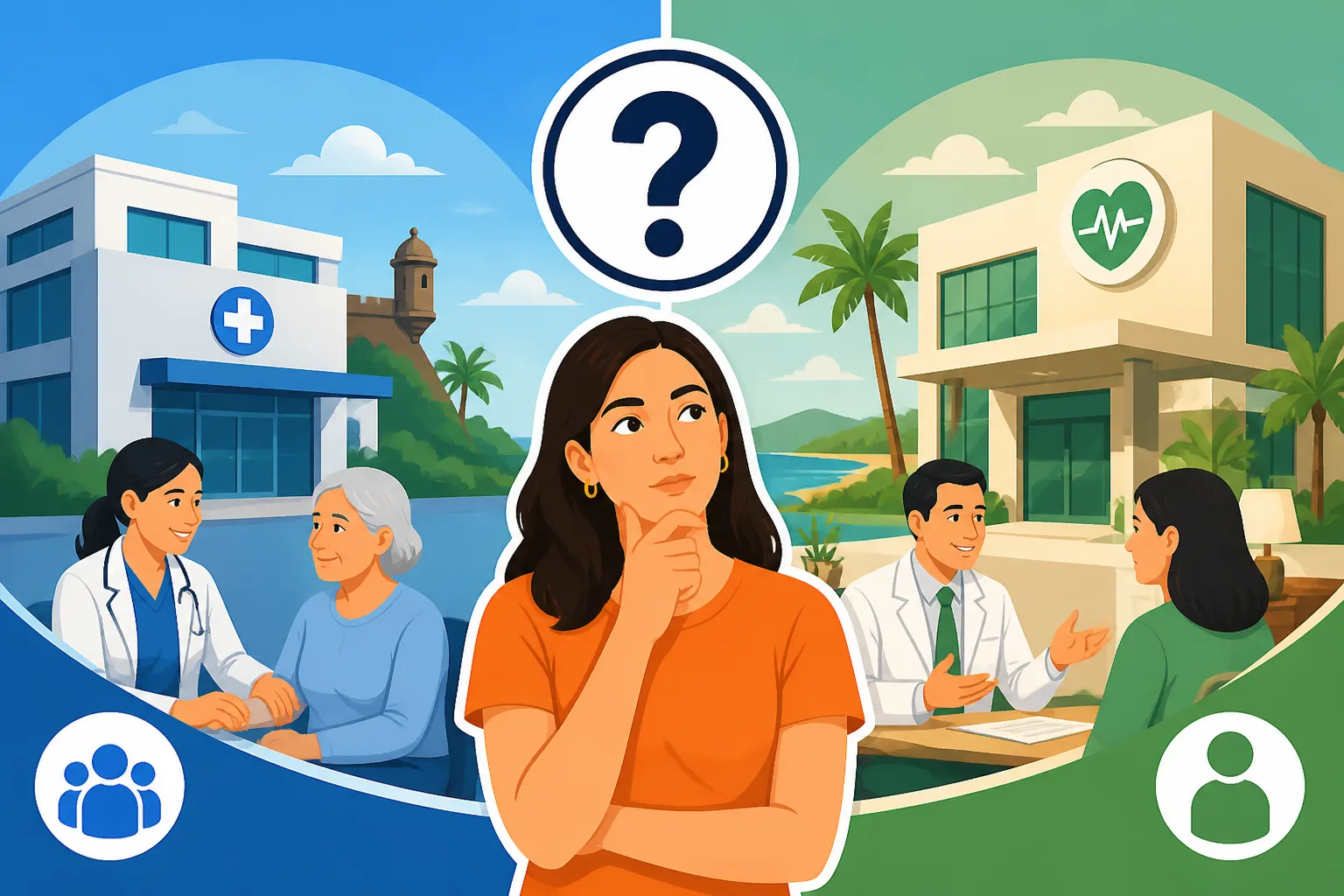
Is Public or Private Healthcare Better in Puerto Rico?
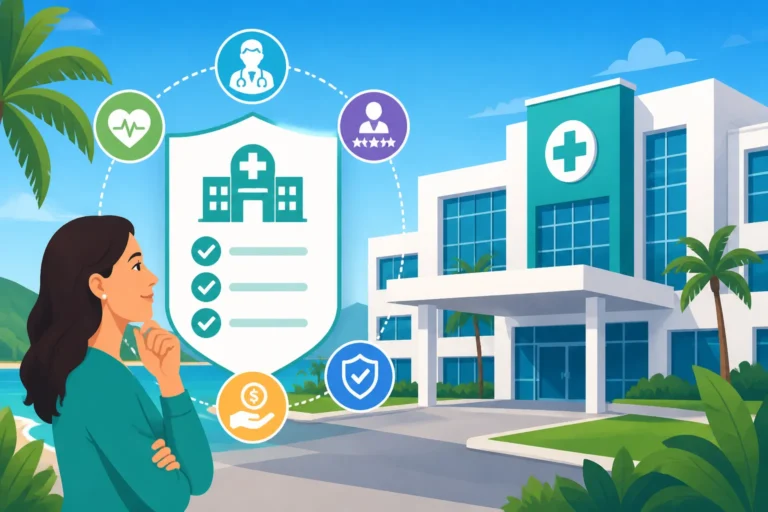
You arrive in Puerto Rico, get a sore throat that turns into a fever, and realize you have no idea whether to walk into a public CDT clinic or a private hospital in Hato Rey. This guide explains how the public and private sides of Puerto Rico healthcare actually work, who each one suits, what private coverage costs, and how to choose without wasting time or money.
How Public and Private Healthcare Actually Work in Puerto Rico
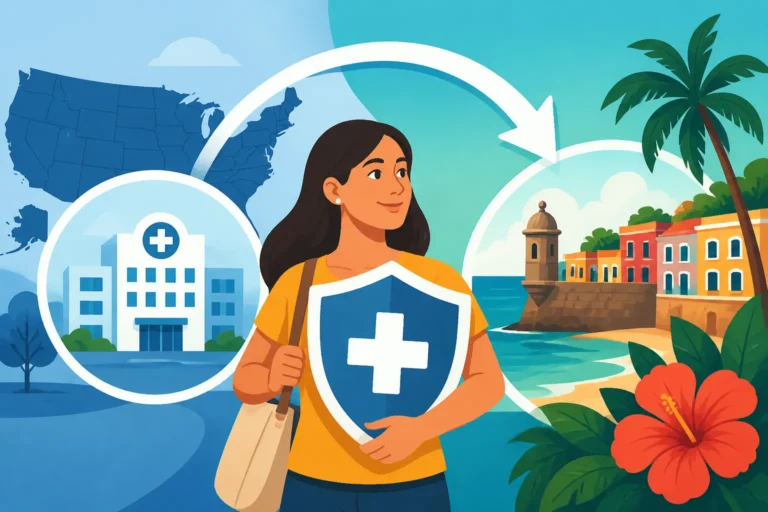
The first thing to know is that “public versus private” in Puerto Rico is less of a clean split than it sounds. Most hospitals and clinics on the island are privately operated, and many of them accept patients on the government health plan. The real question is usually this: which insurance card are you carrying, and which network does it open?
For a fuller structural overview, see How Puerto Rico’s Health System Works: Public vs Private Explained (2027). The practical version follows.
The Public Side: Vital, CDTs and Centro Médico
The public system centers on the Plan de Salud del Gobierno, branded as Vital. It is administered by ASES, the government health insurance administration, and funded largely through Medicaid. Vital is not a separate set of government hospitals. It is a government-paid insurance plan delivered through contracted managed care organizations, and its members see doctors at a mix of clinics and hospitals.
Beyond Vital, the public infrastructure includes:
- CDTs (Centros de Diagnóstico y Tratamiento): municipal or regional diagnostic and treatment centers that handle urgent care, basic diagnostics and primary care. Many towns have one, and quality varies from town to town.
- Community health centers: federally qualified primary care centers, often called 330 centers, which serve patients on a sliding scale regardless of insurance.
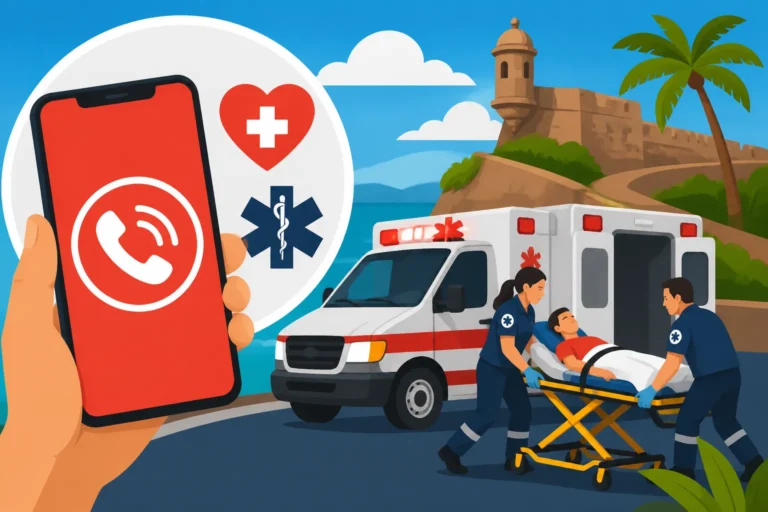
- Centro Médico in Río Piedras: the island’s major public medical complex, home to the main trauma center. If you are in a serious car accident anywhere near the metro area, this is where the ambulance is likely to take you.
Vital eligibility is income-based and tied to residency, so not every new arrival qualifies. If your household income is modest, check the rules in Understanding the Vital (Plan de Salud del Gobierno) Eligibility in Puerto Rico before assuming you are in or out.
The Private Side: Insurers, Networks and Hospitals
Private healthcare in Puerto Rico runs on local insurers. Triple-S is the biggest name, alongside companies such as MMM, MCS and First Medical, especially in the Medicare Advantage space. Your plan determines your network, and your network determines which doctors, labs and hospitals you can use at in-network rates.
The best-known private hospitals in the San Juan area include Auxilio Mutuo in Hato Rey, Ashford Presbyterian in Condado, and Hospital Pavía Santurce. Outside the capital, names like HIMA San Pablo in Bayamón and Caguas and Hospital Damas in Ponce come up constantly. If you are comparing the big three in San Juan, see How Do I Choose Between Auxilio Mutuo, Pavia and Ashford Hospitals?
One honest note from experience: private does not mean instant. Puerto Rico has lost a large number of physicians to the mainland over the years, so even with good private insurance, waiting weeks for certain specialists, including endocrinologists, neurologists and some pediatric subspecialists, is normal. Private coverage gives you more doors to knock on. It does not guarantee that the door opens quickly.
Mainland Plans and Medicare Sit in Between
Some arrivals keep employer coverage from a mainland company, and some retirees bring Original Medicare or switch to a local Medicare Advantage plan. Puerto Rico is part of the US, so federal programs apply. Whether a mainland commercial plan treats island providers as in-network depends entirely on that insurer. Call the member services line on your card and ask specifically about Puerto Rico before you rely on it.
Public vs Private Healthcare Compared Side by Side
Here is how the two sides stack up on the factors that matter day to day.
| Factor | Public: Vital, CDTs, Community Centers | Private: Commercial Insurance |
|---|---|---|
| Who can use it | Vital: income-eligible residents. CDTs and community centers: anyone, with sliding-scale or self-pay options | Anyone who buys a plan or has employer coverage |
| Monthly cost | Vital: no premium for eligible members | Premium based on age, plan level and tobacco use. The Triple-S Directo rates are shown below |
| Doctor choice | Limited to the plan’s assigned network and primary care physician | Wider network, and PPO plans allow more freedom |
| Specialist access | Referral needed, and waits can be long | Referral rules depend on the plan. Waits still happen for scarce specialties |
| Emergency trauma | Centro Médico is the main trauma hub | Private ERs handle most emergencies but transfer severe trauma |
| English availability | Less consistent, so expect Spanish-first service | Better odds in San Juan private hospitals and clinics |
| Facilities | Variable, and some CDTs feel dated | Generally newer, with private rooms more common |
| Paperwork | Eligibility application and renewals through the government | Enrollment through an insurer, an employer or a broker |
What Private Coverage Costs: Triple-S Rates for 2026
For a concrete example, these are the monthly individual rates for two Triple-S individual plans for the 2026 plan year, effective 1 January to 31 December 2026, as filed with the Oficina del Comisionado de Seguros (OCS) and read as of October 2026. Rates depend on age and tobacco use.
| Age | Triple-S Directo PPO Plata | Triple-S Directo PPO Bronce |
|---|---|---|
| 0-20 | $113.23 | $89.56 |
| 21 | $178.32 | $141.05 |
| 40 | $227.89 | $180.26 |
| 50 | $318.48 | $251.91 |
| 60 | $483.96 | $382.80 |
| 64 and older | $534.96 | $423.14 |
Tobacco users pay more. On the Plata plan, the tobacco rate runs from $196.15 at age 21 up to $641.95 at 64 and older.
To put that in perspective, a non-smoking 40-year-old on Plata pays $227.89 a month, while the same person at 60 pays $483.96. A couple aged 50 on Bronce is looking at $251.91 each. Premiums are only part of the picture, so also read Understanding Co-Pays, Deductibles and Premiums in Puerto Rico to see how what you pay at the counter changes the real cost.
Wait Times and the Reality on the Ground
The biggest complaint I hear about the public side is waiting. CDT waiting rooms can be packed, and Centro Médico’s emergency department prioritizes trauma and critical cases, so a stable patient can sit for many hours. For a realistic picture, see How Long Are Wait Times at Public Hospitals in Puerto Rico?
Private ERs at places like Auxilio Mutuo or Pavía are often faster for non-life-threatening problems, but not always. On a busy weekend night they fill up too. The difference is usually comfort and communication rather than a guaranteed speed advantage.
Which Option Is Better for Your Situation
There is no universal winner. The right answer depends on your income, health, language comfort and where you live on the island.
When Public Healthcare Makes Sense
Public coverage through Vital is a strong fit if your income qualifies. You pay no premium, prescriptions are covered under the plan’s formulary, and you can still be seen at many private facilities that contract with Vital’s managed care organizations.
CDTs and community health centers also make sense for:
- Uninsured residents who need basic care at a lower out-of-pocket cost
- Minor urgent issues such as cuts, infections or fevers when you are far from San Juan
- Routine vaccinations and screenings offered through public health programs
Here is a typical scenario. A retired teacher living in Cabo Rojo on a fixed income qualifies for Vital and gets primary care through an assigned clinic in Mayagüez. She waits longer for specialists than she would like, but her costs stay predictable and low.
When Private Healthcare Is Worth Paying For
Private coverage is usually the better choice if you:
- Earn too much for Vital, which applies to most remote workers and Act 60 arrivals
- Have a chronic condition that needs regular specialist follow-up
- Want more control over which doctors and hospitals you use
- Prefer English-language care, which is more common in private San Juan practices
A remote software developer in Dorado, aged 40, choosing Triple-S Directo PPO Plata at $227.89 a month, gets access to a broad PPO network across the metro area. For someone who wants to pick a cardiologist at Ashford without waiting for a referral chain, that flexibility is the whole point. To see how networks shape that choice, read Understanding Provider Networks and In-Network Care in Puerto Rico.
The Language Factor
This is the part nobody warns you about emotionally. Explaining chest pain in your second language at 2 a.m. is stressful. Many Puerto Rican doctors trained on the mainland and speak excellent English, but front desk staff, nurses and billing offices often work in Spanish, especially at CDTs and outside the metro area.
If Spanish is not your strong suit, private care in San Juan, Guaynabo and Dorado gives you better odds. Start building your list now with How to Find an English-Speaking Doctor in Puerto Rico, and learn a handful of phrases such as “me duele (body part)” and “soy alérgico a (medication)” before you need them.
Practical Steps to Choose and Get Covered
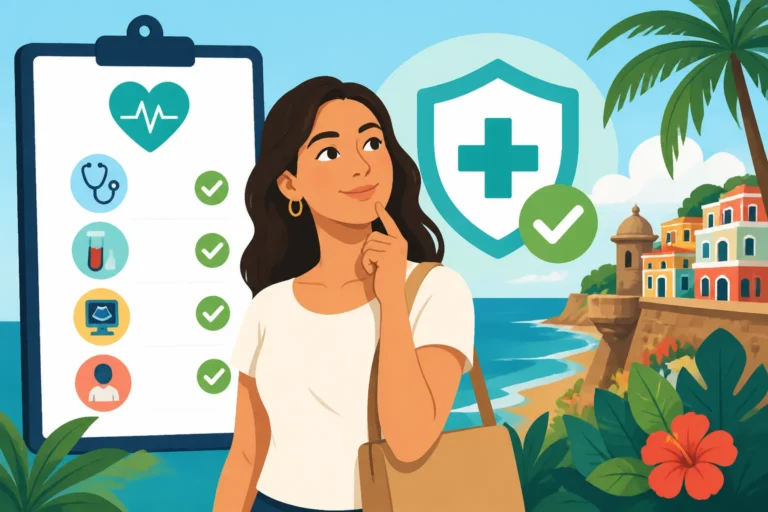
Here is the process I walk friends through when they first land.
Step-by-Step Decision Process
- Check Vital eligibility first. If your household income is near the limit, apply through the government process. If you qualify, it may cover most of your needs at no premium.
- Review any mainland coverage you already have. Call your insurer and ask, in writing if possible, which Puerto Rico providers are in-network.
- Compare local private plans by your actual age. Use the rate tables above as a reference point, then ask a licensed broker or the insurer about deductibles, co-pays and the network list.
- Map your nearest facilities. Identify the closest CDT, the closest private ER and the route to Centro Médico. Do this before an emergency, not during one.
- Choose a primary care doctor. Many plans work better once you have one on file, and some require one for specialist referrals.
- Book specialists early. If you have an ongoing condition, request appointments as soon as your coverage starts, because wait lists are real.
- Keep documents ready. Carry your insurance card, photo ID and a list of your medications at all times.
Covering the Gap Before Local Insurance Starts
There is almost always a gap between arrival and the start of local coverage. Applications take time, employer plans may have waiting periods, and private plans usually start on a set date after enrollment.
For scouting trips and the first weeks after landing, some people use a travel medical policy such as SafetyWing to avoid being completely uninsured. SafetyWing is designed for travelers and remote workers rather than as permanent resident coverage, so treat it as a bridge rather than a replacement for a local plan. Before buying, read SafetyWing’s policy wording on how US territories are treated and what is excluded, and check their own page for current pricing and terms. If something happens during that window, see What Happens If I Get Sick Before My Insurance Starts in Puerto Rico?
Tourists in the same position can use SafetyWing or similar travel coverage for unexpected care. Emergency rooms in Puerto Rico must screen and stabilize anyone who arrives, but the bill afterward is your responsibility if you have no coverage.
Pros and Cons at a Glance
Public pros:
- No premium for eligible Vital members
- Centro Médico offers the island’s top trauma capability
- CDTs are spread across many municipalities
Public cons:
- Income limits exclude many newcomers
- Longer waits and less choice
- Spanish-first service
Private pros:
- Wider doctor and hospital choice
- More comfortable facilities and private rooms
- Better English availability in the metro area
Private cons:
- Premiums rise steeply with age, from $178.32 at 21 to $534.96 at 64 and older on Triple-S Directo PPO Plata
- Specialist shortages still cause waits
- Network rules can surprise you if you do not check them first
My Honest Verdict
For most working-age newcomers who do not qualify for Vital, private insurance is the more practical choice, mainly because of network flexibility and language access. But know the public system too. In a true trauma emergency, Centro Médico is where you will end up, private plan or not. The smartest residents I know hold a private plan, keep a travel policy like SafetyWing for the first weeks or for off-island trips, and still know exactly where their nearest CDT is.
Read Emergency Medical Care in Puerto Rico: What Every Resident Needs to Know so the worst night of your year is a little less chaotic.
Disclaimer
This article is for general informational purposes only and does not constitute professional advice. Laws, prices and regulations vary by location and change over time. Consult a qualified professional for guidance on your specific situation.