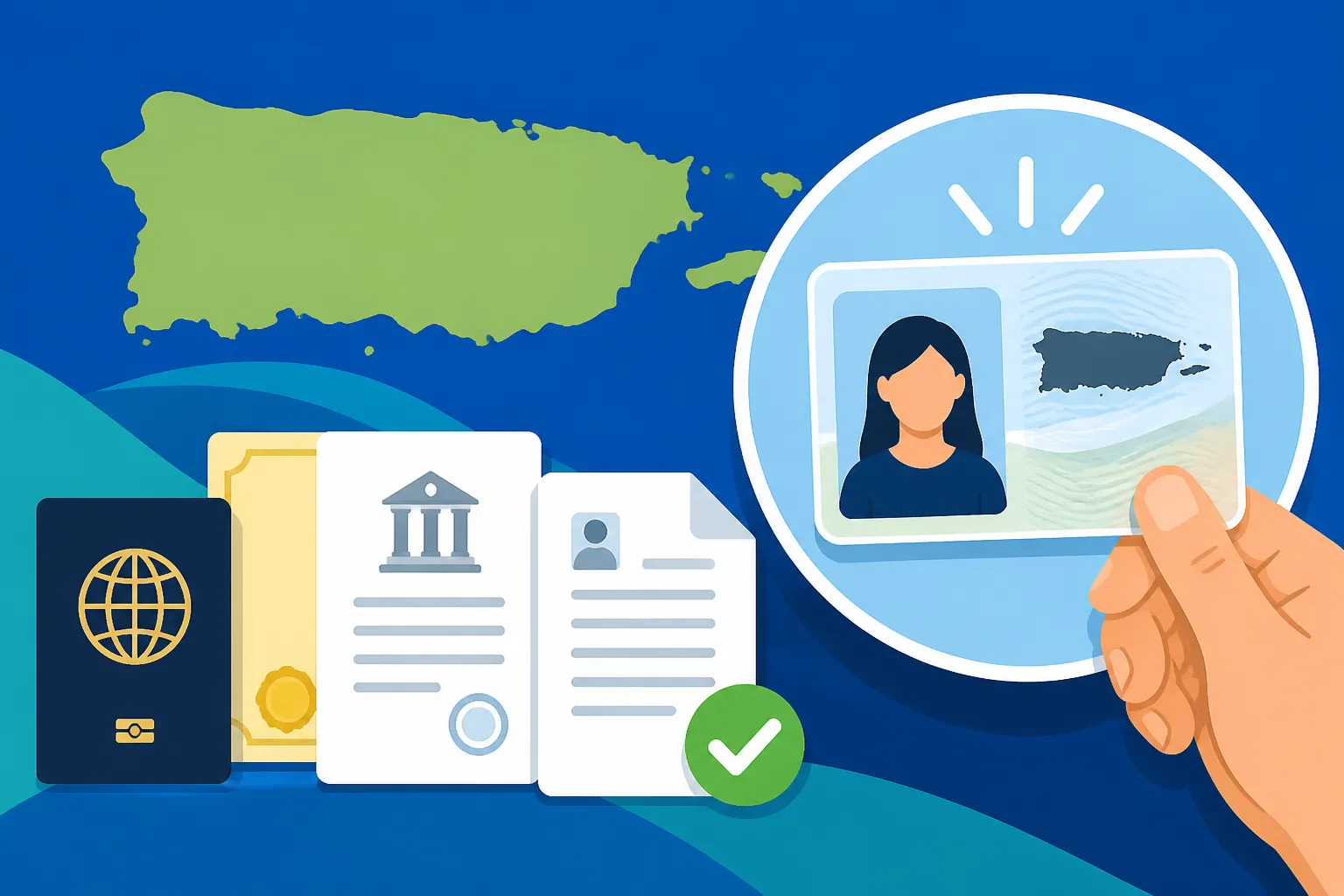
What Documents Do I Need to Get a Puerto Rico ID?
Moving to Puerto Rico, you quickly realize that while it's part of the U.S., many of the administrative processes feel like a world away from the mainland. One of the first hurdles newcomers often face, right after figuring out how to get their electricity running or their car registered, is securing a local identification card. It can feel daunting, confusing, and frankly, a bit like a scavenger hunt for documents. This guide will walk you through exactly what documents you'll need to get your Puerto Rico ID, making the process a little less painful and a lot more predictable.
The Quest for a Puerto Rico ID: More Than Just a Card
When you first arrive, your mainland driver's license or state ID might seem sufficient for everything. And for a while, it largely is. But soon enough, you'll hit a wall where having a local Puerto Rico ID becomes absolutely crucial. Trust me, I’ve been there, flashing my old California license only to be met with a polite, yet firm, "No, señor/señora, for this, you need a licencia de Puerto Rico or identificación del gobierno de Puerto Rico."
Why a Local ID is Essential and Not Just for Driving
A Puerto Rico ID, whether it’s a non-driver identification card or a driver’s license, quickly becomes your golden ticket for integrating into island life. Beyond the obvious need for driving legally, this little card unlocks a surprising number of doors. Think about opening a local bank account; while some banks might initially accept a mainland ID, others, especially smaller credit unions or cooperativas, will prefer or even require a local one. When you’re trying to navigate the complexities of Banking in Puerto Rico: A Complete Guide for Newcomers (2027), having that local ID makes a significant difference.
Then there’s the whole ordeal of setting up utilities. While you can usually get by with a lease agreement and passport or mainland ID to get water (AAA) and electricity (LUMA), later interactions or changes might prompt a request for a local ID. Even something as simple as picking up a registered package at the post office or proving your age at a local bar can sometimes require a local form of identification. It establishes your presence, your commitment, and frankly, your legitimacy as a resident.
Consider healthcare, too. While a robust international health plan like one from Cigna Global might cover your medical needs, presenting a local ID at a doctor's office or pharmacy simply streamlines the process. It helps with their record-keeping and reduces potential confusion, especially if your name is common or your mainland address is causing glitches in their system.
Understanding the CESCO System – Your New Best Friend (or Foe)
The place where all this ID magic happens is CESCO (Centro de Servicios al Conductor). Think of it as Puerto Rico's equivalent of the Department of Motor Vehicles (DMV). And just like any DMV, CESCO branches can be… an experience. You’ll hear stories, believe me. Long lines, specific requirements, and the occasional need to bring a document you didn't even know existed. But don't let the horror stories deter you. With the right preparation, your CESCO visit can be efficient, or at least, manageable. This is where knowing exactly what documents to bring is paramount. Arriving unprepared is a surefire way to spend hours in line only to be told you're missing one crucial piece of paper.
My advice? Embrace patience. Lots of it. And prepare, prepare, prepare. It's not just about showing up; it's about showing up correctly. For those wondering, yes, it's possible to get a non-driver ID card that serves all the same identification purposes as a driver's license, without having to take a driving test. This is an excellent option for those who don't plan on driving or who are still getting comfortable with Driving in Puerto Rico: Licenses, Registration and Rules for Newcomers (2027).
Essential Documents for Your Puerto Rico ID Card (Non-Driver's)
Getting a non-driver ID card is often the path of least resistance for many newcomers who just need a valid local ID. It satisfies most requirements without the added complexity of a driving test. However, the document checklist is still quite specific, and you'll want to have everything in order.
Proof of Identity and Citizenship
This is your foundation. CESCO needs to be absolutely sure who you are and that you’re legally allowed to be issued a government ID. For U.S. citizens moving from the mainland, your options are pretty straightforward, but you must bring original documents or certified copies. No photocopies here will do for the primary proof.
- Original Birth Certificate: This is one of the most common and widely accepted documents. If you have your original, bring it. If not, you'll need a certified copy issued by the vital records office in the state where you were born. Make sure it's the long-form certificate if available, as some agencies are particular about abbreviated versions.
- Valid U.S. Passport or Passport Card: This is often the easiest route if you have one. It serves as excellent proof of both identity and U.S. citizenship. Just ensure it's not expired.
- Certificate of Naturalization: For those who became U.S. citizens through naturalization, this official document (Form N-550 or N-570) is what you'll need.
- Consular Report of Birth Abroad (CRBA): If you were born outside the U.S. to U.S. citizen parents, your CRBA (Form FS-240, DS-1350, or FS-545) is the document required.
It’s crucial to remember that CESCO will likely hold onto these original documents for a period during the processing, so be prepared for that. Always double-check their current policy, but generally, they review, scan, and return them fairly quickly.
Proof of Social Security Number
Your Social Security Number (SSN) is another key piece of information CESCO requires. This connects your identity to your federal records. Again, originals or official documents are the way to go.
- Original Social Security Card: This is the most direct way to prove your SSN. Ensure it's signed.
- W-2 Form: A recent W-2 form, especially if it's from a Puerto Rico employer, can also serve as proof.
- Pay Stub: A recent pay stub displaying your name and SSN is usually acceptable.
- SSA-1099 or Non-SSA-1099 Form: These tax forms, reporting Social Security benefits or other income, also clearly show your SSN.
While a tax return (Form 1040) might seem like an obvious choice, CESCO sometimes prefers the more direct documents listed above. When you’re preparing for your move, Sirelo can help you keep track of these vital documents, ensuring you don't accidentally pack them away where they're hard to access when you need them for CESCO.
Proof of Address in Puerto Rico
This is often where newcomers hit a snag. CESCO wants undeniable proof that you actually live in Puerto Rico, not just that you're visiting or have a mailing address here. And the name on the proof must match the name on your identity documents.
- Utility Bills: This is the gold standard. A recent LUMA (electricity) bill or an AAA (water) bill with your name and Puerto Rico address on it is usually perfect. The trick, of course, is that setting up utilities often requires a lease, and sometimes, you need an ID for the lease! It’s a bit of a chicken-and-egg situation. This is why many newcomers find themselves initially using a trusted friend or family member's address on bills, with an affidavit (see next point).
- Rental Agreement or Lease: An official, signed lease agreement for a property in Puerto Rico, with your name as the tenant, is excellent proof.
- Bank Statement: A recent statement from a Puerto Rico bank, like Banco Popular or Oriental Bank, mailed to your physical address here, works well. Remember, you might need an ID to Open a Puerto Rico Bank Account as a New Resident? in the first place, so this isn't always the first option available.
- Mortgage Statement or Property Deed: If you've already bought property, a recent mortgage statement or the property deed (escritura) in your name is perfect. Understanding Property Ownership and Titles in Puerto Rico is a good starting point if you're going this route.
- Official Correspondence from a Government Agency: This could be a letter from Hacienda (the local tax authority) or another Puerto Rico government entity, addressed to you at your PR address.
The All-Important Affidavit
What happens if you're a newcomer, staying with a friend or family member, and don't yet have utility bills or a lease in your name? This is where the affidavit comes into play, and it's a common lifeline for many expats.
An affidavit is a sworn statement, notarized, where someone (the affiant) attests to something under oath. In this case, a person who does have a utility bill or lease in their name for your Puerto Rico address would swear that you reside with them at that address.
Here’s how it generally works:
- Find your affiant: This must be a trustworthy person who has proof of address (utility bill, lease) at the residence where you're living.
- Draft the affidavit: You can often find templates online, or a local notary can help you draft one. It needs to clearly state your name, the affiant’s name, the Puerto Rico address, and that you reside there.
- Notarize it: Both you and the affiant must go to a notary public in Puerto Rico. They will witness your signatures and officially stamp the document, making it legally binding. There will be a fee for this service.
This affidavit, combined with the affiant's proof of address, can satisfy CESCO's requirement. It’s a bit of extra legwork, but it saves you from being turned away.
Documents for a Puerto Rico Driver's License (Which Also Serves as ID)
For many, getting a driver's license is the preferred route, as it serves both as official identification and grants you the ability to legally drive. The document requirements for a driver's license overlap significantly with the non-driver ID but include additional steps related to your driving history and medical fitness.
Transferring Your Mainland License
If you already hold a valid driver's license from a U.S. state, transferring it to a Puerto Rico license is generally simpler than starting from scratch. However, it's not a direct swap; there are still specific steps to follow.
- Your Current Valid Mainland Driver's License: This is crucial. It must be unexpired. CESCO will often keep this license when they issue you the Puerto Rico one, so be prepared for that.
- Proof of Identity and Citizenship: Same as for the non-driver ID (birth certificate, U.S. passport, etc.). Bring the originals.
- Proof of Social Security Number: Same as for the non-driver ID (SS card, W-2, etc.).
- Proof of Address in Puerto Rico: Same as for the non-driver ID (utility bills, lease, notarized affidavit, etc.).
- Medical Certificate (Certificado Médico): This is a unique requirement in Puerto Rico. You need to get a physical exam from a licensed doctor in Puerto Rico, who will then fill out and sign a specific CESCO medical form. This form certifies that you are medically fit to drive. You can often get this done at a walk-in clinic or your new primary care doctor. How to Find and Register with a Primary Care Doctor in Puerto Rico can help you find a doctor who can provide this.
- Affidavit of License Validity (if required): Sometimes, CESCO might ask for an affidavit stating the validity of your mainland license, especially if it's nearing expiration or has any special endorsements. This isn't always required but be aware it could come up.
- Application Forms: You'll need to fill out the relevant CESCO application forms for a new driver's license. These are often available online or at the CESCO office.
Applying for a New Driver's License
If you've never held a driver's license before, or your mainland license is long expired, you'll need to go through the full new applicant process. This includes all the documents listed above for transferring a license, plus some additional steps:
- Learner's Permit (Permiso de Aprendizaje): You'll first need to apply for and obtain a learner's permit. This requires passing a written knowledge test about Puerto Rico driving laws.
- Driving Test (Examen Práctico): After holding a learner's permit for a specified period (usually a few months) and completing any required driving instruction, you'll need to schedule and pass a practical driving test.
- Proof of Driver Education (if applicable): If you completed a driver's education course, documentation of this might be required, especially for younger applicants.
The entire process, from getting your learner's permit to passing your driving test, can take several months, so factor that into your planning if you don't already have a valid license.
Navigating the CESCO Visit: Tips from a Veteran
Okay, you’ve gathered your documents. Now for the actual visit to CESCO. This is where preparation truly pays off. Remember, the goal is to make it through in one visit, not several.
Preparation is Key: Don't Forget the Copies!
While CESCO will require original documents for verification, they often need copies to keep for their records. Do yourself a massive favor and make multiple photocopies of every single document you plan to bring. Seriously, make two or three copies of everything: your birth certificate, passport, social security card, utility bills, lease, affidavit, medical certificate – the works. I've seen countless people sent away just because they didn't have a copy, and there's rarely a copy machine available on-site.
Also, try to fill out any application forms beforehand. You can usually find these on the official CESCO website (often abbreviated as DTOP for the Department of Transportation and Public Works, which oversees CESCO). Having them completed neatly and accurately will shave precious minutes off your visit and show the CESCO agent you're organized. Consider consulting our guide on The Complete Relocation Checklist for Moving to Puerto Rico (2027) for more comprehensive advice.
The Medical Certificate Requirement
As mentioned, this is a distinct Puerto Rico requirement that can catch newcomers off guard. Before heading to CESCO, you must visit a licensed doctor in Puerto Rico to get your medical certificate. This is essentially a quick physical check-up to ensure you meet the basic health requirements for driving. They'll check your vision, hearing, and general physical condition. The doctor will then fill out a specific form (often called an examen médico) that you take to CESCO.
These are typically available at many local clinics, sometimes even at pharmacies that have a doctor on staff for minor consultations. Don't wait until you're at CESCO to realize you need this, as it will mean a wasted trip.
The Payment Process and Fees
There are fees associated with obtaining a Puerto Rico ID or driver's license. These fees can vary, so it's always best to check the most current information on the CESCO website or call your local CESCO office. Generally, you'll pay a small fee for the issuance of the ID/license itself, and sometimes additional fees for specific stamps (sellos) or processing.
Important: CESCO offices typically accept payment via credit card, debit card, or cash. Some locations might have specific preferences or limitations, so it's wise to have a few options available. Don't assume all locations accept checks.
Here’s a quick summary of the common documents you'll need:
| Document Category | Non-Driver ID | Driver's License (Transferring) | Driver's License (New) |
|---|---|---|---|
| Proof of Identity/Citizenship | Original Birth Cert., US Passport, Naturalization Cert. | Original Birth Cert., US Passport, Naturalization Cert. | Original Birth Cert., US Passport, Naturalization Cert. |
| Proof of Social Security | Original SS Card, W-2, Pay Stub, SSA-1099 | Original SS Card, W-2, Pay Stub, SSA-1099 | Original SS Card, W-2, Pay Stub, SSA-1099 |
| Proof of PR Address | Utility Bill, Lease, Mortgage Stmt., Notarized Affidavit | Utility Bill, Lease, Mortgage Stmt., Notarized Affidavit | Utility Bill, Lease, Mortgage Stmt., Notarized Affidavit |
| Current Driver's License | N/A | Valid Mainland Driver's License | N/A |
| Medical Certificate | N/A (sometimes required for Real ID compliant non-drivers, but less common) | Required (from PR licensed doctor) | Required (from PR licensed doctor) |
| Learner's Permit | N/A | N/A | Required (must pass written test) |
| Proof of Driving Test | N/A | N/A | Required (must pass practical test) |
| Application Forms | Completed CESCO Application Forms | Completed CESCO Application Forms | Completed CESCO Application Forms |
| Fees | Applicable ID Issuance Fee | Applicable License Issuance Fee | Applicable Permit, Test, and License Issuance Fees |
Getting your Puerto Rico ID or driver's license is a significant step in establishing your life here. It's often one of the foundational requirements for many other administrative tasks, from How to Register and Title a Vehicle (DTOP/CESCO) in Puerto Rico to even simple things like picking up a package. Take your time, gather everything meticulously, and breathe. You've got this! And remember, there are always resources available, like our guide on The Complete Guide to Moving to Puerto Rico: Your First 90 Days (2027), to help you along the way.
Disclaimer
The information provided in this guide is for general informational purposes only and does not constitute legal, financial, or professional advice. Requirements for obtaining identification documents in Puerto Rico are subject to change by local authorities. Always verify the most current requirements with CESCO (DTOP) or a qualified local professional before taking any action.