What Is the Year-of-Move Rule for Puerto Rico Residency?
Moving to Puerto Rico, with its promise of sunshine and a vibrant culture, often comes with a tangled web of administrative challenges, especially when it comes to residency. One of the trickiest aspects new arrivals grapple with is understanding how their tax residency actually begins. This guide will meticulously break down the often-misunderstood "year-of-move rule" for establishing bona fide residency in Puerto Rico, offering practical advice to help you navigate your transition smoothly.
Understanding Bona Fide Residency: A Quick Refresher
Before we dive into the specifics of the "year-of-move rule," it’s crucial to grasp the foundational concept of bona fide residency in Puerto Rico. This isn't just about packing your bags and buying a flight ticket; it’s a legal designation by the IRS that determines whether your income sourced from Puerto Rico is exempt from federal income tax. Without bona fide residency, you're essentially still treated as a mainland U.S. resident for federal tax purposes, regardless of where you physically live.
The IRS provides a clear, albeit sometimes complex, framework for determining bona fide residency. It’s not just about spending most of your time here, though that’s a huge part of it. It’s about genuinely severing ties with your previous tax home and establishing new, substantial connections to the island. Many newcomers mistakenly believe that merely being physically present is enough, but Uncle Sam looks for a deeper commitment. For a truly comprehensive look at this, you might find our article on How to Establish Bona Fide Residency in Puerto Rico (2027) incredibly helpful.
The Three Core Tests for Bona Fide Residency
To be considered a bona fide resident of Puerto Rico, you generally need to satisfy three specific tests for an entire tax year. These are the backbone of your residency claim and failing even one can undermine your entire status. It's a bit like a three-legged stool – remove one leg, and the whole thing falls over.
First, there’s the Presence Test. This is probably the most straightforward: you must be present in Puerto Rico for at least 183 days during the tax year. That’s more than half the year. It sounds simple enough, but keeping a meticulous log of your entry and exit dates is critical. A day counts if you're present for any part of it, even just passing through for a layover, but generally it means physically being on the island. People often get caught out by short trips back to the mainland for business or family, which can quickly add up and jeopardize their 183-day count if not carefully managed.
Second, you have the Tax Home Test. Your "tax home" must be in Puerto Rico. This means your primary place of business, employment, or post of duty, regardless of where you maintain your family home. If you don't have a regular or principal place of business, your tax home is where you regularly live. Crucially, you cannot have a tax home in the U.S. (meaning the 50 states and District of Columbia) during any part of the tax year. This is where things can get tricky for remote workers or those with lingering mainland business interests. The IRS wants to see a genuine shift in your professional center of gravity.
Finally, there’s the Closer Connection Test. This is often the most subjective but equally vital. You cannot have a "closer connection" to the U.S. or any foreign country than to Puerto Rico. This test looks at all the facts and circumstances of your life: where your family lives, where you maintain your personal belongings, where your bank accounts are, where you hold your driver's license, where you vote, and where you conduct your social, civic, and religious activities. It’s about demonstrating a holistic commitment to Puerto Rico as your new home. For more detailed insights into all three, our piece on Understanding the Presence, Tax Home and Closer Connection Tests in Puerto Rico breaks down each component in granular detail.
Unpacking the "Year-of-Move Rule" for Residency
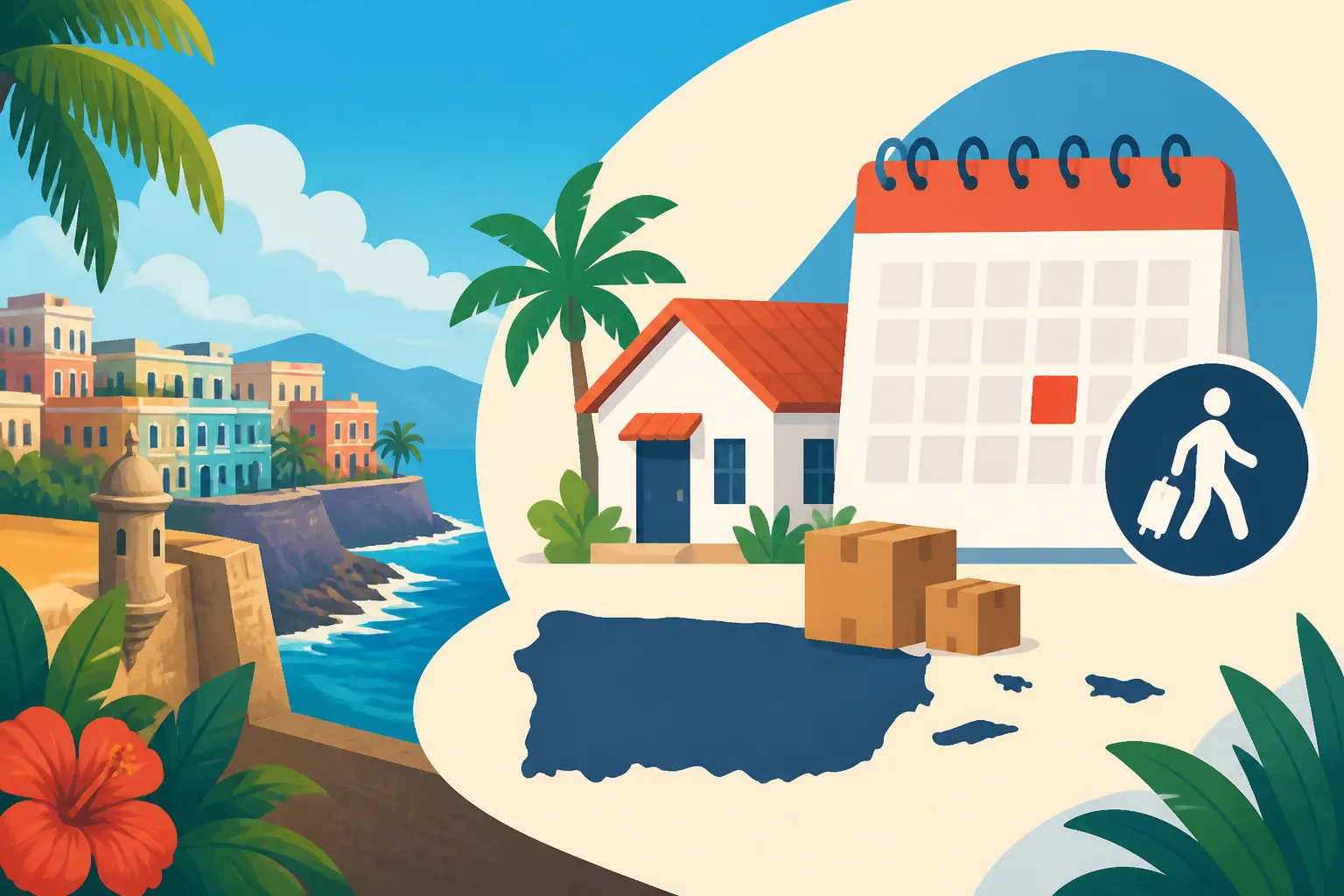
Now that we've set the stage, let's tackle the "year-of-move rule." This is a crucial provision that offers a bit of flexibility for those who don't spend a full 183 days in Puerto Rico during their initial year of relocation. The rule recognizes that life doesn't always fit neatly into calendar years and that moving is a process, not an instant event. Essentially, it allows you to be considered a bona fide resident for your first partial tax year of moving to Puerto Rico, even if you don't meet the 183-day presence test in that specific year, provided you meet other conditions.
This rule is a lifesaver for many, preventing the awkward situation where you've genuinely moved but don't quite hit the numerical target in your first few months. For instance, if you move to Puerto Rico in September, it's virtually impossible to clock 183 days on the island by December 31st of that same year. The "year-of-move rule" bridges this gap, giving you a pathway to establish your bona fide residency without having to wait a full calendar year. It's about easing the transition, not creating a loophole for brief stays.
How the Rule Simplifies Your First Year
The "year-of-move rule" simplifies your first year by allowing you to qualify as a bona fide resident for a partial tax year. This means that if you move to Puerto Rico mid-year, the IRS can treat you as a bona fide resident from the date you establish residency through the end of that tax year, if you then meet the presence test (183 days) for the following full tax year. It’s a bit of a look-ahead provision, offering provisional residency status based on your future commitment.
For example, imagine you pack up your life and move to San Juan on October 1st, 2025. You start renting an apartment, get your utilities set up, and begin working from a local co-working space. You spend the remainder of 2025 (October, November, December) on the island, a total of 92 days. Under the regular 183-day rule, you wouldn’t qualify as a bona fide resident for 2025. However, if you satisfy the other two tests (tax home and closer connection) for 2025, and you meet the 183-day presence test, tax home test, and closer connection test for the entire following year (2026), then the "year-of-move rule" allows you to be treated as a bona fide resident from October 1st, 2025, onward. This effectively makes your Puerto Rico-sourced income exempt from federal tax for that partial 2025 period. It's an incentive to genuinely commit to the island for the long haul.
Documenting Your Days: What Counts and What Doesn't
When relying on the year-of-move rule, meticulous record-keeping becomes even more paramount. While you don't need to hit the 183 days in your initial partial year, proving your intent to make Puerto Rico your long-term home, and demonstrating that you will meet the presence test in the subsequent year, is critical. This means documenting every single day you spend on the island and, just as importantly, every day you spend off it.
What counts as a day of presence is generally any day you are physically present in Puerto Rico for any part of the 24-hour period. This includes travel days into and out of the island. However, transit days where you are merely passing through a U.S. airport without a substantial stop typically do not count as days spent outside Puerto Rico for the purpose of breaking your presence. Keeping a detailed calendar, flight itineraries, ferry tickets, and even receipts from local businesses can serve as proof. Government offices, like Hacienda in Puerto Rico, might request this information if there are questions about your residency, especially if you're claiming tax benefits under specific programs.
What absolutely doesn't count are days spent in the U.S. (the 50 states or D.C.) that are significant. If you’re constantly flying back for extended periods, even during your initial year, it weakens your claim of establishing a "closer connection" to Puerto Rico. The IRS is looking for a pattern of behavior that shows a genuine commitment to your new life here. This is especially true for those who might try to leverage the rule without a real intent to settle. Think about it: if you move in November, spend 30 days, then leave for a month-long holiday in Florida, your claim of a genuine move might look pretty thin, even if you promise to be here for 183 days next year.
Practical Implications and Common Pitfalls
The "year-of-move rule" is a valuable tool, but it's not without its complexities and potential traps. Understanding these nuances can save you a lot of headaches, especially when dealing with two separate tax authorities – the IRS (federal) and Hacienda (Puerto Rico's treasury department). Your life during this transitional period needs to reflect a genuine shift in domicile, not just a temporary change of scenery. Our article on The Complete Guide to Moving to Puerto Rico: Your First 90 Days (2027) provides excellent practical steps for setting up your life effectively during this critical initial phase.
One of the biggest pitfalls is assuming that simply being present is enough. As discussed, the tax home and closer connection tests are equally vital. Many expats, particularly those working remotely, might accidentally retain a tax home on the mainland or maintain stronger personal and economic ties there, thereby jeopardizing their bona fide residency, even with the year-of-move flexibility. It's a holistic assessment, and every detail matters.
Balancing Mainland Ties and Puerto Rico Connections
During your year of move, and even afterward, carefully managing your connections to the mainland versus those in Puerto Rico is paramount. The "closer connection" test specifically scrutinizes this balance. While it’s natural to have family and friends on the mainland, your primary social, civic, and economic center should shift to Puerto Rico.
Let's consider a hypothetical scenario: you move to Puerto Rico, but your spouse and children remain on the mainland for a few more months to finish the school year. While this is understandable logistically, it creates a potential issue for the "closer connection" test. The IRS looks at where your immediate family lives, where you own property, where your primary bank accounts are, where you're registered to vote, and even where your pets live. If most of these ties remain on the mainland, it can be challenging to prove a closer connection to Puerto Rico, even if you’re physically present. For those with significant assets, our guide on Understanding Double Reporting and FBAR Rules for PR Residents can offer further clarification on financial reporting requirements.
The goal is a demonstrable shift. This means things like getting a Puerto Rico driver's license, registering to vote here, opening local bank accounts (like with Banco Popular or Oriental Bank), moving your valuable personal belongings, and engaging with local communities and organizations. You want a clear paper trail and a lifestyle that unequivocally points to Puerto Rico as your new home. For those who frequently travel, carefully documenting the purpose of your trips can also be helpful. Business trips may be viewed differently than extended personal vacations for the purpose of the closer connection test.
Financial and Tax Considerations in the Transition Year
The financial implications during your year of move are significant. You'll be dealing with two separate tax jurisdictions, and understanding How Puerto Rico Taxes Work: Federal vs Local (Hacienda) Explained (2027) is absolutely essential. While the year-of-move rule can grant you bona fide residency for a partial year, it primarily impacts how your Puerto Rico-sourced income is treated by the IRS – specifically, it can make it exempt from federal income tax.
However, any income you earn from mainland sources before establishing bona fide residency, or any mainland-sourced income earned after your move, will still be subject to U.S. federal income tax, regardless of the year-of-move rule. This is a critical distinction many new residents overlook. For instance, if you sold a property on the mainland in July before moving to Puerto Rico in October, the capital gains on that sale are fully taxable by the IRS. Even if you hold investments on the mainland, their income generally remains subject to federal tax, even as a bona fide resident.
You’ll also need to consider your Puerto Rico income tax obligations. As soon as you become a resident of Puerto Rico, generally, all your income (regardless of source) becomes subject to Puerto Rico income tax, with the significant exception of income exempt under Acts like Act 60. Even if the IRS grants you bona fide residency for a partial year, Hacienda's rules for local tax residency may operate slightly differently. It’s a two-front battle, and understanding both sets of rules is critical. Our article on The Complete Guide to Taxes in Puerto Rico for New Residents (2027) is an invaluable resource for navigating these complexities.
Navigating the Process: Tips for a Smooth Transition
Making the move to Puerto Rico, even with the year-of-move rule in play, requires careful planning and execution. It's not just about meeting the legal requirements, but also about practically integrating into your new home. From finding a place to live to understanding the local customs, every step contributes to building your new life and reinforcing your claim to bona fide residency.
One of the most valuable pieces of advice I can offer as a veteran expat is to not go it alone. There are professionals and resources specifically designed to help people like us navigate these waters. Ignoring expert advice can lead to costly mistakes, both financially and in terms of your residency status. Think of it as investing in peace of mind.
Professional Guidance: When to Seek Help
Given the intricacies of U.S. and Puerto Rico tax law, especially concerning bona fide residency and the year-of-move rule, seeking professional guidance isn't just a suggestion – it's often a necessity. A qualified tax advisor or attorney specializing in Puerto Rico tax residency can review your individual situation, help you understand the specific requirements, and guide you through the documentation process. They can provide tailored advice that a general guide simply cannot.
This is especially true if your situation is complex. Do you own businesses on the mainland? Do you have significant investment income? Are you frequently traveling? All these factors can impact your residency status and the interpretation of the year-of-move rule. A good advisor will help you plan your move to optimize your tax position and ensure compliance. Many firms specialize in this, and they can be invaluable. Relocation specialists can also assist with the practical aspects of moving, which can free you up to focus on the legal and financial necessities. Companies like Sirelo can help coordinate the logistical aspects of your move, ensuring your belongings arrive safely while you focus on the bureaucratic hurdles.
Beyond tax and legal advice, consider consulting with a local real estate agent to understand the housing market, or an insurance broker to get proper coverage. These professionals become part of your new support network on the island, helping you establish those crucial "closer connections" that the IRS looks for.
Preparing for Healthcare During Your Move
Moving to a new place always brings questions about healthcare, and Puerto Rico is no exception. It’s one of those things you don't think about until you need it, and then you really need it. When you're making your move, especially during that transitional year, ensuring you have continuous and adequate health coverage is absolutely vital. You don't want to find yourself in a medical emergency without a plan. Our article How to Get Health Insurance When You Move to Puerto Rico goes into depth on this exact topic.
If you're moving mid-year, your mainland health insurance might not cover you adequately in Puerto Rico, or it might only offer emergency coverage with high out-of-network costs. This gap can be a significant source of stress and financial risk. While you're establishing your new life and waiting for local health insurance to kick in – which can take time, depending on enrollment periods and processing – consider short-term international health insurance options. Providers like Cigna Global offer plans that can cover you during this transitional phase, ensuring you have comprehensive coverage regardless of where you are in the world, including Puerto Rico. This gives you peace of mind that you're protected while you get settled.
Once you’re settled and have established your bona fide residency, you'll want to explore the local options. Puerto Rico has both public (Vital Plan) and private healthcare systems, and choosing the right one depends on your needs and financial situation. Understanding Health Insurance in Puerto Rico: Plans, Costs and Options Explained (2026) is a must for long-term residents. Don't wait until an emergency strikes to figure out your healthcare; plan this out well in advance of your move.
Here's a quick comparison of the Year-of-Move Rule vs. Standard Residency:
| Feature | Standard Bona Fide Residency | Year-of-Move Rule (Initial Year) |
|---|---|---|
| Presence Test | At least 183 days in PR during the current tax year. | Not required to meet 183 days in the current partial year. |
| Future Presence | N/A | Must meet 183 days in PR in the following full tax year. |
| Tax Home Test | Tax home must be in PR for the entire tax year. | Tax home must be in PR from the date of relocation. |
| Closer Connection Test | No closer connection to US/foreign country than PR for the entire tax year. | No closer connection to US/foreign country than PR from the date of relocation. |
| Applicability | Every full tax year. | Only for the first partial tax year of moving. |
| Benefit | PR-sourced income exempt from federal tax for the full year. | PR-sourced income exempt from federal tax from the date of relocation to year-end. |
| Key Requirement | Consistent annual compliance. | Demonstrable intent for long-term residency and future compliance. |
The "year-of-move rule" for Puerto Rico residency is an essential provision that offers flexibility during your initial transition. It acknowledges that moving to a new place is a process, not a singular event. By understanding its requirements, diligently documenting your steps, and seeking professional advice when needed, you can successfully establish your bona fide residency and fully embrace your new life on the island. Just remember, it's about genuine commitment, not just a temporary visit. For a comprehensive overview, don't forget to check out The Complete Relocation Checklist for Moving to Puerto Rico (2027).
Disclaimer
The information provided in this article is for general informational purposes only and does not constitute legal, tax, or professional advice. While we strive to provide accurate and up-to-date information, laws and regulations regarding residency and taxation in Puerto Rico and the United States are complex and subject to change. It is essential to consult with qualified legal and tax professionals specializing in Puerto Rico and U.S. tax law to address your specific situation before making any decisions related to your residency or financial planning.