Can I Get Fiber Internet Anywhere in Puerto Rico?
The dream of moving to Puerto Rico often comes with a mental checklist: find a home, set up utilities, and, high on many lists, secure reliable internet. But when it comes to fiber internet, the question "Can I get it anywhere?" is a common one that often brings a dose of island reality. This guide aims to manage expectations, highlight where fiber thrives, and explain your options for staying connected across the beautiful but infrastructurally diverse island.
The Fiber Reality: Not Quite "Anywhere" Yet, But Rapidly Expanding
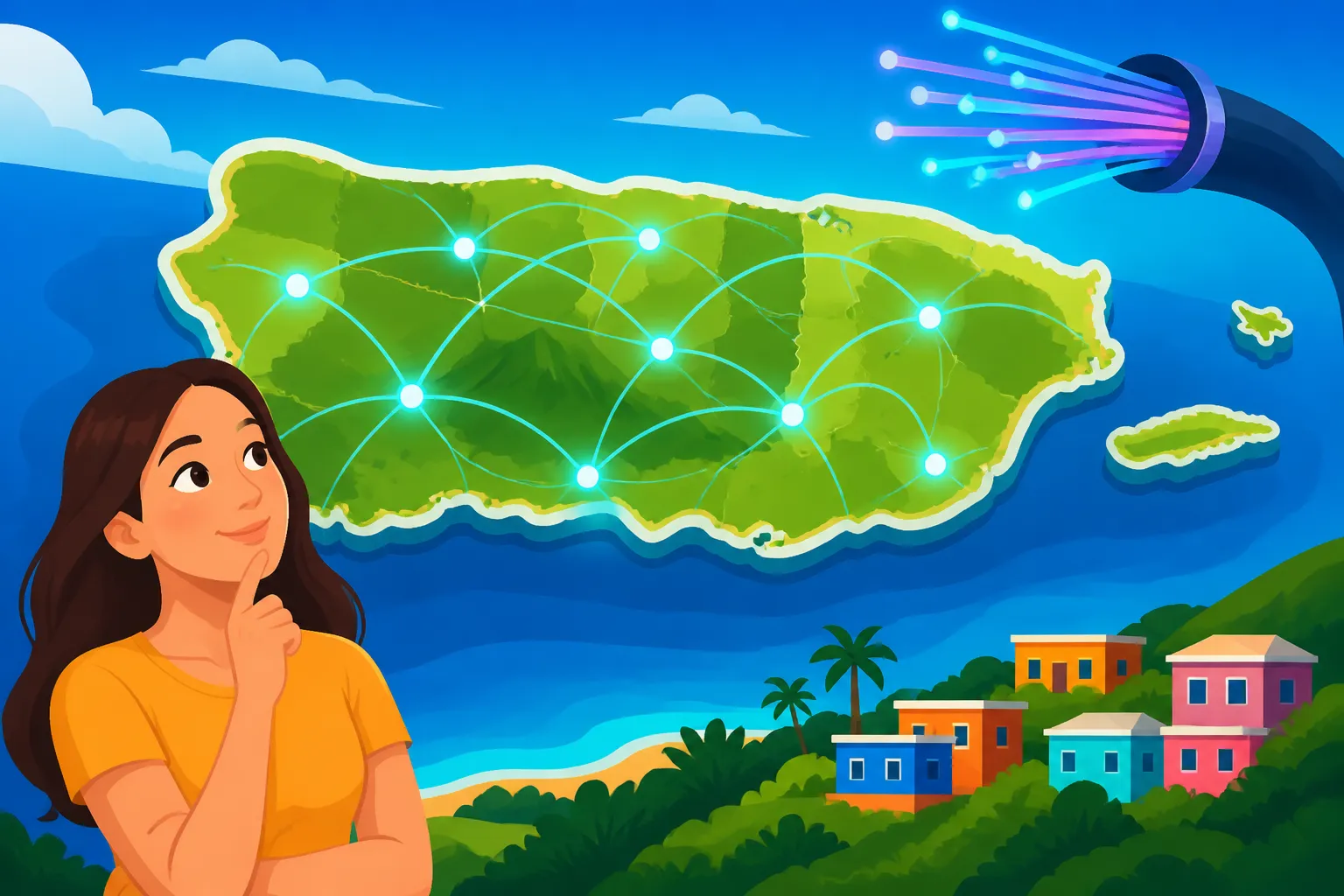
Let's be honest right from the start: no, you probably can't get fiber internet anywhere in Puerto Rico, at least not in the same way you might find it ubiquitous in many mainland U.S. cities. The island's unique geography, historical infrastructure challenges, and the devastating impact of hurricanes like Maria in 2017 have made the rollout of modern, high-speed fiber a complex, ongoing endeavor. However, it's crucial to understand that Puerto Rico's internet landscape has been evolving at a furious pace. What wasn't available even a few years ago might be popping up in your desired neighborhood today.
For many years, the island relied heavily on older copper infrastructure and limited cable networks, leading to slower speeds and less reliable connections outside major urban centers. But recognizing the critical need for robust connectivity, significant investments have been poured into expanding fiber optic networks. This means that while rural areas and some older neighborhoods might still be playing catch-up, the situation is far from static. New developments, particularly in popular expat hubs, often come with fiber pre-installed or readily available, making a huge difference for those who rely on fast internet for work or entertainment. It's a patchwork quilt, but the fiber threads are getting longer and more numerous by the day.
Understanding the Geographic Divide
The biggest factor dictating fiber availability is geography. Like many places, urban centers naturally received infrastructure upgrades first, and Puerto Rico is no different. The more densely populated areas and newer developments are where you'll find the most robust fiber networks.
- Urban Cores and Newer Developments: In cities like San Juan, particularly neighborhoods like Condado, Santurce, and Isla Verde, and in bustling municipalities like Bayamón, Guaynabo, and Caguas, fiber optic internet is increasingly common. Many new residential buildings and renovated commercial spaces in these areas are built with fiber infrastructure in mind. The same goes for upscale communities like Dorado, where developers have invested heavily in modern amenities, including state-of-the-art internet. You'll often find multiple providers vying for your business, offering competitive speeds and packages.
- Suburban Areas: As you move slightly out from the immediate urban sprawl into more suburban zones, fiber availability can become a bit more hit-or-miss. Some well-established residential areas might have fiber, while others still rely on cable or fixed wireless solutions. It often depends on the specific neighborhood, the age of the infrastructure, and whether a provider has recently expanded their network into that particular block.
- Rural and Mountainous Regions: This is where the "anywhere" question truly hits a wall. The cost and logistical challenges of laying fiber optic cable through rugged mountainous terrain, dense forests, or sparsely populated coastal areas are immense. While some smaller towns might have limited fiber access, it's generally not the norm. Here, fixed wireless or satellite internet often become the primary options, which, while functional, typically don't offer the symmetrical speeds or low latency of fiber.
This geographic divide means that your internet experience can vary wildly based on your chosen location. When you're looking for affordable housing in Puerto Rico, or deciding which towns are most popular with mainland transplants in Puerto Rico, internet availability should definitely be a consideration beyond just the vibe and amenities.
Post-Hurricane Infrastructure Enhancements
The series of hurricanes, particularly Maria in 2017, was devastating to Puerto Rico's infrastructure, including its communication networks. While tragic, it also spurred a massive overhaul and investment in more resilient infrastructure. A lot of the rebuilding efforts have prioritized undergrounding cables where possible and utilizing more robust materials, including fiber optic lines, which are inherently less susceptible to electromagnetic interference and corrosion compared to traditional copper.
This means that many areas that were completely cut off after the hurricanes now have brand-new, more advanced networks. It’s a bittersweet reality: the destruction paved the way for a more modern grid. So, when you're looking at a home, especially if it's been recently rebuilt or is in a newer development, there's a good chance it benefited from these post-Maria upgrades. However, these improvements are not uniform, and some areas are still working with older setups.
Major Internet Providers and Their Fiber Footprint
When you're trying to set up your new life here, understanding your options is key. There are several internet service providers (ISPs) in Puerto Rico, and their fiber offerings are what you'll want to investigate first. Each has its strengths and coverage areas, and it often pays to do a little research specific to your address.
Leading Providers and Their Fiber Offerings
The main players in the internet game here are typically Liberty, Claro, and a growing number of smaller, more niche fiber providers.
- Liberty Puerto Rico: This is often the biggest name you'll hear. Liberty acquired what was formerly Choice Cable and then AT&T's Puerto Rico operations, making them a dominant force. They offer a mix of cable internet (coaxial) and an increasingly wide fiber-to-the-home (FTTH) network. Their fiber footprint is robust in many urban and suburban areas, offering speeds up to gigabit and beyond. If fiber is available in your area, Liberty is usually one of the first providers to check. Their customer service can be a mixed bag, as is often the case with large utility companies on the island, so be prepared for some "island time" when it comes to installations or technical support.
- Claro Puerto Rico: Claro, owned by América Móvil, is another major player, especially known for its mobile services but also offering internet and TV. Claro has invested heavily in expanding its fiber network across the island. In many municipalities, if Liberty offers fiber, Claro likely does too, or vice versa. They are often competitive on pricing and speeds. Like Liberty, their reach is strongest in urban and more densely populated areas.
- Optico Fiber and Aeronet: These are examples of smaller, dedicated fiber providers that have carved out specific niches. Optico Fiber focuses exclusively on fiber optic connections and often serves specific developments or business parks, sometimes offering highly localized, high-performance service. Aeronet is another significant player, particularly in the business sector, but they also extend fiber services to residential areas where they have a footprint. These smaller providers can sometimes offer more personalized service, but their coverage is much more limited than the larger companies. Always check if one of these specialized providers serves your specific address.
- AWP (Aerostar Wireless Puerto Rico): While primarily known for fixed wireless internet, AWP also operates some fiber lines. They are often a good alternative in areas where traditional fiber from Liberty or Claro might not yet reach, but their primary offering remains fixed wireless.
When you're comparing options, it's not just about the advertised speed. Look at the upload speeds (fiber typically offers symmetrical or near-symmetrical upload/download, which is great for remote work), latency, and customer reviews specific to your area. Remember, the experience can vary greatly even within the same municipality. To truly know what is the best internet provider in Puerto Rico, you need to check availability at your exact address.
Checking Availability at Your Specific Address
This is the golden rule: always check directly with the providers using the exact address of your potential home or apartment. Websites often have "check availability" tools where you plug in your address. Don't rely on general neighborhood information; what's available two blocks away might not be available at your front door.
It's also a good idea to speak with neighbors or your landlord if possible. They can offer firsthand accounts of internet reliability, common issues, and which providers are easiest to deal with in that specific location. Sometimes, a building might have an exclusive agreement with a particular fiber provider, simplifying your choice but potentially limiting competition.
Alternatives When Fiber Isn't an Option
So, you've found your dream casita perched on a hillside in the west, or a charming old apartment in a historic town, and discovered fiber just isn't an option. Don't despair! While fiber offers the gold standard, there are other viable internet solutions that can keep you well-connected in Puerto Rico. You might have to adjust your expectations, but you can definitely still get online.
Fixed Wireless Internet
Fixed wireless internet is a strong contender, especially in areas where traditional cable or fiber hasn't reached. Companies like AWP (Aerostar Wireless Puerto Rico) and other local providers utilize wireless towers to beam internet signals directly to a receiver installed at your home. It's not mobile hotspot internet; it's a fixed service designed for residential use.
- Pros: Often available in more rural or underserved areas where fiber doesn't exist. Can offer decent speeds, sometimes comparable to mid-range cable. Installation usually involves mounting a small antenna on your roof or a high point.
- Cons: Line of sight to a tower is crucial, so terrain and trees can be an issue. Speeds can be affected by weather conditions or network congestion, especially during peak hours. Latency might be higher than fiber or cable.
- Realistic Expectations: You can expect speeds that are perfectly adequate for browsing, streaming in HD, and most remote work. If you're a heavy gamer or routinely upload huge files, you might notice the difference, but for everyday use, it's a solid option.
Cable Internet (Coaxial)
Before fiber became the new king, cable internet was the workhorse of high-speed connectivity. Liberty Puerto Rico still offers cable internet in many areas where fiber hasn't been deployed or as a more affordable alternative. This uses the existing coaxial cable infrastructure that also delivers television signals.
- Pros: Widely available in many urban and suburban areas. Can offer good download speeds, often reaching several hundred Mbps. Generally more reliable than DSL.
- Cons: Upload speeds are usually significantly slower than download speeds (asymmetrical). Can experience slowdowns during peak usage times in highly congested neighborhoods. The infrastructure is older and might be more prone to issues than fiber.
- Realistic Expectations: Cable internet is a perfectly functional solution for most households. You'll be able to stream 4K, hold video calls, and work remotely without major headaches, though you might notice the slower upload speeds if you're sending large files frequently.
Satellite Internet
For the truly remote locations, satellite internet remains an option. Providers like Starlink have emerged as game-changers in this space, offering significantly faster speeds and lower latency than traditional geostationary satellite internet services.
- Pros: Available virtually anywhere with a clear view of the sky, making it ideal for the most remote properties. Starlink, in particular, offers impressive speeds that can compete with some urban broadband options.
- Cons: Higher cost for equipment and monthly service. Latency, while improved with Starlink, is still generally higher than terrestrial options. Performance can be affected by severe weather.
- Realistic Expectations: If you're living truly off the beaten path, especially in a property without line-of-sight for fixed wireless, Starlink is a compelling choice. It offers genuine broadband in places where it was previously impossible. Older satellite internet services, however, should generally be a last resort due to high latency and data caps.
Mobile Hotspot/Módem (Temporary or Backup)
While not a primary home internet solution for long-term heavy use, a mobile hotspot from your phone or a dedicated mobile modem can be a lifesaver, especially when you're first arriving or for backup. Providers like Claro, Liberty Mobile, and T-Mobile offer robust 4G LTE and expanding 5G networks across the island.
- Pros: Instant connectivity. Great for temporary situations, travel, or as a backup when your primary internet goes down (which can happen, especially with power outages). Easy to set up and use.
- Cons: Data caps can be restrictive and costly for heavy use. Speeds can vary greatly depending on cellular signal strength and network congestion. Not ideal for multiple users or high-bandwidth activities like gaming.
- Realistic Expectations: Think of this as your go-to for initial setup, occasional work on the go, or bridging the gap. For example, when you're first navigating the complexities of setting up internet in your Puerto Rico home, having a reliable mobile connection with an eSIM from a provider like Airalo can keep you connected while you wait for installation. It’s also crucial to remember that how reliable the electricity grid in Puerto Rico is directly impacts your internet, so a cellular backup can be invaluable during power outages.
Here's a quick comparison of the common internet options you'll find in Puerto Rico:
| Internet Type | Typical Availability | Speeds (Download/Upload) | Reliability (General) | Best For | Considerations |
|---|---|---|---|---|---|
| Fiber Optic | Major urban centers, newer developments, some suburbs | Up to 1 Gbps+ / Up to 1 Gbps+ | Very High | Heavy users, remote work, streaming, gaming | Best option; check exact address availability. |
| Cable Internet | Urban & suburban areas (wider than fiber) | Up to 500 Mbps / Up to 50 Mbps | High (can vary with congestion) | General use, streaming, multiple users | Slower uploads; performance varies by neighborhood. |
| Fixed Wireless | Rural & underserved suburban areas, some businesses | 25-100 Mbps / 5-20 Mbps | Moderate (line of sight/weather) | Rural residents, basic remote work, streaming | Requires outdoor antenna; line of sight is key. |
| Satellite (e.g., Starlink) | Virtually anywhere with clear sky | 50-250 Mbps / 10-25 Mbps | Moderate (weather impact) | Very remote locations, last resort | Higher cost, higher latency, equipment needed. |
| Mobile Hotspot | Anywhere with cellular coverage | 10-100 Mbps / 5-20 Mbps (variable) | Variable (signal strength, network) | Temporary, backup, on-the-go | Data caps, not for primary home internet. |
Tips for Getting Connected and Managing Expectations
Moving to a new place like Puerto Rico, especially from the mainland, always involves a bit of a learning curve. Setting up utilities and internet is often one of those initial hurdles. While things are constantly improving, it's wise to approach the process with a flexible mindset and some practical strategies. Many resources, like Sirelo, which specializes in international moves, can provide insights into what to expect when setting up home utilities.
Do Your Homework Before Committing
Before you even sign a lease or buy a property, make internet availability a key question. Ask landlords or real estate agents which providers serve the address and what types of service are available. Don't just take their word for it; actually call the major providers like Liberty and Claro, or check their websites using the specific address. This can save you a lot of heartache later on. Knowing this upfront helps you avoid the scenario where you move in only to find your only internet option is slower than dial-up (okay, maybe not that slow, but you get the idea!).
Be Prepared for "Island Time" for Installation
Customer service and installation timelines in Puerto Rico can sometimes operate on what many expats lovingly (or exasperatedly) refer to as "island time." This means that while some installations go smoothly and quickly, others can take longer than you might be used to on the mainland. Appointments might be rescheduled, or technicians might arrive outside of the given window.
- Schedule Early: As soon as you have a confirmed move-in date, try to schedule your internet installation. The earlier, the better.
- Confirm and Reconfirm: Don't be shy about calling a day or two before your scheduled installation to confirm the appointment.
- Have a Backup Plan: This is where your mobile hotspot or a temporary eSIM data plan comes in handy. It's truly invaluable to have a way to connect if your primary installation is delayed. Remember, the goal is to get settled without unnecessary stress, and having connectivity from day one will definitely help with the complete relocation checklist for moving to Puerto Rico (2027).
Understand Contracts and Bundles
Most providers will try to sell you a bundle that includes internet, TV, and sometimes phone service. While these can offer savings, make sure you genuinely need all components. Read the contract carefully for any promotional pricing that expires, data caps, and early termination fees. Ask about equipment rental fees for modems and routers. Sometimes, buying your own compatible equipment can save you money in the long run.
For many newcomers, especially those who primarily stream content, a robust internet-only plan is often sufficient. Consider how to set up streaming and TV service in Puerto Rico might integrate with your internet plan choices.
Local Knowledge is Power
Talk to other expats and locals in your area. They can share invaluable insights about which providers are most reliable, which have the best customer service, and any recurring issues specific to your neighborhood. Online forums and local expat groups on social media are excellent resources for this kind of ground-level information. Their experiences can often help you make a more informed decision and navigate potential pitfalls. It’s also important to consider the broader cost of living in Puerto Rico when budgeting for these essential services.
Power Outages and Connectivity
It's a fact of life here that power outages happen, sometimes unpredictably, and sometimes for extended periods. When the power goes out, your internet often goes with it, regardless of whether it's fiber or cable. If your router and modem aren't on a battery backup (UPS), you're out of luck. This is another reason a reliable mobile data plan is essential. Some homes, particularly those in areas prone to outages, might have backup generators. Learning about how to find an apartment with a generator in San Juan or understanding solar power and backup generators in Puerto Rico can greatly impact your ability to stay connected during these times.
In conclusion, while you can't get fiber internet everywhere in Puerto Rico, its reach is rapidly expanding, especially in urban and popular expat areas. If fiber isn't an option, fixed wireless and cable internet provide solid alternatives. The key is thorough research for your specific address, patience during installation, and having a backup plan. Welcome to the island!
Disclaimer
The information provided in this guide is for general informational purposes only and does not constitute professional advice. While we strive to keep the information up-to-date and correct, infrastructure and service availability in Puerto Rico can change rapidly. Always verify specific details, pricing, and availability directly with service providers and relevant authorities.