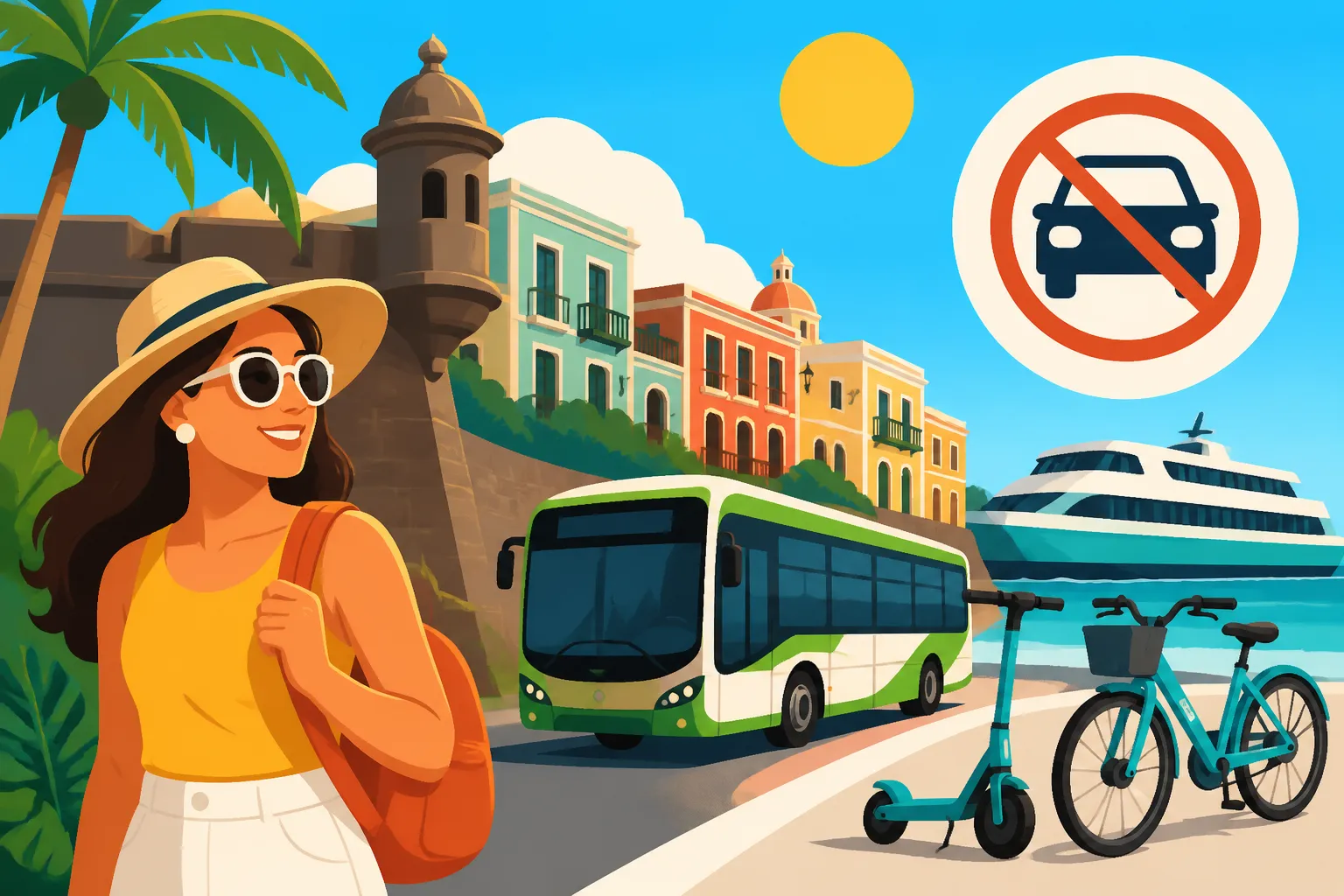
How Do I Get Around San Juan Without a Car?
Stepping off the plane at Luis Muñoz Marín International Airport (SJU), many newcomers to Puerto Rico find themselves faced with a common dilemma: how on earth do I get around this vibrant island, especially in bustling San Juan, without a car? While the idea of ditching mainland car dependency sounds liberating, the reality of navigating San Juan's transportation system can feel daunting, confusing, and frankly, a little frustrating at first. This guide is here to walk you through all the viable options for getting around the metropolitan area without a personal vehicle, offering insider tips and preparing you for what to expect.
Deciphering San Juan's Public Transportation Landscape
Let’s be honest, Puerto Rico isn't exactly renowned for its efficient public transport system. Unlike major U.S. cities with extensive subway networks and frequent bus services, San Juan's options are more limited and require a healthy dose of patience and local savvy. However, with a bit of planning, it’s absolutely doable to get around without buying a car.
The Tren Urbano: A Glimmer of Modernity, with Caveats
The Tren Urbano is probably the most modern piece of public transport infrastructure you'll find in San Juan, and it's a blessing if your destination happens to be along its route. This single-line metro system connects some key areas, primarily running from Santurce (at the Sagrado Corazón station) through Río Piedras, Guaynabo, and all the way to Bayamón.
If you’re living or need to get to areas like the University of Puerto Rico in Río Piedras, the financial district in Hato Rey, or even certain government offices, the Tren Urbano can be a reliable, air-conditioned, and surprisingly clean option. It runs roughly every 8 to 16 minutes, depending on the time of day, and usually operates from early morning until around 10:00 PM on weekdays, with slightly reduced hours on weekends. You’ll need a "Tarjeta de Tránsito" (Transit Card), which you can purchase and reload at any station. A single ride is quite affordable, usually under a dollar.
The biggest "pero" (but) with the Tren Urbano is its limited coverage. It doesn't extend to Old San Juan, Condado, or Isla Verde, which are often the primary destinations for tourists and many newcomers. So, while it’s great for the areas it serves, you’ll almost always need a secondary mode of transport to complete your journey to these popular spots. Think of it as a backbone that needs ribs to fully function for most of your needs. You might use the Tren Urbano to get to Sagrado Corazón, then hop into a ride-share or a taxi for the final leg to your cozy apartment in Old San Juan.
Navigating the AMA Bus System: A Test of Patience and Spanish Skills
Ah, the Autoridad Metropolitana de Autobuses (AMA) bus system. This is where things get a bit more… "local." The bus system covers a much broader area of San Juan and its surrounding municipalities compared to the Tren Urbano, reaching places like Old San Juan, Condado, Isla Verde, and even farther-flung neighborhoods.
However, the AMA buses are known for their unpredictability. Schedules are often more of a suggestion than a firm commitment, and buses can be late, early, or sometimes simply not show up at all. Don’t rely on apps showing real-time bus locations; they aren’t always accurate. Your best bet is to check the general routes online, identify your stop, and then arrive with plenty of time to spare – and a good book or podcast. The buses themselves are typically older, and while functional, they might not offer the same comfort as a modern city bus on the mainland. Payment is also made via the "Tarjeta de Tránsito" system, the same one used for the Tren Urbano, so make sure it's loaded with sufficient funds.
For non-Spanish speakers, figuring out routes and asking for directions can be an additional hurdle, as drivers and fellow passengers might not always speak English. It’s an immersive experience, to say the least! While the bus system is the most economical way to get around wide swathes of the city, it truly tests your flexibility and resolve. It’s a great option if you have a lot of time, are on a tight budget, and are feeling adventurous, but perhaps not for a time-sensitive appointment. Consider it more for leisurely exploration than for your daily commute if you value punctuality.
"Públicos": The Authentic, Unofficial Shared-Ride Experience
Before the advent of ride-sharing apps, "públicos" were (and still are) a staple for many locals traversing the island. These are essentially shared taxis, often vans or large sedans, that operate on fixed routes between towns or within larger metropolitan areas like San Juan. They’re distinct from regular taxis in that they don't offer private, point-to-point service unless negotiated. Instead, they pick up multiple passengers heading in the same general direction.
In San Juan, you'll find "público" stops in central locations, often near public markets, bus terminals, or town squares. For example, there's a bustling "público" hub in Río Piedras. You simply tell the driver your destination, and if it's along their route, you hop in. The fare is usually fixed for specific segments of the route and is paid directly to the driver. This can be a very cost-effective way to travel, especially if you're going to a less common destination that might be expensive with a regular taxi or ride-share.
However, "públicos" come with their own set of considerations. They can be crowded, often waiting until they fill up before departing. Communication is almost exclusively in Spanish, and for a newcomer, identifying the correct "público" and understanding its route can be tricky. They also don't typically operate late into the night. It's an excellent way to experience local life and save money, but it definitely requires an open mind and a willingness to embrace the island's unique rhythm. For long-term residents seeking to truly integrate, understanding and utilizing "públicos" is a valuable skill.
Embracing Ride-Sharing and Traditional Taxis
For many expats and newcomers, ride-sharing apps and traditional taxis quickly become the most convenient and often preferred method for getting around San Juan without a personal car, especially during those initial months of settling in. They offer a much higher degree of predictability and comfort compared to the public bus system.
Ride-Sharing Apps: Uber, Lyft, and Local Alternatives
Just like on the mainland, Uber is widely available and very popular in San Juan, with Lyft also having a significant presence. These apps offer the familiar convenience of requesting a ride from your smartphone, seeing the fare upfront, and paying electronically. They are generally much more reliable than the public bus system and are available virtually 24/7, making them ideal for airport runs, late-night outings in Old San Juan, or simply getting across town without a hassle.
You'll find that prices can fluctuate based on demand (surge pricing) and time of day, but they are generally comparable to or slightly lower than traditional taxi fares for similar distances. For instance, a ride from Old San Juan to Isla Verde might cost anywhere from $15-$25, depending on traffic and time. Pickup points are usually clearly marked in busy areas like the airport or cruise ship terminals, and drivers are often accustomed to serving English-speaking passengers. If you're relying heavily on these apps, ensure you have a reliable data plan. Using an eSIM from providers like Airalo can be a lifesaver for seamless connectivity without worrying about roaming charges or hunting for local SIM cards.
Beyond the major players, you might also encounter local ride-sharing apps, though their market share is smaller. It's always a good idea to have both Uber and Lyft downloaded, as availability or pricing can sometimes differ. Keep an eye out for "Como Llego" as a local option, though its service area and driver pool might be more limited. When you’re planning your move, consider how much you expect to use these services and budget accordingly, as the costs can add up if they become your primary mode of transport.
Traditional Taxis: The Steadfast Option
While ride-sharing has taken a bite out of their business, traditional taxis are still a very viable option in San Juan. You'll find official taxi stands at the airport, major hotels, the cruise ship piers, and sometimes even roaming the streets in tourist-heavy areas like Condado and Old San Juan.
Taxi fares from the airport to various zones (e.g., Old San Juan, Condado, Isla Verde) are often fixed, which can be reassuring as you won't have to worry about meter surprises. Always confirm the fare with the driver before you start your journey, especially if you're heading to an area outside these fixed zones. For example, the official website for San Juan taxis lists zones and their corresponding flat rates for airport travel. This transparency can be a big plus.
Taxis might be a better choice in certain situations. If you prefer not to rely on an app, or if you're traveling with a lot of luggage and need a guaranteed larger vehicle, a traditional taxi hailing service might feel more secure. They also tend to have designated lanes at the airport, which can sometimes expedite your departure. While possibly slightly more expensive than a ride-share during non-peak hours, the consistency and local knowledge of seasoned taxi drivers can be invaluable, especially if you're venturing to less common destinations or need a specific type of service.
Walking and Biking Through San Juan's Charms
One of the most enjoyable and immersive ways to experience San Juan is by simply walking or, increasingly, by biking. Many of the city's most iconic and beautiful areas are perfectly suited for exploration on foot or on two wheels, offering a perspective you simply can't get from a car window.
Walking the Historic Districts: Old San Juan, Condado, and Santurce
Old San Juan is, without a doubt, a pedestrian paradise. Its narrow, cobblestone streets, vibrant colonial architecture, and countless historical sites like El Morro and San Cristobal forts are best explored on foot. You can spend days wandering these colorful streets, discovering hidden plazas, charming cafes, and unique shops. The area is relatively compact, making it incredibly walkable, though be prepared for some inclines. Remember to wear comfortable shoes – those cobblestones are beautiful but can be tough on your feet! Safety is generally good during the day and into the evening in Old San Juan, particularly where tourists congregate.
Moving east, the Condado and Ocean Park neighborhoods are also very walkable. The main Ashford Avenue in Condado is lined with hotels, restaurants, and boutiques, all easily accessible on foot. You can stroll along the beachfront, enjoy the lagoon views, and even walk between Condado and neighboring Ocean Park, which has a more bohemian, laid-back vibe. Many people living in these areas opt to walk to grocery stores, restaurants, and local parks for their daily needs.
Santurce, particularly areas like La Placita de Santurce, is another neighborhood that comes alive on foot. While some parts might feel more spread out, the central core of Santurce, known for its art, food, and nightlife, is very amenable to walking. Exploring the street art in the Calle Loíza area or sampling the culinary delights around La Placita is a fantastic way to immerse yourself in local culture.
Bike Rentals and Dedicated Paths: A Growing Trend
Biking is becoming an increasingly popular way to get around certain parts of San Juan, especially with the growing awareness of environmental concerns and the desire for active lifestyles. While you won’t find the extensive network of bike lanes you might see in Amsterdam or Copenhagen, there are dedicated paths and bike-friendly routes emerging.
One notable route is the Paseo Puerta de Tierra, a scenic waterfront path that connects Old San Juan to Condado. It's a fantastic ride or stroll with breathtaking ocean views. You’ll also find bike paths around the Condado Lagoon and along parts of the coastline. Many hotels in tourist areas offer bike rentals, and there are a few independent bike rental shops popping up. Some even offer guided bike tours of Old San Juan, which can be an excellent way to get acquainted with the city’s history and layout.
The challenge with biking outside of these specific paths can be San Juan's sometimes aggressive traffic, lack of dedicated bike lanes on many major roads, and the occasional uneven pavement. However, if you stick to the more pedestrian-friendly zones and designated bike routes, it’s an invigorating way to explore. It's also a great way to incorporate exercise into your daily routine and truly feel the tropical breeze.
Strategic Planning and Tips for Car-Free Living in San Juan
Living car-free in San Juan is more than just knowing your transportation options; it's about developing a strategic mindset and embracing the local rhythm. Here are some pointers that can make your experience smoother and more enjoyable.
Combining Modes of Transport for Efficiency
One of the most effective strategies for navigating San Juan without a car is to think of transportation as a multi-modal puzzle. Rarely will a single option get you from door to door for all your needs, especially if you're venturing outside the immediate walkable areas. The key is to smartly combine options.
For instance, you might take the Tren Urbano to a station near your destination, then hop into an Uber or a "público" for the final mile or two. Or perhaps you walk the scenic route through Condado, then grab a ride-share to a restaurant in Santurce. For longer distances, especially if you're planning a weekend trip outside of San Juan – say, to El Yunque National Forest or the beautiful beaches of Luquillo – you might consider renting a car for a day or two. There are several car rental agencies at the airport and scattered throughout San Juan, like Enterprise, Hertz, and Avis, which can be convenient for these occasional excursions. This approach gives you the flexibility you need without the commitment and expense of car ownership.
Learning to seamlessly switch between walking, ride-sharing, and perhaps the occasional public transport foray is an art. It’s also a way to save money, as constant ride-sharing can add up quickly. If you’re really serious about making car-free living work, learning some basic Spanish phrases for directions or confirming routes with drivers will go a long way.
Essential Apps and Leveraging Local Knowledge
In the absence of your own set of wheels, your smartphone becomes your best friend. Google Maps is generally reliable for walking directions and estimated ride-share times. However, for public transport, always take online schedules with a grain of salt, as mentioned earlier. For consistent data access, especially if you're frequently calling Ubers, having a robust mobile plan or an eSIM like those offered by Airalo is critical. There’s nothing worse than being stranded with no data!
Beyond apps, don't underestimate the power of local knowledge. Ask your landlord, neighbors, or colleagues for their best tips. Locals often know the most efficient "público" routes, the best times to catch a specific bus, or even shortcuts that won't show up on a map. They can tell you about new local ride services or informal networks that are highly effective. Building a rapport with your community is not just good for transportation, but for integrating into your new life in general.
When planning your move to Puerto Rico, resources like Sirelo can help with the broader logistics, ensuring your transition is smooth, and part of that planning should definitely include how you'll get around. Understanding the nuances of daily life here, including transport, is crucial. If you're looking into "The Complete Guide to Cost of Living in Puerto Rico (2026)", remember that transportation costs without a car can vary wildly based on your lifestyle choices.
Table: Comparing San Juan Transportation Options
Here’s a quick overview to help you weigh your options:
| Transportation Method | Cost (Estimated) | Reliability | Coverage | Convenience | Best For: |
|---|---|---|---|---|---|
| Tren Urbano | Low ($0.75) | High | Limited (Santurce to Bayamón) | Medium | Commutes to specific stops (Hato Rey, UPR), avoiding traffic. |
| AMA Bus System | Low ($0.75) | Low | Broad (San Juan Metro) | Low | Budget travel, flexible schedule, local immersion. |
| Públicos | Medium-Low ($2-5) | Medium | Inter-municipal/Fixed routes | Medium | Longer journeys between towns, authentic local experience. |
| Uber/Lyft | Medium-High ($10-30+) | High | Broad (San Juan Metro) | High | Quick trips, late nights, direct routes, airport runs. |
| Traditional Taxis | Medium-High ($15-35+) | High | Broad (San Juan Metro) | High | Airport/Cruise transfers with fixed rates, guaranteed service. |
| Walking | Free | High | Very Limited (Old San Juan, Condado, specific areas) | High | Exploring historic/tourist zones, exercise, short distances. |
| Biking | Low (rental fees vary) | Medium | Limited (specific paths) | Medium | Leisure, exercise, connecting nearby walkable areas. |
This table provides a general idea, but remember that individual experiences may vary. Traffic, time of day, and even local events can impact travel times and costs.
A Note on Safety and Awareness
Like any urban area, it’s always wise to be aware of your surroundings when using public transportation or walking, especially after dark. Stick to well-lit, populated areas. While San Juan is generally safe, exercising caution is always a good practice. Having your phone charged and knowing basic emergency numbers will give you peace of mind. For more on safety, you might want to read "What Should I Do in a Medical Emergency in San Juan?"
Living car-free in San Juan is absolutely possible and, for many, a rewarding part of the expat experience. It forces you to engage more deeply with the city, its people, and its unique rhythms. It might take some getting used to, a bit of planning, and a good sense of humor, but you'll soon find your own preferred ways to navigate this beautiful corner of the world. While you're getting settled, you'll also be figuring out other vital aspects of life here, such as how to obtain your How Do I Get a Puerto Rico Driver's License and ID (2026) if you eventually decide to get one, or where to find an How Do I Find an English-Speaking Doctor in Puerto Rico?. Embrace the adventure!
Disclaimer
The information provided in this guide is intended for general informational purposes only and does not constitute professional advice. While we strive to keep the information accurate and up-to-date, public transportation schedules, prices, and regulations in Puerto Rico can change without prior notice. Readers are encouraged to verify current details with relevant authorities and service providers. Reliance on any information in this guide is solely at your own risk.