Which Towns Are Most Popular with Mainland Transplants in Puerto Rico?
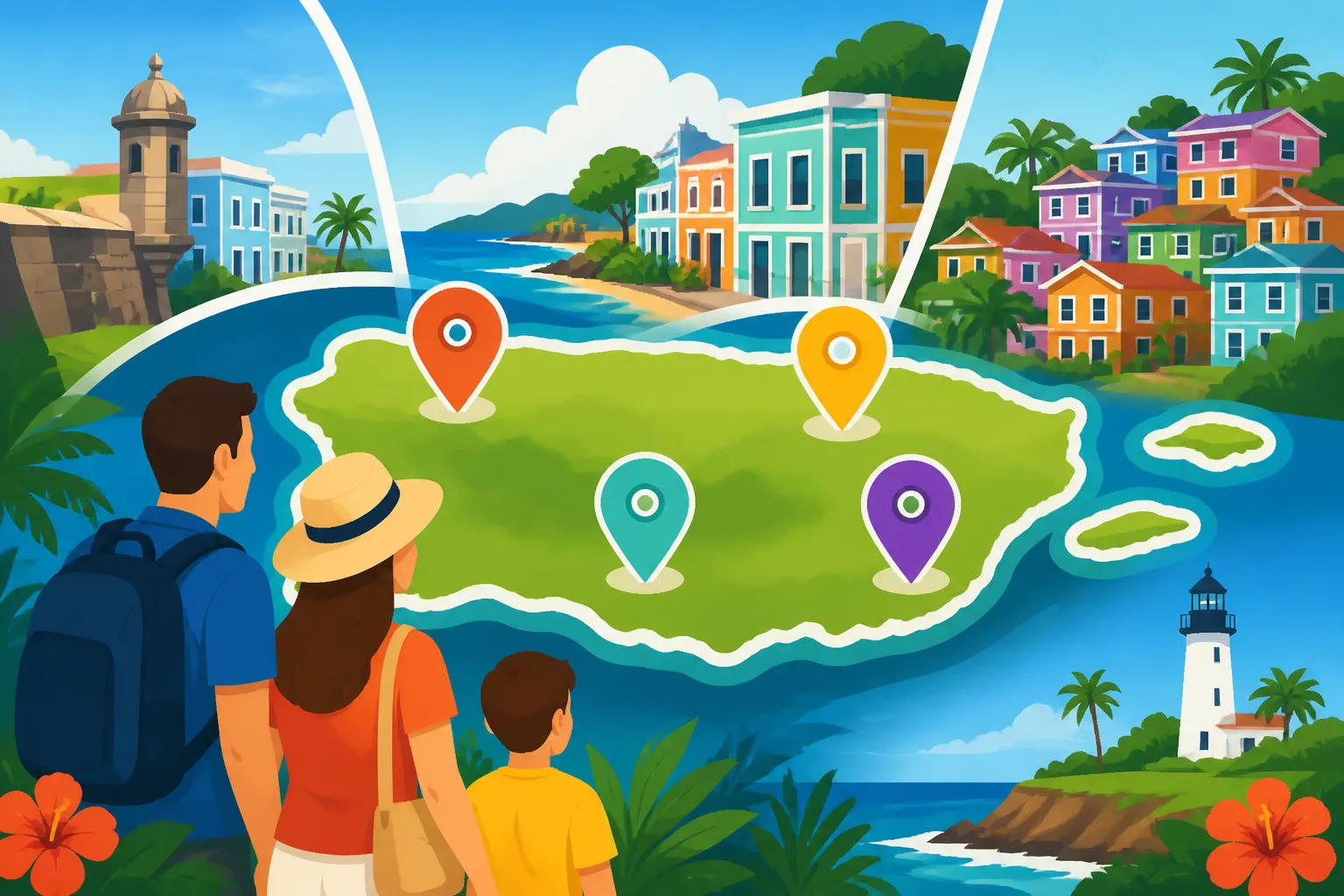
Picture this: you’ve decided to move to Puerto Rico, you open a map, and you’re stuck. Do you go with the beachfront buzz of Condado, the gated calm of Dorado, or the surf-town ease of Rincón? Picking the wrong town can mean long commutes, isolation or a lifestyle that doesn’t fit. This guide covers the towns where mainland transplants actually settle and what daily life there really feels like.
Why Mainland Transplants Cluster Where They Do
When I first moved to the island, I assumed people from the mainland spread out evenly across all seventy-eight municipalities. They don’t. Within a few months I could almost predict where someone would live from three questions: How often do you fly back to the States? Do you work remotely or locally? Do you have kids? Those answers send people to a fairly small group of towns. Knowing why makes it much easier to work out which one suits you.
The Pull of the Airport and the Expressway
Luis Muñoz Marín International Airport in Carolina is the island’s main gateway, and it has more influence on where transplants live than anything else. If you’re flying back for family events, client meetings or holidays several times a year, living within easy reach of the airport changes your life. A short ride from Isla Verde or Condado to your gate is a different experience from a long drive in the dark from the west coast for an early flight.
That’s why the San Juan metro area, which takes in San Juan, Carolina, Guaynabo and stretches out to Dorado along the PR-22 expressway, holds the largest share of mainland newcomers. Look closely at the west coast, though, and you’ll see the same logic in a smaller form. Aguadilla’s Rafael Hernández Airport has direct routes to some mainland cities, and that helps explain why the Rincón, Aguada, Aguadilla and Isabela corridor became the second big transplant hub. In the south, Ponce has Mercedita Airport, which keeps the city reachable for people who want to stay connected without living in the metro sprawl.
Here’s a scenario that often plays out. A remote software developer falls in love with a hilltop house in the central mountains near Utuado. Six months later she’s selling it, because every quarterly trip to the office meant a winding mountain drive, a long stretch on the expressway, airport traffic and lost workdays. She now lives in Ocean Park and walks to the beach. The mountains are gorgeous, but airport access wins out for a lot of people.
Infrastructure Realities That Shape Every Choice
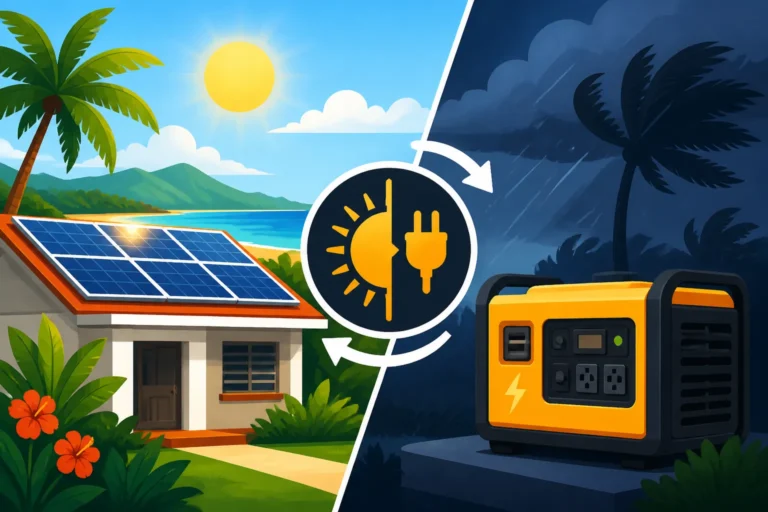
Let me be honest about something no glossy relocation brochure leads with: the electrical grid. Power outages are part of island life, and how you handle them depends a lot on where you live. In some neighborhoods power comes back quickly after an outage. In more rural areas the wait can stretch out. Many transplants pick a town, or at least a building, based on whether it has a full-building generator, a water cistern and a reliable internet provider.
This is one reason condo buildings in Condado, Isla Verde and Dorado are so popular with newcomers. A well-run building with a backup generator and a water tank means the lights and the elevator keep working when the neighborhood goes dark. If that’s high on your list, see How Do I Find an Apartment with a Generator in San Juan? for help with that search.
Water is the other piece. The water authority serves the whole island, but pressure and interruptions vary by area, especially in hillside neighborhoods. Fiber internet is common in the metro area and in tourist zones but less consistent in some rural barrios. If you work remotely, check connectivity before you fall for a property. The view from a mountaintop finca won’t help when your video call freezes during a client presentation.
Community, Language and the Comfort Zone
The third factor is softer but just as real: community. Spanish is the main language of daily life in Puerto Rico. English is widely understood in the San Juan metro area, in tourist areas and in professional settings, but once you leave those zones, everyday errands happen in Spanish. Many transplants, especially early on, gravitate toward places where they can handle the pharmacy, the mechanic and the condo board meeting in English while their Spanish improves.
That’s why you’ll find concentrated English-speaking communities in Dorado, parts of Condado and Ocean Park, Palmas del Mar in Humacao, and Rincón. There’s nothing wrong with wanting a soft landing. Just know that living only inside the expat bubble can leave you feeling like a permanent tourist. The transplants I know who are happiest after several years made a real effort to join local life by learning Spanish, shopping at the neighborhood colmado and showing up for the patron saint festivities.
The Metro Area Favorites
Most mainland transplants land somewhere in the greater San Juan area, at least at first. It has the most rental inventory, the most services, the best hospitals, the most English spoken and the shortest airport runs. “San Juan” isn’t one place, though. Each neighborhood feels like a different town.
San Juan’s Beach Neighborhoods: Condado, Ocean Park and Isla Verde
Condado is usually the first stop. Ashford Avenue is lined with high-rise condos, hotels, restaurants and boutiques, with the Atlantic on one side and the Condado Lagoon on the other. You can walk everywhere, the paddleboarders on the lagoon at sunrise are a daily sight, and plenty of residents never use a car on weekdays. It’s also among the most expensive neighborhoods on the island, it’s busy with tourists, and parking can be a headache. If you’re ready to start looking, see How Do I Find an Apartment to Rent in Condado? for what the rental search there involves.
Ocean Park sits just east of Condado and has a quieter, more residential feel. Most of it is low-rise homes and small apartment buildings on tree-lined streets that end at a wide, calm beach popular with kitesurfers and morning walkers. Many longtime transplants consider Ocean Park the sweet spot: you’re close to the action in Condado and Santurce, but your street is calm at night. Inventory is limited, and good rentals often go through word of mouth.
Isla Verde, technically in Carolina, is right by the airport. It has a long strip of beachfront condo towers and hotels, a lively scene along Isla Verde Avenue, and the shortest commute to your flight that you’ll find. Frequent flyers and flight crews love it. The tradeoff is jet noise in some buildings and a strip that feels more resort-like than neighborly. I have a friend who travels for work almost every other week. She tried living in Guaynabo, then moved to Isla Verde and says it gave her back hours every month.
Old San Juan and Santurce for Character Seekers
Old San Juan appeals to a particular kind of transplant: someone who wants pastel colonial buildings, cobblestone streets, the walls of El Morro at the end of the block and a café on every corner. Living there is magical, and it’s also complicated. Many buildings are historic walk-ups with no elevator and no parking. Cruise ship days bring crowds. Renovating a historic property means dealing with preservation rules. Some days the charm makes up for all of it, and some days it doesn’t.
Santurce has become the creative heart of the metro area. It’s the home of La Placita de Santurce, where the market square turns into a street party on weekend nights, the mural-covered streets around Calle Cerra, and a growing number of galleries, restaurants and coworking spaces. Artists, young professionals and remote workers who want an urban, slightly gritty energy often end up here. Some blocks are much more polished than others, so walk a street at different times of day before you commit.
These two neighborhoods suit people who care more about culture than convenience. If you need a garage, a quiet street and a big grocery store nearby, look at Guaynabo or Dorado. If you’d rather walk to a bomba performance and grab mofongo at midnight, Santurce or Old San Juan may feel like home.
Guaynabo for Suburban Families
Guaynabo, just south and west of San Juan, is where many transplant families with school-age children end up. It has established upscale neighborhoods such as Garden Hills, plenty of gated communities, or urbanizaciones with controlled access, and quick access to San Patricio Plaza and the shopping and dining around it. Several of the island’s well-known private schools are in or near Guaynabo, and that drives a lot of family decisions.
Daily life here looks a lot like suburban life on the mainland. You’ll drive everywhere, the houses have yards and carports, and neighbors gather at kids’ birthday parties and school events. The downside is traffic. Rush hour on the main roads between Guaynabo and San Juan can be slow, and you’re trading the beach-town feel for suburban practicality. For a wider look at family-friendly options across the island, see What Are the Best Family Neighborhoods in Puerto Rico?
Dorado for Gated Resort Living
Dorado, west of San Juan along PR-22, is probably the best-known transplant destination on the island, and it has a reputation to match. It’s home to some of Puerto Rico’s most exclusive gated residential and resort communities, with golf courses, beach clubs, private security and polished amenities. Many of the high-profile entrepreneurs and investors who have moved to the island chose Dorado, and that has shaped its image.
Dorado is more than its luxury enclaves, though. Outside the gated communities there are ordinary neighborhoods, a walkable town center with its own plaza, and newer shopping and dining developments that serve the growing population. The drive to San Juan is manageable outside rush hour, which makes Dorado workable for people who still need to be in the city regularly. For a sense of what renting there involves, see What Is the Average Rent in Dorado in 2026?
The main thing to think about with Dorado is the bubble. Inside the gated communities, English is everywhere and life is comfortable and well-serviced, but it can feel separate from the rest of Puerto Rico. Some transplants love that security and ease. Others find after a year that they want more contact with island life and move toward San Juan or out west.
Beyond the Metro: West Coast, East Coast and the South
Not everyone wants city life or resort living. A large and growing share of transplants skip the metro entirely and head west for the surf, east for the marinas, or south for a more traditional Puerto Rican city. Each region has a distinct personality, and each comes with practical tradeoffs.
Rincón and the Surf Coast
Rincón, on the far western tip of the island, has drawn surfers and free spirits from the mainland for decades. It’s famous for winter swells at spots like Domes and Maria’s, snorkeling at Steps Beach, and sunsets over the Mona Passage that bring half the town to the shore every evening. The vibe is laid-back, casual and outdoorsy. Flip-flops count as formal wear, and the farmers market is a social event.
The transplant community here is well established and close-knit, and many people make a living in tourism, short-term rentals, yoga, surf instruction or remote work. Many properties sit on hillsides with ocean views, which is beautiful but often means steep driveways and roads that are hard going in heavy rain. Before you buy, see How Much Does It Cost to Buy a House in Rincon? for a realistic picture of the local property market.
Rincón’s biggest drawback is distance. San Juan is a long drive away, and specialized services such as major hospitals and big-box shopping mean a trip to Mayagüez or Aguadilla, or the long haul to the metro. Some services are seasonal, too, and the town feels noticeably quieter outside the winter high season. If you’re weighing Rincón against the metro options, see How Do I Choose Between San Juan, Dorado and Rincon to Live In? for a side-by-side comparison.
Isabela and Aguadilla
Isabela and Aguadilla, northeast of Rincón along the coast, have grown fast as transplant destinations, partly because they offer much of Rincón’s surf-town appeal with more services nearby. Isabela has beaches like Jobos and Montones, a strong surf and food scene along the coast road, and more flat, buildable land than Rincón. Aguadilla has the airport, the ruins of the old Ramey Air Force Base area that still shape the town’s layout, and dramatic cliffs and dive spots at Crash Boat Beach.
The area around the former Ramey base has a slightly mainland feel thanks to its history, with wide streets and housing that some transplants find familiar. Aguadilla’s airport is a real advantage for people who fly to the States regularly, and its shopping centers cover the basics so you don’t have to drive to the metro. Isabela, meanwhile, keeps more of a small-town agricultural character inland, with farms, roadside fruit stands and quiet country roads.
This corridor works well for families who want the west coast lifestyle with more conveniences, and for remote workers who want surf before breakfast and a reasonable airport run. The trade is that it’s less polished than the metro and has fewer English-speaking services, so you’ll need more Spanish for daily life.
Humacao, Palmas del Mar and the East
On the east coast, Palmas del Mar in Humacao is one of the oldest planned resort communities on the island and has long drawn mainland retirees and second-home owners. It’s a large, self-contained community with a marina, golf, tennis, beaches, restaurants and private security, and many residents spend most of their time inside its gates. English is widely spoken, and the community feel is strong, with clubs, events and an active social calendar.
Farther north along the east coast, Fajardo and Ceiba attract boaters, since this is the jumping-off point for sailing to the Spanish Virgin Islands and the ferries to Vieques and Culebra. Río Grande, home to the edges of El Yunque rainforest and some large resort developments, is another option for people who want lush scenery and quick access to the eastern beaches while staying reasonably close to the airport.
The eastern region is often where retirees and boating enthusiasts settle. The pace is relaxed and the scenery is spectacular. The tradeoffs are a longer drive to the metro than from Dorado, some vulnerability to storms coming in from the Atlantic, and a smaller range of services outside the resort communities.
Ponce and the South
Ponce, the island’s second major city, gets far fewer transplants than it deserves. Called “La Perla del Sur,” it has a beautiful historic center around Plaza Las Delicias, the striking red-and-black Parque de Bombas firehouse, the Museo de Arte de Ponce, and the waterfront boardwalk at La Guancha, where families gather on weekend evenings. The south coast is drier and sunnier than the north, which some people love.
Ponce is a deeply Puerto Rican city, and that’s both its appeal and its challenge. English is spoken less than in the metro, so you’ll rely on Spanish much sooner. In exchange you get a real community feel, a strong arts and cultural scene, and day-to-day costs that many transplants find gentler than in the metro beach neighborhoods. People who want to immerse themselves rather than stay in an expat enclave often thrive here.
If you’re thinking about relocating to Ponce and need local work rather than a remote job, see What Is the Job Market Like in Ponce for Newcomers? for an honest look at local employment. Many transplants in Ponce work remotely, are retired, or are connected to the city’s universities and medical community.
Vieques and Culebra
The offshore island municipalities of Vieques and Culebra pull at a certain kind of dreamer: someone who wants empty beaches, wild horses on the road, bioluminescent bays and a pace slower than anything on the main island. Flamenco Beach in Culebra and Mosquito Bay in Vieques are world-famous for good reason, and the small transplant communities on both islands are welcoming and resourceful.
Life on Vieques or Culebra is also logistically demanding. You depend on ferries from Ceiba or small planes for nearly everything, and when the ferries are disrupted, groceries, building materials and even medical access can become a problem. Healthcare is limited, so anything serious means going to the main island. Building or renovating costs more because everything has to come over by boat.
My advice is simple: rent first, and stay through at least part of the low season and a stretch of bad weather before you think about buying. The people who last on these islands love the isolation. The ones who leave usually do so because daily logistics wore them down.
How to Choose the Right Town for Your Life
With so many good options, it’s easy to freeze. The best approach is to compare towns honestly against your actual daily needs, not your vacation fantasy, and then test your top choices in person. The table and steps below are the framework I wish I’d had when I arrived.
Comparing the Most Popular Transplant Towns
| Town or Area | Best Suited For | Airport Access | English in Daily Life | Relative Housing Cost | Main Tradeoffs |
|---|---|---|---|---|---|
| Condado | Walkable urban living, singles, couples | Very easy, to Luis Muñoz Marín | Very common | Very high | Tourist crowds, parking, noise |
| Ocean Park | Quiet beach living close to the city | Very easy, to Luis Muñoz Marín | Common | High | Limited inventory |
| Isla Verde | Frequent flyers, beach condo lovers | Easiest on the island | Common | High | Jet noise, resort feel |
| Old San Juan | History and culture enthusiasts | Easy | Common in tourist areas | High | Walk-ups, no parking, crowds |
| Santurce | Creatives, young professionals | Easy | Moderate | Moderate to high | Uneven blocks, nightlife noise |
| Guaynabo | Families, private school access | Easy | Moderate to common | High | Car-dependent, rush hour traffic |
| Dorado | Gated resort living, investors, families | Moderate, via PR-22 | Very common in gated areas | Very high | Expat bubble, traffic into the city |
| Rincón | Surfers, remote workers, free spirits | Moderate to Aguadilla, long to San Juan | Common within the transplant community | Moderate to high | Distance from services, hilly roads |
| Isabela and Aguadilla | West coast lifestyle with more services | Easy to Aguadilla | Moderate | Moderate | Less polished, more Spanish needed |
| Humacao and Palmas del Mar | Retirees, boaters, second homes | Moderate | Very common inside Palmas | Moderate to high | Distance from metro, storm exposure |
| Ponce | Cultural immersion, gentler budgets | Easy to Mercedita, long to San Juan | Limited | Moderate | More Spanish needed, fewer transplants |
| Vieques and Culebra | Island isolation seekers | Requires ferry or small plane | Moderate within transplant community | Moderate to high | Ferry dependence, limited healthcare |
Treat this table as a starting point, not a final answer. Housing costs move with tourism demand, construction and short-term rental activity. Microclimates and individual streets can differ a lot even within one town. Use it to narrow your list to two or three candidates, then go see them in person.
For a broader island-wide view that goes beyond the transplant hotspots, see The Best Places to Live in Puerto Rico for Newcomers: A Complete Guide (2027), which also covers towns that are less well known among people from the mainland.
A Step-by-Step Process for Scouting Your Town
I can’t stress enough how much a proper scouting trip pays off. Here’s the process I recommend to anyone who asks me where to live:
- Write down your non-negotiables before you look at a single listing. Include how often you’ll fly, whether you need a local job or work remotely, whether you have children who need schools, whether you need regular specialist medical care, and how much Spanish you speak.
- Use those non-negotiables to narrow the field to two or three towns from the comparison table, and resist the urge to add a fourth just because the photos look pretty.
- Plan a trip that covers each finalist over several days, ideally in a mix of weekdays and weekends. Day-trips that only show you a town at its sunny best on a Saturday aren’t enough.
- Drive your likely commute at rush hour, and do a test run to the airport from each candidate area at the time you’d actually be traveling.
- Visit a grocery store, a pharmacy and a hardware store in each town to see how everyday errands feel and what language they happen in.
- Walk the specific streets you’re considering in the morning, in the evening and late at night, and talk to neighbors, shop owners and anyone sitting on a balcony who looks like they’ll chat.
- Ask landlords or sellers directly about generator coverage, water cisterns, flood history and internet providers for the exact address.
- Rent before you buy, ideally for several months and long enough to live through at least one rainy stretch and some power interruptions.
For a deeper planning framework covering accommodation, timing and what to bring, see How Do I Plan a Scouting Trip Before Moving to Puerto Rico?
Staying connected during the trip makes a real difference, especially when you’re juggling viewings, calling landlords and using maps in unfamiliar barrios. Since Puerto Rico is a US territory, many mainland mobile plans work on the island, but coverage and data allowances depend on your carrier. Some visitors prefer a travel eSIM from Airalo to keep a separate data line for the scouting period, which can be handy if you’re testing coverage in remote areas or want to keep your main plan untouched. Once you’ve decided to stay, see How Do I Set Up a Mobile Phone Plan in Puerto Rico? for help choosing a local option.
Questions to Ask Before You Sign Anything
Once you’ve narrowed down your town, the details of the specific property matter as much as the town itself. Every town has excellent buildings and nightmare buildings, and lovely streets and streets that flood every time it pours. These are the questions I run through before committing to any home on the island:
- Does the building or house have a backup generator, and does it cover the whole unit or only common areas like elevators and hallway lights?
- Is there a water cistern, and how large is it relative to the household’s daily use?
- Is the property in a designated flood zone, and has the street flooded during past storms?
- Which internet providers serve this exact address, and do current residents find the connection stable?
- How old is the roof, and how did the property hold up during past hurricanes?
- How is the condo association run, what does the maintenance fee cover, and how healthy is the reserve fund?
- How noisy is the street at night, especially on weekends and during festivals?
- How long does it realistically take to reach the nearest hospital emergency room?
The flood zone question deserves extra attention because it affects your safety, your insurance and your resale value. Before you sign a lease or make an offer, see Understanding Flood Zones and Hurricane Insurance in Puerto Rico for how to check a property’s risk and what coverage to consider.
Here’s a real-life example of why these questions matter. A couple I know found a gorgeous ground-floor apartment in a coastal neighborhood with a terrace steps from the sand. The price was attractive and the landlord was charming. On a whim they asked the neighbor about flooding, and she showed them photos of seawater pouring into the terrace during a past storm surge. They chose a third-floor unit two blocks inland, and they were very glad of it the next hurricane season.
Getting Your Belongings to Your New Town
Once you’ve chosen your town, the next problem is getting your life there. Moving to Puerto Rico means shipping goods across the ocean, usually by container or roll-on vessel from ports such as Jacksonville, and that’s different from loading a truck for an interstate move. You have to decide what to ship, what to sell and what to buy on the island, and the answer depends partly on your destination town.
If you’re moving into a furnished condo in Condado or Isla Verde, you might ship only a few boxes of personal items. If you’re moving into an unfurnished family house in Guaynabo or Dorado, shipping furniture may make more sense. For a house in Rincón or Vieques, keep in mind that final-mile delivery from the San Juan port to a remote hillside or an offshore island adds another layer of logistics, and you need to confirm that your mover handles it.
Comparing several international and ocean-freight movers is worth the effort, because quotes, services and delivery areas vary a lot. A comparison platform like Sirelo can help you request and weigh quotes from multiple moving companies side by side, which is useful when you’re figuring out which providers actually deliver to your chosen town. Always check the mover’s own page for current terms and confirm insurance coverage in writing. For a full walkthrough on vetting movers, see How Do I Find a Reliable Moving Company to Puerto Rico?
When I moved, I made the classic decision of shipping a heavy wooden dining table that I loved. It arrived fine, but in the humidity of my first apartment it started to warp, and I ended up replacing it with a locally made piece that handled the climate much better. Island humidity, salt air and the occasional power outage are hard on certain furniture and electronics. Think twice before shipping antiques, fine wood pieces or delicate electronics, and ask your mover through Sirelo or directly about climate-protective packing.
Settling In and Making the Town Your Own
Choosing a popular transplant town gives you a support network and a gentler landing, but making it home takes effort. Join the local Facebook groups and community boards for your area, since that’s where transplants share contractor recommendations, generator repair contacts and news about water interruptions. Attend municipal events and patron saint festivals. Shop at the local panadería instead of driving to the big supermarket every time.
Most of all, give yourself time. Nearly every transplant I know went through a hard stretch somewhere in the first months: a power outage during a heat wave, a frustrating government office visit, a landlord who stopped returning calls. Those moments test your choice of town more than any sunny weekend does. If you’ve picked a place that fits your real needs for airport access, services, community and infrastructure, you’ll get through them, and one day you’ll realize the town you once studied on a map has become home.
Disclaimer
This article is for general informational purposes only and does not constitute professional advice. Laws, prices and regulations vary by location and change over time. Consult a qualified professional for guidance on your specific situation.