Understanding What Counts as a Closer Connection to Puerto Rico
One of the biggest anxieties for folks making the leap to Puerto Rico, especially those eyeing the tax incentives, isn't just about packing boxes or finding a great chinchorro. It's about legally proving you actually live here. The IRS has a whole checklist, and the "Closer Connection" test is often the most subjective and confusing part. This guide is here to walk you through exactly what counts – and what doesn't – when establishing your legitimate ties to our beautiful island.
The Three Pillars of Bona Fide Residency: A Quick Refresher
Alright, let's cut to the chase. When you're trying to establish bona fide residency in Puerto Rico for tax purposes, the IRS doesn't just take your word for it. They look at three main tests, and you've got to pass all of them. Think of them as the three legs of a stool: if one is wobbly, the whole thing falls apart. For a deeper dive into the overall process, make sure to check out How to Establish Bona Fide Residency in Puerto Rico (2027).
The Presence Test: Counting Your Days
This one is usually the easiest to wrap your head around, at least initially. The Presence Test simply asks you to be physically present in Puerto Rico for at least 183 days during the tax year. That’s more than half the year, folks. It means living here, waking up here, going to bed here. It doesn't mean you can't travel, but your primary physical location for the majority of the year needs to be on the island.
Many newcomers meticulously track their days, which I highly recommend. There are accounts of people setting up spreadsheets, using apps, or even keeping a detailed journal to ensure they hit that 183-day mark. Remember, even a partial day counts as a full day of presence in Puerto Rico. So, if you fly in at 10 PM, that's a day. If you fly out at 6 AM, that's also a day. It sounds straightforward, but trust me, when you start traveling for business or visiting family, those days can add up faster than you think. For more details on this, you might find our guide on Understanding the 183-Day Rule for Bona Fide Residency in Puerto Rico extremely helpful.
The Tax Home Test: Where Your Economic Life Is Rooted
The Tax Home Test is where the IRS wants to see where your main place of business, employment, or self-employment is located. If you don't have a regular place of business, it's where you regularly live. Basically, where's your bread and butter coming from, and where do you conduct that business? For most of us, this means setting up shop right here.
For example, if you've moved down here and started a new business, fantastic! That business should be registered in Puerto Rico, and its operations should be based here. If you're employed, your employer should be a Puerto Rico entity, or if you’re working remotely for a mainland company, you need to clearly establish your base of operations and the economic benefit accruing to Puerto Rico. It’s not enough to simply say your tax home is in Puerto Rico; you need to demonstrate that your primary source of income and work activities are genuinely anchored here. This test truly focuses on the economic core of your existence. For a comprehensive overview, consider delving into Understanding the Tax Home Test for Puerto Rico Residency.
The Closer Connection Test: More Than Just Showing Up
Ah, the Closer Connection Test. This is the one that often trips people up because it's not as black and white as counting days or pointing to a business address. This test delves into the subjective aspects of your life – where your heart and your daily life truly lie. It's about proving that even if you have connections elsewhere (which, let's be honest, most expats do, especially initially), your primary connections are firmly planted in Puerto Rico.
The IRS wants to see if you've really integrated into the community. Did you just hop off a plane, grab a rental, and keep everything else status quo, or have you genuinely started building a life here? This test is designed to catch those who might try to game the system by merely fulfilling the minimum presence requirement while maintaining their real life and ties elsewhere. It's about demonstrating intent and actual integration, which can be harder to quantify but is incredibly important.
Deciphering the "Closer Connection" Test: What It Really Means
The "Closer Connection" test, outlined in IRS Publication 570, is perhaps the most nuanced and often misunderstood aspect of establishing bona fide residency in Puerto Rico. It’s less about a strict mathematical calculation and more about a holistic assessment of your life. The IRS is essentially asking: "Where do you truly belong?"
The IRS's Perspective: More Than Just One Factor
The IRS looks at a variety of factors to determine if you have a closer connection to Puerto Rico than to any other place in the United States or a foreign country. They don’t just pick one thing; they consider the totality of the circumstances. This means no single factor is determinative, but rather a combination of many elements paints the full picture. It’s about creating a narrative of your life that clearly points to Puerto Rico as your primary home.
They're not just checking boxes; they're trying to understand your lifestyle, your commitments, and your intentions. Did you move here for a temporary stint, or are you genuinely putting down roots? They'll compare your connections to Puerto Rico against any lingering ties you might have to the mainland or elsewhere. This is where it gets tricky because many of us retain some ties – family, investments, old friendships – to our previous homes. The key is to show that your strongest and most numerous ties are now here.
Why This Test Can Be a Head-Scratcher for Expats
For many expats, especially those moving from the mainland, this test can be a real head-scratcher. We often have families, long-standing bank accounts, investment advisors, and perhaps even a vacation home or a favorite old haunt back in our previous state. It feels almost unnatural to sever all those connections, and frankly, it's not always practical or necessary. The challenge lies in understanding which connections truly matter to the IRS and how to shift your center of gravity to Puerto Rico without completely abandoning your past.
Another reason it's confusing is that it’s not always obvious how much emphasis the IRS places on one factor versus another. Is it more important to have local utility bills, or to be registered to vote? Both are important, but their relative weight might depend on your unique situation. This ambiguity often leads to anxiety, and it’s why careful planning and consistent action are so crucial. It’s not just about what you do, but how you document it and how it collectively demonstrates your intent.
Key Factors for Establishing a Closer Connection to Puerto Rico
Let's break down the specific areas the IRS examines when assessing your closer connection to Puerto Rico. Think of these as categories where you need to accumulate evidence of your new life here.
Your Primary Residence and Where You Spend Your Time
This might seem obvious, but it's foundational. Do you have a permanent home in Puerto Rico that you treat as your principal residence? This isn't just a short-term rental or a hotel room; it's where you keep your personal belongings, where you genuinely live. The IRS looks for things like:
- Lease agreements or property deeds: A long-term lease or owning property here shows commitment. When I first moved, securing a proper long-term lease was a huge step in feeling settled, and it also helped immensely with the paperwork for utilities and banking. For tips on finding your place, check out The Complete Guide to Renting an Apartment in Puerto Rico (2027).
- Utility bills in your name: Having your electricity (LUMA), water (AAA), and internet bills under your name, paid consistently from a Puerto Rico bank account, is clear evidence of your residential ties. This is often one of the first things you tackle when you move, and it's a solid piece of evidence. Speaking of, our guide on The Newcomer's Guide to Setting Up Utilities (LUMA/AAA) in Puerto Rico can definitely help.
- Mail: Where do you receive your important mail? Having your official correspondence, bank statements, and personal mail delivered to your Puerto Rico address is crucial. It’s not just about a P.O. Box; it’s about establishing a physical mailing address. Our post on How to Set Up Your Mailing Address and USPS in Puerto Rico offers good advice.
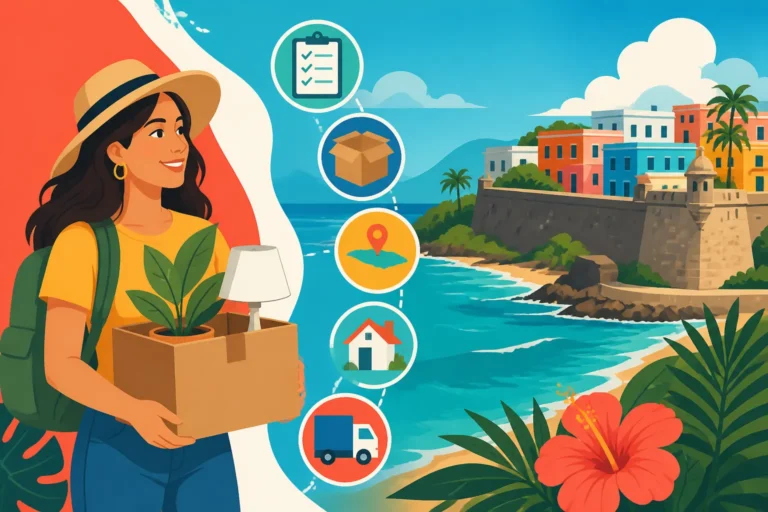
- Storage of personal effects: Do you have your furniture, clothing, and personal keepsakes here, or are they still largely stored on the mainland? Moving your possessions down here, even if it feels like a logistical nightmare, signals a permanent move. Services like Sirelo can be really helpful when planning to ship your belongings to the island, making that aspect of establishing your physical presence a bit smoother.
Family Ties and Social Connections
This is where the human element truly comes in. The IRS wants to see that your personal life is centered in Puerto Rico.
- Spouse and dependents: If your spouse and children reside with you in Puerto Rico, this is a very strong indicator of a closer connection. This immediately demonstrates that your personal nucleus is here. Enrolling children in local schools is another significant tie.
- Social and cultural integration: Are you getting involved in the local community? Joining a gym, a church, a volunteer group, or even a local sports league shows you’re not just isolating yourself. Attend local festivals, learn some Spanish, and genuinely immerse yourself in the culture. These seemingly small actions build a compelling case. I remember how joining a local hiking group not only helped me explore the island but also introduced me to some of my closest friends here, truly solidifying my sense of belonging.
- Doctors, dentists, and other service providers: Having local healthcare providers, a local mechanic, or even a local barber establishes routine, everyday connections. It shows you're building a network of support here. Our guide on How to Find and Register with a Primary Care Doctor in Puerto Rico can get you started on this vital step.
Economic Interests and Business Activities
Beyond your primary employment or business (which falls under the Tax Home test), the Closer Connection test looks at broader financial integration.
- Bank accounts: Opening bank accounts with local institutions like Banco Popular or Oriental Bank is essential. This shows your financial activity is rooted here. Make sure your direct deposits and bill payments go through these local accounts. Check out The Newcomer's Guide to Opening a Bank Account in Puerto Rico for more information.
- Investments: While you might maintain some mainland investments, initiating new investments or engaging with local financial advisors in Puerto Rico can bolster your case.
- Local credit cards and loans: Obtaining a local credit card or taking out a car loan or mortgage here further demonstrates your financial commitment to the island.
- Vehicle registration: Registering your car in Puerto Rico and obtaining a local driver's license is a clear sign you’re here to stay. This is one of those administrative tasks that scream "I live here!" Our articles on How to Register and Title a Vehicle (DTOP/CESCO) in Puerto Rico and How to Transfer Your Mainland Driver's License in Puerto Rico are incredibly useful resources.
Driver's License, Voter Registration, and Official Documents
These are tangible pieces of evidence that are easy for the IRS to verify and are often among the first things new residents should address.
- Puerto Rico driver's license or ID: This is paramount. It serves as your primary form of identification and is a clear indicator of your domicile. Getting your How to Get a Puerto Rico Real ID Driver's License should be a top priority.
- Voter registration: Registering to vote in Puerto Rico and canceling your previous voter registration on the mainland is a powerful statement of intent. It shows you're engaging with the civic life of the island. Our guide, How to Register to Vote After Moving to Puerto Rico, details this process.
- Professional licenses and memberships: If you're a professional, transferring your professional licenses or joining local professional organizations reinforces your commitment to working and living here.
- Passport details: If you're traveling internationally, ensure your passport details reflect your Puerto Rico address if applicable, or at least be prepared to explain your travel patterns in relation to your residency claim.
Common Pitfalls and Misconceptions About Closer Connection
Navigating the Closer Connection test isn't just about accumulating positive ties to Puerto Rico; it's also about understanding what can undermine your claim. Many newcomers, despite their best intentions, fall into traps that can complicate their residency status.
The "Fly-in, Fly-out" Trap
This is a classic rookie mistake. Some people assume that simply meeting the 183-day Presence Test is enough. They'll fly in, stay for exactly 183 days, often holed up in a temporary rental, and then jet off for the rest of the year, maintaining their entire life on the mainland. This "fly-in, fly-out" approach is precisely what the Closer Connection Test is designed to detect and invalidate.
The IRS will see right through this. If your bank accounts, family, doctors, social life, and mail are all still primarily on the mainland, those 183 days in Puerto Rico won't hold much weight. It looks like you're merely "visiting" or "vacationing" for the required time, rather than establishing a genuine home. You must actively live here, not just exist here temporarily.
Maintaining Mainland Ties That Undermine Your Claim
It's natural to have lingering connections to your previous home, but some ties are more problematic than others when it comes to the Closer Connection test.
- Maintaining a primary residence on the mainland: If you still own a home on the mainland and it's vacant or rented out, that's one thing. But if you're frequently returning to it, paying all its utility bills, and treating it as your "other" home, it significantly weakens your Puerto Rico claim. The IRS wants to see that your primary home is here.
- Having a mainland driver's license and voter registration: As mentioned before, these are strong indicators of domicile. If you haven't switched these over, it suggests your legal identity is still tied to the mainland.
- Children attending school on the mainland: If your dependents are still enrolled in mainland schools, it tells the IRS that your family's center of life is not yet in Puerto Rico.
- Primary social circle on the mainland: While Zoom and FaceTime keep us connected, if all your major social engagements, community involvement, and recreational activities are still taking place on the mainland, it's a red flag.
- Exclusive reliance on mainland financial institutions: While having some mainland accounts for convenience is understandable, if all your major banking, investments, and credit are exclusively with mainland institutions, it doesn't show economic integration into Puerto Rico.
The Importance of Documentation and Consistency
This might sound like a broken record, but I can't stress it enough: document everything. The IRS loves evidence. They need to see a consistent pattern of behavior and a paper trail that supports your claim of a closer connection.
- Keep records: Save all your utility bills, bank statements, lease agreements, property tax receipts (CRIM), and any other official documents showing your Puerto Rico address and financial activity.
- Travel records: Maintain clear records of your travel in and out of Puerto Rico to substantiate your Presence Test, but also to show that your travel patterns support your claim of residing here, not just visiting.
- Correspondence: Ensure your official correspondence is addressed to your Puerto Rico residence.
- Professional help: If this all feels overwhelming, it’s because it can be. Working with a knowledgeable tax professional who understands both US federal and Puerto Rico tax laws is invaluable. They can help you identify potential weaknesses in your claim and ensure your documentation is robust. This isn't something you want to guess at.
Practical Steps to Solidify Your Closer Connection to Puerto Rico
Now that we’ve dissected the intricacies, let’s talk about actionable steps you can take to build a rock-solid case for your closer connection to Puerto Rico. It’s all about intentionally shifting your life’s center of gravity.
Proactive Moves: From Utilities to Community Involvement
Don't wait for tax season to start scrambling for proof. Begin building your connections the moment you arrive, or even before if possible.
- Establish your home: Secure a long-term rental or purchase property. This physical base is the cornerstone. Then, immediately get all utilities – electricity (LUMA), water (AAA), internet, cable – put into your name at that address. These are tangible, recurring proofs of residency. For assistance with this, our detailed guide, The Newcomer's Guide to Setting Up Utilities (LUMA/AAA) in Puerto Rico, is a must-read.
- Open local bank accounts: Get your checking, savings, and possibly even a local credit card. Direct your income and pay your bills from these Puerto Rico-based accounts. This financial integration is a powerful indicator. Remember to consult The Newcomer's Guide to Opening a Bank Account in Puerto Rico for practical advice.
- Update your official identification: Transfer your driver's license to Puerto Rico as soon as possible. Register to vote locally and, crucially, deregister from your previous state. These acts declare your legal allegiance.
- Transfer professional licenses: If your profession requires a license, initiate the process to transfer it to Puerto Rico or obtain a new one. This signals your intent to work and contribute professionally on the island.
- Engage with local services: Find a local doctor, dentist, mechanic, and other regular service providers. Keep their contact information and any statements or receipts.
- Get involved in the community: Join a gym, a language class, a volunteer group, a local club, or a church. Participate in community events. Attend the local fiestas patronales or art walks. The more you immerse yourself socially, the stronger your connection. This isn't just for the IRS; it's how you actually build a fulfilling life here!
- Forward your mail: Set up mail forwarding from your previous mainland address to your new Puerto Rico address. This helps ensure all important correspondence makes it here and also demonstrates a clear change of primary mailing address.
Professional Guidance: Don't Go It Alone
While this guide offers a lot of information, the nuances of tax law and residency can be incredibly complex. This is not a DIY project if you have significant assets or are relying on tax incentives.
- Consult a tax attorney or CPA: Find a professional with expertise in both US federal tax law and Puerto Rico tax law. They can review your specific situation, help you understand the risks, and guide you in documenting your closer connection effectively. They'll be your best ally in ensuring you meet all requirements.
- Use relocation services: Companies that specialize in moving to Puerto Rico, like Sirelo, can help with the practical logistics of moving your belongings, finding housing, and navigating some of the initial administrative hurdles. While they can't offer tax advice, they can streamline the process of physically establishing your life here, which directly supports your closer connection claim.
- Healthcare considerations: Think about your healthcare coverage. While Cigna Global is excellent for international health insurance, for those establishing bona fide residency, you'll want to ensure your primary health insurance is Puerto Rico-based or specifically covers you here. This is another layer of local integration. For comprehensive details, our Health Insurance in Puerto Rico: Plans, Costs and Options Explained (2026) guide is a great place to start.
Navigating the Nuances: Real-Life Scenarios
The Closer Connection Test isn't a one-size-fits-all situation. Your personal circumstances, like your family status or work arrangement, significantly influence how you demonstrate your ties to Puerto Rico. Let's look at some real-life scenarios that highlight these nuances.
The Single Professional vs. The Family Unit
Consider the single professional versus a family with children. For a single person, establishing a "closer connection" might rely heavily on their professional ties, social integration, and personal property. They might join more local groups, become very active in professional networks, and ensure all their finances are centralized here. Their challenge might be to show they're not just here for work, but truly building a life.
A family, however, has an inherent advantage in demonstrating closer ties. When you enroll your children in a local school, suddenly you have daily interaction with other parents, school events, local school activities, and a direct, undeniable tie to the community. Having your spouse also residing here, working, or engaged in local activities further anchors your presence. The shared family unit naturally creates a web of connections—from pediatricians to family outings at El Yunque, to grocery shopping at local supermercados. For families, the act of relocating together automatically strengthens the "closer connection" argument significantly, making the presence of minor children and a spouse a very strong factor in the IRS's assessment.
Balancing Remote Work with Puerto Rico Residency
Many new residents come to Puerto Rico while continuing to work remotely for mainland companies. This is absolutely feasible, but it requires careful attention to the Closer Connection Test. Your physical work presence might still be virtual, but your life needs to be here.
The key is to proactively establish all the other connections we've discussed. Your "tax home" (where your business is conducted) must be in Puerto Rico. Ensure your employer understands your residency and addresses your payroll accordingly. Beyond work, focus on building your social life, obtaining local IDs, engaging in local commerce, and making Puerto Rico your undeniable base for everything else. If you're physically working from your apartment in San Juan, great. But if your weekends are spent flying back to your old neighborhood in Florida because that's where all your friends and activities are, then you're running into trouble. The goal is to show that even if your employer is geographically distant, your personal and civic life are firmly planted on the island. Remember to consult Working Remotely from Puerto Rico: The Definitive Guide (2027) for a comprehensive look at this lifestyle.
The Impact of Frequent Mainland Travel
It's common for expats to travel frequently, whether for business, family visits, or simply a vacation. However, too much travel back to the mainland can jeopardize your Closer Connection claim, even if you meet the 183-day Presence Test.
The IRS will look at the nature and duration of your trips. If your trips back to the mainland are short and sporadic, primarily for specific purposes like family gatherings or brief business meetings, that’s usually fine. But if you're spending significant chunks of time back on the mainland, especially at a property you still own there, or if the majority of your social engagements still happen off-island, it raises questions.
Imagine this: you've got your Puerto Rico apartment, but every month you fly to New York for a week to "check on your other apartment" and catch up with your old friends. Over the year, those weeks add up. Even if you're technically in Puerto Rico for 183+ days, the IRS might argue that your "closer connection" is still with New York because a substantial portion of your non-work life and property management is still based there. The trick is to ensure that your travel patterns are consistent with someone whose primary home and life are in Puerto Rico, with mainland visits being exactly that – visits, not a return to a secondary home base.
Here's a quick reference table to help visualize key connection points:
| Factor | Strong Puerto Rico Connection | Weak Puerto Rico Connection (Strong Mainland Tie) |
|---|---|---|
| Primary Residence | Long-term lease/owned property, all utilities in PR | Short-term rental, significant mainland property still maintained |
| Voter Registration | Registered in PR, deregistered from mainland | Still registered on mainland, not in PR |
| Driver's License/ID | Puerto Rico license/ID | Mainland license/ID, or expired PR ID |
| Bank Accounts | Primary checking/savings/credit in PR banks, local payments | Exclusive reliance on mainland banks, minimal local financial activity |
| Children's Schooling | Enrolled in PR schools | Enrolled in mainland schools |
| Healthcare Providers | PR-based doctors, dentists, specialists | Primary doctors still on mainland, only emergency local care |
| Mail Address | All important mail received at PR residence | Significant mail still directed to mainland address |
| Social/Community Ties | Active in local groups, events, local friends | Social circle primarily mainland, limited local engagement |
| Professional Licenses | Transferred/obtained in PR | Still mainland-based, not active in PR |
| Physical Belongings | Majority of personal effects moved to PR | Significant portion still stored/used on mainland |
This table isn't exhaustive, but it provides a good snapshot of how various aspects of your life are evaluated. It's about building a consistent pattern that points undeniably to Puerto Rico as your true home.
Disclaimer
The information provided in this guide is for general informational purposes only and does not constitute tax, legal, or financial advice. Tax laws and regulations are complex and subject to change. It is crucial to consult with a qualified tax attorney or certified public accountant specializing in Puerto Rico and U.S. federal tax laws for advice tailored to your specific situation. Reliance on any information in this guide is solely at your own risk.