Do I Lose My US Citizenship by Moving to Puerto Rico?
Let's be honest: the idea of packing up your life on the mainland and moving to Puerto Rico can feel a lot like moving to a different country. The language is different, the culture has its own beautiful rhythm, and the administrative processes? Well, they certainly keep you on your toes! It’s completely natural to wonder about the big things, like your citizenship. Many expats have had that nagging thought: "Do I lose my US citizenship by moving to Puerto Rico?" Let me assure you right from the start: no, you absolutely do not. This guide is here to clear up that common misconception and help you understand why your US citizenship remains fully intact when you make the beautiful island your home.
The Fundamental Truth: Moving to Puerto Rico Does NOT Affect Your US Citizenship
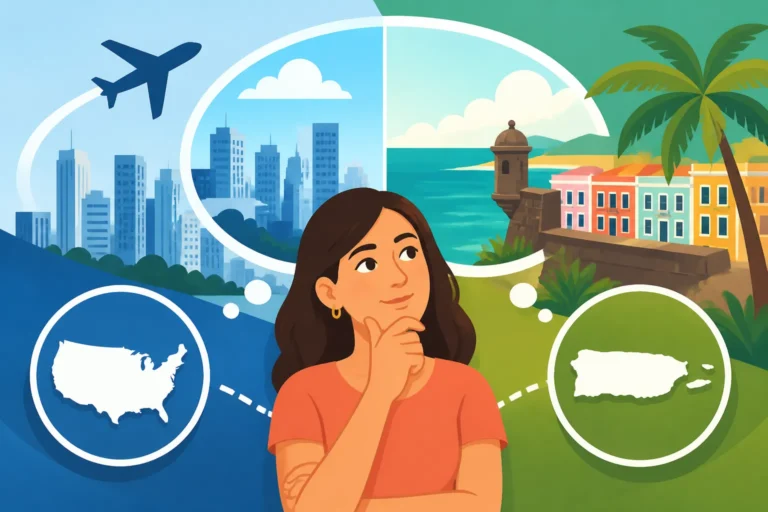
I get it. The confusion is real. You're moving across a body of water, perhaps immersing yourself in a new language, and it feels like a huge international relocation. But here's the bedrock truth: Puerto Rico is a U.S. territory. It's not a foreign country, and moving here from any of the 50 states is an internal relocation, not an act of expatriation. Your US citizenship is a birthright (for most), and it doesn't just vanish because you've decided to trade snow for sunshine and palm trees.
Puerto Rico: An Intrinsic Part of the United States
The relationship between Puerto Rico and the United States dates back to 1898. Fast forward to 1917, and the Jones-Shafroth Act granted statutory U.S. citizenship to nearly all Puerto Ricans. This means that if you were born in Puerto Rico after January 13, 1941, you are a natural-born U.S. citizen. If you're coming from the mainland, you're simply exercising your right to live and work in any part of the United States. Think of it like moving from New York to California, or from Florida to Texas – except with way better beaches and a much more vibrant culture! There's no separate "Puerto Rican citizenship" that replaces your US citizenship; rather, you possess both by being a citizen of the U.S. residing in Puerto Rico. This unique status means you retain all the rights and privileges of a U.S. citizen, including your passport, your ability to travel freely between the island and the mainland, and your eligibility for federal programs.
Why the Confusion? Debunking the "Leaving the Country" Myth
So, if it’s so clear-cut, why the persistent confusion? A big part of it stems from the cultural and linguistic differences, coupled with the fact that Puerto Rico has its own local tax system and distinct government entities. When you land at Luis Muñoz Marín International Airport (SJU), you don't go through customs or immigration like you would when arriving from a foreign nation. However, the distinct identity and often separate legal frameworks (like the local tax code) can make it feel like you're entering a different nation, leading people to question their fundamental legal status. But that feeling, while valid in a cultural sense, doesn't translate to a change in your citizenship. It’s simply a new chapter within the larger narrative of your U.S. life. You’re not "leaving the country"; you’re moving to another, albeit beautiful and unique, jurisdiction under the same federal umbrella.
US Citizenship Rights and Responsibilities While Living in Puerto Rico
Moving to Puerto Rico doesn’t strip you of your fundamental rights as a U.S. citizen. In fact, it's quite the opposite: you continue to enjoy most of these rights and also carry responsibilities, just as you would anywhere else in the United States. This continuity provides a significant layer of security and familiarity for new residents.
Voting, Passports, and Federal Programs
As a U.S. citizen living in Puerto Rico, your U.S. passport remains fully valid and is your primary document for international travel. You won't need any special endorsements or different documentation for travel between the mainland and the island. On the political front, while residents of Puerto Rico cannot vote in U.S. presidential elections (unless they establish residency in a state), you can vote in presidential primaries and elect a Resident Commissioner to the U.S. House of Representatives, who has a voice but no vote on the House floor.
Beyond that, your eligibility for federal benefits and programs like Social Security, Medicare, and veterans' benefits remains intact. For example, understanding the nuances of Understanding Medicare and Medicare Advantage in Puerto Rico (2027) is crucial, but your fundamental eligibility as a US citizen is not challenged by your move. These programs are federal, meaning they apply across all U.S. states and territories. This is a huge relief for many, especially those nearing retirement or relying on these safety nets. You’re still an American citizen, and the federal government still recognizes you as such.
Maintaining Your US Legal Identity
The process of moving and setting up your new life in Puerto Rico will involve a lot of administrative steps, but none of them impact your U.S. citizenship. You'll need to transfer your driver's license, for instance, or register your vehicle with the local Department of Transportation and Public Works (DTOP). You might be wondering, "How Long Can I Use My Mainland License Before Getting a Puerto Rico One?" but these are local administrative requirements for residents, not citizenship tests. You’ll also want to update your address with federal agencies, such as the IRS and the Social Security Administration, to ensure you receive important correspondence and that your tax home is correctly identified.
This continuity of your legal identity extends to things like maintaining bank accounts on the mainland, if you choose, or interacting with any federal court or agency. Your fundamental status doesn't change. When it comes to the logistics of getting all your belongings over, relocation services like Sirelo can be a huge help. They connect you with reliable movers, ensuring your transition is smooth and that your focus can remain on settling in, rather than worrying about the practicalities that might seem daunting. This support can really ease the feeling of being in limbo as you establish your new home.
Citizenship vs. Residency vs. Domicile: Clarifying Key Concepts
One of the biggest sources of confusion when discussing your status in Puerto Rico is the interchangeable use of "citizenship," "residency," and "domicile." In plain terms, these are three distinct legal concepts, and understanding their differences is absolutely crucial for any expat moving to the island. While they might overlap in practice, they serve very different purposes.
Decoding the Jargon: What Each Term Truly Means
Let’s break them down:
- Citizenship: This is your national legal status, determining your allegiance to a country and granting you fundamental rights and protections. As established, if you're a U.S. citizen, moving to Puerto Rico does not change this status. You remain a U.S. citizen.
- Residency: This refers to where you physically live for a significant period. It's often determined by physical presence and intent. For tax purposes, Puerto Rico has its own definition of "bona fide residency" which generally requires you to be physically present on the island for at least 183 days a year, have a tax home there, and have stronger connections to Puerto Rico than to any state in the U.S. Mainland. This is critical for understanding your tax obligations and benefits, but it has no bearing on your citizenship. If you're curious about the specifics, you'll definitely want to dive into articles like Bona Fide Residency in Puerto Rico: The Definitive Tax Guide (2027).
- Domicile: This is your legal home, the place where you intend to return, even if you’re temporarily living elsewhere. It's a more abstract concept than residency and is often about your long-term intent. For instance, you might reside in Puerto Rico for a year, but if your intent is to return to your previous state and you maintain strong connections there, your domicile might still be on the mainland. For the vast majority of people moving to Puerto Rico with the intention of making it their permanent home, their domicile will shift to the island alongside their residency.
The key takeaway is that while your residency and domicile might change when you move to Puerto Rico, your U.S. citizenship does not. They are separate legal spheres.
Practical Implications for Your Life in Puerto Rico
Understanding these distinctions will profoundly impact your daily life and administrative tasks on the island. For instance, your tax obligations are tied to your residency and source of income, not your citizenship. If you meet the criteria for How to Establish Bona Fide Residency in Puerto Rico (2027), you may qualify for significant tax exemptions on Puerto Rico-source income. This is a huge draw for many, but it's entirely separate from whether you are a U.S. citizen. The "183-day rule" mentioned earlier, which is detailed in Understanding the 183-Day Rule for Bona Fide Residency in Puerto Rico, is a residency requirement, not a citizenship one.
Furthermore, your eligibility for local services, like applying for a Puerto Rico driver's license or enrolling your children in schools, depends on establishing residency, not on some new form of citizenship. Even when considering something as critical as health insurance, your U.S. citizenship means you have access to various options. For example, Cigna Global offers robust international health insurance plans that are often a great fit for expats and can provide comprehensive coverage in Puerto Rico, complementing or substituting local plans depending on your needs. This is just one of many options available to you as a U.S. citizen here.
Here's a quick table to summarize these differences:
| Feature | U.S. Citizenship | Puerto Rico Residency / Domicile |
|---|---|---|
| Status | National legal status, inherent for most | Where you primarily live and intend to stay (legal home) |
| Acquisition | Birth in U.S. or territories, naturalization | Physical presence, intent to remain, establishing ties |
| Impact on PR | Unchanged by moving to Puerto Rico | Determines local tax obligations, access to local services |
| Federal Rights | Full U.S. federal rights & protections | Doesn't alter federal rights, but applies local laws |
| Primary Doc. | U.S. Passport, Birth Certificate | Puerto Rico Driver's License/ID, utility bills, lease |
| Travel | Free travel between PR and mainland | No impact on travel between PR and mainland |
| Taxes | Federal taxes on worldwide income (if not PR bona fide resident); local taxes if PR resident | Local taxes on PR-source income (if bona fide resident), potentially exempt from federal tax on PR-source income |
Navigating Your Move with Confidence as a US Citizen
The thought of moving to a new place, especially an island that has its own unique governance, can feel overwhelming. But knowing that your fundamental US citizenship is secure should give you a significant boost of confidence. You're not cutting ties with your country; you're simply changing your address within it. This means many processes will be more familiar than if you were truly moving abroad, but there are still essential steps to ensure a smooth transition.
Essential Considerations for a Smooth Transition
Your move to Puerto Rico will involve several administrative tasks that are tied to establishing your residency and domicile, not your citizenship. You’ll need to set up your utilities, apply for a local driver's license, and register your vehicle. Understanding The Newcomer's Guide to Setting Up Utilities (LUMA/AAA) in Puerto Rico is a practical example of a local step you’ll take as a new resident. Similarly, while your US citizenship grants you access to federal healthcare programs like Medicare, you'll still need to navigate the local healthcare landscape. Reading up on Health Insurance in Puerto Rico: Plans, Costs and Options Explained (2026) will be vital to ensure you have comprehensive coverage that fits your needs on the island. Reputable providers, including options like Cigna Global, often provide excellent health insurance plans that cater to expats, ensuring you're well-covered in your new island home, regardless of whether your medical needs are simple or complex.
From a financial perspective, while your US citizenship means you’re still part of the federal tax system, your new bona fide residency in Puerto Rico can significantly alter your income tax obligations. This is why The Complete Guide to Taxes in Puerto Rico for New Residents (2027) is essential reading. You’ll also need to open local bank accounts, a process detailed in The Newcomer's Guide to Opening a Bank Account in Puerto Rico. These are all practical steps for living in Puerto Rico, not for establishing your right to be a US citizen there.
Leveraging Resources for a Seamless Relocation
Moving your entire life, whether it’s just yourself or your whole family, is a monumental task. As a US citizen, you have the advantage of relatively seamless paperwork between the mainland and the island compared to international moves. Still, it pays to be organized and leverage available resources.
Start with a comprehensive plan. A guide like The Complete Relocation Checklist for Moving to Puerto Rico (2027) can help you tick off all the necessary steps, from changing your mailing address to preparing your pets for the move. For the actual logistics of getting your belongings to the island, using a service like Sirelo can make a world of difference. They allow you to compare various international movers, ensuring you find a reliable and cost-effective solution for shipping your household goods. Their services are invaluable for streamlining the physical move, taking a lot of the stress out of the process, and ensuring your transition is as smooth as possible. Remember, you’re not starting from scratch in a foreign land; you're building a new life in a beautiful, familiar, yet distinct part of your home country.
Disclaimer
This article is for general informational purposes only and does not constitute professional advice. Laws, prices and regulations vary by location and change over time. Consult a qualified professional for guidance on your specific situation.