How Do I Title and Register a New Car in Puerto Rico?
Moving to Puerto Rico, you quickly realize that administrative tasks often come with their own unique set of challenges, and registering a new car is definitely one of them. It's not just a quick trip to the DMV like on the mainland; here, you're navigating multiple agencies, distinct processes, and sometimes, a little bit of paciencia. This guide is going to walk you through exactly what you need to do, step by excruciating, but ultimately conquerable, step, to title and register your brand-new vehicle on the island, helping you avoid some of the common headaches that many of us expats have learned the hard way.
Understanding the Initial Hurdles: Why It Feels So Complicated
When you're dealing with official paperwork in Puerto Rico, it often feels like you're caught in a labyrinth designed by someone who secretly loves bureaucracy. And, to be honest, when it comes to titling and registering a new car, there's a kernel of truth to that. It’s not just one government office, but a multi-pronged approach involving different departments, each with its own specific forms, requirements, and sometimes, its own interpretation of the rules. Don’t worry, we’ll demystify it together.
The Different Agencies Involved: DTOP, CESCO, Hacienda
First things first, let’s get acquainted with the players in this bureaucratic drama. You'll be dealing with three major entities:
- Hacienda (Department of Treasury): This is where your journey often begins, even before you step foot in a CESCO. Hacienda is responsible for collecting the sales and use tax, known as IVU (Impuesto sobre Ventas y Uso), on your new vehicle. Think of it as the gatekeeper for the initial financial clearance. You can't even dream of getting plates without this step being completed and proof in hand. It’s a bit like getting permission to even start the process.
- DTOP (Department of Transportation and Public Works): This is the overarching agency that sets the rules for vehicle registration, driver's licenses, and all things related to roads and vehicles. You won't typically interact directly with DTOP in the way you do with CESCO or Hacienda, but they're the ones behind the regulations.
- CESCO (Centro de Servicios al Conductor): This is the equivalent of your mainland DMV. It’s where the rubber meets the road, so to speak, for vehicle registration, getting your license plates, and renewing your marbete (vehicle sticker) annually. You’ll be spending a significant amount of time here, so get comfortable. You’ll need to make sure you have all your ducks in a row before you visit CESCO, otherwise, you'll be sent packing, only to start the waiting game all over again. Remember, patience is a virtue, especially in the CESCO lines! If you're fresh off the plane, you might find that navigating these government offices can be quite an initiation. It’s part of that grand adventure of living here, much like figuring out the best way to get your utilities set up or understanding How Puerto Rico Taxes Work: Federal vs Local (Hacienda) Explained (2027).
Key Documents You'll Need to Gather
Now, this is where many people get tripped up. The key to a smoother process is being overprepared with documents. Do not assume anything. Bring originals, and for the love of all that is holy, bring multiple photocopies of everything. Trust me on this.
Here’s a breakdown of the typical documents required for titling and registering a new car purchased from a dealership in Puerto Rico:
- Bill of Sale (Contrato de Compraventa): This is your proof of purchase from the dealership. It must clearly state the vehicle information, purchase price, and both buyer and seller details. Make sure it's properly notarized, as that's a common requirement here for major transactions.
- Manufacturer's Certificate of Origin (MCO) or Manufacturer's Statement of Origin (MSO): This document, sometimes called a "Certificado de Origen del Fabricante," confirms that the vehicle is new and has not been previously titled. The dealership should provide this. It’s absolutely critical.
- Proof of Payment of IVU (Sales and Use Tax): This is the receipt or official document from Hacienda showing you've paid the sales tax on the vehicle. You'll get this after completing the first step with Hacienda. We'll dive into that in the next section.
- Valid Photo ID: Your driver's license (Puerto Rico or mainland, though you’ll eventually need to How Do I Transfer My Mainland Driver's License in Puerto Rico?) or passport will work. Ensure it’s current.
- Proof of Physical Address in Puerto Rico: This could be a utility bill (LUMA, AAA), a rental agreement, or a bank statement addressed to you at your current residence. They want to make sure you're a legitimate resident here.
- Social Security Card: Or a document from the Social Security Administration showing your Social Security Number.
- Proof of Mandatory Public Liability Insurance (ACAA): In Puerto Rico, there's a mandatory basic liability insurance, ACAA (Administración de Compensaciones por Accidentes de Automóviles), that every registered vehicle must have. You'll pay for this as part of your marbete fee. While it's paid at CESCO, it’s a prerequisite for the registration itself.
- Application for Certificate of Title (Solicitud de Certificado de Título): This is a CESCO form (often DTOP-250) that you'll fill out, providing all the vehicle and owner details.
- Forms AS 2915 and AS 2975 from Hacienda: These are specific forms related to the IVU payment for vehicles. The dealership often helps prepare these, but it’s good to be aware of them.
Seriously, create a dedicated folder for all these documents. You'll be pulling them out repeatedly. Having a good cell signal to quickly look up information or confirm appointments can also be a lifesaver, so make sure you've sorted out How Do I Set Up a Mobile Phone Plan in Puerto Rico? or have a reliable eSIM like one from Airalo ready to go.
The Step-by-Step Process: From Purchase to Plates
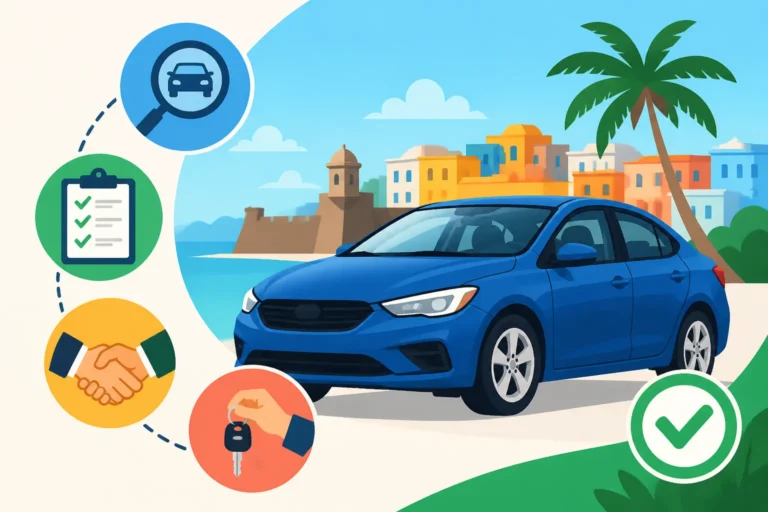
Alright, let's get down to the nitty-gritty. This is the sequence of events you’ll typically follow. Don't skip steps, as they are usually interdependent.
Step 1: Getting Your Sales Tax (IVU) Paid at Hacienda
This is often the first real hurdle, and it’s critical. Before CESCO will even look at your paperwork for a new car, Hacienda needs to collect its share.
- What is IVU? The IVU is Puerto Rico's sales and use tax, similar to sales tax on the mainland. For vehicles, it's typically a percentage of the purchase price. As of my last check, the general IVU rate is 10.5%, with an additional municipal IVU of 1% in most areas, making it 11.5% in total. However, there are specific rates and exemptions for vehicles that can make this complex. Your dealership should be well-versed in the exact amount.
- Where to Pay: You generally have two main options for handling the IVU payment and associated forms (like the AS 2915 and AS 2975):
- Dealership Assistance: Many reputable dealerships will assist you with this. They might even have a designated person or service that takes care of submitting these forms and payments to Hacienda on your behalf. This is often the smoothest route, even if it might cost a small service fee. They deal with this daily, so they know the drill.
- Hacienda Office: If your dealership doesn't offer this service, or if you prefer to handle it yourself, you'll need to visit a local Hacienda office. Be prepared for potential lines and make sure you have all the necessary documents we listed earlier, especially your Bill of Sale and the MCO. You’ll present these, fill out the specific IVU forms, and make the payment. Once processed, you'll receive a receipt or a stamped document as proof of payment. This is your golden ticket to CESCO.
- SURI (Sistema Unificado de Rentas Internas): Hacienda's online portal, SURI, is becoming increasingly useful for many tax-related matters. While some vehicle IVU processes might be handled through SURI, particularly for dealers, as an individual, you'll likely still need direct interaction for a new vehicle purchase or rely on the dealership. It's always a good idea to check Hacienda's official website or confirm with your dealership if any part of this process can be done entirely online.
Without that Hacienda receipt, CESCO won't proceed, so make this your absolute priority.
Step 2: The CESCO Gauntlet for Registration
With your Hacienda clearance in hand, it’s time for CESCO. This is where your car officially gets recognized and you receive your license plates and marbete.
- Making an Appointment: Many CESCO offices now operate by appointment, which can be a blessing or a curse depending on availability. Check the official DTOP website or call ahead to see if appointments are required or recommended for vehicle registration at your chosen CESCO location (e.g., CESCO Carolina, CESCO Manatí, CESCO Ponce). Walking in without one often means a much longer wait, or being turned away if they're at capacity.
- Your CESCO Visit Checklist (Re-emphasized!):
- All Original Documents: Bill of Sale, MCO, Hacienda IVU Payment Proof, your ID, Social Security Card, Proof of Address.
- Photocopies: Have at least 2-3 sets of photocopies of every single document. Seriously, they will ask for them.
- The Application for Certificate of Title (Form DTOP-250): This is the main application for registration. You can often get this form from the CESCO website beforehand and fill it out, saving time.
- The Process at CESCO:
- Initial Review: When your number is called (or your appointment time arrives), a CESCO agent will review your documents. This is where they’ll check for the Hacienda payment proof and all other required paperwork. If anything is missing or incorrect, you’ll be sent home.
- Payment of Fees: Once your documents are approved, you'll pay the registration fees. This will include the cost of the plates, the initial marbete (vehicle sticker) fee, and the mandatory ACAA insurance. The marbete fee varies depending on the vehicle type, year, and value.
- Issuance of Plates and Marbete: After payment, you'll typically be issued your new Puerto Rico license plates and the marbete. The marbete is a sticker that goes on your windshield, indicating that your vehicle is registered and insured (with ACAA) for the current year. It also has a small paper portion that serves as your vehicle's registration certificate, which you should keep in your glove compartment.
Once you leave CESCO with your plates and marbete, congratulations! Your new car is officially titled and registered in Puerto Rico. You can finally breathe that sweet, salty air of accomplishment. This process, like How to Register a Property Deed (Escritura) in Puerto Rico, involves careful document handling, so always be meticulous.
Navigating Common Pitfalls and Pro Tips
Even with a step-by-step guide, administrative processes in Puerto Rico can throw a curveball or two. Knowing what to expect and how to react can save you a lot of grief.
The Language Barrier and Local Nuances
Puerto Rico is predominantly Spanish-speaking, and while many government employees in larger CESCO offices or tourist areas might speak English, it's not guaranteed, especially in smaller, more rural CESCOs or even at some Hacienda branches.
- Brush Up Your Spanish: Even a basic understanding of automotive terms and polite phrases can go a long way.
- Bring a Friend: If your Spanish isn't up to par, seriously consider bringing a local friend or a paid interpreter. They can help clarify questions, understand instructions, and ensure nothing is lost in translation. This isn't just about language; it's also about understanding the local way of doing things, the unspoken rules, and the general vibe.
- Patience and Politeness: Things might move slower than you’re used to. Rushing, getting frustrated, or being impolite won't speed up the process. A friendly smile and a patient attitude can make a big difference in how your interactions go. Remember, you’re here to get help, and the person helping you is just doing their job, often understaffed and overworked.
What to Do If You Encounter Issues
It’s almost a rite of passage to encounter some hiccup during government processes here. Don’t despair!
- Missing or Incorrect Documents: If you’re told a document is missing or incorrect, ask exactly what needs to be fixed or obtained. Don’t leave without precise instructions. Write it down.
- Take Names: If you’re getting conflicting information or facing an unusual hurdle, politely ask for the name of the person you’re speaking with. This can sometimes encourage them to be more helpful or provide clearer guidance.
- Manager or Supervisor: If you feel stuck, politely ask to speak with a supervisor. Sometimes, a more experienced person can resolve an issue quickly.
- Make Copies, Again: Did I mention copies? Always make copies of everything before you hand over any original document. Keep them in a separate folder.
- Digital Trail: If you submit anything online (like through SURI), always save screenshots and confirmation numbers.
Essential Things to Know About Vehicle Ownership in PR
Beyond the initial registration, there are ongoing responsibilities. Understanding these will help you maintain compliance and avoid future headaches.
- Annual Marbete Renewal: Your marbete (vehicle sticker) is valid for one year. You’ll need to renew it annually. This involves paying a fee and ensuring your vehicle passes a basic safety inspection. Understanding the Marbete (Vehicle Sticker) and Inspection in Puerto Rico is a whole process in itself.
- Mandatory ACAA Insurance: As mentioned, ACAA is mandatory. It provides basic coverage for bodily injury in an accident, regardless of fault. It's often not enough, so most residents opt for additional private insurance.
- Private Car Insurance: While ACAA is mandatory, it offers minimal coverage. You'll definitely want to secure additional private liability and collision insurance from a local provider like Universal Insurance, Triple-S, or Mapfre. This will protect your investment and cover you for much more significant damages or injuries. Consider the total cost of ownership, as this impacts your overall The Complete Guide to Cost of Living in Puerto Rico (2026).
- Vehicle Inspections: Before renewing your marbete, your vehicle will need to pass an inspection at an authorized inspection station (often a mechanic shop or gas station). This is a straightforward visual inspection to ensure basic safety features are working.
- Changing Address/Information: If your address or other vehicle information changes, you must update it with CESCO promptly. Ignoring this can lead to issues down the road.
The whole process can feel a bit like wading through treacle, but it's entirely manageable. Think of it as just one more step in getting settled on the island, much like figuring out all the other administrative bits when you first move here, which can feel overwhelming. Many resources exist to help ease your transition, and services like Sirelo can be great for understanding the logistics of moving your entire life here, even if they aren't directly registering your car!
Document Checklist for New Car Registration in Puerto Rico
| Document | Where to Obtain/Complete | Purpose | Notes |
|---|---|---|---|
| Bill of Sale (Contrato de Compraventa) | Dealership | Proof of Purchase | Ensure notarized, includes all vehicle/buyer details |
| Manufacturer's Certificate of Origin (MCO) | Dealership | Proves vehicle is new, never titled | Absolutely essential; original needed |
| Proof of IVU Payment (Hacienda Receipt) | Hacienda Office or via Dealership | Confirms Sales & Use Tax paid | Crucial first step before CESCO |
| Valid Photo ID | Your Person | Identification | Puerto Rico DL, US Passport, or other valid government ID |
| Proof of Address (PR) | Utility bill, lease, bank statement | Confirms Puerto Rico residency | Must be recent and in your name |
| Social Security Card | Your Person | Verification of SSN | Original or official document |
| Application for Certificate of Title (DTOP-250) | CESCO Office or DTOP Website | Main application for vehicle registration | Can be filled out in advance |
| Mandatory Public Liability Insurance (ACAA) | Paid at CESCO as part of marbete fee | Basic, compulsory accident coverage | Included with registration fee, not separate purchase |
| Forms AS 2915 & AS 2975 | Hacienda Office or via Dealership | Specific forms for vehicle IVU payment | Dealership often assists with these |
While the process of titling and registering a new car in Puerto Rico can feel a bit like a maze, especially with all the forms and different agencies involved, it's a completely navigable path. Just come prepared, arm yourself with patience, and don't hesitate to ask for clarification. You'll get there, and soon enough, you'll be cruising the beautiful roads of Puerto Rico with your new vehicle, completely legit.
Disclaimer
The information provided in this guide is intended for general informational purposes only and does not constitute legal, financial, or professional advice. While we strive to provide accurate and up-to-date information, government regulations and procedures in Puerto Rico can change frequently. Always consult with official sources, such as the Puerto Rico Department of Transportation and Public Works (DTOP), CESCO, and Hacienda, or seek advice from a qualified local professional for the most current and specific guidance pertaining to your individual situation. We assume no responsibility for any actions taken based on the information contained herein.