How to Keep Mainland Health Coverage After Moving to Puerto Rico
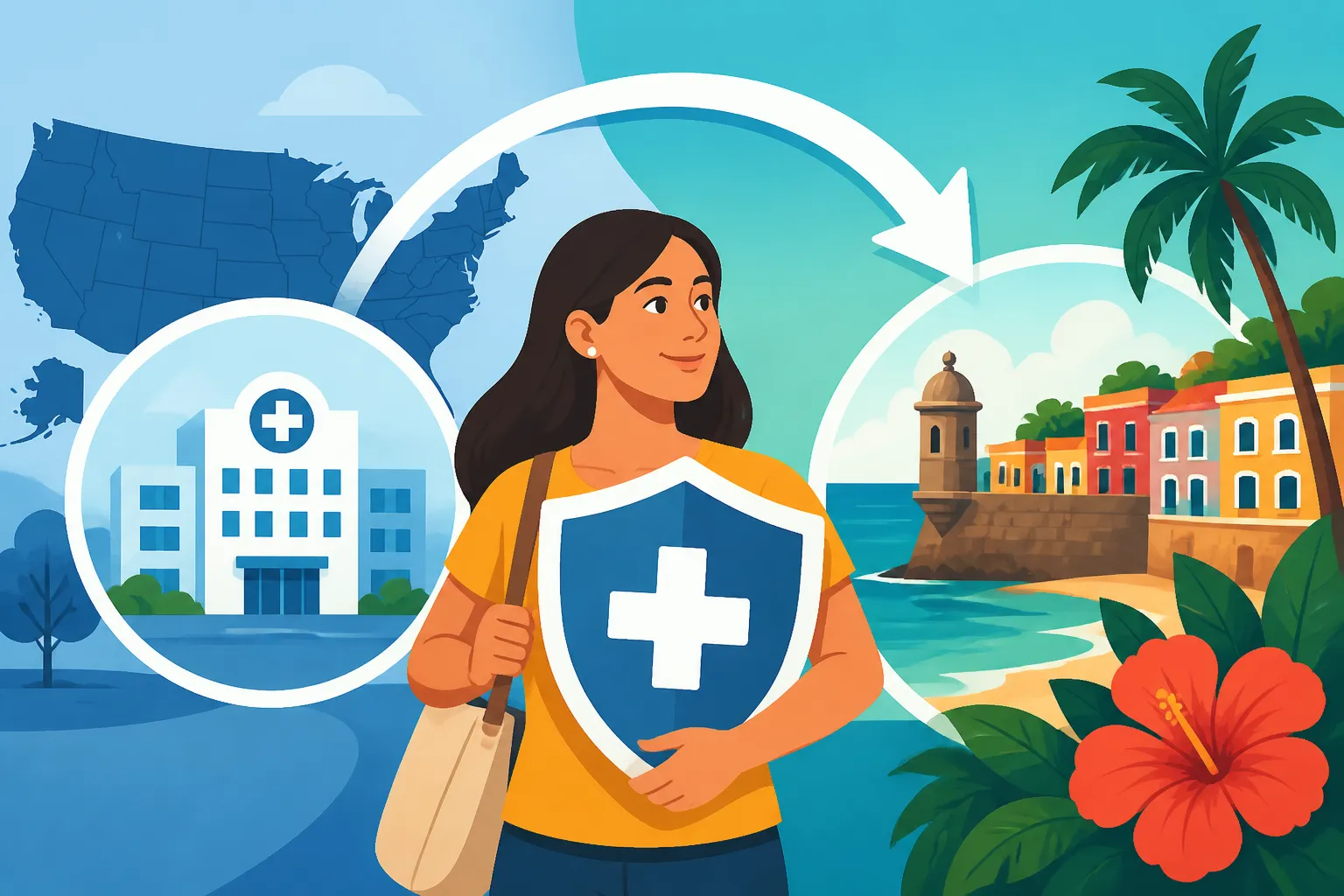
Moving from the US mainland to Puerto Rico involves a unique paradox: you are staying within the United States, yet you are entering a health insurance market that behaves like a foreign country. Many newcomers assume their existing Blue Cross or UnitedHealthcare plan will function identically in San Juan as it did in Seattle, only to face massive out-of-network bills. This guide explains how to navigate keeping mainland coverage, when it fails, and how to bridge the gap effectively.
The Reality Check: Does Your Mainland Plan Really Work in Puerto Rico
The most common misconception I hear from new arrivals is the belief that "national" coverage means "universal" coverage. While Puerto Rico is a US territory, its healthcare ecosystem is distinct. Most mainland-based insurers view the island as a separate jurisdiction. If you have a plan through a mainland employer or the ACA marketplace in a specific state, your coverage in Puerto Rico is likely restricted to "emergency only." This means if you have a heart attack, you are covered. If you need a refill for your blood pressure medication or a check-up for a persistent cough, you might be on your own.
The Difference Between Emergency and Routine Care
When you first land on the island, your mainland insurance is essentially a safety net with very large holes. Emergency care is generally protected under federal law (EMTALA), meaning a hospital in Ponce or San Juan must stabilize you. However, "emergency" is a strictly defined term in the insurance world. If you visit a Sala de Emergencias for something that the insurer later deems "urgent" rather than "emergent," you could be stuck with the full bill.
The frustration often peaks when trying to access routine care. Most local doctors in Puerto Rico—even those in high-end areas like Condado or Dorado—do not participate in mainland provider networks. They accept local plans like Triple-S, MCS, or Humana del Caribe. If you try to use your mainland PPO, the doctor’s office will likely ask for cash upfront, leaving you to fight for reimbursement later. To better understand these distinctions, it is worth reading How Puerto Rico's Health System Works: Public vs Private Explained (2027) to see how the local infrastructure is segmented.
Identifying National Networks vs Local Puerto Rican Networks
Some mainland plans, particularly high-tier PPOs from companies like UnitedHealthcare (UHC) or Aetna, claim to have a national network that includes Puerto Rico. However, even within these "national" networks, the density of providers on the island is incredibly low. You might find one or two specialists in San Juan who are in-network, but if you live in Rincon or Humacao, you could be facing a three-hour drive just to see a "covered" doctor.
Before you commit to keeping your mainland plan, you must log into your insurer’s portal and specifically search for providers using a Puerto Rico zip code (like 00907 for San Juan). Do not take a customer service representative's word for it; they often confuse "Puerto Rico" with "Costa Rica" or simply assume that because it’s the US, it’s covered. You need to see a list of actual names and addresses. If the list is empty or contains only three doctors for the entire island, your mainland coverage is effectively useless for daily life.
The Hidden Costs of Out-of-Network Billing
If you decide to keep your mainland plan and see local doctors as "out-of-network" providers, you are playing a dangerous financial game. Most mainland plans have a separate, much higher deductible for out-of-network care. Furthermore, Puerto Rican doctors often charge "fair market rates" that exceed what your insurance company considers "allowable."
For example, if a specialist in Guaynabo charges $200 for a consultation, your mainland insurer might only allow $120 for that service code. If you haven't met your out-of-network deductible, you pay the full $200. Even if you have met it, the insurer only pays a percentage of the $120, leaving you to pay the difference plus the "balance bill" of $80. This is why many expats eventually realize that Understanding Co-Pays, Deductibles and Premiums in Puerto Rico is essential knowledge for managing their transition.
Navigating Specific Plan Types: PPO, HMO, and Medicare
The type of plan you currently hold on the mainland is the single biggest factor in whether you can—or should—keep it after your move. The rules for an HMO are night and day compared to a high-end PPO, and Medicare brings its own set of bureaucratic headaches that can leave seniors vulnerable if they don't plan ahead.
PPOs: Your Best Bet, but With Strings Attached
A Preferred Provider Organization (PPO) is the only mainland plan type that offers a realistic chance of functioning in Puerto Rico. Because PPOs allow you to see providers outside of a restricted gatekeeper system, you can technically use them anywhere. The issue, as mentioned, is the cost. However, for those who split their time between the island and the mainland (the "Snowbirds"), a PPO is often the ideal solution. It allows you to keep your trusted doctors in New York or Florida for major procedures while providing "some" coverage for unexpected issues in Puerto Rico.
If you are a remote worker, you should check if your employer offers a "Global" or "National" tier. Sometimes, these plans have reciprocal agreements with local insurers. For instance, some Blue Cross Blue Shield (BCBS) plans allow you to use the local Blue Cross affiliate in Puerto Rico (Triple-S) at in-network rates. This is the "holy grail" of expat insurance, but it requires verification of the specific "Alpha Prefix" on your ID card. Without that reciprocal agreement, your PPO is just an expensive emergency-only plan.
HMOs and EPOs: The Geographical Lockout
If you have an HMO (Health Maintenance Organization) or an EPO (Exclusive Provider Organization), you should prepare to lose your coverage the moment you establish residency in Puerto Rico. These plans are geographically fenced. They require you to use a specific network of doctors in a specific county or state. The moment you move to a new zip code outside that service area, you are generally only covered for "life or limb" emergencies.
Many newcomers try to "cheat" this by keeping their mainland address (like a parent's house or a mail forwarding service). Not only is this technically insurance fraud, but it also creates a logistical nightmare. If you need a referral to a specialist, your HMO will require you to see a Primary Care Physician (PCP) in your "home" state. Flying back to New Jersey every time you need a dermatologist referral is neither cost-effective nor sustainable. For those in this situation, it is better to look into How to Get Health Insurance When You Move to Puerto Rico as soon as possible.
Understanding Medicare and Medicare Advantage in Puerto Rico
For retirees, the transition is even more complex. Traditional Medicare (Parts A and B) works in Puerto Rico exactly as it does on the mainland. You can see any doctor on the island who accepts Medicare, and many do. However, the "Medigap" (Supplemental) plans that cover the 20% coinsurance are much harder to find or may not transfer.
Medicare Advantage (Part C) is a different story. If you have a Medicare Advantage plan in Florida, it will not work for routine care in Puerto Rico. You must enroll in a local Puerto Rico Medicare Advantage plan during a Special Enrollment Period (SEP) triggered by your move. The good news is that Puerto Rico has a very robust Medicare Advantage market with low premiums, but the networks are strictly local. For a deep dive into this, I highly recommend reading Understanding Medicare and Medicare Advantage in Puerto Rico to avoid a lapse in coverage.
Strategic Options for Maintaining Coverage
If you aren't ready to go "all-in" on a local Puerto Rican health plan, there are several ways to bridge the gap. Whether you are waiting for a local plan to kick in or you simply want to maintain access to US-based specialists, these strategies can save you thousands of dollars during your first year on the island.
Keeping Your Mainland Plan for Travel Back Home
Many expats who move under Act 60 or as high-net-worth investors choose to keep a high-end mainland PPO even after they get local coverage. This "dual coverage" strategy ensures that if they receive a serious diagnosis (like cancer or a complex cardiac issue), they can immediately fly to top-tier mainland hospitals like Mayo Clinic or Johns Hopkins.
While local hospitals like Auxilio Mutuo or Ashford are excellent, the reality is that Puerto Rico is currently facing a doctor shortage. Wait times for specialists can be months long. Having a mainland plan as a backup allows you to bypass these wait times by seeking care in the states. If you are considering this, you should look at The Guide to Choosing a Private Hospital in Puerto Rico to understand what is available locally versus what you might want to "outsource" to the mainland.
Using COBRA as a Bridge to Local Coverage
If you left a mainland job to move to Puerto Rico, you are likely eligible for COBRA. This allows you to keep your employer-sponsored plan for up to 18 months, albeit at a very high cost (you pay the full premium plus a 2% admin fee). COBRA is often a terrible long-term solution because of the price, but it is an excellent "bridge."
It gives you 60 days to elect coverage and 45 days after that to pay. This means you can effectively move to the island, spend two months settling in, and only "activate" the COBRA retroactively if you have a medical emergency before you secure a local plan. This is a common tactic for those who are still Navigating the Puerto Rico Healthcare System: A Newcomer's Roadmap (2027) and aren't sure which local provider to choose yet.
Supplementing with International Travel or Nomad Insurance
For those who are not yet "Bona Fide Residents" or who spend significant time traveling, a nomad insurance product like SafetyWing can be a literal lifesaver. While SafetyWing is primarily designed for international travelers, it can provide a crucial layer of "buffer" coverage for newcomers.
If your mainland insurance only covers emergencies and you haven't yet qualified for a local plan, SafetyWing can fill the gaps for unexpected illnesses or accidents that occur while you are in transition. It is particularly useful because it is flexible; you can start or stop it as your residency status changes. Just keep in mind that SafetyWing is not a replacement for a long-term, comprehensive local health plan, but rather a tool to manage the risks of the "in-between" phase. Digital nomads scouting the island for a few months before committing to a long-term lease.
| Feature | Mainland PPO | Mainland HMO | Local PR Plan (e.g., Triple-S) | Nomad Insurance (SafetyWing) |
|---|---|---|---|---|
| Routine Care in PR | Usually Out-of-Network | Not Covered | Fully Covered | Limited/Emergency |
| Emergency Care in PR | Covered (High Deductible) | Covered (Emergency Only) | Fully Covered | Covered |
| Mainland Specialist Access | Excellent | Excellent (in home state) | Very Limited | Limited/Emergency |
| Prescription Coverage | National Pharmacies only | Home State only | Local Pharmacies only | Limited |
| Cost | Very High | High | Moderate (Lower than US) | Low |
The Local Puerto Rico Health Insurance Landscape
Eventually, most permanent residents find that the easiest path is to simply join the local system. Puerto Rico has a highly developed private insurance market dominated by three or four major players. These plans are designed for the island’s unique economy and provider network, making them much more "user-friendly" than any mainland plan.
Why You Might Need to Switch to a Local Plan Anyway
The administrative friction of using a mainland plan in Puerto Rico is exhausting. Most local clinics are not set up to process out-of-state claims. You will find yourself constantly paying "cash" (or ATH Movil) and then spending hours on the phone with your mainland insurer trying to explain that, yes, Puerto Rico is in the US, and no, the doctor does not have a standard US Tax ID in the format they expect.
Furthermore, local plans like Triple-S or MCS offer benefits that mainland plans don't, such as "Pague Menos" (Pay Less) programs for prescriptions and access to a wide network of CDTs (Centros de Diagnóstico y Tratamiento). These are local urgent care centers that are the backbone of the PR healthcare system. If you want to know how to get started, check out Health Insurance in Puerto Rico: Plans, Costs and Options Explained (2026).
How Puerto Rico’s Health System Works
The system is split into the "Vital" plan (the government-funded program for lower-income residents) and private insurance. As a newcomer, you will likely be looking at the private market. The level of care in private hospitals like those in San Juan is comparable to many mid-sized US cities. However, the system relies heavily on referrals.
Even with a private plan, you often need a primary care doctor to "authorize" your visit to a specialist. This is a cultural and administrative hurdle that mainlanders find infuriating. To get ahead of this, you should learn How Specialist Referrals Work Under Puerto Rico Health Plans before you actually need one. It will save you a wasted trip to a specialist's office only to be told you don't have the right "papel" (paperwork).
Navigating Provider Networks and In-Network Care
In Puerto Rico, "in-network" means everything. The price difference between an in-network lab test and an out-of-network one can be 500%. Most locals use large groups like "IPA" (Independent Practice Associations). When you sign up for a local plan, you aren't just joining an insurance company; you are often joining a specific "IPA" network of doctors who work together.
This is why newcomers are advised to choose their doctor first and their insurance second. If you find a pediatrician in Bayamon that you love, ask them exactly which plans they accept and which "IPA" they belong to. Then, buy that plan. For more details on this strategy, read Understanding Provider Networks and In-Network Care in Puerto Rico.
Practical Steps to Transitioning Your Health Coverage
If you’ve decided to make the move, don't wait until you arrive to start the process. Healthcare is one of the most stressful parts of relocation, and a little homework now will prevent a crisis later.
Verifying Provider Networks in Puerto Rico
Start by making a list of every medication you take and every specialist you see regularly. Then, use the online "Directorio de Proveedores" (Provider Directory) for the major PR insurers (Triple-S, MCS, Humana, First Medical). If you see your medications listed and find local specialists who speak English, you can move with confidence.
If you have a rare condition that requires a very specific specialist, you must call their office in Puerto Rico directly. Ask them: "Do you accept mainland [Insurancename] PPO, or must I have a local plan?" Often, they will tell you they only accept local plans, which is your cue to start the enrollment process for a local policy the moment you have a PR address. You can learn more about finding the right help in How to Find and Register with a Primary Care Doctor in Puerto Rico.
Handling Prescription Meds During the Transition
Mainland pharmacies like CVS and Walgreens exist in Puerto Rico, but they are not always integrated with mainland insurance systems. I have seen mainlanders stand at a San Juan Walgreens for two hours because the pharmacy's computer couldn't "see" their Illinois-based insurance.
The best strategy is to get a 90-day "vacation override" supply of your medications from your mainland doctor before you leave. This gives you three months to find a local doctor, get a PR-based prescription, and get it into the local system. Remember, many mainland doctors cannot legally send prescriptions across state/territory lines once you have moved permanently.
Bridging the Gap with SafetyWing
During this 90-day transition period, having a supplemental plan like SafetyWing is highly recommended. If you have an adverse reaction to a new medication or a minor injury while hiking in El Yunque, you don't want to be worrying about whether your mainland PPO's "emergency" clause will cover an urgent care visit. SafetyWing provides that peace of mind for a very low monthly cost, allowing you to focus on the logistics of your move rather than the fine print of your insurance policy. It's an essential part of the expat toolkit for those first few months on the island.
Financial and Legal Considerations of Split Coverage
Finally, we have to talk about the "B-word": Bona Fide Residency. If you are moving to Puerto Rico for tax incentives (like Act 60), your health insurance is more than just a medical necessity; it is a piece of legal evidence.
Tax Implications of Bona Fide Residency
To qualify for the tax benefits of living in Puerto Rico, the IRS requires you to prove that your "Tax Home" and "Closer Connection" are to the island. If you continue to use a health insurance plan that is tied to a mainland address, it can be used against you in an audit.
The IRS looks at things like where your primary care physician is located. If you are claiming to live in San Juan but all your medical bills are coming from a doctor in Atlanta, it suggests you haven't truly moved your "life" to the island. Switching to a local PR health plan is a strong signal of your intent to remain a Bona Fide Resident.
Understanding Co-Pays and Deductibles in Puerto Rico
One pleasant surprise for mainlanders is that healthcare in Puerto Rico is often significantly cheaper. A specialist co-pay on a local private plan might be as low as $20 or $30, compared to $60 or $100 on the mainland. However, the "deductible" system can be confusing. Some local plans have a $0 deductible for in-network care, which feels like a dream to Americans used to $5,000 "High Deductible" plans. To fully grasp how to budget for this, read Understanding Co-Pays, Deductibles and Premiums in Puerto Rico.
Managing the "Split Life"
If you truly are living a split life—six months in PR and six months on the mainland—you will likely need a very specific type of "national" PPO or a combination of a local PR plan and a high-deductible mainland plan. This is expensive, but it is the only way to ensure 100% coverage in both locations. For most people, the most cost-effective solution is a local PR plan for daily life and a product like SafetyWing for when they are traveling back to the states or elsewhere. This combination covers the "routine" locally and the "catastrophic" while traveling, which is the most realistic balance for the modern expat.
Disclaimer
This guide is for informational purposes only and does not constitute legal, financial, or medical advice. Health insurance laws and provider networks in Puerto Rico are subject to frequent change. Always verify coverage details directly with your insurance provider and consult with a qualified tax professional regarding Bona Fide Residency requirements.