How Do I Register My Out-of-State Car in Puerto Rico?
Alright, my friend, let's talk about getting your car registered here in Puerto Rico. If you've just moved from the mainland, you're probably navigating a whole new world of paperwork and processes, and trust me, registering an out-of-state vehicle is often right up there on the "pulling your hair out" list. It’s not impossible, but it is a journey. This guide is here to walk you through every step, helping you understand the local system, what you'll need, and how to keep your sanity through it all.
Getting Started: Pre-Arrival and Initial Steps for Your Out-of-State Vehicle
Before you even step foot in a CESCO office (our version of the DMV), there are some crucial preparatory steps you should take. Believe me, a little foresight here can save you a mountain of headaches later. This isn't like the mainland where you can often breeze through an inspection or registration with minimal fuss. Here, it’s all about the details, and if you miss one, you’ll be sent home to start over.
Preparing Your Vehicle for Puerto Rico Standards
First things first, let's make sure your car is ready for its new life on the island. While Puerto Rico generally follows U.S. federal emissions and safety standards, the local inspection process is, well, local.
For most private passenger vehicles, you'll be relieved to know that an intensive emissions test, like those in some mainland states, isn't typically required at the time of initial registration or annual renewal. However, the vehicle will undergo a safety inspection. This isn't just a quick look-over. Inspectors will check things like your brakes, lights (headlights, tail lights, turn signals), horn, wipers, tires (tread depth and condition are important), and even your seatbelts. They're looking for basic roadworthiness and safety compliance.
Before you even think about the inspection, give your car a good once-over. Are all your lights working? Are your tires in good shape? Is there anything visibly broken or hanging loose? If you're planning on shipping your car here, companies like Sirelo often provide guidance on preparing vehicles for international transport, which can include some of these basic checks, but it's ultimately your responsibility to ensure it meets local road standards upon arrival. Better to fix any minor issues beforehand than to fail the inspection and have to return.
Beyond the physical inspection, consider if your vehicle is mechanically sound for the tropical climate and, let's be honest, sometimes less-than-perfect road conditions. Constant humidity, salt air (especially if you live near the coast), and heat can take a toll on components that might have been fine in a drier, colder climate. Make sure your A/C is in top shape, and that all your fluids are at proper levels.
Gathering Your Essential Documents
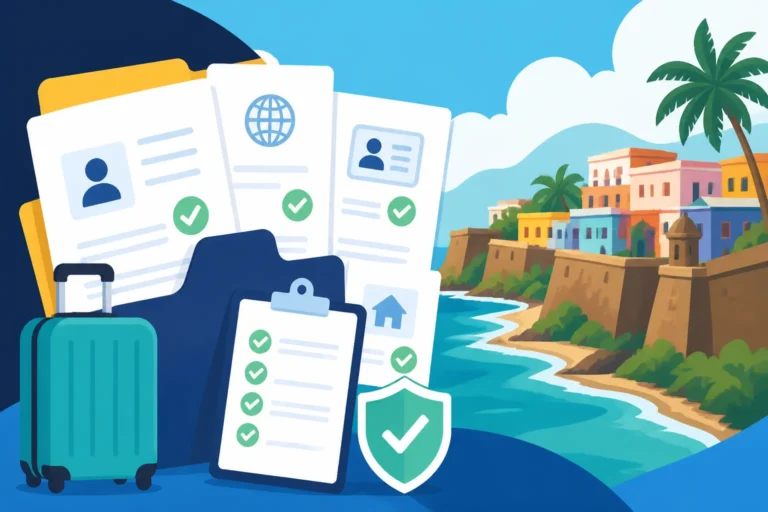
This is perhaps the most critical step. CESCO is notorious for being strict about documentation. If you're missing even one paper, or if something isn't precisely as they expect it, you'll be told "no se puede" (it cannot be done) and sent packing. My advice? Over-prepare. Bring originals, and make at least two copies of everything.
Here's a breakdown of what you'll typically need:
- Original Vehicle Title: This is paramount. It must be clean, in your name, and free of any liens (unless you have a lien release from your bank). If your title is held by a bank because you have a loan, you'll need to work with your lender to get the original title or a certified copy, along with a letter authorizing registration in Puerto Rico. This can be a huge hurdle, so start this conversation early with your bank on the mainland.
- Current Out-of-State Registration: Even if it's expired or close to expiring, bring it. It helps prove ownership and the vehicle's history.
- Bill of Sale (if recently purchased): If you bought the car within the last year or so, bring the original bill of sale. This is especially important for calculating any sales tax (IVU) that might be due upon import, though most private vehicles brought by new residents don't incur this at the same rate as newly imported vehicles for sale.
- Proof of Identity: Your valid driver's license (from the mainland or Puerto Rico) and a U.S. passport or a state-issued Real ID. Make sure the name on your ID matches the name on your vehicle title exactly.
- Proof of Residency: A recent utility bill (LUMA, AAA), a lease agreement, or a property deed in your name, showing your Puerto Rico address. This confirms you're a resident here. Remember, you're trying to establish your bona fide residency in Puerto Rico, and vehicle registration is one piece of that puzzle. For more on this, you might find our guide on The Complete Relocation Checklist for Moving to Puerto Rico (2027) helpful.
- Customs Declaration (if applicable): If you shipped your car from the mainland, you might have received customs paperwork upon its arrival. Bring this along. While Puerto Rico is part of the U.S. customs territory, there can still be forms related to vehicle import for record-keeping.
- Vehicle Inspection Certificate: You'll obtain this after your car passes its safety inspection, but it's a critical document that feeds into the registration process itself.
- Power of Attorney (if someone is registering for you): Highly unlikely for an initial out-of-state registration, but if for some extraordinary reason someone else is doing it, they'll need a notarized power of attorney.
A real-life scenario: My friend, bless her heart, brought her title, but it was from a state that issues titles electronically. Her bank had the physical title. She spent weeks going back and forth with the bank, then CESCO, trying to get it sorted. Save yourself that stress! Confirm you have the actual, original physical title in your possession before you start the process. For additional details on what else you might need when moving here, check out our piece on What Documents Do I Need to Move to Puerto Rico?.
Navigating CESCO: The Heart of Vehicle Registration in Puerto Rico
Once your vehicle is prepped and your document folder is bulging, it's time to face CESCO. Prepare for a unique experience, let's just say that. It's not always a quick in-and-out, so bring your patience, a good book, and maybe some snacks.
The Vehicle Inspection and Emissions Check (If Applicable)
First, you need to get your car inspected. This is typically done at one of the many inspección stations scattered across the island, which are often private businesses licensed by DTOP (Department of Transportation and Public Works). They're usually easy to spot – look for signs that say "Centro de Inspección."
The process is fairly straightforward: You drive your car in, an inspector checks the items mentioned earlier (lights, brakes, tires, horn, wipers, seatbelts, etc.), and verifies your VIN (Vehicle Identification Number) matches your title. As I mentioned, most private passenger vehicles do not require a separate emissions test for registration or annual renewal, unlike some mainland states. However, it's always wise to confirm this at the inspection center itself, especially if you have an older or diesel vehicle.
If your car passes, you'll receive a physical inspection certificate. Hold onto this for dear life! If it fails, the inspector will tell you why and you'll have to get the issue fixed and return for a re-inspection. Don't be surprised if they're very particular. A cracked windshield, for example, is a common reason for failure. Ensure your vehicle is absolutely pristine in terms of safety and visible condition.
The Paperwork Marathon at CESCO
Now, with your inspection certificate in hand, it's time for the main event: CESCO. Currently, many CESCO offices operate on an appointment-only basis (cita). You'll typically need to use the CESCO Citas portal online to schedule your visit. This is crucial because trying to just walk in often leads to being turned away, no matter how early you arrive. Be prepared for the online portal to be entirely in Spanish. Take your time, use a translation tool if needed, or ask a Spanish-speaking friend for help. This online system is a step towards efficiency, but it still has its quirks. You can learn more about scheduling your visit in our detailed guide, How to Register and Title a Vehicle (DTOP/CESCO) in Puerto Rico.
When your appointment day arrives, head to the CESCO office, preferably early, even with an appointment. Present your documents at the information desk, and they will direct you to the appropriate counter. You'll likely need to fill out a "Formulario de Solicitud de Registro de Vehículos" (Vehicle Registration Application Form). This form asks for all your vehicle's details, your personal information, and how the vehicle was acquired. Again, if your Spanish isn't fluent, bring someone who can help you. While many CESCO employees speak English, it’s not guaranteed, and relying on someone else’s goodwill can add stress.
Once your paperwork is reviewed and approved, you’ll pay the necessary fees. They will then issue your new Puerto Rico license plates and a temporary registration document. Your actual title, now stamped and updated with Puerto Rico registration information, will be returned to you. This is it – you've officially registered your out-of-state car in Puerto Rico! This process is a significant step in your journey as a resident, and you can find more insights on it in How Do I Register for the Puerto Rico DMV (CESCO)?.
Understanding the Costs, Fees, and Ongoing Obligations
Moving to Puerto Rico means a new set of costs, and vehicle registration is no exception. It's not just a one-time thing; there are annual fees and requirements to keep your car legally on the road.
Breakdown of Initial Registration Fees
The initial costs for registering an out-of-state vehicle can vary slightly depending on the type of vehicle, its weight, and sometimes even the original purchase price. However, here's a general idea of what you can expect:
| Fee Type | Estimated Cost (USD) | Notes |
|---|---|---|
| Vehicle Inspection | $15 – $25 | Paid directly to the inspection center. |
| Title Transfer/Registration Fee | $15 – $25 | This is the fee for transferring your vehicle's registration to Puerto Rico. |
| License Plate Fee | $10 – $20 | For your new Puerto Rico plates. |
| ACAA Insurance (Mandatory) | $99 | Automobile Accident Compensation Administration. This is a mandatory government-mandated liability insurance. You must pay this at CESCO. It's often bundled into your Marbete renewal but is a separate initial charge when first registering. This covers basic medical expenses for anyone involved in an accident, regardless of fault. |
| Document Processing/Stamps (Sellos) | $5 – $10+ | Various administrative stamps (sellos) might be required, similar to taxes on documents. |
| Total Estimated Initial Fees | $144 – $179+ | This does not include any private auto insurance you choose to purchase (which is highly recommended beyond the basic ACAA). |
Please note: These are estimated costs and can change. Always confirm current fees directly with CESCO or the inspection station.
Beyond these direct fees, remember you'll want to secure additional private auto insurance. The ACAA only covers basic medical liability for injuries; it does not cover damage to your vehicle or property, nor extensive liability claims. Major insurance carriers like MAPFRE, Universal, and Triple-S are popular on the island. You can read more about what insurance to expect in Understanding Car Registration Costs and Insurance (ACAA) in Puerto Rico and How Much Is Car Insurance in Puerto Rico?. Don't skimp on this; an accident without proper coverage can be financially devastating.
The Annual Marbete Renewal and Vehicle Inspection
Ah, the Marbete. This is your annual vehicle registration sticker, and it's a bit different than what you might be used to. In Puerto Rico, the Marbete is a physical sticker that you attach to your windshield, usually near the rearview mirror. It has a barcode that police can scan to verify your registration.
Every year, usually around the anniversary of your initial registration, you'll need to renew your Marbete. This process involves two main components:
- Annual Vehicle Inspection: Yes, another inspection. Just like the initial one, your car will need to pass a safety check at a licensed inspection center. They'll issue a new certificate.
- Marbete Purchase: With your valid inspection certificate, you can purchase your new Marbete. This can be done at CESCO, at designated collection centers, or many banks and cooperatives. Some online renewal options are available, but often still require a physical pickup of the sticker. The annual Marbete cost generally includes the ACAA insurance premium ($99) plus various other taxes and fees based on your vehicle's make, model, and year. For a typical sedan, this might run you anywhere from $200-$400 annually, not including your private insurance.
It's absolutely critical to renew your Marbete on time. Driving with an expired Marbete is a serious offense, and you will get pulled over. The fines are hefty, and your car could even be impounded. They don't mess around with this. Our article on Understanding the Marbete (Vehicle Sticker) and Inspection in Puerto Rico) provides even more detail on how to stay compliant. And if you're wondering how to manage the annual renewal, check out How Do I Renew My Marbete (Vehicle Registration) in Puerto Rico?.
Tackling Common Challenges and Insider Tips
Even with all your ducks in a row, the process can throw a curveball or two. It's just part of the experience of living on the island!
Overcoming Bureaucracy and Language Hurdles
The biggest challenge for many newcomers is often the bureaucracy itself. Processes aren't always streamlined, and consistency can vary from one CESCO office to another, or even from one agent to the next.
- Patience is Your Best Friend: Seriously, embrace la paciencia. Things here often operate on "island time." Expect delays, long waits, and potentially multiple trips. Getting frustrated won't speed things up; it will only make you miserable.
- Bring a Translator or Friend: If your Spanish is rusty or non-existent, bringing a local friend, neighbor, or even hiring a professional translator can make a world of difference. They can help clarify instructions, fill out forms, and advocate for you if needed. This is where leaning on your expat network can really pay off.
- Double-Check Everything: Before you leave CESCO, review all the documents they give you. Make sure your name is spelled correctly, the VIN is accurate, and all dates are right. Correcting errors after you've left can be another bureaucratic nightmare.
- "It Depends": You'll hear this a lot. The exact requirements or interpretations can sometimes feel flexible. Be polite, clear, and persistent. Have all your original documents and multiple copies ready, which can often smooth over minor discrepancies.
Temporary Plates, Insurance, and Troubleshooting
What happens if your mainland registration expires before you manage to get your Puerto Rico plates? This is a common worry.
- Expired Mainland Registration: In an ideal world, you'd get everything done before your mainland tags expire. However, if they do, you technically shouldn't be driving the car. DTOP might issue a temporary permit (permiso provisional) in some cases, allowing you to drive directly to an inspection station and CESCO. However, this is not guaranteed and requires an explanation. It's far better to complete the process quickly upon arrival.
- Continuous Insurance Coverage: Make sure you have continuous private auto insurance coverage. Your mainland policy might offer limited coverage for a short period after you move, but you'll need a Puerto Rico-specific policy promptly. Contact local insurance agents as soon as you know your move date. It’s a good idea to have this sorted before you even go to CESCO.
- Lost Documents or Errors: If you lose a document (heaven forbid!) or find an error after the fact, you'll need to go back to CESCO. They have procedures for duplicate titles or correction of errors, but it will involve more forms, more waiting, and potentially more fees. Just another reason to keep those documents safe and triple-check everything.
Remember, the goal is to get your vehicle legally registered so you can fully enjoy Driving in Puerto Rico: Licenses, Registration and Rules for Newcomers (2027). While you’re at CESCO, it’s also a great opportunity to explore how to transfer your personal driver's license. Our guide on How to Transfer Your Mainland Driver's License in Puerto Rico can help with that side of the process.
It might feel like a lot, but many of us have been through it. Take it one step at a time, gather your papers, and remember that once it's done, you'll have one less thing to worry about as you settle into your fantastic new life here in Puerto Rico.
Disclaimer
This article is for general informational purposes only and does not constitute professional advice. Laws, prices and regulations vary by location and change over time. Consult a qualified professional for guidance on your specific situation.