How to Get a Non-Driver ID Card in Puerto Rico
When you first arrive in Puerto Rico, you quickly realize how vital official identification is for just about everything – opening a bank account, setting up utilities, even picking up a package. But what if you don't drive, or you simply don't want the hassle of getting a local driver's license right away? Fear not, fellow expat, because Puerto Rico offers a non-driver ID card, and this comprehensive guide will walk you through exactly how to get one, making your transition smoother.
The Importance of a Puerto Rico Non-Driver ID Card for New Residents
Moving to a new place, even one that's part of the U.S. like Puerto Rico, involves a mountain of paperwork and identification requirements. Your mainland driver's license might get you by for a little while, but eventually, you'll hit a wall where local, non-driving identification becomes absolutely necessary. This isn't just about convenience; it's about establishing your presence and being recognized by local institutions.
Why You'll Need a Local ID in Puerto Rico
Let me tell you, it doesn't take long before someone asks for a local ID. While your U.S. state driver's license or passport are federally accepted forms of ID, many local businesses, banks, and government offices here on the island prefer, or outright require, a Puerto Rico-issued identification. This isn't out of malice; it's often due to internal policies or simply the way their systems are set up. Think about it: applying for a job, registering for local services, or even proving your age at a local establishment can sometimes be smoother with a Puerto Rico ID. For those who aren't planning to drive, or who just want an additional, easily accessible form of local ID that doesn't involve carrying their passport everywhere, the non-driver ID card is a lifesaver. It simplifies numerous administrative tasks that are part of setting up your new life here, from getting a library card to applying for certain benefits or services.
Differentiating from a Driver's License
A non-driver ID card serves the exact same purpose as a driver's license when it comes to proving your identity and age, but without the driving privileges. It’s perfect for those who rely on public transportation, carpooling, or simply prefer not to drive. Many newcomers arriving on the island already have a valid driver's license from the mainland but want a separate, local ID to avoid carrying their primary driving credential around everywhere. It’s also a great option if you’re still waiting to transfer your mainland driver's license in Puerto Rico and need immediate local identification. The process for obtaining a non-driver ID is often a bit simpler than a driver's license since you don't need to pass a driving test or vision exam, focusing purely on identity and residency verification.
Who is Eligible for a Puerto Rico Non-Driver ID?
Before you even think about heading to the CESCO office, you need to understand if you qualify for a non-driver ID card in Puerto Rico. The eligibility criteria are fairly straightforward, designed to ensure that the ID is issued to genuine residents who need it for identification purposes. It’s not just for those who don’t drive; it’s for anyone who needs a valid local ID and meets the residency requirements.
Age and Residency Requirements
To get a non-driver ID card in Puerto Rico, you generally need to be at least 14 years old. While there isn't a strict upper age limit, the card is widely used by seniors who no longer drive but still need official identification.
The more crucial aspect is establishing residency. You need to prove that Puerto Rico is your current primary place of residence. This involves more than just having a local address; it's about demonstrating your intent to reside here. For many, this means establishing bona fide residency in Puerto Rico, which involves meeting specific IRS-defined tests like the presence test, tax home test, and closer connection test. While a non-driver ID itself isn't proof of bona fide residency for tax purposes, the documents required to get it certainly help demonstrate your intent and physical presence on the island. You'll need documents that show you live here, like utility bills, rental agreements, or mail from official sources. This is where your efforts to gather all necessary paperwork for your move really pay off. For instance, a detailed relocation plan you might create with resources from a service like Sirelo could include a checklist of all documents to prove residency.
Common Scenarios for Needing This ID
There are countless reasons why you'd want a non-driver ID. Perhaps you're a student at the University of Puerto Rico and don't own a car, but need an official ID for campus services or local discounts. Maybe you're a retiree who's given up driving but still needs to open a bank account at a Puerto Rico bank as a newcomer or pick up prescriptions. It's also incredibly useful for federal benefits, voting registration, or accessing public services.
Consider a scenario: you've just moved to Fajardo, and you need to visit a doctor. While your passport might work, having a local ID from CESCO often streamlines the check-in process at local clinics and hospitals, especially when dealing with health insurance providers. This also comes into play when trying to access mental health services in Puerto Rico or generally navigating the complete guide to healthcare in Puerto Rico for new residents (2027). Having this official Puerto Rico ID solidifies your local presence and can make interactions with local bureaucracy significantly less frustrating.
The Application Process: Navigating CESCO
Getting any official document in Puerto Rico can feel like a quest, and obtaining a non-driver ID card is no exception. The process takes place at a CESCO office (Centro de Servicios al Conductor), which is essentially Puerto Rico's equivalent of the DMV. It's important to be prepared, patient, and polite.
Locating Your Nearest CESCO Office
CESCO offices are scattered across the island. For those living in the metropolitan area, you might consider the CESCO offices in Carolina, Bayamón, or San Juan (usually in the Santurce area or Río Piedras). If you're further afield, there are offices in Ponce, Mayagüez, Caguas, and other major municipalities. A quick search online for "CESCO [your town name]" should give you the exact address and current operating hours. It’s always a good idea to check their official website or call ahead, as hours and services can sometimes change, or specific offices might have unique requirements. Remember, showing up prepared is half the battle won, so knowing which office to go to and their operational nuances is key. You can also get a lot of information by checking out our guide on how to register for the Puerto Rico DMV (CESCO).
Scheduling an Appointment vs. Walk-Ins
In recent years, many CESCO services, including obtaining an ID card, have shifted towards an appointment-based system to manage crowds and improve efficiency. While walk-ins might be entertained if the office isn't busy, it's a gamble. I highly recommend trying to schedule an appointment online through the official CESCO portal or by calling them directly. This saves you hours of waiting in line under the Caribbean sun, only to be turned away because they're at capacity.
The online appointment system, often found via CESCO's Cita Previa (Previous Appointment) link on their website, can be a bit tricky to navigate for newcomers. It's in Spanish, primarily, but with a translation tool or a Spanish-speaking friend, you can usually secure a slot. Select "Identificación No Conductor" or "Tarjeta de Identificación" as your service. Print out your confirmation, as you'll need to show it upon arrival. Showing up without an appointment or with the wrong documents is a surefire way to extend your CESCO adventure unnecessarily.
Essential Documents You'll Need
This is where the rubber meets the road. CESCO is meticulous about documentation, and if you're missing even one piece of paper, you'll be sent home. Trust me, I’ve been there – standing in line, feeling confident, only to realize I forgot a crucial utility bill. It's frustrating, but with careful preparation, you can avoid this headache. Our comprehensive guide on what documents do I need to get a Puerto Rico ID? also offers excellent supplementary information.
Proof of Identity and Legal Presence
You'll need original documents (no copies unless explicitly stated) to prove who you are and that you are legally present in the United States.
- Primary Identification: Your U.S. passport or U.S. birth certificate is usually the easiest way to fulfill this requirement. If you were born outside the U.S. but are a naturalized citizen, your Certificate of Naturalization works too. For non-U.S. citizens with legal residency, you'd need your Green Card or other valid USCIS-issued documentation.
- Social Security Card: Your physical Social Security card is mandatory. Make sure it's signed! If you don't have it, you'll need to contact the Social Security Administration to request a replacement well in advance, as this can take weeks.
- Proof of Signature: Sometimes your primary ID is sufficient, but a signed driver's license from the mainland or another official ID can serve this purpose.
It's a good idea to bring more than one document for each category, just in case. They're very particular, and it's better to over-prepare than to be turned away after waiting your turn.
Proof of Domicile in Puerto Rico
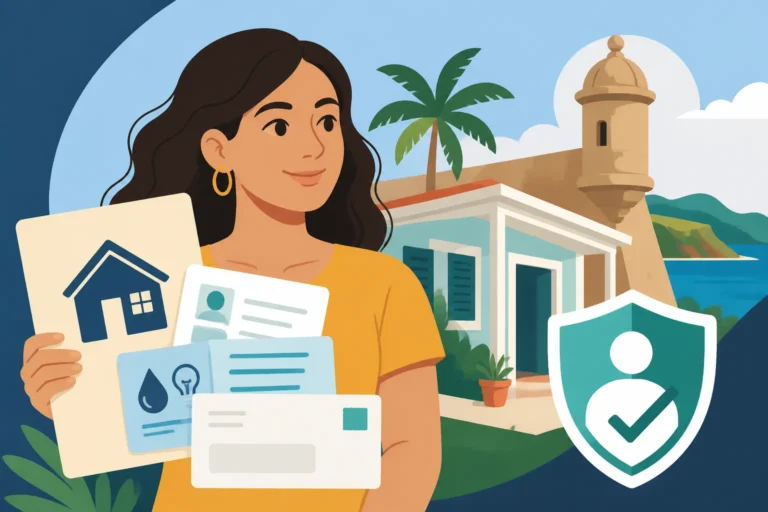
This is the residency component, and CESCO needs to see concrete evidence that you live here. They generally require at least two different documents from separate sources, issued within the last 60-90 days, showing your name and current physical address in Puerto Rico.
Here’s what typically works:
- Utility Bills: A recent electricity bill from LUMA Energy or a water bill from AAA (Autoridad de Acueductos y Alcantarillados) is usually gold. These are some of the most accepted forms of proof. Make sure your name is clearly on it. You can learn more about this by reading the newcomer's guide to setting up utilities (LUMA/AAA) in Puerto Rico.
- Rental Agreement or Deed: A signed rental contract for your apartment or house, or a property deed (escritura) if you own your home.
- Bank Statements: A recent statement from a local Puerto Rico bank account like Banco Popular or Oriental Bank. Having already set up your finances with a local bank, as advised in our guide to banking in Puerto Rico: a complete guide for newcomers (2027), will make this much easier.
- Tax Documents: Official documents from Hacienda (Puerto Rico Treasury Department) or the IRS showing your Puerto Rico address.
- Mail from Government Agencies: Official correspondence from Social Security, Medicare, or other government entities.
- Insurance Policy: A current auto, home, or health insurance policy (like one from Cigna Global if you're on an international plan, though local plans like MCS or Triple-S are more commonly recognized for domicile).
Remember, consistency is key. All documents should show the same name and address. If your name has changed, bring your marriage certificate or court order. The more official the document, the better.
Photo and Fingerprints
Once your documents are verified, you'll proceed to have your photo taken and fingerprints scanned. The photo will be for your ID card, so try to look presentable, even if you've been battling CESCO bureaucracy for hours! They're usually pretty quick with this part. The fingerprints are for their internal records and security.
Fees and Payment Methods
There is a fee for the non-driver ID card, which is relatively modest, usually around $15-20. The exact amount can change, so it's best to have a bit more on hand.
Payment methods:
CESCO offices generally accept cash, debit cards, and credit cards (Visa, Mastercard). Personal checks are usually not accepted. Bring cash as a backup, just in case their card reader is down or there's an issue with your specific card – it happens! Confirming the fee before your appointment can save you a last-minute scramble.
Table: Overview of Required Documents for a Puerto Rico Non-Driver ID
| Document Type | Specific Examples | Notes |
|---|---|---|
| Proof of Identity | US Passport, US Birth Certificate, Certificate of Naturalization, Green Card | Original documents required. Must establish legal presence. |
| Proof of Social Security | Original Social Security Card | Must be signed. |
| Proof of Signature | Mainland Driver's License, Passport, previous PR ID (if applicable) | Used to verify your signature. |
| Proof of Domicile (2) | LUMA or AAA utility bill, rental contract/deed, bank statement, tax documents | Must show your name and current PR address, issued within 60-90 days. |
| Payment for Fees | Cash, Debit Card, Credit Card (Visa/MC) | Approximately $15-20. Cash is a good backup. |
Receiving Your Non-Driver ID Card
After enduring the document verification, photo, and fingerprinting, you're almost there! The final steps involve payment and receiving your card.
On-Site Issuance vs. Mail Delivery
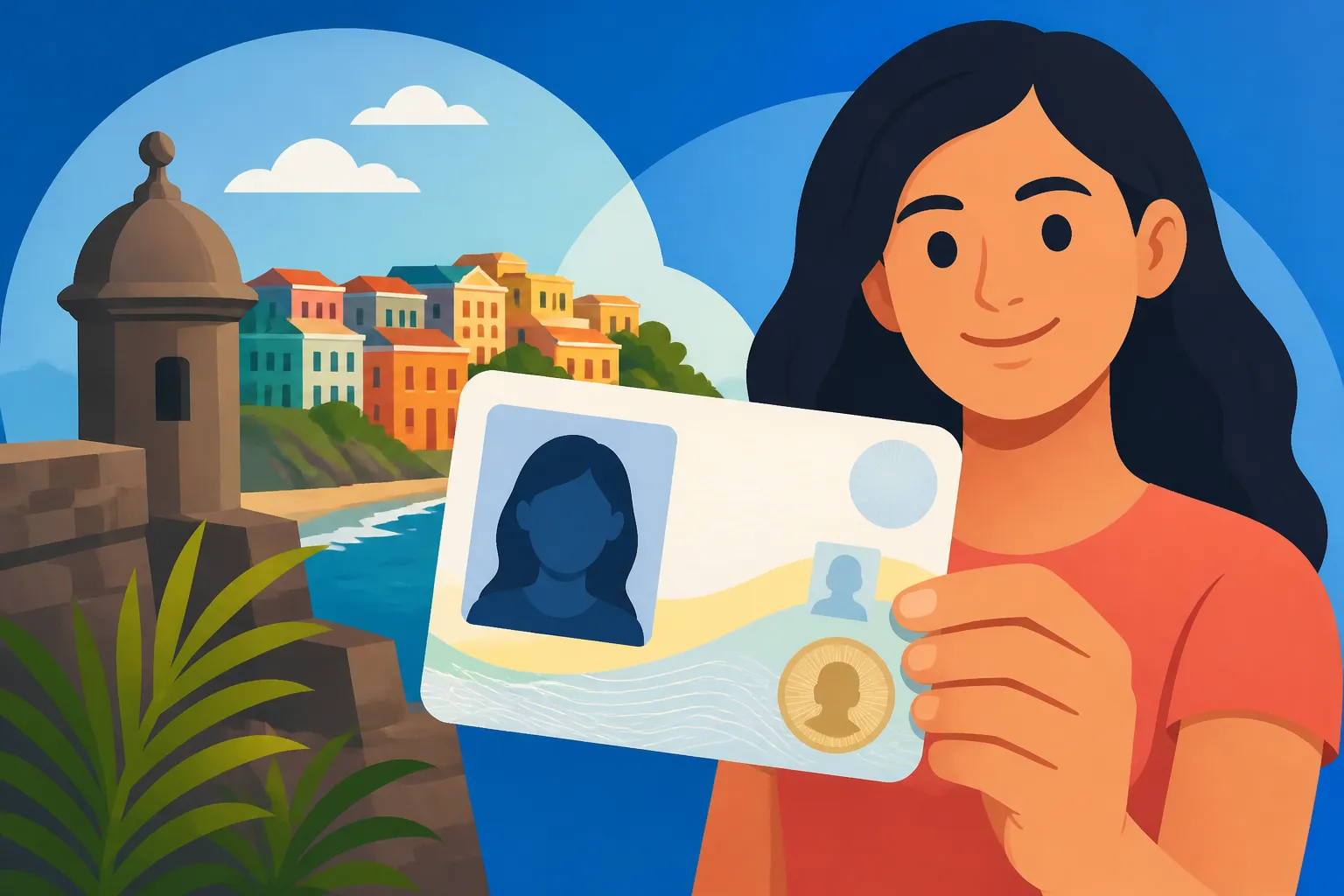
Typically, CESCO offices in Puerto Rico issue the non-driver ID card on the spot, immediately after you've completed all the steps and paid the fee. You walk out with a brand-new, laminated card in your hand. This is a huge relief, as you won't have to worry about it getting lost in the mail or waiting anxiously for it to arrive. This instant gratification is a rare but welcome treat in local bureaucracy.
However, sometimes, due to technical issues or specific circumstances, an office might inform you that the card will be mailed. While less common for ID cards, it's a possibility. If this happens, make sure they have your correct mailing address on file. This is another reason why having established a reliable mailing address in Puerto Rico, as outlined in our complete relocation checklist for moving to Puerto Rico (2026), is so important.
Validity Period and Renewal Process
A Puerto Rico non-driver ID card is usually valid for a period of eight years. This is a pretty generous timeframe, meaning you won't have to go through this whole process again anytime soon!
When it comes time for renewal, the process is generally simpler than the initial application. You'll likely need to bring your expiring ID card, updated proof of domicile (utility bills, etc.), and pay the renewal fee. You might also have a new photo taken. CESCO typically sends a renewal notice to your address on file, so keeping your address updated with them is crucial. Don't wait until the last minute to renew; plan ahead to avoid any lapses in your official identification.
Tips for a Smooth CESCO Experience
My years of navigating Puerto Rico's administrative waters have taught me a few tricks. Getting through CESCO doesn't have to be a nightmare if you're smart about it.
Best Time to Visit and What to Bring
- Timing is everything: Try to schedule an appointment for early in the morning, right when they open, or mid-week. Mondays and Fridays are often the busiest, as are the days right after a public holiday. The closer you are to opening time, the fresher the staff, and generally, the shorter the wait.
- Bring ALL your documents: And then some. As mentioned, CESCO is notoriously strict. Bring originals and at least one set of clear copies of everything, even if they say only originals are needed. Sometimes they want to keep a copy for their files.
- Proof of signature: Make sure you have multiple documents that show your signature. Your passport is usually good, but a signed mainland ID helps too.
- Patience and a good attitude: This is probably the most important tip. Things move at their own pace here. Be prepared for potential delays, unexpected requests for additional documents, or system glitches. A friendly smile and a polite demeanor, even when things are challenging, go a long way. The CESCO staff deal with a lot of frustrated people; being the calm, prepared one can make a difference.
- Snacks and water: Depending on the wait time, you might get hungry or thirsty. Bring a water bottle and a snack to keep your energy up.
- A book or entertainment: Waiting is inevitable, so come prepared with something to occupy your time – a book, a fully charged phone, or a tablet.
Language Barrier and Assistance
While many CESCO employees, especially in larger metropolitan areas, speak some English, don't assume everyone will be fluent. The forms and signage are primarily in Spanish.
- Learn basic Spanish phrases: Even a few polite phrases like "Buenos días" (Good morning), "Necesito una tarjeta de identificación" (I need an ID card), and "Gracias" (Thank you) can help.
- Bring a Spanish-speaking friend: If you're not comfortable navigating in Spanish, ask a friend or family member who is fluent to accompany you. They can help translate and clarify any questions the CESCO staff might have. This can significantly reduce stress and miscommunication.
- Online translation tools: Have Google Translate or a similar app ready on your phone as a backup. While not perfect, it can help with specific words or short phrases.
Remember, the staff are there to help, but communication is a two-way street. Being prepared for potential language differences will make the process much smoother for everyone involved. Planning your move to Puerto Rico step by step involves anticipating these practical challenges, so you're already ahead by thinking about it.
Benefits and Limitations of the Non-Driver ID
Understanding what your Puerto Rico non-driver ID can and cannot do is important for managing expectations and ensuring you use it appropriately. It’s a powerful tool for establishing your local identity, but it’s not a magic bullet for every situation.
What the ID Card Allows You to Do
The Puerto Rico non-driver ID card is your official proof of identity and age within the Commonwealth. It allows you to:
- Open a bank account: Most local banks, like Banco Popular or Oriental Bank, will readily accept this ID, making it much easier to handle your finances once you’ve moved. This is a critical step covered in the newcomer's guide to opening a bank account in Puerto Rico.
- Access government services: Whether it's registering to vote, applying for local benefits, or interacting with other government agencies, this ID simplifies the process by confirming your local identity.
- Verify age: It serves as a valid document for age verification at bars, liquor stores, and other establishments.
- Travel domestically: For flights between Puerto Rico and the U.S. mainland, this Real ID-compliant card can serve as acceptable identification at TSA checkpoints, as can your passport or mainland driver's license.
- Set up utilities and services: While you'll need additional proof of domicile (like a rental agreement), your non-driver ID will be key for verifying your identity when setting up electricity with LUMA or water with AAA.
- Receive healthcare services: When visiting clinics or hospitals, presenting a local ID, along with your health insurance information (whether a local plan or an international option like Cigna Global), helps streamline administrative processes.
Situations Where You Might Need More
While versatile, there are a few situations where your non-driver ID won't be enough, or where other documents are specifically required:
- Driving a vehicle: This one is obvious, but it bears repeating: a non-driver ID does not grant you permission to operate a vehicle. For that, you’ll need a valid Puerto Rico driver’s license.
- International travel: For travel outside of the U.S. and its territories, you will need a valid passport. Your non-driver ID is a domestic identification document.
- Federal tax purposes: While it helps establish local residency, a non-driver ID alone isn't sufficient for proving bona fide residency to the IRS for tax benefits. You'll need to meet the presence, tax home, and closer connection tests and accumulate other evidence.
- Opening certain complex financial accounts: For specific investment accounts or business banking, you might be asked for additional documentation beyond just an ID, such as your Employer Identification Number (EIN) or proof of business registration.
- Professional licensing: If you're a professional looking to practice in Puerto Rico, your non-driver ID is only for identification; you'll need to go through the relevant professional board to transfer or obtain your professional license.
Essentially, the non-driver ID is an excellent foundational document for your life in Puerto Rico, but it’s part of a larger ecosystem of identification and legal requirements. Always double-check what specific documents are needed for any given task to ensure a smooth interaction.
Disclaimer
Please note that while this guide provides comprehensive information based on current regulations and typical experiences in Puerto Rico, rules and procedures can change. It is always advisable to verify the latest requirements directly with CESCO or the relevant government agency before your visit. This article is for informational purposes only and does not constitute legal or professional advice.