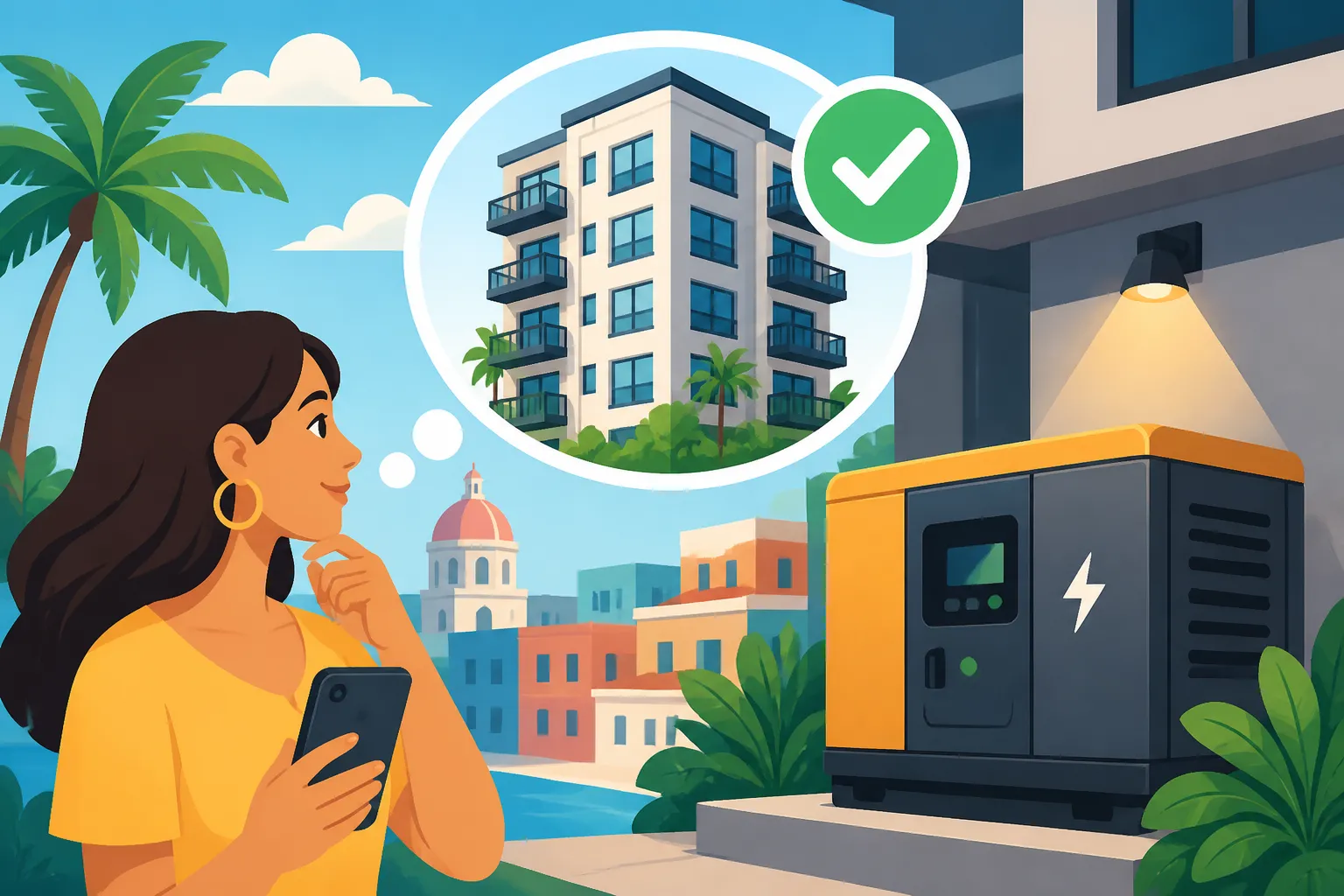
How Do I Find an Apartment with a Generator in San Juan?
One of the most common anxieties for anyone moving to San Juan, or really anywhere in Puerto Rico, revolves around the stability of our electricity. You’ve likely heard the stories or even experienced the frustration of an unexpected power outage. This guide is here to walk you through the nitty-gritty of finding an apartment in San Juan that comes equipped with a generator, saving you from many a dark, sweltering night and the accompanying stress.
The Reality of Power Outages in San Juan and Why Generators are Essential
Let's be honest, mi gente, the power situation here can be a real headache. It's not just a minor inconvenience; it genuinely impacts your daily life, your work, and your comfort. When you're new to the island, it’s easy to underestimate how disruptive a prolonged outage can be until you’re suddenly sitting in the dark, your phone battery dying, and the fridge slowly warming up.
Understanding LUMA and the Grid's Vulnerabilities
The electricity grid in Puerto Rico has had its fair share of challenges, especially since Hurricane María. While there's ongoing work to improve it, it's still prone to interruptions. LUMA Energy took over the transmission and distribution system in 2021, and while many hoped for immediate miracles, the reality is that infrastructure upgrades take time and money. There are still frequent, sometimes prolonged, outages caused by anything from heavy rains and tropical storms to equipment failures, or even just a particularly enthusiastic iguana on a power line (yes, it happens!).
Imagine you’re in the middle of an important video call for work, or trying to relax after a long day, and boom, everything goes dark. If you're running a business from home, or your kids are doing online school, these interruptions aren't just annoying; they can be financially detrimental and incredibly stressful. This is why having a reliable backup power source isn't just a luxury here; for many, it's a non-negotiable part of finding a place to live. If you're new to understanding the utility landscape, you might want to dive deeper into The Newcomer's Guide to Setting Up Utilities (LUMA/AAA) in Puerto Rico. It covers the basics, but the generator aspect adds another layer you need to consider.
The Impact of Outages on Daily Life
Beyond the immediate loss of light, power outages in Puerto Rico can mean no air conditioning in our tropical heat, no internet, and no running water if your building relies on electric pumps (which many do, especially high-rises). Your groceries can spoil, your devices run out of juice, and simple tasks like cooking become a challenge. This isn't just about comfort; it's about basic functionality and maintaining a sense of normalcy.
For expats, especially those coming from places with highly reliable grids, this can be a significant cultural and practical adjustment. You might find yourself needing to adapt quickly. This is also where planning ahead comes in handy; even with a generator, having a contingency like a data plan that works on a reliable network is crucial. Many expats find services like Airalo, which offers eSIMs, incredibly useful for staying connected when Wi-Fi is down. You want to make sure you have reliable mobile data as a backup if your home internet is tied to the grid and the building generator doesn't power all internet infrastructure. Trust me, you'll feel a sense of relief knowing you have a plan B, or even a plan C, for keeping things running.
Where to Look for Apartments with Generators in San Juan
Okay, so you’re convinced you need a generator. Now, where do you actually find such a unicorn? It's not always explicitly advertised, but certain areas and building types are definitely more likely to have them. This is where your search needs to be strategic and, honestly, a bit persistent.
Targeted Neighborhoods and Building Types
In San Juan, you'll generally have better luck finding apartments with generator backup in newer constructions, higher-end condominiums, and buildings located in more affluent areas. Think about neighborhoods like Condado, Miramar, parts of Santurce, and Isla Verde. These areas often cater to residents who expect a higher level of amenities and services, and a reliable power supply is definitely one of them. For a deeper dive into these areas, check out How Do I Find an Apartment to Rent in Condado?.
- Condado and Miramar: These neighborhoods are renowned for their modern high-rises, many of which were built with luxury amenities in mind, including full-building generators. These typically cover common areas, elevators, and often provide a certain amount of power to individual units.
- Isla Verde: Similar to Condado, Isla Verde features numerous apartment and condo complexes, particularly those closer to the beach, that are designed with backup power in mind.
- Newer Developments: Keep an eye out for any recently constructed buildings across San Juan. Developers are increasingly aware of the demand for reliable power and often incorporate full-building generators into their designs.
When you're looking, don't just ask, "Does it have a generator?" Ask for specifics: "Is it a full-building generator? What does it power within the unit? How long can it run? Is there a fuel contract?" These questions are vital because not all generators are created equal, and some might only power essential common areas, leaving your apartment still in the dark.
Navigating Online Listings and Real Estate Agents
Finding these specifics often requires more than just browsing Zillow or local classifieds. Many online listings might simply say "generator" without clarifying the scope. This is where you need to be proactive.
- Online Platforms: Sites like ClasificadosOnline.com, BienesRaicesPR.com, and even Facebook Marketplace can be good starting points. However, expect to do a lot of follow-up. Look for keywords like "planta eléctrica," "generador," "full power," or "total backup."
- Real Estate Agents: This is, hands down, your best resource. A good local real estate agent who understands the nuances of the San Juan market will know which buildings and complexes offer robust generator systems. They can directly inquire with landlords and HOAs on your behalf and save you a lot of legwork. Explain your non-negotiable need for a generator that powers your unit, not just the hallway lights. Don't be shy about your requirements; a reputable agent will understand. They also often have access to listings that aren't widely advertised. When planning your broader move, remember that services like Sirelo can help you find reliable international movers, which might be useful if you're bringing over larger appliances or personal backup systems that need careful transport.
- Word of Mouth: Sometimes, the best leads come from other expats. Join local expat Facebook groups or forums. Ask around; someone might know of a unit coming available in a building with a great generator setup.
| Feature | Condos/High-Rises (Luxury/Newer) | Older Apartments/Walk-ups | Detached Houses (Private) |
|---|---|---|---|
| Generator Likely? | High | Low to Medium | Variable (Owner-installed) |
| Type of Generator | Full-building, automatic | Often none, or small backup for common areas | Portable, whole-house, or none |
| Unit Coverage | Partial to full unit power | Minimal to none | Full house (if installed) |
| Cost Implications | Higher rent/HOA fees | Lower rent, personal expense for backup | Higher initial investment |
| Ease of Finding | Moderate to high | Low (for unit-level coverage) | Variable (requires due diligence) |
| Maintenance | Managed by HOA | Personal responsibility (if portable) | Personal responsibility |
Remember, the cost of living in San Juan can vary widely, and an apartment with a robust generator system will likely fall into the higher end of the spectrum. Understanding How Much Does It Cost to Rent an Apartment in San Juan in 2026? will give you a good baseline for budgeting.
What to Ask and Look For When Viewing Apartments with Generators
So you've found a promising listing or your agent has a lead. Now comes the crucial step: actually checking it out and asking all the right questions. Don't be afraid to be thorough; this is about your peace of mind.
Types of Generators and Their Capabilities
Not all generators are created equal, and knowing the difference can save you a lot of grief.
- Full-Building vs. Partial-Building Generators: A full-building generator, also known as a whole-building generator, is exactly what it sounds like: it's powerful enough to provide electricity to the entire building, including all common areas (elevators, hallways, lobby, pool pumps) and, crucially, a significant portion of power to each individual apartment unit. This is the gold standard you're aiming for. Partial-building generators, on the other hand, might only power common areas and perhaps a single outlet or light in your unit. That’s better than nothing, but still leaves you largely in the dark.
- Automatic Transfer Switch (ATS): This is a game-changer. An ATS automatically detects a power outage, starts the generator, and transfers the electrical load from the grid to the generator, all without you having to lift a finger. When grid power returns, it switches back and shuts the generator down. Without an ATS, someone (usually building staff) has to manually start the generator, which can delay power restoration to your unit.
- Fuel Source and Capacity: Generators typically run on diesel or propane. Ask about the fuel tank size and how often it's refilled. A large tank is great, but if the HOA or landlord doesn't have a reliable fuel contract or contingency for long outages, that tank might as well be empty. During widespread outages, fuel can become scarce, so understanding the building's plan is essential. Some buildings might even have solar power integrated with battery backup, offering a more sustainable solution, which you can learn more about in Understanding Solar Power and Backup Generators in Puerto Rico.
When you're walking through an apartment, look for the main electrical panel. If there's a generator, sometimes there will be specific breakers labeled for generator circuits. Ask the landlord or agent to point out what exactly will be powered. Don't just take their word for it that "the generator covers everything"; clarify what "everything" means. Does it include your A/C units? Your kitchen appliances? Your internet router? These details matter!
Important Questions for Landlords and HOAs
When you’ve found a place you like, it’s time to grill the landlord, the building manager, or the HOA representative. These aren't just polite inquiries; they are crucial due diligence.
- What specifically does the generator power in my unit? Be precise. Do the air conditioners work? The refrigerator? The stove? All outlets? The water heater? The internet router?
- Is the generator automatic or manual? As discussed, automatic is highly preferred. If manual, who is responsible for starting it, and how quickly is it usually activated after an outage?
- What type of fuel does it use, and how often is the tank topped up? Ask about the fuel capacity and the building's emergency fuel plan. Is there a long-term contract with a fuel supplier?
- How frequently is the generator maintained? Regular maintenance is crucial for reliability. Ask for proof of recent maintenance. A generator that isn’t properly maintained is often worse than no generator at all because it provides a false sense of security.
- What is the policy for extended outages? If there's a multi-day outage (like during hurricane season), what's the plan? Will the generator run continuously? For how many hours per day? Will there be limitations on usage to conserve fuel? This is incredibly important, especially when you're looking to How to Prepare Your Home for Hurricane Season in Puerto Rico.
- Are there any additional fees associated with generator use or maintenance? Sometimes, especially in older buildings, there might be a separate assessment or fee for generator-related expenses.
- Can I see the generator room? While not always possible, asking to see it can give you an idea of its size, condition, and maintenance. If they refuse, it might be a red flag.
- What's the typical wait time for power restoration from LUMA versus generator activation? Understanding the historical performance of both the grid and the building's backup system is key. You might also want to understand How Reliable Is the Electricity Grid in Puerto Rico? in general.
Getting these answers in writing, even if it's just in an email, is always a good idea. This prevents misunderstandings down the line. Remember, while a landlord might be eager to rent, a trustworthy one will be transparent about these critical details. For further tips on this, consider reading How Do I Find a Trustworthy Landlord in San Juan?.
Alternatives and Backup Solutions if a Generator-Equipped Apartment Isn't an Option
Let's face it, sometimes despite your best efforts, finding that perfect apartment with a robust, reliable building generator in San Juan isn't feasible or within your budget. Don't despair! There are still ways to mitigate the impact of power outages and ensure your comfort and connectivity.
Portable Generators and Battery Backup Systems
If your apartment doesn't come with a building-wide generator, you might consider bringing your own backup solutions. This is where personal preparedness really shines.
- Portable Generators: These are smaller units that you can purchase and operate yourself. They run on gasoline or propane and can power essential appliances like a refrigerator, a few lights, fans, and charge your devices.
- Pros: Gives you control over your power, relatively affordable upfront cost.
- Cons: Requires manual setup and fueling, noisy, emits fumes (must be operated outdoors, away from windows), and you'll need a way to safely store and transfer fuel. In an apartment, this can be challenging due to space and safety regulations. You absolutely cannot run a gas generator indoors due to carbon monoxide poisoning risk. Also, you need to be careful not to backfeed power into the grid, which is dangerous for utility workers.
- Portable Power Stations/Battery Backup Systems: These are essentially large batteries with AC outlets. Brands like Jackery, Goal Zero, or EcoFlow are popular.
- Pros: Silent, no fumes, can be used indoors, plug-and-play, requires no fuel. Perfect for charging phones, laptops, running small fans, and keeping a mini-fridge cold for a few hours.
- Cons: Limited capacity compared to fuel generators, longer recharge times, higher upfront cost for larger units, and won't power A/C or large appliances.
When considering these options, think about your individual needs. If you work remotely, a portable power station might be enough to keep your laptop and internet router running for a few hours. If you absolutely need to keep food cold, a portable generator for the fridge might be necessary, provided you have a safe way to run it. Keep in mind that for a more comprehensive understanding of electricity costs in general, you can look at Why Is My LUMA Electricity Bill So High in Puerto Rico? to help manage your overall budget.
Community Resources and Emergency Preparedness
Beyond personal devices, building a strong community network and having a well-stocked emergency kit can make a world of difference during outages.
- Community Support: Get to know your neighbors! During an outage, a friendly neighbor with a generator might offer to charge your phone, or you might find a community center offering charging stations. Local Facebook groups often become hubs for sharing information and resources during emergencies.
- Emergency Kit: This is non-negotiable for anyone living in Puerto Rico. Your kit should include:
- Plenty of bottled water (at least one gallon per person per day for several days).
- Non-perishable food.
- Battery-powered or crank flashlights, and extra batteries.
- A first-aid kit.
- A battery bank for charging phones.
- Cash (ATMs might not work during outages).
- Any essential medications.
- A basic car kit, because you might need to use your car for charging devices or to drive somewhere with power.
- Staying Connected: Even with a generator, local cell towers might go down or become overloaded. Having multiple ways to communicate is smart. As mentioned before, a service like Airalo, providing an eSIM for immediate data access, can be a lifesaver if your primary internet or mobile provider is down. Consider having a local SIM card with a different carrier than your main phone, just in case.
- Water Storage: Since many buildings rely on electric pumps for water, you might lose water pressure during an outage. Keep a few gallons of water stored for flushing toilets and basic hygiene.
Living in Puerto Rico means embracing a certain level of self-reliance, especially when it comes to utilities. While finding an apartment with a generator is ideal, knowing you have backup plans and a solid emergency kit will greatly reduce stress and ensure you can navigate any power challenges with confidence. And remember, your relocation journey isn't just about finding a home; it’s about settling in completely, so refer to The Complete Relocation Checklist for Moving to Puerto Rico (2027) for a broader perspective on what to consider.
Disclaimer
Please note that this guide provides general information based on common experiences and publicly available knowledge in Puerto Rico. The electricity grid, regulations, and market conditions are subject to change. It is always advisable to conduct your own due diligence, consult with local real estate professionals, legal experts, and utility providers for the most current and specific advice tailored to your situation.