What Is Covered Under a Basic Health Plan in Puerto Rico?
Moving to Puerto Rico, or even just living here for a while, can bring a whirlwind of emotions – excitement, sunshine, and, let's be honest, a fair bit of head-scratching when it comes to things like healthcare. One of the biggest questions I hear from fellow expats is, "What on earth does a 'basic' health plan actually cover in Puerto Rico?" It’s not always straightforward, and what you expect from "basic" might be completely different from what you get. This guide is here to untangle the complexities, validate your frustrations, and give you a realistic roadmap of what a typical basic health plan in Puerto Rico entails, helping you make informed decisions about your well-being on the island.
Demystifying "Basic": What Does It Really Mean in Puerto Rico?
When you hear "basic health plan" in Puerto Rico, it's easy to assume it means something minimal, perhaps even inadequate. But the reality is a bit more nuanced. "Basic" here isn't necessarily a bad word; it often refers to plans designed to cover essential healthcare needs without a lot of bells and whistles, typically at a lower premium. For many, especially those just starting out or on a tighter budget, these plans are absolutely vital.
The Spectrum of Basic: Vital Plan vs. Private Entry-Level
In Puerto Rico, "basic" can actually fall into two main categories: the government-sponsored health plan known as the Vital Plan, and the entry-level options offered by private insurers. Understanding the distinction is crucial.
The Vital Plan is Puerto Rico's version of Medicaid, designed for low-income individuals and families who meet specific eligibility criteria. If you qualify, this is arguably the most "basic" in terms of cost to you, often covering a vast array of services with minimal or no co-pays, deductibles, or premiums. It's a lifesaver for many, ensuring access to necessary medical care for those who might otherwise go without. However, navigating the application process and understanding the specifics of Understanding the Vital Plan (Government Health Plan) in Puerto Rico (2027) can be a bureaucratic challenge, testing even the most patient individual. The plan is administered by various managed care organizations like Triple-S Salud, MCS, and First Medical, meaning your experience might vary slightly depending on which one you're assigned to.
On the other hand, a "basic" private entry-level plan is what you'll typically encounter if you're not eligible for the Vital Plan but are looking for affordable coverage. These plans are offered by commercial insurers such as Triple-S Salud, MCS, Humana, and sometimes even smaller local providers. They generally come with lower monthly premiums compared to more comprehensive plans but often feature higher deductibles, co-pays, and out-of-pocket maximums. The idea is that you're covered for significant events and essential services, but you'll bear more of the initial costs for routine care. Think of it as a safety net that protects you from financial ruin during a major medical crisis, while still requiring you to be mindful of everyday medical expenses. It’s important to remember that even these basic private plans are regulated and must meet certain minimum coverage standards set by the Puerto Rico Office of the Insurance Commissioner (OCIS), so you're not left completely exposed. For those new to the island, obtaining private insurance is often one of the first crucial steps in Navigating the Puerto Rico Healthcare System: A Newcomer's Roadmap (2027).
Key Elements of Any Basic Health Plan
Regardless of whether you're looking at the Vital Plan or an entry-level private offering, there are certain foundational services that any legitimate basic health plan in Puerto Rico is legally mandated to cover. These are the bedrock of the healthcare system, ensuring that everyone has access to a minimum standard of care. This is a relief, especially when you're just getting settled and trying to wrap your head around How Puerto Rico's Health System Works: Public vs Private Explained (2027).
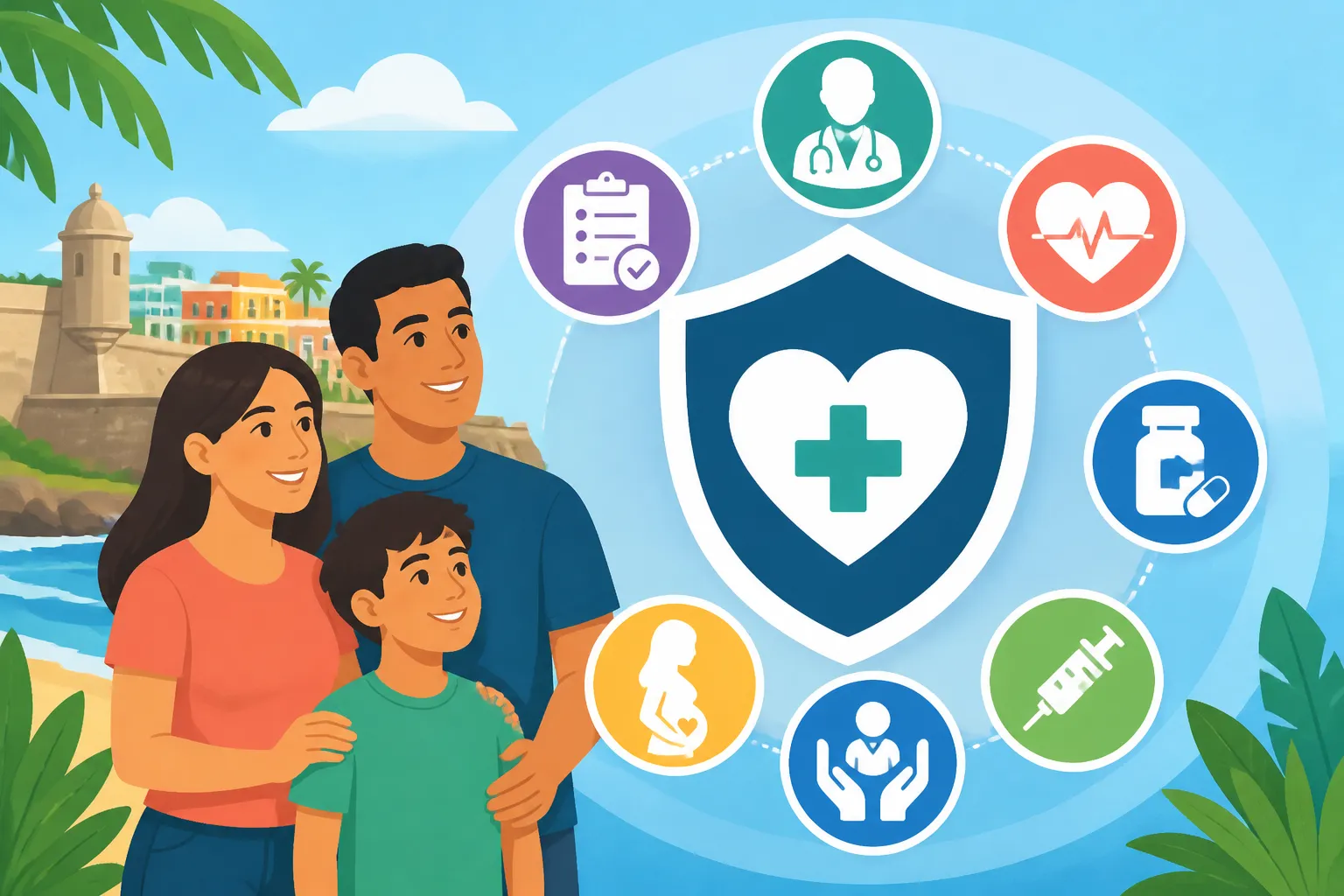
At a minimum, you can expect coverage for:
- Preventative and Wellness Services: This is non-negotiable. Annual physicals, certain screenings (like mammograms, colonoscopies for eligible age groups), immunizations, and routine check-ups are typically covered, often at 100% with no co-pay. The logic here is simple: preventing illness is cheaper than treating it.
- Emergency Services: Should you have a sudden accident or illness that requires immediate attention, emergency room visits are covered. However, be prepared for potential co-pays or deductibles that might apply, even for emergencies, especially with private plans. For those who are just arriving or on a temporary stay, travel insurance providers like SafetyWing can provide crucial emergency medical coverage before a local plan kicks in or for short visits.
- Hospitalization: If you need to be admitted to a hospital for inpatient care, basic plans will cover a portion of your stay, including room and board, nursing services, and necessary medical procedures. Again, deductibles and co-insurance will almost certainly apply here for private plans.
- Prescription Drugs: Most basic plans will include some level of prescription drug coverage. This usually operates on a tiered system, where generic drugs are cheaper (or have lower co-pays) than brand-name drugs.
- Maternity and Newborn Care: Under the Affordable Care Act (ACA), which extends to Puerto Rico, maternity and newborn care are considered essential health benefits. This means even basic plans must offer coverage for prenatal care, childbirth, and postnatal care.
- Laboratory Tests and Diagnostic Imaging: Blood tests, X-rays, ultrasounds, and other medically necessary diagnostic services are typically included.
Understanding these core components gives you a solid starting point. It means that while the specific cost-sharing might differ, you won't be left without coverage for the most fundamental aspects of your health.
Core Services You Can Expect from a Basic Plan
Alright, let's dive a bit deeper into the nitty-gritty of what a basic health plan here on the island actually covers, day-to-day. It’s one thing to know the general categories, and another to understand how they play out in real life when you need to see a doctor or get a prescription. This section will walk you through the specifics, helping you mentally prepare for your interactions with the healthcare system in Puerto Rico.
Doctor Visits and Primary Care
When you first land in Puerto Rico, one of the most immediate needs, after securing housing and figuring out your driver’s license, is often to How to Find and Register with a Primary Care Doctor in Puerto Rico. A basic health plan will almost certainly cover your visits to a primary care physician (PCP). This is your first line of defense for most non-emergency health concerns.
For most private basic plans, you’ll typically pay a co-pay each time you see your PCP. This co-pay is a fixed amount, perhaps $10, $20, or $30, that you pay at the time of service. It’s a small, manageable fee that helps keep your monthly premiums lower. The remaining cost of the visit is then covered by your insurance, usually after any deductible has been met. For instance, if you wake up with a nasty cold or need a routine check-up, you simply pay your co-pay, and the doctor’s visit is handled. It’s important to note that many basic plans are HMO (Health Maintenance Organization) style, meaning you’ll need to choose a PCP within the plan’s network, and they’ll coordinate most of your care.
Beyond just sick visits, preventative care is a cornerstone of basic health plans. Things like your annual physical exam, basic health screenings (blood pressure, cholesterol, diabetes screenings), and routine adult vaccinations (like the flu shot) are generally covered, often with no co-pay or deductible, as they are considered essential health benefits. The idea is to keep you healthy and catch potential issues early before they become bigger, more expensive problems. This emphasis on prevention is a huge plus, even for a "basic" plan, as it encourages you to stay proactive about your health without worrying about immediate costs.
Emergency Services and Hospital Stays
Nobody wants to think about a medical emergency, but knowing you’re covered brings immense peace of mind, especially when you’re in a new environment. Basic health plans in Puerto Rico definitely cover emergency room visits for sudden and severe medical conditions. If you break an arm, experience chest pain, or have any other acute issue requiring immediate medical attention, your plan will kick in.
However, the cost structure for emergencies on a basic plan can be a bit different from a regular doctor's visit. You’ll likely face a higher co-pay for an ER visit, sometimes significantly more than a PCP co-pay, or a portion of your deductible might apply. For example, a private basic plan might have a $100-$250 co-pay for an emergency room visit. If you’re admitted to the hospital, that ER co-pay might be waived or rolled into your inpatient deductible. This structure is designed to encourage people to use urgent care centers or their PCP for non-emergencies, reserving the ER for true emergencies. It's a common practice everywhere, but worth knowing so you're not caught off guard. For very short-term needs, or during the initial phase of relocation, some expats opt for international travel medical insurance like SafetyWing, which can offer robust coverage for unforeseen emergencies before settling into a long-term local health plan.
Should your condition require you to be admitted for inpatient hospitalization, basic plans cover a significant portion of the costs. This includes your hospital room and board, necessary tests (like MRIs or CT scans), surgical procedures, and physician fees while you’re in the hospital. This is where your deductible and co-insurance really come into play. Your deductible is the amount you have to pay out-of-pocket before your insurance starts paying. Once you’ve met that, co-insurance kicks in, meaning the plan pays a percentage (e.g., 80%) and you pay the remaining percentage (e.g., 20%) until you reach your annual out-of-pocket maximum. It's a structured approach to ensure you're protected from catastrophic medical bills. The difference between public and private hospitals can also impact your experience here; while private hospitals like Hospital Auxilio Mutuo or Ashford Presbyterian offer excellent care, knowing The Guide to Choosing a Private Hospital in Puerto Rico (2027) is always helpful, as private basic plans will typically have a network of these facilities.
Prescription Medication Coverage
For many of us, regular access to prescriptions is a non-negotiable part of staying healthy. Basic health plans in Puerto Rico universally include prescription medication coverage, which is a huge relief. However, how that coverage works can vary quite a bit, primarily through a tiered system designed to manage costs.
Most plans, whether the Vital Plan or a private basic option, will categorize medications into different tiers:
- Tier 1: Generic Drugs: These are the most affordable and often have the lowest co-pay, sometimes as little as $5-$10. Generics are chemically identical to their brand-name counterparts and are the go-to for cost-effective treatment.
- Tier 2: Preferred Brand-Name Drugs: These are brand-name medications that your plan has negotiated a discount for. They'll have a higher co-pay than generics, maybe $30-$60, but are still more affordable than non-preferred brands.
- Tier 3: Non-Preferred Brand-Name Drugs: These are brand-name drugs that don't have a preferred status. They come with the highest co-pays, often $70 or more, or may even require you to pay a percentage of the cost (co-insurance) rather than a fixed co-pay.
- Tier 4: Specialty Drugs: These are high-cost medications for complex or chronic conditions. They usually have a very high co-pay or co-insurance, potentially hundreds of dollars.
When you get a prescription, your doctor will usually try to prescribe a generic option first if one is available. If not, they might choose a preferred brand. If you need a non-preferred brand or specialty drug, sometimes prior authorization from your insurer might be required, or your doctor may need to submit an appeal justifying the medical necessity of the higher-cost drug.
It's wise to familiarize yourself with the pharmacies in your plan's network. Major pharmacy chains like CVS and Walgreens are prevalent here, as are local farmacias that might offer more personalized service. Knowing Prescription Medications and Pharmacies in Puerto Rico: The Complete Guide will save you a lot of hassle. Always ask your pharmacist about generic alternatives or if there are any cost-saving programs available. Even with a basic plan, understanding these tiers and networks can significantly reduce your out-of-pocket costs for medications.
What Might Be Limited or Not Covered by a Basic Plan
While basic health plans in Puerto Rico cover essential services, it’s just as important to understand their limitations. This is where many expats, used to more expansive mainland plans, can get a rude awakening. "Basic" means essential, not comprehensive, and it's vital to set your expectations accordingly to avoid surprises.
Specialist Care and Referrals
One of the most common areas where basic plans, especially those with an HMO structure, differ from more premium options is specialist care. If you have a persistent skin rash that needs a dermatologist or concerns about your heart that warrant a cardiologist, you typically can't just call up any specialist and make an appointment.
With a basic plan, you’ll almost always need a referral from your primary care physician (PCP) to see a specialist. Your PCP acts as the gatekeeper, assessing your condition and determining if a specialist visit is medically necessary. They'll then provide a referral to a specialist within your plan's network. This process is designed to ensure appropriate care coordination and prevent unnecessary specialist visits, but it can feel like an extra hurdle if you're used to direct access. For a deeper dive into this, check out How Specialist Referrals Work Under Puerto Rico Health Plans.
Once you get that referral, you’ll likely have a co-pay for specialist visits, which is usually higher than your PCP co-pay. It might be $40-$70 per visit, for example. Furthermore, some basic plans may place limitations on the number of specialist visits allowed per year for certain conditions. For instance, you might be covered for four dermatology visits annually, and anything beyond that would be entirely out-of-pocket unless medically justified and approved. This limitation can be frustrating, especially for chronic conditions that require ongoing specialist management. It pays to have a frank conversation with your PCP about the expected frequency of specialist visits and how your plan will accommodate them.
Dental, Vision, and Mental Health Services
These three areas are often the biggest pain points when relying on a basic health plan in Puerto Rico, as they are frequently limited, offered as separate add-ons, or have very minimal coverage.
For dental and vision, don't expect much from a standard basic health plan. Routine dental cleanings, fillings, braces, or comprehensive eye exams and glasses are rarely included beyond very basic emergency dental care (e.g., for an injury to the mouth). Most people will need to purchase separate dental and vision insurance plans, which are available from various local providers. These supplemental plans can add to your monthly costs, but they can be invaluable if you or your family require regular dental or vision care. Many expats simply pay for routine dental care out of pocket, as the cost for a basic cleaning can be quite reasonable compared to mainland prices. For more details on what to expect, refer to Understanding Dental Coverage and Costs in Puerto Rico.
Mental health services are a bit of a mixed bag. Under ACA mandates, mental health and substance abuse services are considered essential health benefits, meaning basic plans must offer some level of coverage. However, the extent of that coverage can be quite basic indeed. You might be covered for a limited number of outpatient therapy sessions (e.g., 10-20 sessions per year) with a co-pay, and inpatient mental health care might be covered for acute crises. The catch is finding in-network providers, especially English-speaking ones, and dealing with potentially higher co-pays or strict session limits. This can be a real struggle for individuals seeking ongoing mental health support. If mental well-being is a priority, understanding How to Access Mental Health Services in Puerto Rico will be key, and you may need to explore options beyond your basic plan.
Elective Procedures and Alternative Therapies
This is another clear-cut area where basic plans draw a firm line. If a procedure isn't deemed medically necessary, it's highly unlikely to be covered.
Elective procedures like cosmetic surgery (rhinoplasty, liposuction, etc.), procedures solely for aesthetic enhancement, or experimental treatments that haven't been scientifically proven and approved will simply not be covered. This includes non-essential bariatric surgery or certain fertility treatments, unless there's a specific medical diagnosis that makes them necessary and the plan's policy explicitly includes them. If you’re considering any such procedure, you’ll be paying for it entirely out of your own pocket.
Similarly, alternative therapies or complementary medicine, such as acupuncture, chiropractic care (beyond very limited physical therapy), naturopathy, or homeopathy, are generally not covered by basic plans. While some more comprehensive plans might include a few physical therapy sessions or limited chiropractic care, a truly basic plan will often categorize these as "non-covered services." If these therapies are important to you, you'll need to budget for them separately. Even physical therapy, if extensive, might be limited on a basic plan, so understanding How to Get Physical Therapy and Rehabilitation Covered in Puerto Rico within your specific plan's terms is crucial.
Navigating Your Basic Plan: Tips for Expats
Living in Puerto Rico, especially as an expat, means you’re constantly learning and adapting. Your health plan is no exception. Understanding the financial mechanics and knowing how to maximize your benefits, or even knowing when to seek alternatives, is crucial. It’s not just about what’s covered, but how to make that coverage work for you without undue stress or financial strain.
Understanding Co-Pays, Deductibles, and Out-of-Pocket Maximums
These terms are the backbone of how most health insurance, especially private basic plans, operates. It’s easy to get them mixed up, but knowing the difference is essential for managing your healthcare budget.
- Co-Pays (Co-Payments): As we discussed, this is a fixed amount you pay for a specific service at the time you receive it. Think $20 for a PCP visit, $50 for a specialist, or $10 for generic prescriptions. Co-pays usually do not count towards your deductible, but they do count towards your annual out-of-pocket maximum. It’s like a small entry fee for service.
- Deductibles: This is the amount of money you must pay out of your own pocket for covered medical services before your insurance company starts paying. For a basic private plan, deductibles can be quite high – anywhere from $1,500 to $7,000 or more per individual, sometimes even higher for families. For instance, if you have a $3,000 deductible, you'd pay the first $3,000 of your medical bills (excluding co-pays) yourself before your insurance company contributes. Once met, then your co-insurance kicks in.
- Co-insurance: After you've met your deductible, co-insurance is the percentage of the cost of a covered service that you're still responsible for. If your plan has an 80/20 co-insurance, it means the plan pays 80% and you pay 20% of the bill until you reach your out-of-pocket maximum.
- Out-of-Pocket Maximum: This is the absolute most you will have to pay for covered medical expenses in a given year. Once your deductibles, co-pays, and co-insurance payments reach this limit, your insurance plan will then pay 100% of the cost for all covered services for the rest of that policy year. This is your ultimate financial safety net, protecting you from truly catastrophic medical bills. Even a basic plan has this critical cap.
A quick look at this table might help clarify these cost-sharing mechanisms:
| Cost-Sharing Element | What It Is | When You Pay It | Counts Towards Deductible? | Counts Towards Out-of-Pocket Max? |
|---|---|---|---|---|
| Premium | Your monthly payment to the insurance company | Every month | No | No |
| Co-Pay | A fixed amount for a service | At time of service (e.g., doctor visit, Rx) | Usually No | Yes |
| Deductible | Amount you pay before insurance starts paying | For covered services, before co-insurance kicks in | N/A (you pay it) | Yes |
| Co-insurance | A percentage of costs after deductible | After deductible is met, until out-of-pocket max is hit | No | Yes |
| Out-of-Pocket Max | The most you'll pay in a year | After all other cost-sharing reaches this limit | N/A | N/A |
For a comprehensive breakdown, consider reading Understanding Co-Pays, Deductibles and Premiums in Puerto Rico. Keeping track of these numbers for your specific plan is incredibly important, as they dictate how much you'll pay for care throughout the year.
Supplementing Your Basic Coverage or Considering Upgrades
There will come a point where you might realize your basic plan, while functional, just isn't cutting it for your lifestyle or evolving health needs. Perhaps you need more extensive dental work, or consistent specialist visits, or simply prefer lower co-pays.
One strategy, especially for new arrivals who might have a gap in local coverage, or for digital nomads, is to use international travel insurance like SafetyWing. It’s designed for those who travel frequently or live abroad, offering a flexible safety net for emergencies and urgent care globally. However, it’s generally not a replacement for a long-term, comprehensive local health plan for residents. It's more about bridging gaps or offering peace of mind during transitional periods. Many expats initially use such solutions, but ultimately secure local coverage once they establish residency.
If you’ve settled in for the long haul, you might want to explore upgrading your plan. All the major local insurers – Triple-S, MCS, and Humana – offer a range of plans, from basic to premium. Upgrading often means:
- Lower deductibles and co-pays.
- More comprehensive coverage for specialist visits.
- Inclusion or better benefits for dental and vision (sometimes as integrated benefits, sometimes as optional riders).
- Access to a wider network of providers, or even out-of-network benefits.
- Better coverage for mental health services.
The cost, of course, goes up with increased benefits. It’s a trade-off between monthly premium payments and out-of-pocket costs at the point of care. It’s essential to evaluate your past year's medical expenses and anticipate future needs when deciding whether an upgrade is worth it. Don't be afraid to sit down with an insurance agent (many speak English) to compare options. They can help you understand the nuances of Health Insurance in Puerto Rico: Plans, Costs and Options Explained (2026) offered by various providers.
Local Health Plan Providers and Their Basic Offerings
When you’re exploring health insurance in Puerto Rico, you'll primarily encounter three large, reputable providers: Triple-S Salud, MCS, and Humana. Each offers a spectrum of plans, including entry-level "basic" options tailored to different budgets and needs. It's not uncommon to find that while the names are familiar, the specific plan structures and benefits can differ from what you might be used to on the mainland.
- Triple-S Salud: Often considered one of the largest and most established health insurers in Puerto Rico, Triple-S (which stands for "Seguro de Servicios de Salud") has a broad network of doctors, clinics, and hospitals across the island. Their basic plans typically come in an HMO format, emphasizing primary care and requiring referrals for specialists. They are known for their strong presence and generally reliable customer service.
- MCS Healthcare Holdings (MCS): Another major player, MCS offers competitive basic plans. Like Triple-S, their entry-level offerings usually operate within a defined network, focusing on cost-effective care. MCS often has a good reputation for its digital tools and customer portals, making it easier to manage claims and find providers online.
- Humana: While a national brand, Humana has a significant presence in Puerto Rico, especially within the Medicare Advantage market. However, they also offer individual and group health plans. Their basic plans align with market standards, providing essential benefits with structured cost-sharing.
When looking at their basic plans, you'll generally see a focus on preventative care, emergency services, and prescription drug coverage, with varying deductibles and co-pays. What might set them apart are the specific provider networks, the number of included specialist visits, or the ease of getting referrals.
It's highly recommended to get quotes from all three providers when you're looking for a basic plan. Their offerings, even at the "basic" level, can change annually, and what works best for one person might not for another. Pay close attention to:
- Network Size and Type: Is it an HMO, PPO, or POS? How extensive is the network in your preferred living area (e.g., San Juan, Dorado, Rincon)?
- Deductible Amount: Can you realistically afford to pay this out-of-pocket if a major medical event occurs?
- Co-pays: What are the co-pays for PCPs, specialists, ER visits, and different tiers of prescriptions?
- Out-of-Pocket Maximum: What's the absolute worst-case scenario for your annual medical costs?
- Extra Benefits: Even basic plans might sometimes include a few limited extras, like a certain number of physical therapy sessions or a small discount on vision services.
Talking to an independent insurance broker who specializes in Puerto Rico health plans can be incredibly beneficial. They can compare options across all providers, explain the fine print, and help you find a plan that best fits your budget and basic health needs.
Disclaimer
The information provided in this guide is for general informational purposes only and does not constitute medical, legal, or financial advice. Healthcare regulations, plan coverages, and costs in Puerto Rico can change frequently. While we strive to provide accurate and up-to-date information, it is essential to consult with qualified professionals, such as insurance agents, healthcare providers, or legal advisors, for advice tailored to your specific situation. Always verify current plan details directly with insurance providers.