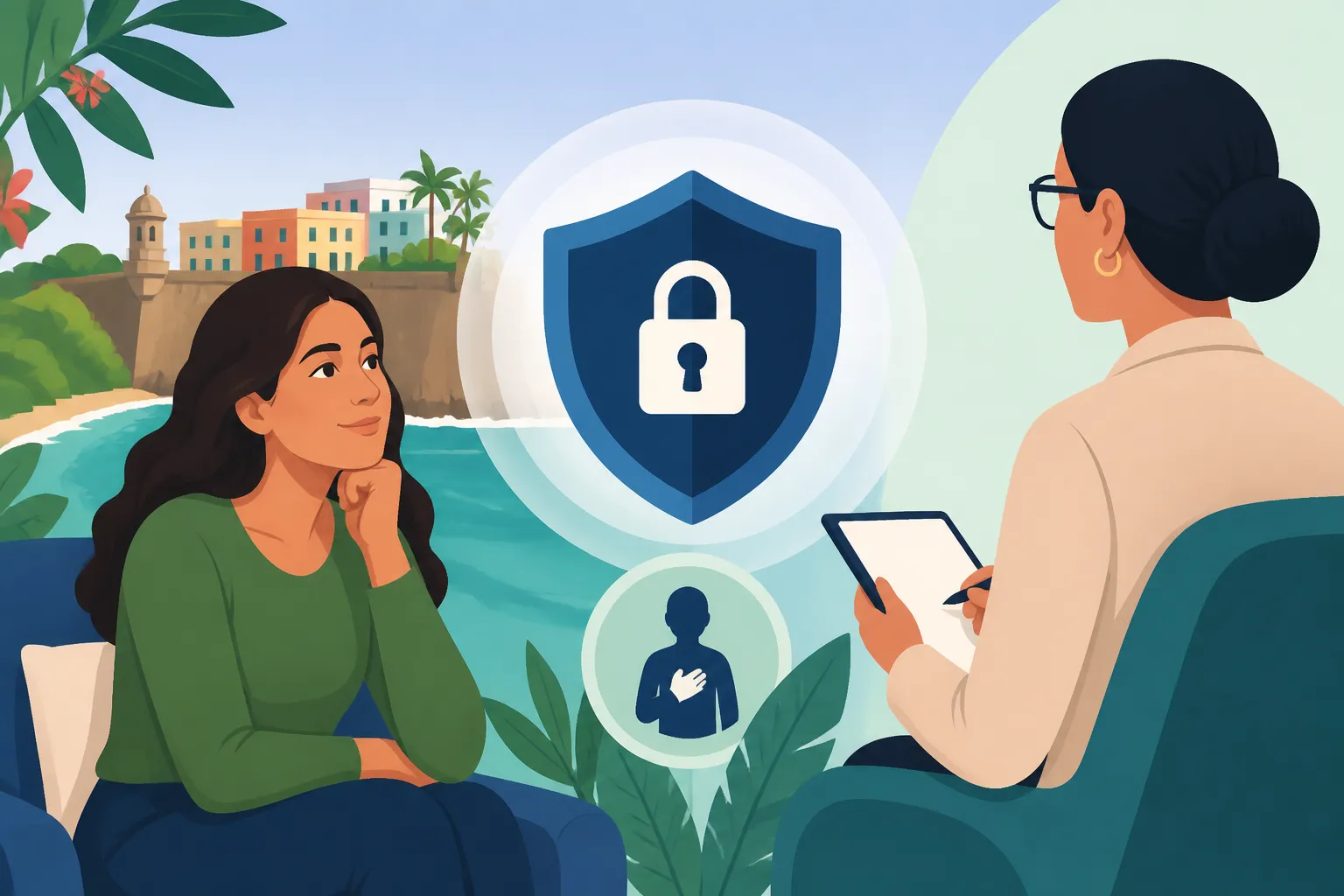
Is Mental Health Treatment Confidential in Puerto Rico?
Moving to a new environment often brings immense stress, yet many newcomers hesitate to seek professional support because they fear their private struggles might become public knowledge in a tight-knit community like Puerto Rico. This guide clarifies the legal protections, cultural nuances, and practical steps regarding mental health confidentiality on the island to ensure your privacy remains protected while you heal.
The Legal Framework for Confidentiality in Puerto Rico
When you sit down in a therapist’s office in San Juan or a psychiatrist’s clinic in Ponce, you are protected by a dual layer of legal oversight. Because Puerto Rico is a U.S. territory, federal laws apply with full force, but the local government has also enacted specific statutes that are often more descriptive regarding patient rights. Understanding this intersection is the first step in feeling secure during your sessions.
HIPAA Compliance on the Island
The Health Insurance Portability and Accountability Act (HIPAA) is the gold standard for medical privacy in the United States, and it operates in Puerto Rico exactly as it does in Florida or New York. This federal law prohibits healthcare providers from sharing your protected health information (PHI) without your written consent. In the context of mental health, this includes not just your diagnosis, but the very fact that you are seeking treatment.
For expats, this means that your records cannot be shared with your employer, your landlord, or even your family members unless you sign a specific release form. Providers are required to use secure electronic systems for notes and billing. If you are concerned about how your data is handled, you can always ask a clinic for their Notice of Privacy Practices. Many people moving here wonder, Does My Mainland Health Insurance Work in Puerto Rico? and if those companies maintain the same standards. The answer is a resounding yes; the privacy barrier remains intact regardless of where the insurance provider is headquartered.
Law 408: The Puerto Rico Mental Health Law
Beyond HIPAA, Puerto Rico has its own robust legislation known as Law 408 (Ley de Salud Mental de Puerto Rico). Enacted in 2000, this law is a comprehensive document that outlines the rights of patients receiving mental health services. It goes a step further than some federal guidelines by explicitly stating that the patient has the right to a dignified treatment environment and the absolute right to confidentiality regarding their clinical record.
Law 408 is particularly important because it governs how local institutions, such as a CDT (Centro de Diagnóstico y Tratamiento), handle mental health crises. It mandates that any person receiving services has the right to have their records kept in a separate, secure file that is not part of the general medical record if the provider deems it necessary for privacy. This local nuance provides an extra layer of comfort for those who might be using a multi-specialty clinic for both physical and mental health.
Practical Realities for Expats and Residents
While the law is clear, the practical experience of seeking care in Puerto Rico involves navigating a unique cultural landscape. Puerto Rico is often described as a "big small town." In areas like Condado or Dorado, the expat community can feel quite interconnected, which leads to a legitimate fear of "island gossip" or bumping into your therapist at the grocery store.
Navigating the Cultural Landscape of Stigma
In many local circles, there is still a lingering stigma surrounding mental health treatment. Older generations may view seeking therapy as a sign of extreme illness rather than a tool for wellness. Many expats have seen how this stigma can make newcomers feel isolated. You might worry that seeing a professional will somehow "get out" and affect your social standing or business prospects.
However, the professional community in Puerto Rico is highly ethical and well-aware of these cultural dynamics. Most therapists take extreme precautions to ensure patient anonymity. For example, some offices are located in professional buildings with multiple types of businesses (lawyers, accountants, doctors) so that entering the building does not immediately signal you are visiting a psychologist. If you are looking for specific help, you might start by learning How to Access Mental Health Services in Puerto Rico to find providers who specialize in working with the international community.
Finding an English-Speaking Provider
Language is a significant factor in confidentiality. If you are not fluent in Spanish, the nuances of your private thoughts might be lost or misunderstood, which feels like a violation of the "internal" confidentiality of the therapeutic relationship. Finding a provider who is truly bilingual is essential for feeling that your private world is being accurately captured and protected.
Many expats prefer to find specialists in San Juan who have experience with the mainland lifestyle. You might wonder, Where Can I Find an English-Speaking Doctor in San Juan? or specifically how to find a therapist who understands the unique stresses of Act 60 residents or remote workers. Providers in these circles are often the most attuned to the privacy needs of high-profile or professional expats.
Accessing Care and Protecting Your Privacy
How you pay for your care can sometimes influence the "paper trail" of your mental health treatment. For some, the traditional insurance route is the most affordable, but for those prioritizing maximum privacy, other options exist.
Insurance vs. Private Pay
When you use local insurance, a record of the visit is generated for billing purposes. While this record is protected by HIPAA, some individuals prefer "Private Pay" (paying out of pocket) to ensure that no insurance company has a record of their mental health diagnosis. This is a common choice for those in sensitive professions.
For newcomers who are still in the transition period and haven't yet established local coverage, services like SafetyWing can be a lifesaver. SafetyWing provides a bridge for digital nomads and expats who need reliable coverage without the immediate bureaucratic hurdles of a local plan. Using an international provider like SafetyWing can also offer a psychological sense of distance; your medical claims are being processed by a global entity rather than a local office where you might know the staff. SafetyWing is particularly popular among the remote work crowd in Rincon and San Juan who prioritize flexibility and privacy.
Digital Records and Administrative Privacy
Puerto Rico is increasingly moving toward digital health records. While this improves care coordination, it also raises questions about who can see what. It is important to know that How to Access Mental Health Services in Puerto Rico involves understanding that your mental health notes are often "walled off" from your general practitioner's view unless you provide explicit permission for them to be shared.
If you are self-employed, you are likely already familiar with the SURI system for taxes, but rest assured that your medical and mental health data is not linked to government tax or administrative portals. Your privacy as a patient is treated as a separate legal entity from your status as a taxpayer or resident. If you are currently navigating this transition, you should look into Health Insurance in Puerto Rico: Plans, Costs and Options Explained (2026) to see how different tiers of coverage handle mental health data.
Exceptions to Confidentiality
It is vital to be realistic: confidentiality is not 100% absolute. There are specific, legally mandated situations where a provider must break silence. These exceptions are standard across the U.S. but are worth repeating in the local context of Puerto Rico.
| Situation | Action Required | Legal Basis |
|---|---|---|
| Harm to Self | Provider may intervene to ensure safety | Law 408 / Duty of Care |
| Harm to Others | "Duty to Warn" the intended victim | Federal Precedent / Law 408 |
| Child/Elder Abuse | Mandatory reporting to Dept. of Family | PR Protective Statutes |
| Court Order | Records may be subpoenaed by a judge | Judicial System Rules |
In Puerto Rico, the "Duty to Warn" is taken very seriously. If a patient expresses a credible threat against another person, the therapist is legally obligated to notify both the police and the potential victim. Additionally, because the island has strong family protection laws, any suspicion of child abuse or neglect must be reported to the Departamento de la Familia. While these exceptions might feel daunting, they are designed to protect the most vulnerable members of society and are rarely invoked in standard therapeutic settings.
Steps to Take if Your Privacy is Violated
If you ever feel that your confidentiality has been compromised—perhaps a receptionist discussed your visit in a waiting room or a provider shared information without your consent—you have the right to take action. This is not something to be brushed under the rug.
- Address it Directly: Often, administrative slips can be corrected with a firm conversation with the provider.
- File a HIPAA Complaint: You can file a formal complaint with the U.S. Department of Health and Human Services (HHS) if you believe a federal privacy violation occurred.
- Contact the Patient Advocate: Puerto Rico has an Office of the Patient Advocate (Oficina del Procurador del Paciente) specifically designed to handle grievances regarding healthcare quality and privacy.
- Review Your Coverage: If the breach happened through a billing error, contact your coordinator. For those using SafetyWing, their customer support is generally very responsive to privacy concerns and can help clarify how your data was handled during the claims process.
Ensuring you have the right support starts with finding the right specialist. If you are in the metro area, you might search for How Do I Find a Psychiatrist in San Juan? or look for clinical psychologists who have established reputations for discretion. Remember that Is Mental Healthcare Affordable in Puerto Rico? is a common question, and the answer often depends on whether you are using private clinics or public centers. Private clinics generally offer a higher perceived level of privacy simply due to lower foot traffic and more personalized administrative handling.
Conclusion
The short answer is yes: mental health treatment in Puerto Rico is confidential, backed by both powerful U.S. federal laws and specific local statutes like Law 408. While the island's social culture is warm and interconnected, the medical community maintains a professional barrier that protects your most private information.
Whether you are a digital nomad using SafetyWing for your first few months on the island or a long-term resident with a local plan, you have the right to seek help without fear. For those who are still setting up their new life, understanding Navigating the Puerto Rico Healthcare System: A Newcomer's Roadmap (2027) can provide the broader context needed to feel at home. You might also want to check Can I Get Counseling or Therapy in Puerto Rico? for a list of available modalities. Your mental well-being is the foundation of a successful life in the tropics; don't let a fear of privacy keep you from the support you deserve.
Disclaimer
The information provided in this guide is for informational purposes only and does not constitute legal or medical advice. Laws and regulations regarding healthcare and privacy can change; always consult with a qualified legal professional or healthcare provider in Puerto Rico regarding your specific situation.