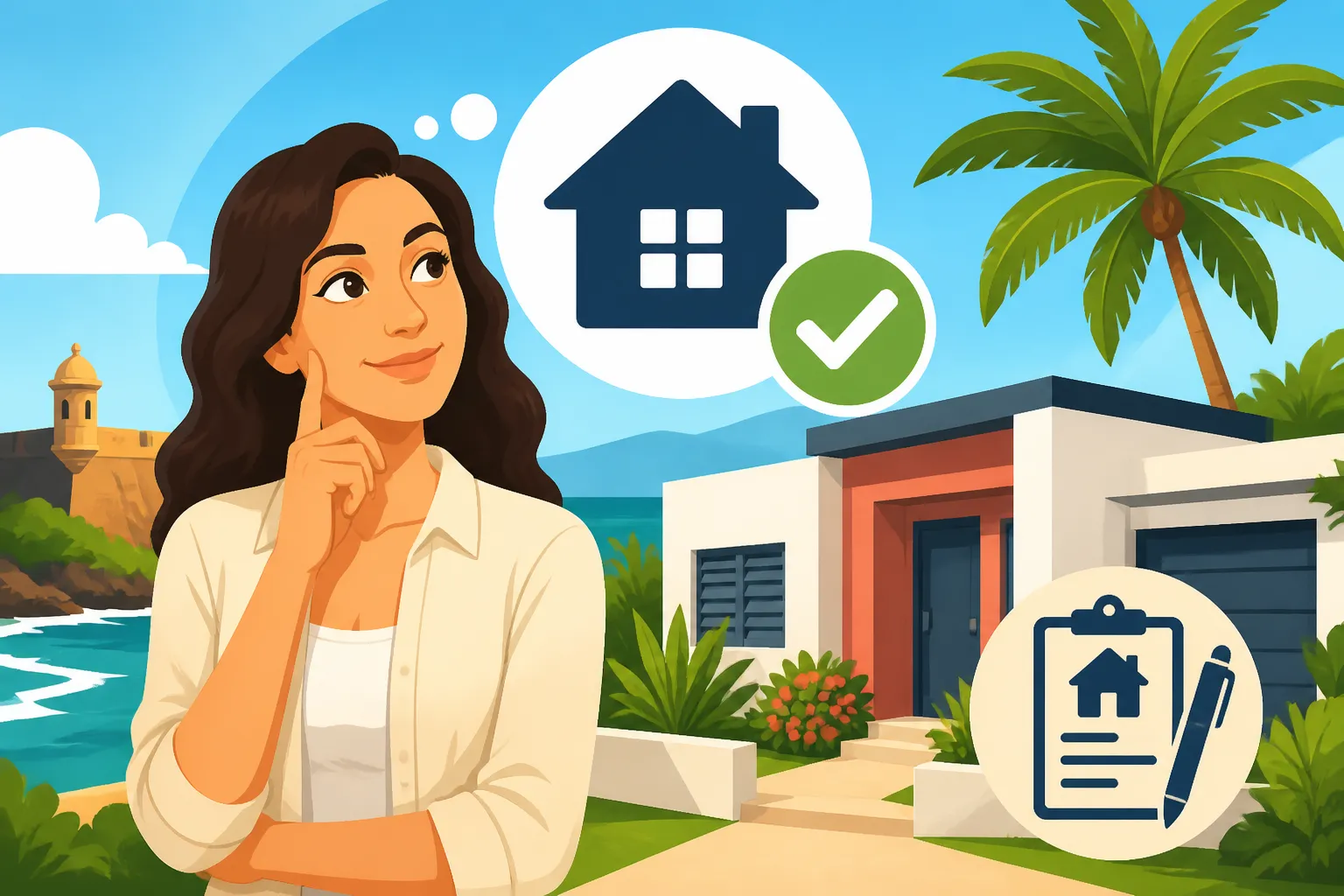
Can I Get a Mortgage as a New Resident in Puerto Rico?
Moving to a new place is exhilarating, but let's be real, the administrative hurdles can often feel like a full-contact sport. For many new residents arriving in Puerto Rico, one of the biggest questions that quickly surfaces when dreaming of laying down roots is, "Can I actually get a mortgage here?" It's a completely valid concern, filled with anxiety about different systems and unfamiliar processes. This comprehensive guide will walk you through everything you need to know about securing a mortgage as a newcomer, helping you navigate the unique landscape of homeownership in paradise.
The Short Answer: Yes, But It's a Different Ballgame
Okay, let's cut to the chase: yes, absolutely, you can get a mortgage as a new resident in Puerto Rico. However, don't walk into this expecting it to be exactly like the process you might have experienced, or heard about, on the mainland. While Puerto Rico is a U.S. territory, and many federal regulations apply, the local banking practices, documentation requirements, and even the pace of business can feel quite distinct.
Imagine you're trying to play baseball, but suddenly the rules about what counts as a home run have subtly changed, and the umpire speaks mostly Spanish. You can still hit a home run, but you need to understand these nuances. The key difference often boils down to how "new residency" is perceived and verified, alongside the sometimes-stricter underwriting guidelines specific to island lenders. They're often looking for a demonstrated commitment to living and working here, not just a quick stopover. This means providing evidence that you’re truly establishing your life on the island, not just here for a temporary stint.
Understanding Residency and Credit for Mortgages
When a bank in Puerto Rico considers you for a mortgage, they're not just looking at your ability to pay; they're also assessing your stability as a resident. This isn't just about showing up with a new address. It's about proving bona fide residency. This concept, especially for those interested in tax incentives like Act 60, is critical and involves more than just physically being on the island for a certain number of days. It delves into where your true "tax home" is and where your "closer connection" lies. Without clearly establishing this, lenders might view you as a higher risk. You’ll need to demonstrate ties to the island, such as local bank accounts, utility bills in your name, a Puerto Rico driver's license, and local employment or business registration.
Your credit history is another interesting point. If you're coming from the mainland, your U.S. credit score will generally transfer and be recognized. However, local lenders often want to see some local financial activity too. This could mean having a checking account, savings account, or perhaps even a local credit card that you’ve managed responsibly for a few months. It's not always a hard requirement, but it certainly helps to build confidence with the loan officers who are more familiar with local financial behaviors. Don't be surprised if they ask for more documentation than you might expect, even with an excellent mainland credit score.
The Initial Hurdles Newcomers Face
One of the first hurdles you might encounter is simply knowing where to start. Unlike the mainland where a quick online search can yield dozens of national lenders, the market here is more concentrated. Major banks like Banco Popular de Puerto Rico, Oriental Bank, and FirstBank Puerto Rico are dominant players, but they operate on their own timelines and sometimes with specific requirements tailored to the local market. Expect to explain your situation repeatedly, as not every loan officer will be intimately familiar with the intricacies of relocating from the mainland. Patience, my friend, is your best ally here.
Another hurdle is the paperwork itself. While many documents are similar to what you'd need on the mainland, the way they're requested, and the sheer volume, can be a bit overwhelming. For example, if you're self-employed, preparing your income documentation for a Puerto Rico mortgage might involve a deep dive into your local tax filings with Hacienda, alongside your federal returns. It's a good idea to start gathering everything you can think of well in advance, and then some. Trying to piece it all together last minute is a recipe for unnecessary stress.
Navigating Eligibility and Gathering Your Documents
Getting a mortgage in Puerto Rico as a new resident is all about proving your financial stability and your commitment to the island. Lenders need to see a clear picture that you’re not just passing through, but truly embedding yourself in the local economy. This section will walk you through the specifics of what that entails.
Proof of Bona Fide Residency: More Than Just an Address
This is perhaps the most critical component. Lenders need tangible proof that you're a bona fide resident of Puerto Rico, especially if you're seeking favorable terms or if your income sources are tied to the island's tax incentives. This isn't just a casual "I live here now" statement. It typically involves demonstrating that you meet the IRS's three tests for bona fide residency: the Presence Test (generally spending 183 days or more in Puerto Rico during the tax year), the Tax Home Test (your main place of business or employment is in Puerto Rico), and the Closer Connection Test (demonstrating more significant connections to Puerto Rico than to any other place).
For a mortgage application, this might translate to providing:
- A valid Puerto Rico driver's license or state ID.
- Recent utility bills (electric, water, internet) in your name at your Puerto Rico address.
- Vehicle registration in Puerto Rico.
- Registration to vote in Puerto Rico.
- Bank statements from local Puerto Rico banks. You'll want to read up on The Newcomer's Guide to Opening a Bank Account in Puerto Rico to ensure you have this squared away.
- Children's school enrollment records, if applicable.
- An employment contract with a Puerto Rico-based company or evidence of a registered business on the island.
- Your latest Puerto Rico tax return (Form 482.0).
The more you can demonstrate your integration into the island, the smoother this part of the process will be. Lenders are often very conservative and will err on the side of caution.
Income and Employment Verification
Just like anywhere else, your income and employment stability are paramount. However, if your income is new or comes from a remote job with a mainland company, lenders might scrutinize it more heavily.
- W-2 Employees: If you’ve secured a W-2 job with a Puerto Rico employer, great! You’ll typically need your offer letter, recent pay stubs (usually 2-3 months), and W-2s from the last two years. If you've just started, showing a strong history with mainland employers can help, but they'll want to see that local employment is stable.
- Self-Employed/Business Owners: This can be trickier, as it is anywhere. You'll likely need two years of personal and business tax returns, profit and loss statements, and possibly a letter from your accountant verifying your income. For those operating under Act 60 incentives, proving the legitimate operation of your export services or individual investor status will be crucial. Organizations like Taxes for Expats can be invaluable resources in helping you navigate the tax implications and prepare the necessary documentation to demonstrate a robust financial standing.
- Remote Workers: If you work remotely for a mainland company, you'll need a solid employment history, consistent income, and a clear explanation of your work arrangement. Be prepared for lenders to ask how your residency in Puerto Rico aligns with your employer's policies, as some mainland companies may not be accustomed to local tax structures or labor laws here.
Credit History: Mainland vs. Local Considerations
As mentioned, your mainland credit history is usually accessible and taken into account. However, establishing some local credit can expedite the process and demonstrate your reliability within the Puerto Rico financial system. This doesn't mean you need to rack up debt; simply opening a local checking and savings account and using them regularly, perhaps even getting a secured credit card from a local bank, can show positive financial behavior.
Sometimes, new residents are advised to spend a few months or even up to a year just establishing financial ties on the island before applying for a mortgage. This period allows you to build a local credit footprint, which can be immensely helpful. You'll find a lot more information on the overall banking landscape in Banking in Puerto Rico: A Complete Guide for Newcomers (2027).
Essential Documents You'll Need
While the exact list can vary slightly between lenders and your personal situation, here’s a general rundown of what you’ll need to prepare:
| Document Category | Specific Documents | Notes |
|---|---|---|
| Personal Identification | Valid photo ID (PR Driver's License/State ID, Passport) | A Puerto Rico ID is highly preferred. |
| Residency Proof | Recent utility bills (LUMA, AAA), vehicle registration, voter registration, children's school enrollment | The more, the better, to establish "Closer Connection." More on this in Bona Fide Residency in Puerto Rico: The Definitive Tax Guide (2027). |
| Income Verification | Last 2 years' W-2s or 1099s, last 2 years' personal and business tax returns, recent pay stubs, profit & loss statements | For self-employed, expect a thorough review. If your income has shifted to PR sources, emphasize this. You may need specific tax forms from Hacienda (Puerto Rico Treasury Department). More details can be found in How Puerto Rico Taxes Work: Federal vs Local (Hacienda) Explained (2027). |
| Asset Statements | Last 2-3 months' bank statements (checking/savings, local and mainland), investment account statements | To prove funds for down payment, closing costs, and reserves. Lenders want to see a clear paper trail for large deposits. |
| Credit History | Your credit report (from TransUnion, Equifax, Experian), possibly local credit references | Mainland credit reports are accepted, but local activity helps. |
| Property Specifics | Purchase agreement, property appraisal, title search results | These come into play once you've found a property. It's good to understand the process for Understanding Property Ownership and Titles in Puerto Rico. |
| Other | Rental history, letters of explanation for credit anomalies, gift letters (if applicable) | Anything that might raise questions should have a clear explanation. |
The Mortgage Application Process: A Step-by-Step Walkthrough
Once you’ve gathered your documents and have a good grasp on your eligibility, it’s time to dive into the actual application. This process, while familiar in its broad strokes, has its unique Puerto Rican rhythm.
Finding the Right Lender in Puerto Rico
This isn't the time to rely solely on online aggregators. For new residents, a personal touch often makes a huge difference. You'll want to connect with loan officers who have experience working with mainland transplants and understand the nuances of their financial backgrounds.
- Local Banks: As mentioned, Banco Popular de Puerto Rico, Oriental Bank, and FirstBank Puerto Rico are major players. They have dedicated mortgage departments. Don’t be afraid to visit a branch in person, especially in areas with a higher expat population like San Juan, Dorado, or Rincon. Ask for a mortgage specialist.
- Mortgage Brokers: There are also independent mortgage brokers on the island who can shop your application around to different lenders. This can be particularly useful if your situation is a bit complex, as they often know which lenders are more flexible with specific types of income or residency proofs.
- Recommendations: Talk to other expats who have successfully purchased property here. Their experiences and recommendations can be invaluable. They can often tell you which lenders were helpful and which ones to potentially avoid for your specific situation. Many new residents find navigating the entire home buying process easier with some guidance, which is why we’ve put together How to Buy Property in Puerto Rico: The Full Guide (2027).
When you first connect, be upfront about being a new resident. This manages expectations and allows the loan officer to guide you on their specific requirements from the get-go.
From Pre-Approval to Closing: What to Expect
The mortgage process generally follows these steps:
- Pre-Qualification/Pre-Approval: This is your first crucial step. You provide your financial information, and the lender gives you an estimate of how much you can borrow. A pre-approval, which involves a more thorough review of your finances and a credit check, is much stronger and is often necessary before a seller will take your offer seriously. This step can feel like a mini-application in itself, especially for new residents, as they gather all your initial documents.
- Property Search: Once you have your pre-approval, you can confidently start looking for a home. Make sure you're working with a real estate agent who understands the local market and the specifics of transactions in Puerto Rico.
- Offer and Purchase Agreement (Contrato de Compraventa): Once your offer is accepted, a purchase agreement is drafted. This is a legally binding document, so ensure you have a good real estate attorney review it.
- Underwriting: This is where the lender dives deep into all your submitted documents to verify everything. Expect questions, requests for additional information, and possibly some delays. This stage requires patience and quick responses to information requests.
- Appraisal and Title Search: The lender will order an appraisal of the property to ensure its value supports the loan amount. A title search will also be conducted to verify clear ownership and identify any liens or encumbrances. Issues here can cause significant delays, so Understanding Property Ownership and Titles in Puerto Rico is key.
- Loan Approval and Closing Disclosure: Once underwriting is complete and all conditions are met, your loan is approved. You'll receive a Closing Disclosure (CD) detailing all the final terms and costs.
- Closing (Cierre): This is the final step, usually held at a notary's office in Puerto Rico. You'll sign all the necessary documents, transfer funds, and officially become a homeowner! You’ll need to manage funds for down payments and closing costs, which might involve significant transfers, so consider using services like Wise to handle international transfers efficiently.
The entire process can take anywhere from 45 to 90 days, or sometimes even longer for new residents, so factor that into your moving timeline. You can get more specific details on the process in How to Get a Mortgage to Buy a Home in Puerto Rico.
Understanding Local Mortgage Products
Puerto Rico offers similar mortgage products to the mainland, including:
- Conventional Loans: These are not government-backed and typically require a higher credit score and down payment.
- FHA Loans: Backed by the Federal Housing Administration, these offer lower down payment options and more flexible credit requirements. They are popular for first-time homebuyers.
- VA Loans: For eligible veterans, these offer favorable terms, often with no down payment required.
- Rural Development Loans: Aimed at promoting homeownership in rural areas, these also offer low or no down payment options for eligible properties.
It's worth discussing all these options with your lender to see which one best fits your financial profile as a new resident.
Common Pitfalls and Expert Tips for New Residents
Moving to a new place is about embracing the unknown, but it's also about being prepared for the bumps in the road. Here are some common pitfalls new residents face when getting a mortgage in Puerto Rico and how to navigate them.
The Language Barrier and Cultural Nuances
Even if you're comfortable with English, remember that Spanish is the primary language of business and daily life in Puerto Rico. While many professionals in the banking and real estate sectors are bilingual, not everyone will be fluent. Relying on translations for complex legal and financial documents can be risky. Always ask for explanations in the language you're most comfortable with. If you're not fully bilingual, consider hiring a real estate agent and attorney who are, or bring a trusted, fluent friend to important meetings. Don't be afraid to ask for things to be repeated or explained in simpler terms; it's your investment, after all.
Culturally, things might move at a different pace than you're used to. "Island time" isn't just a stereotype; it's a reality. Processes can take longer, and follow-ups might be necessary. This isn't inefficiency; it's just how things often operate. Embrace patience, but also don't be afraid to politely follow up. Establishing strong, personal relationships with your real estate agent, loan officer, and attorney can go a long way in ensuring smooth communication.
Navigating Property Titles and Legalities
The system for property titles and legalities, while robust, can differ from mainland practices. For instance, many properties here might have servidumbres (easements) or límites (boundary descriptions) that are very specific and potentially different from what you're used to. It is absolutely critical to have a good, independent real estate attorney who specializes in property law in Puerto Rico. They will conduct thorough due diligence, review the escritura (deed), and ensure the title is clear of any encumbrances that could cause problems down the line. Never rely solely on the lender's attorney, as their primary responsibility is to the bank. A good attorney is your advocate. This ties into the advice in Understanding Property Ownership and Titles in Puerto Rico, which is a must-read for anyone considering buying property here.
Managing Funds for Down Payments and Closing Costs
Down payments and closing costs are significant financial commitments. For new residents, moving large sums of money from mainland accounts to Puerto Rico can be an additional logistical challenge. Ensure you understand the fees and exchange rates if you're transferring money from a non-USD account (though Puerto Rico uses USD, so this is less of a concern for mainland transfers). Services like Wise can be helpful for secure and cost-effective international money transfers if you're bringing funds from outside the U.S. financial system.
It's not just about the down payment; closing costs in Puerto Rico can range from 3% to 7% of the purchase price, encompassing attorney fees, notary fees, recording fees, and property taxes. Make sure these funds are readily accessible in your local Puerto Rico bank account well before closing. Lenders will want to see that the funds have been seasoned (i.e., in your account for a certain period) and that the source of any large deposits is clear. Don't make any major financial moves (like buying a new car or furniture) between loan approval and closing, as this can impact your debt-to-income ratio and jeopardize your loan.
Overall, buying a home and getting a mortgage as a new resident in Puerto Rico is entirely doable, but it requires diligent preparation, patience, and a willingness to understand the local ways of doing things. It's a journey, but one that leads to establishing a truly permanent home in this beautiful corner of the world. Remember to budget carefully, as covered in The Complete Guide to Cost of Living in Puerto Rico (2026), and to get your tax affairs in order, including How to Register with Hacienda and Get a Tax Account in Puerto Rico. Embrace the process, and soon you'll be enjoying your very own piece of paradise.
Disclaimer
The information provided in this guide is for general informational purposes only and does not constitute financial, legal, or tax advice. While we strive to offer accurate and up-to-date content based on current understanding and research, laws and regulations in Puerto Rico, especially concerning finance, taxes, and residency, can change. It is essential to consult with qualified local professionals, such as mortgage lenders, real estate attorneys, and tax advisors, for advice tailored to your specific situation before making any financial decisions related to property or mortgages in Puerto Rico.