How to Use ATH Movil and Local Payment Apps in Puerto Rico
One of the first things many newcomers realize after settling into the rhythm of island life is that while credit cards are widely accepted, cash is still king in many local spots. But then, you spot a sign for "ATH Móvil" at your favorite panadería, or someone asks for your "Ath" to split the bill after a chinchorreo outing. This guide is going to walk you through how to navigate the digital payment landscape here, ensuring you can transact with ease, whether you're paying a friend, a street vendor, or your monthly bills.
Understanding ATH Móvil's Place in Puerto Rico's Digital Ecosystem
When you first arrive in Puerto Rico, you might expect to rely on familiar payment apps like Venmo or Zelle. However, you'll quickly discover that the island has its own dominant player: ATH Móvil. This app isn't just another payment option; it's deeply integrated into the daily financial lives of most residents, to a degree that newcomers often find surprising. Ignoring it would be like trying to navigate mainland US without a debit card – you'd manage, but you'd constantly be hitting walls.
The Ubiquity of ATH Móvil in Island Life
From the bustling streets of San Juan to the tranquil beaches of Rincón, ATH Móvil is everywhere. Seriously, it's not an exaggeration. Picture this: you're at a roadside stand, craving a pincho or a piragua. You might assume you need cash. But often, there's a small sign, or the vendor will simply ask, "¿ATH Móvil?" It's become the default way to send and receive money for everything from splitting a restaurant bill with friends, paying your handyman, buying crafts at a local market, or even donating to a community fundraiser. It's truly a testament to how quickly Puerto Rico adopted this technology, making it an indispensable tool for nearly everyone. Even small, family-owned businesses that might not have a traditional point-of-sale system for credit cards often use ATH Móvil Business to accept payments. This widespread acceptance means that if you're not using it, you're potentially missing out on convenience and flexibility in countless daily transactions.
How It Differs from Mainland Apps and Why It Matters
If you're coming from the mainland US, you're likely familiar with apps like Venmo, Zelle, or Cash App. While these might have some presence here, they are far from universally adopted. ATH Móvil stands out because it's directly tied to the ATH network, which is Puerto Rico's interbank network, similar to how local debit card networks operate. This means almost every major bank on the island is integrated with ATH Móvil. When you send money via ATH Móvil, it’s typically transferred instantly between bank accounts, regardless of which local bank either party uses. This direct integration with local banking infrastructure is what gives it such a powerful advantage over other peer-to-peer payment apps, many of which only operate effectively between specific banks or require a separate cash-out step. For an expat, understanding this distinction is crucial because trying to use a mainland-centric app will often lead to frustration and delays when trying to pay local businesses or individuals who primarily rely on ATH Móvil.
The Evolution of Digital Payments in Puerto Rico
Puerto Rico's journey towards digital payments has been fascinating, partly accelerated by past natural disasters and the need for resilient financial tools. Before ATH Móvil, cash was even more prevalent, and interbank transfers could be cumbersome. The app emerged as a solution, simplifying peer-to-peer transactions and eventually expanding to include merchant payments. Its growth showcases a strong local push for financial technology that addresses specific island needs, particularly during times when traditional infrastructure might be compromised. This adaptability and widespread adoption have cemented its role as a vital piece of the financial puzzle here. For new residents, embracing ATH Móvil isn't just about convenience; it's about integrating into the local economic and social fabric. It's part of how the island has adapted and innovated, and it's a tool you'll want in your arsenal to truly live like a local.
Getting Started with ATH Móvil: A Step-by-Step Guide
So, you're convinced. ATH Móvil is the way to go. But how do you actually get set up? For many newcomers, this first step can feel a little daunting, especially if your Spanish isn't quite up to par yet for navigating bank applications. But don't worry, the process is generally straightforward once you know what to expect and what documents you'll need. The key is having a local bank account, which is a foundational step for almost all financial transactions in Puerto Rico. If you haven't opened one yet, you might want to check out our guide on The Newcomer's Guide to Opening a Bank Account in Puerto Rico.
Eligibility Requirements and What You'll Need
To get started with ATH Móvil, the most critical requirement is having a checking or savings account with a participating financial institution in Puerto Rico. This isn't an app you can link directly to a mainland US bank account and expect full functionality. Most local banks, including popular ones like Banco Popular de Puerto Rico, Oriental Bank, and FirstBank, support ATH Móvil. You'll also need a valid Puerto Rico phone number. This is crucial for verification purposes and for others to be able to send you money easily.
Here's a quick checklist of what you'll typically need:
- A local bank account: This is non-negotiable. Ensure it's a checking or savings account.
- A Puerto Rico phone number: A local 787 or 939 area code number is essential. This is how the app identifies you and how others find you to send money.
- A smartphone: The app is available for both iOS and Android devices.
- Basic personal information: Your name, address, and email, which should match the details on file with your bank.
Without these foundational elements, you'll hit roadblocks. It's a system designed for residents with local banking ties, so planning ahead to open your local bank account and get a local phone number should be high on your relocation checklist. For more on local banking, our comprehensive guide on Banking in Puerto Rico: A Complete Guide for Newcomers (2027) can provide further details.
Downloading and Linking Your Bank Account
Once you have your local bank account and phone number ready, the rest of the setup is pretty intuitive.
- Download the App: Head to your smartphone's app store (Apple App Store or Google Play Store) and search for "ATH Móvil." Make sure you download the official app, typically identified by the ATH logo.
- Register Your Account: Open the app and follow the prompts to register. You'll be asked to provide your Puerto Rico phone number. The app will usually send a verification code to this number to confirm it's yours.
- Select Your Bank: From the list of participating financial institutions, choose your bank.
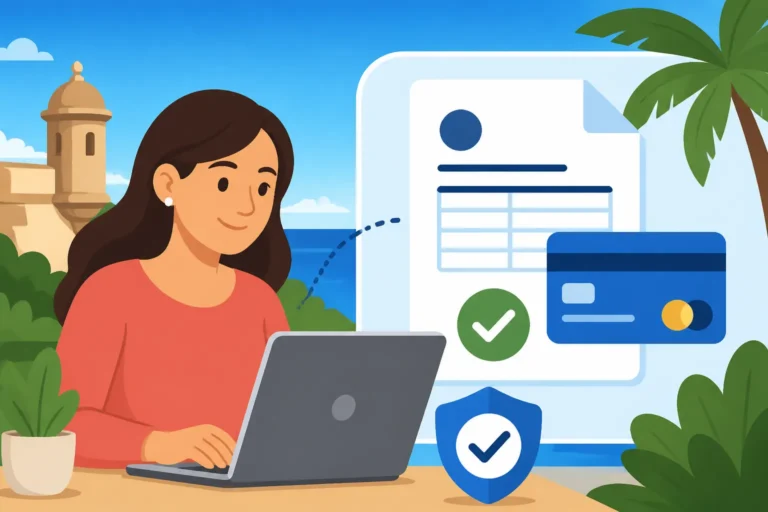
- Link Your Account: You'll then be prompted to log in using your online banking credentials (username and password). This step securely links your ATH Móvil profile to your bank account. The app typically doesn't store your bank login details directly but uses them for the initial authorization.
- Create a PIN: You'll create a 4-digit ATH Móvil PIN. This is a crucial security feature that you'll use for sending money. Do not confuse this with your bank debit card PIN; it's specific to ATH Móvil.
- Agree to Terms and Conditions: Read through the terms and conditions – a necessary step for any financial application.
That's it! Once linked, you'll usually see your available balance (or a general indication of funds) from your linked account within the ATH Móvil app. It's a pretty seamless process, designed to get you up and running quickly.
Understanding Your ATH Móvil PIN and Security Features
Your ATH Móvil PIN is your primary defense against unauthorized transactions within the app. Just like your debit card PIN, you should keep it confidential and never share it with anyone. Every time you initiate a payment to another individual or business, you'll be prompted to enter this PIN. This layer of security is vital, especially given how widely the app is used for daily transactions.
Beyond the PIN, ATH Móvil employs several other security measures:
- Bank-Level Encryption: As it integrates directly with local banks, the app benefits from robust encryption protocols to protect your financial data during transfers.
- Transaction Monitoring: Banks and ATH Móvil systems actively monitor for suspicious activity, similar to how they track unusual debit or credit card transactions.
- Biometric Authentication: Many smartphones allow you to enable fingerprint or facial recognition for quicker access to the app, adding another layer of security beyond just a PIN.
- Transaction Limits: To mitigate risk, there are often daily or per-transaction limits on how much money you can send through ATH Móvil. These limits can vary based on your bank and account type, but they are designed to prevent large-scale unauthorized transfers.
It's important to remember that while the app itself is secure, user vigilance is paramount. Always double-check recipient details before sending money, be wary of unsolicited payment requests, and regularly review your transaction history. If you suspect any unauthorized activity, contact your bank immediately.
Daily Uses and Features of ATH Móvil
Once you're all set up with ATH Móvil, you'll quickly realize how much it streamlines daily financial interactions in Puerto Rico. It's not just for big transfers; it's truly designed for the rhythm of island life, making everything from splitting a lunch bill to paying your small local vendors incredibly simple. This convenience factor is a huge stress-reducer for expats adapting to a new financial environment.
Peer-to-Peer Payments: Sending Money to Friends and Family
This is arguably where ATH Móvil shines brightest and how most people first get introduced to it. Let's say you and a friend grab mofongo and a medalla at your favorite restaurant. One person pays the bill, and the other can instantly send their share via ATH Móvil. No fumbling for cash, no awkward "I'll get you back later" promises.
The process is incredibly simple:
- Open the App: Tap on the "Send Money" or "Enviar Dinero" option.
- Select Recipient: You can search for the recipient by their ATH Móvil username (often their phone number), or if they're in your phone contacts and have registered with ATH Móvil, they'll appear automatically.
- Enter Amount: Type in the amount you wish to send.
- Add a Note (Optional): You can add a memo, like "Lunch at El Jibarito" or "Rent for July."
- Confirm and Send: Review the details, enter your ATH Móvil PIN, and hit send.
The money usually arrives instantly in the recipient's bank account, making it incredibly convenient for quick repayments, gifting, or sharing expenses. This seamlessness is why it's become such a cultural cornerstone here. When you're trying to build a new social circle, the ability to effortlessly split costs removes potential awkwardness and allows you to enjoy experiences more freely.
Paying for Goods and Services at Local Businesses
Beyond peer-to-peer, ATH Móvil has expanded significantly into the merchant space through its "ATH Móvil Business" and "ATH Móvil Commercial" services. This is fantastic news for consumers because it means you can pay many small businesses that might not otherwise accept credit cards without needing to carry a stack of cash. Think about visiting a chinchorro in the countryside, buying fresh produce from a local farmer, or getting your hair cut at a small salon – many now proudly display their ATH Móvil logo.
To pay a business:
- Look for the Business Option: In the app, select the "Pay Business" or "Pagar Negocio" option.
- Search by Username or QR Code: Businesses typically have a unique ATH Móvil Business username (often their registered name or a variant). Some larger merchants might also have a QR code you can scan directly from the app.
- Enter Amount: Input the amount of your purchase.
- Add Reference (Optional): Some businesses might ask you to add a reference, like your invoice number or name.
- Confirm and Send: Just like with peer-to-peer payments, you'll review and confirm with your PIN.
This feature is a game-changer for economic activity, especially for small entrepreneurs. It allows them to participate in the digital economy without the hefty fees or complex setup often associated with traditional credit card processing. For you, it means more flexibility and fewer instances of being caught without the right form of payment.
Donations, Group Payments, and Other Handy Features
ATH Móvil isn't just about direct payments; it also offers features that cater to community and group interactions, which is very much in line with Puerto Rican culture.
- "Solicitar" (Request Money): If someone owes you money, instead of waiting for them to send it, you can send a request through the app. They simply accept, and the funds are transferred. This is great for collecting money for a group gift or when friends need a gentle reminder for that mofongo debt!
- Donations: Many non-profit organizations and community groups in Puerto Rico use ATH Móvil to collect donations. During natural disasters or local fundraising drives, it often becomes the fastest and most efficient way to contribute to causes. You'll frequently see donation links or ATH Móvil usernames shared on social media for this purpose.
- Scheduled Payments: For recurring payments, like rent to a private landlord or a regular payment to a service provider, some banks allow you to schedule payments through ATH Móvil. This feature adds another layer of convenience, ensuring you don't miss important deadlines.
- Bill Payments (Limited): While not universal for all utilities, some service providers or merchants allow you to pay specific bills directly through ATH Móvil. Always check with the individual provider to see if this is an option. For major utilities like LUMA (electricity) or AAA (water), you'll typically still use their dedicated portals or bank bill pay, but for certain local services, ATH Móvil might be a choice.
These expanded features really underscore ATH Móvil's role as more than just a payment app; it's a versatile financial tool that genuinely simplifies many aspects of daily life here. For expats, adapting to these local tools can significantly enhance your experience and smooth your transition into island living.
Beyond ATH Móvil: Exploring Other Local Payment Options
While ATH Móvil definitely holds the crown for local digital payments in Puerto Rico, it’s certainly not the only way to pay for things. As an expat, you’ll encounter a mix of payment methods, and it's wise to understand the landscape beyond just one app. Knowing your options will ensure you’re never caught off guard, whether you’re at a high-end restaurant or a remote village market.
Traditional Banking and Debit/Credit Cards
Before digital apps became so prevalent, debit and credit cards were the main alternative to cash. They still are, and you’ll find that most established businesses, supermarkets, chain stores, restaurants, and hotels readily accept major credit cards (Visa, Mastercard, American Express, Discover). Your local Puerto Rico bank debit card will also work universally where cards are accepted, often using the same ATH network that powers ATH Móvil.
However, there are nuances:
- Minimum Purchase Requirements: Some smaller establishments might have a minimum purchase amount (e.g., $5 or $10) for credit card transactions, due to processing fees. This is where ATH Móvil or cash comes in handy for smaller buys like a coffee or a single pastry.
- Connectivity Issues: While much improved, internet and power outages can still occasionally affect card processing machines, especially in more rural areas or during adverse weather. Having an alternative is always a good idea.
- Card Skimming: Like anywhere in the world, be vigilant about card skimmers at gas pumps or ATMs. It's always best to use ATMs inside bank branches during business hours if possible, and to check card readers for anything suspicious.
Having a robust local bank account is key, and if you're still weighing your options for local financial institutions, our guide on How to Choose the Best Bank for Newcomers in Puerto Rico offers a detailed comparison. Your local debit card will be your workhorse for most larger transactions where ATH Móvil isn't accepted, or for ATM withdrawals.
International Money Transfer Services and Digital Wallets
For sending or receiving money internationally, or for specific online purchases, other digital solutions come into play.
- PayPal: Widely accepted online for e-commerce and some larger businesses in Puerto Rico. It’s also useful for receiving payments from mainland US or international clients if you’re freelancing or running an online business. However, for peer-to-peer payments within Puerto Rico, it’s much less common than ATH Móvil.
- Wise (formerly TransferWise): This service is invaluable for expats needing to transfer larger sums between different countries and currencies. If you're managing finances between a mainland US account and your Puerto Rico account, or even dealing with other international transfers, Wise offers competitive exchange rates and lower fees compared to traditional bank wire transfers. For instance, if you're receiving payments in USD from a client outside of Puerto Rico, or sending money back home, Wise can often be a more efficient and cost-effective solution than relying on your local Puerto Rico bank for an international transfer.
- Zelle/Venmo/Cash App: While technically functional, these apps generally link best with mainland US bank accounts. Their acceptance in Puerto Rico for daily local transactions is minimal. You might encounter an individual who uses Venmo, but it's not a reliable payment method for most local businesses. Don't expect your colmadito to take Venmo.
- Apple Pay/Google Pay: These mobile wallet services are increasingly accepted at businesses that have modern, contactless payment terminals. You can link your local Puerto Rico debit or credit cards to these wallets. While convenient, their acceptance isn't as universal as a physical card or ATH Móvil, especially at smaller, more traditional establishments.
When it comes to financial planning and managing your money as an expat, particularly if you're self-employed, tracking these various income and expense streams is important for tax purposes. Services like Taxes for Expats could be helpful in navigating the complexities of your tax obligations, especially if you have income sources both on and off the island. You'll want a clear record of all your digital transactions, whether through ATH Móvil, PayPal, or Wise.
The Role of Cash in Puerto Rico's Economy
Despite the rise of digital payments, cash still plays a significant role in Puerto Rico. You absolutely cannot abandon it. There are several scenarios where cash is king:
- Small Vendors and Farmers' Markets: Many small, independent vendors, especially at local plazas del mercado or roadside stands, operate on a cash-only basis. They might not have an ATH Móvil Business account or a card reader.
- Tipping: While some higher-end establishments allow you to add a tip to your card, many local service providers (like hair stylists, valets, or informal guides) prefer or expect cash tips.
- Emergencies: During power outages or natural events, electronic systems can go down. Having a small stash of cash on hand is always a prudent emergency preparedness measure.
- Parking and Tolls: While many toll roads in Puerto Rico are electronic (AutoExpreso), some smaller parking lots or private parking attendants might only accept cash.
It’s a good practice to always carry a small amount of cash, say $20-$50, for these situations. ATMs are widely available at banks and many gas stations and supermarkets, so accessing cash is generally not an issue. Balancing your payment options means being prepared for any situation, and in Puerto Rico, that balance definitely includes a bit of cash alongside your digital tools.
Security, Fees, and Troubleshooting Common Issues
Navigating digital payments, especially in a new country, naturally brings up questions about security and potential costs. While ATH Móvil and other payment apps are generally secure and convenient, understanding the potential pitfalls and how to resolve them is crucial for peace of mind. Plenty of expats have seen enough "Oops, I sent money to the wrong person!" moments to know that vigilance is your best friend.
Protecting Your Account: Best Security Practices
Just like you wouldn't leave your physical wallet lying around, you need to treat your digital payment apps with the same level of care. Here are some critical security practices:
- Strong, Unique PINs: Never use easily guessable PINs like your birthdate or "1234." Make your ATH Móvil PIN distinct from other financial PINs.
- Enable Biometrics: If your phone supports it, use fingerprint or facial recognition to unlock your ATH Móvil app. This adds an extra layer of protection beyond just the PIN.
- Two-Factor Authentication (2FA): If available for any of your digital wallets or banking apps, always enable 2FA. This usually means a code is sent to your registered phone or email to verify your identity on a new device.
- Beware of Phishing Scams: Be extremely suspicious of emails or text messages claiming to be from ATH Móvil or your bank asking for your PIN, password, or other sensitive information. Financial institutions will never ask for this directly via email or text. Always go directly to the app or official website.
- Verify Recipient Details: Before hitting 'send,' always double-check the recipient's phone number or username. A simple typo can send your money to a stranger, and recovering it can be a long, difficult process.
- Secure Wi-Fi: Avoid making financial transactions over unsecured public Wi-Fi networks. Stick to your home Wi-Fi or cellular data.
- Monitor Transactions: Regularly review your ATH Móvil and bank statements for any suspicious or unauthorized activity. Report anything unusual to your bank immediately.
Remember, you are the first line of defense for your financial security. A little paranoia goes a long way!
Understanding Transaction Limits and Potential Fees
While ATH Móvil is incredibly convenient, it's not entirely without limits or potential costs, although for basic peer-to-peer transactions, it's typically free.
- Transaction Limits:
- Daily Limits: Most banks impose daily limits on how much money you can send via ATH Móvil. For personal accounts, this might range from $500 to $1,500 per day, varying by bank and account type. This is a security measure.
- Per Transaction Limits: There might also be a limit on a single transaction amount.
- Merchant Limits: ATH Móvil Business accounts usually have higher limits, but even these aren't limitless.
- If you need to send a very large sum, you'll likely need to use traditional bank transfers, which typically have higher limits. For significant international transfers, particularly for business expenses or large personal remittances, services like Wise are specifically designed to handle larger sums efficiently and with transparent fees.
- Fees:
- Personal Use (P2P): Generally, sending and receiving money between individuals for personal use is free of charge. This is a major reason for its popularity.
- ATH Móvil Business/Commercial: Businesses using ATH Móvil to accept payments typically incur a small transaction fee, similar to credit card processing fees. This fee is usually paid by the business, not the customer.
- International Transfers: If you're using other platforms like PayPal for international transfers, or sending money through your bank, expect varying fees and potentially less favorable exchange rates. This is where a service like Wise really comes into its own for managing cross-border finances.
- Insufficient Funds: If you attempt to send money and don't have sufficient funds in your linked bank account, you could incur an overdraft fee from your bank. Always check your balance first!
It’s always a good idea to familiarize yourself with the specific limits and any potential fees associated with your bank's ATH Móvil service. A quick call to your bank or a look at their website (or a visit, for that true Puerto Rican experience!) can clarify these details.
What to Do When Transactions Go Awry
Mistakes happen, and technology can sometimes be unpredictable. Knowing what steps to take if an ATH Móvil transaction goes wrong is important.
- Sent to the Wrong Person:
- Act Immediately: Contact the recipient if you know them. If it was a wrong number, you might try calling or texting the number to politely explain the situation and request the funds back.
- Contact Your Bank: If the recipient is uncooperative or unknown, contact your bank and ATH Móvil customer service right away. Provide all transaction details. While they can't force the recipient to return funds, they can sometimes initiate a dispute process or flag the transaction. The quicker you act, the better the chances.
- Unrecognized Transaction:
- Check with Family/Friends: First, confirm no one else with access to your phone or account made the transaction.
- Contact Your Bank: Report it as an unauthorized transaction immediately. Your bank will guide you through the dispute process and may be able to reverse the charge.
- Payment Not Received:
- Verify Recipient Details: Double-check that the sender used the correct phone number or username.
- Check Bank Account: Sometimes, due to bank processing times or internal system delays, the funds might appear a little later.
- Contact Sender's Bank/ATH Móvil: The sender should initiate an inquiry with their bank and ATH Móvil customer service to trace the transaction.
- App Glitches/Technical Issues: If the app is freezing, not processing, or showing errors, first try:
- Restarting the app.
- Checking your internet connection.
- Updating the app to the latest version.
- If problems persist, contact your bank's online banking support or ATH Móvil customer service directly.
Keep screenshots and detailed records of any problematic transactions or communications. Being prepared for these scenarios will save you a lot of headache if you ever face them.
Tips for Expats and Newcomers: Navigating Payments Like a Local
Moving to a new place means more than just changing your address; it’s about adapting to new customs, including how money changes hands. For expats in Puerto Rico, truly mastering the local payment landscape goes beyond simply knowing how to use ATH Móvil; it's about understanding the nuances, preparing for occasional hiccups, and integrating seamlessly into the local financial culture.
Embracing Local Payment Culture
One of the biggest pieces of advice I can give any newcomer is to embrace the local way of doing things, especially when it comes to payments. Don't fight it; flow with it.
- ATH Móvil First: When in doubt about how to pay a local, independent business or an individual, ask, "¿Aceptas ATH Móvil?" or simply, "¿Tienes Ath?" It's often the preferred method. If not, cash is usually the next best option.
- Be Prepared for Cash-Only: While digital payments are prevalent, certain situations almost always require cash. These include tips for many service providers (from the coffee shop barista to the person bagging your groceries, if you choose to give a tip), very small roadside vendors, parking attendants, or even some small chinchorros (local bars/eateries) in more rural areas. Always keep a small amount of cash on hand, perhaps $20-$50, just in case.
- Flexibility is Key: Power outages, while less frequent in some areas, can still happen. When the power goes out, card readers often stop working. If you're out and about, having some cash or a fully charged phone with ATH Móvil can be a lifesaver. This sort of resilience is part of living here.
- Language is a Bridge: While many people in Puerto Rico are bilingual, especially in tourist areas, knowing a few Spanish phrases related to payments ("¿Cuánto es?" – How much is it?, "¿Puedo pagar con tarjeta?" – Can I pay with card?, "¿Tienes cambio?" – Do you have change?) will make your transactions much smoother and show respect for the local culture.
Language Barriers and Customer Service
Dealing with financial matters in a new language can be intimidating. While many customer service representatives at major banks in Puerto Rico are bilingual, there might be times when you encounter someone whose English isn't as strong, especially for very specific or technical issues.
- Major Banks are Your Friend: Institutions like Banco Popular, Oriental Bank, and FirstBank generally have excellent English-speaking customer service representatives, particularly for their online banking and ATH Móvil support lines. When in doubt, call your bank's main customer service number.
- Be Patient: If there's a language barrier, try speaking slowly and clearly. Using simple sentences can often bridge the gap. Don't be afraid to ask for someone who speaks English ("¿Habla inglés?").
- Utilize Online Resources: Many banks and ATH Móvil itself have English versions of their websites and FAQs, which can be invaluable for troubleshooting common issues without needing to speak to someone directly.
- Bring a Friend: For more complex issues that require a visit to a bank branch, consider bringing a trusted bilingual friend or a local who can assist with translation. This can greatly reduce stress and ensure your concerns are fully understood.
- Google Translate (with caution): For quick translations of signs or simple questions, Google Translate can be a helpful tool on your phone. However, avoid using it for sensitive financial information or complex conversations, as nuances can be lost.
Remember that most people are genuinely willing to help, and a little patience and a friendly attitude go a long way in overcoming language challenges.
Integrating Digital Payments into Your Financial Planning
For those who have relocated to Puerto Rico, especially under tax incentive programs or as self-employed individuals, managing your finances digitally takes on an added layer of importance. You're not just paying for coffee; you're also tracking expenses and income for tax purposes.
- Keep Good Records: Whether it's ATH Móvil transactions, credit card statements, or Wise transfers, maintain meticulous records. This is crucial for budgeting, and even more so if you're dealing with local tax obligations. If you're self-employed, accurate expense tracking is essential for your annual planilla (tax return). Our guide on Filing Your Puerto Rico Tax Return with Hacienda: The Complete Walkthrough (2027) delves into these requirements.
- Distinguish Personal vs. Business: If you run a business, even a small freelance operation, try to keep personal ATH Móvil transactions separate from business ones. Ideally, use an ATH Móvil Business account for your professional income. This simplifies accounting and makes tax filing much clearer. Read more about this in Self-Employment in Puerto Rico: Registering a Business and Getting Licensed (2027).
- Budgeting with Digital Tools: Use the transaction history available in your ATH Móvil app or bank's online portal to monitor your spending. This can be especially helpful in understanding The Complete Guide to Cost of Living in Puerto Rico (2026). Many financial planning apps can link to your bank accounts (if supported in PR) to help you visualize your spending across various categories.
- Consider Professional Advice: As an expat, especially if you have complex income streams or are leveraging tax incentives, consulting with a financial advisor or a tax professional familiar with both US federal and Puerto Rico tax laws is invaluable. They can help you structure your finances, including how you manage digital payments, to ensure compliance and efficiency. Services like Taxes for Expats specialize in this kind of cross-border financial guidance.
By integrating these local payment apps and practices into your financial routine, you'll not only enjoy a smoother daily life but also build a solid foundation for your financial well-being in Puerto Rico.
Disclaimer
The information provided in this article is intended for general informational purposes only and does not constitute financial, legal, or tax advice. While we strive to provide accurate and up-to-date information based on our experience and research, rules and regulations in Puerto Rico can change. Always consult with qualified financial advisors, legal professionals, or tax experts for advice tailored to your specific situation before making any financial decisions or undertaking any transactions. We are not liable for any actions taken based on the information presented herein.