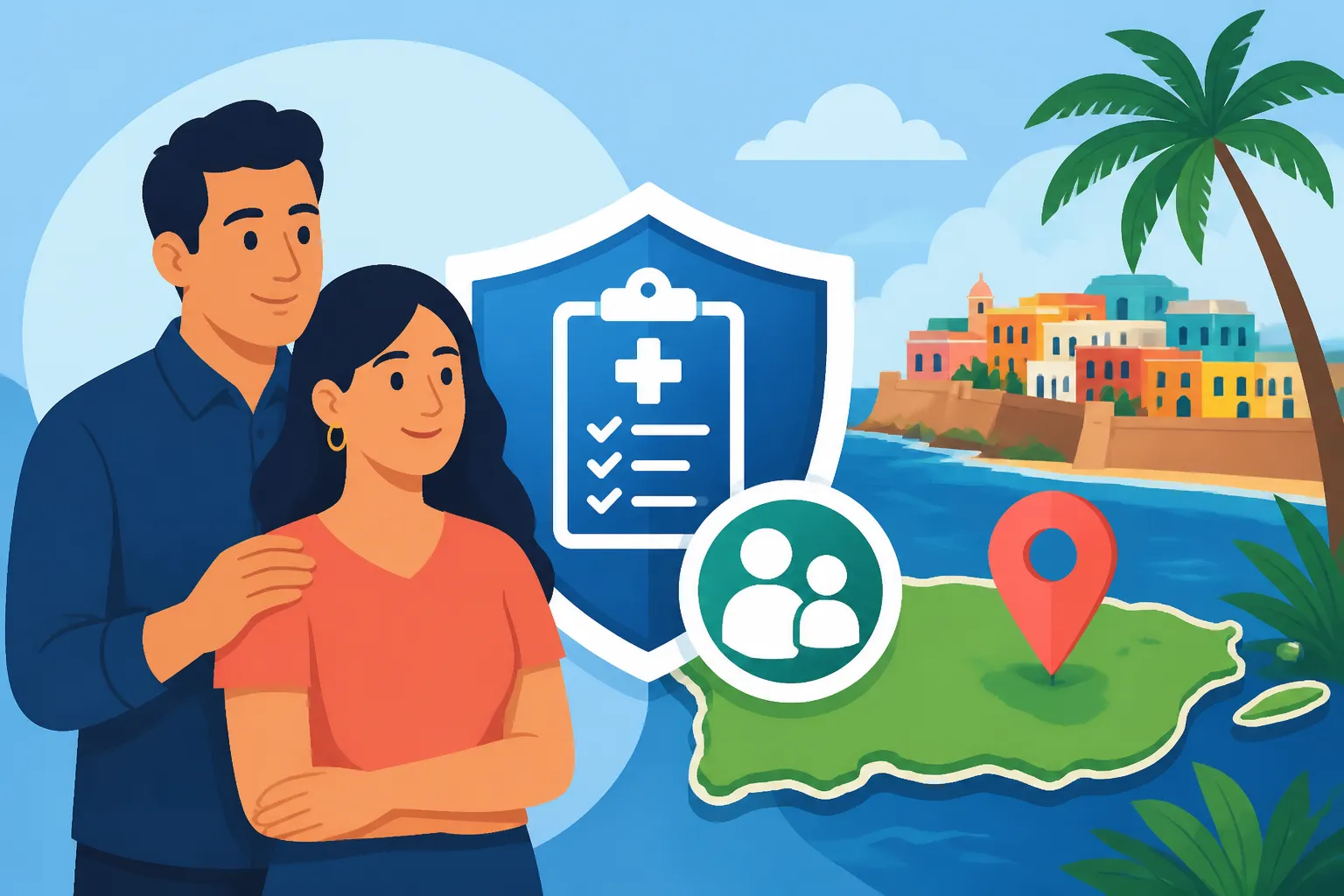
Can I Use My Employer Plan for My Spouse in Puerto Rico?
Figuring out the ins and outs of health insurance when you first move to Puerto Rico can feel like navigating a dense jungle, and adding a spouse to the mix often complicates things even further. You’ve landed a great job, and now you’re wondering if your employer’s health plan will extend to your beloved partner without a mountain of headaches and unexpected costs. This guide will walk you through the realistic landscape of employer-sponsored health coverage for your spouse here on the island, cutting through the confusion and setting clear expectations.
The Nuances of Employer-Sponsored Health Plans in Puerto Rico
When you start a new job in Puerto Rico, one of the first things on your mind, beyond your salary, is often the benefits package. For many expats, ensuring their spouse is covered under their employer's health plan is a top priority. While the general concept might seem straightforward – "my job offers health insurance, so my spouse is covered" – the reality in Puerto Rico has its own unique twists and turns.
Standard Practices for Spousal Coverage
In Puerto Rico, much like on the mainland, most reputable employers offering health benefits will extend coverage options to eligible dependents, including spouses. This is a pretty standard expectation across the board, whether you're working for a large multinational corporation or a significant local business. The core idea is that your employer has a group health plan, and your spouse can be added to this group.
However, "eligible" is the key word here. Typically, eligibility for spousal coverage hinges on a few criteria. First and foremost, you'll need to provide proof of marriage. This usually means a valid marriage certificate. For some, common-law partnerships might be a consideration, but it's less frequently recognized for formal health insurance purposes in Puerto Rico than in some other jurisdictions. You’ll definitely want to clarify this with your employer’s HR department from day one if that applies to your situation. They can tell you exactly what documents and relationship proofs are acceptable.
Enrollment periods are also crucial. You usually have an initial enrollment window when you first start your job – don't miss this! It's often a strict 30-day period. Outside of this initial window, you’ll typically need to wait for the annual open enrollment period, which usually happens towards the end of the year, to make changes or add new dependents. The only exceptions are "qualifying life events" such as getting married, having a baby, or your spouse losing their previous health coverage. These events usually trigger a special enrollment period, allowing you to add your spouse outside of the regular open enrollment. Make sure you report these events to HR promptly, often within 30 or 60 days, as specified by the plan.
Employer Contributions and Employee Costs
Now, let's talk about the money, because that’s where the real conversation often gets interesting. While your employer might offer to cover a substantial portion, or even 100%, of your individual premium, the contribution for dependents, including your spouse, can vary wildly.
It’s not uncommon for an employer to cover, say, 70-100% of the employee's premium, but then only 50% or less of the dependent's premium. Sometimes, they might provide a flat monetary contribution towards family coverage, leaving you to cover the rest. For instance, an employer might cover the first $300 of a family plan, and if your spouse's portion of the premium is $400, you'll be responsible for the remaining $100. This means that while your spouse can be on your plan, it might not be entirely "free" or as subsidized as your own coverage.
Beyond the monthly premiums, you also need to factor in other out-of-pocket costs. These include co-pays for doctor visits and prescriptions, deductibles you have to meet before the insurance starts paying a larger share, and co-insurance percentages. These costs can add up quickly, especially if your spouse has chronic health conditions or requires frequent specialist visits. It's vital to get a full breakdown of the plan’s benefits and costs from your HR department. Ask for the Summary of Benefits and Coverage (SBC) and review it meticulously. Don't be shy about asking direct questions like, "What is the monthly premium for myself and my spouse?" and "What are the deductibles and out-of-pocket maximums for family coverage?" Understanding these details upfront can prevent significant financial surprises down the line.
Navigating Enrollment and Documentation for Your Spouse
Once you’ve confirmed that your employer’s plan can cover your spouse, the next hurdle is actually getting them enrolled. This process, while seemingly simple, requires attention to detail and a keen understanding of the specific documents needed here in Puerto Rico. Missing a deadline or a crucial piece of paperwork can mean delays or even denial of coverage, leaving your spouse exposed.
The Enrollment Process: Step-by-Step
The enrollment process for your spouse typically begins with your initial onboarding. When you first join your company, your HR representative will guide you through all available benefits. This is your prime opportunity to inquire about adding your spouse.
- HR Meeting: Schedule a dedicated time with HR to discuss health benefits. Don't just skim the surface. Ask for all the forms and information packets related to family coverage.
- Form Completion: You'll receive enrollment forms from the insurance carrier (e.g., Triple-S, MCS, Humana Puerto Rico). These forms will require information about both you and your spouse, including personal details, contact information, and sometimes medical history declarations, though the latter is less common for group plans.
- Dependent Information: You'll specifically indicate your spouse as a dependent to be covered.
- Submission Deadlines: Pay extremely close attention to the deadlines! As mentioned, missing the initial enrollment window (often 30 days from your start date) means you typically have to wait until the next open enrollment period, which could be many months away.
- Qualifying Life Events (QLEs): If you're enrolling your spouse after your initial enrollment (e.g., you got married after starting your job, or your spouse lost their own coverage), you'll need to report this QLE to HR within the specified timeframe (usually 30 or 60 days). They will then open a special enrollment period for you. You will need documentation proving the QLE (e.g., marriage certificate, letter of termination of previous coverage).
- Confirmation: Once enrolled, you should receive an insurance card for both yourself and your spouse, along with a confirmation letter detailing your coverage effective dates. Keep these documents safe.
It's a process that demands diligence. I've heard countless stories from folks who got caught up in the excitement of a new job, glossed over the benefits paperwork, and then found themselves scrambling months later when their spouse needed to see a doctor but wasn't properly covered. Remember, HR is there to help, but ultimately, it's your responsibility to ensure all paperwork is submitted correctly and on time.
Essential Documents You'll Need
Having the right documents on hand will make the enrollment process significantly smoother. For adding your spouse to your employer's health plan in Puerto Rico, you'll generally need:
- Marriage Certificate: This is the absolute non-negotiable. It must be an official, government-issued document. If your marriage certificate is from a non-U.S. territory or in a language other than Spanish or English, you might need a certified translation. Always check with HR.
- Spouse's Identification: A valid government-issued ID is required. This could be a Puerto Rico driver's license, a U.S. passport, or a state-issued ID from the mainland. Make sure it's current and clearly shows their legal name.
- Spouse's Social Security Number (SSN): If your spouse has an SSN, they will need to provide it. This is standard for U.S. health insurance plans.
- Proof of Address: Sometimes, the insurer or HR might request proof that your spouse resides at the same address as you. This could be a utility bill (LUMA, AAA), a bank statement, or a lease agreement. This helps establish bona fide residency for tax and insurance purposes.
- Birth Certificates (if adding children): If you're adding children along with your spouse, their official birth certificates will also be required to prove the relationship.
A good tip is to have digital copies of these documents readily accessible, along with physical copies. The bureaucracy can be demanding, and having everything organized from the start will save you a lot of back-and-forth. For new residents, securing some of these documents, like a Puerto Rico driver's license, can take time, so it's best to start gathering everything as soon as you know you're moving.
Understanding Local vs. Mainland Plans and Alternatives
This is where many newcomers face a bit of a culture shock. While Puerto Rico is part of the U.S., its healthcare system, and consequently its insurance plans, operate with a distinct local flavor. Your employer's plan will most likely be tied into this local system.
The "Local-First" Reality for Puerto Rico Employers
When your employer in Puerto Rico offers health insurance, they will almost certainly be contracting with local insurance carriers. These are the big players on the island: Triple-S Salud, MCS Advantage, Humana Puerto Rico, and sometimes others like Plan de Salud Menon. These companies have established networks of doctors, specialists, clinics, and hospitals right here in Puerto Rico.
The critical takeaway here is that these plans are designed for the Puerto Rico healthcare landscape. This means that if your spouse is enrolled in one of these plans, they will primarily have access to providers within Puerto Rico. While many plans offer some form of emergency coverage when traveling off-island, routine care and specialist visits are typically restricted to the local network. This is a huge difference compared to a mainland employer's plan, which might offer extensive nationwide networks.
For example, if your spouse needs to see a specialist, they'll be looking for one within the network of Triple-S or MCS, not necessarily the one they used to see in Florida or New York. The system for How Specialist Referrals Work Under Puerto Rico Health Plans might also be different from what you're used to. This "local-first" reality is why it's so important to fully understand the provider network and coverage details before committing. Don't assume your new employer's plan will act exactly like your old one from the mainland. If you're curious about the broader system, you can learn more about How Puerto Rico's Health System Works: Public vs Private Explained (2027).
When Your Spouse Might Need Separate Coverage
Despite the convenience of adding your spouse to your employer's plan, there are situations where it might not be the best fit, or even feasible. Understanding these scenarios can help you make an informed decision and explore alternatives for your spouse.
- High Dependent Costs: As discussed, the cost to add a spouse can sometimes be prohibitive. If the employer's contribution to dependent coverage is minimal, you might find that purchasing a separate individual plan for your spouse, or exploring a government-subsidized option, is more cost-effective. You can compare options for Health Insurance in Puerto Rico: Plans, Costs and Options Explained (2026).
- Spouse Works Remotely for a Mainland Company: If your spouse works remotely for a company based on the mainland, they might have access to their own employer's plan. While this plan might have limitations for routine care in Puerto Rico, it could offer better benefits or lower costs depending on their employer's policies. It's crucial to understand Does My Mainland Health Insurance Work in Puerto Rico? in such cases.
- Specific Health Needs/Provider Preference: Your spouse might have very specific healthcare needs that are better met by a different plan or a different network. Perhaps they've been seeing a particular specialist that isn't in your employer's plan network, and the cost of out-of-network care is too high.
- Gaps in Coverage: If there's a significant waiting period before your employer's health benefits kick in (which is common, sometimes 30-90 days), your spouse will have a gap in coverage. During this transitional period, it’s absolutely essential to have a safety net. This is where options like travel insurance or short-term health plans come into play. A company like SafetyWing offers flexible, global health insurance that can be a lifesaver during these interim periods, providing coverage for unexpected illness or accidents before your primary plan starts. It’s designed for nomads and expats, so it’s pretty well-suited for those transitional moments when you’re not fully settled with local coverage.
- Eligibility for the Vital Plan: If your household income falls within certain thresholds, your spouse (and family) might qualify for the Vital Plan, Puerto Rico's government-sponsored health insurance program. This is often a very low-cost or no-cost option, particularly if other health insurance is financially out of reach. You can learn more about Understanding the Vital Plan (Government Health Plan) in Puerto Rico (2027).
Here's a quick comparison of coverage types for your spouse:
| Coverage Type | Pros | Cons | Considerations |
|---|---|---|---|
| Employer-Sponsored (Your Plan) | Convenient, often subsidized (employee portion) | Dependent costs can be high, local network focus, less flexibility for individual needs | Understand dependent contribution, network limitations, specific enrollment periods. |
| Individual Private Plan | Tailored to spouse's needs, choice of local networks | Potentially higher premiums if not subsidized, requires separate research and enrollment | Compare costs & benefits against employer plan. Look at local providers like Triple-S, MCS. |
| Government Vital Plan | Very low-cost or no-cost (if eligible) | Strict income eligibility, generally public health system access, may have longer wait times | Check eligibility carefully. Good option for lower-income households. |
| Travel/Short-Term Plan | Flexible, covers gaps in coverage, good for emergencies | Not designed for long-term routine care, may have lower coverage limits | Excellent for temporary coverage (e.g., SafetyWing). Crucial for early relocation periods. |
| Mainland Employer Plan (Spouse's) | Familiarity, potentially robust benefits (if available) | Limited routine care in PR, out-of-network costs for local PR doctors can be very high | Only viable if spouse works remotely for mainland company and plan has some PR coverage. |
Common Challenges and Troubleshooting
Even with the best intentions and meticulous planning, moving to a new place like Puerto Rico always throws a few curveballs. When it comes to something as critical as health insurance for your spouse, anticipating and preparing for potential snags can save you a lot of grief.
Language Barriers and Bureaucracy
This is perhaps one of the most significant frustrations for newcomers to Puerto Rico. While many people in urban centers and the tourism industry speak English, the administrative side of things, including HR departments, insurance companies, and government agencies, often operates primarily in Spanish.
Imagine trying to fill out complex insurance forms, understand detailed benefit explanations, or argue a billing discrepancy when your Spanish isn't fluent. It's enough to make anyone want to pull their hair out. Your HR person might be bilingual, which is a huge help, but not everyone you interact with at the insurance company or clinic will be.
Tips for Overcoming This:
- Bring a Fluent Friend: If you have a friend or colleague who is fluent in both English and Spanish, ask if they can accompany you to important HR meetings or help you review documents. A second pair of eyes and ears, especially linguistically, is invaluable.
- Ask for English-Speaking Representatives: When calling insurance companies or clinics, don't hesitate to politely ask, "Habla inglés?" (Do you speak English?) or "Hay alguien que hable inglés?" (Is there someone who speaks English?). Many larger organizations will have bilingual staff available.
- Prepare Questions in Advance: Write down all your questions in English, and if possible, use an online translator to get the Spanish version. This way, you can point to the Spanish translation if needed and ensure your core queries are understood.
- Be Patient and Persistent: The administrative pace can sometimes feel slower than what you're used to. Things might take multiple phone calls or visits. Stay polite, but be persistent in following up until you get the information and resolution you need.
Navigating these intricacies is part of the expat journey. Don't be afraid to ask for help, and don't feel discouraged if it takes a bit longer than you expected.
What Happens During Gaps in Coverage
The period between leaving your old job/home and your new employer's plan kicking in is a vulnerable time. Many employer plans have a waiting period, typically 30, 60, or even 90 days, before coverage becomes effective. This means that for a period, your spouse could be without any health insurance. And let's be honest, life doesn't wait for your insurance to start. Accidents happen, people get sick, and suddenly you're facing a hefty bill for medical care.
Addressing Gaps in Coverage:
- Negotiate Early Effective Dates: When negotiating your job offer, if possible, try to negotiate for health benefits to start on your first day of employment. Some employers are flexible, especially for high-demand positions.
- COBRA (if applicable): If you're coming from a mainland U.S. employer, you might have the option to elect COBRA coverage. While expensive, it provides continuity of coverage. However, COBRA is a federal program and might not be applicable if your previous employer wasn't subject to it or if you're transitioning from a non-U.S. plan.
- Short-Term Health Insurance or Travel Insurance: This is often the most practical solution for gaps. Companies like SafetyWing specialize in flexible, short-term plans that can cover you and your spouse for medical emergencies and unexpected illnesses while you're in transition. These plans are usually more affordable than COBRA and can provide immense peace of mind. They aren't meant for routine check-ups or pre-existing conditions (so read the fine print!), but they are excellent for those "what if" scenarios.
- Budget for Out-of-Pocket Costs: If, despite your best efforts, your spouse has a temporary gap in coverage, make sure you have an emergency fund set aside. Even a simple urgent care visit or a course of antibiotics can run into hundreds of dollars without insurance. For a deeper dive into the costs of care without insurance, you might want to read How Much Does a Private Doctor Visit Cost in Puerto Rico?.
- Be Proactive: Don't wait until your spouse gets sick. Have a plan in place before you even move. Know exactly when your new coverage starts and what options you have for interim periods. This proactive approach can alleviate a tremendous amount of stress and protect your finances. If you're concerned about What Happens If I Get Sick Before My Insurance Starts in Puerto Rico?, definitely look into temporary solutions.
Moving to Puerto Rico is an adventure, but like any adventure, it comes with its challenges. Being prepared for the health insurance landscape, especially for your spouse, will help ensure a smoother transition and greater peace of mind for your entire family.
Disclaimer
The information provided in this article is intended for general informational purposes only and does not constitute professional medical, legal, financial, or insurance advice. While we strive to provide accurate and up-to-date information, regulations and policies regarding health insurance in Puerto Rico can change. It is essential to consult with your employer's HR department, a qualified insurance agent, or a legal professional for advice tailored to your specific situation before making any decisions related to health insurance or relocation. We are not responsible for any actions taken based on the information presented herein.