How to Access Mental Health Services in Puerto Rico
Moving to a tropical paradise like Puerto Rico is often portrayed as a dream, but the reality of relocating can bring intense stress, isolation, and administrative headaches that take a toll on your well-being. Finding reliable mental health support shouldn't be another source of anxiety. This guide provides a clear roadmap for navigating the local system, securing providers, and understanding your coverage options.
The Landscape of Mental Health Care in Puerto Rico
The mental health system in Puerto Rico is a complex mix of public initiatives, private clinics, and independent practitioners. For many newcomers, the first hurdle is simply understanding where the "system" begins and ends. Unlike some mainland states where mental health services are integrated into large hospital networks, Puerto Rico often relies on specialized centers or independent offices that require a bit more legwork to find.
Understanding the System Public vs Private
The divide between public and private care is significant here. The public sector is largely overseen by the Administration of Mental Health and Anti-Addiction Services (ASSMCA). They manage the island's crisis lines and public clinics. For many residents, especially those on the government's Vital plan, these services are the primary point of entry. You can learn more about how this fits into the broader picture in our guide on How Puerto Rico's Health System Works: Public vs Private Explained (2027).
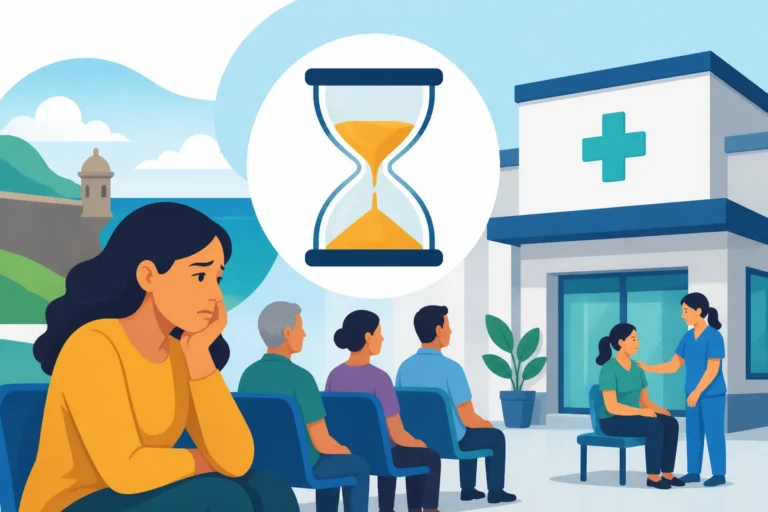
The private sector, on the other hand, consists of psychologists, psychiatrists, and licensed clinical social workers (LCSWs) who either take private insurance or work on a cash-pay basis. The private sector generally offers shorter wait times and a wider selection of specialists, but the costs can add up if you aren't properly covered. If you are just starting your journey, it is helpful to review Navigating the Puerto Rico Healthcare System: A Newcomer's Roadmap (2027) to understand how these two worlds interact.
Cultural Nuances and the Stigma Factor
While the island has made great strides in recent years, mental health remains a somewhat sensitive topic in traditional Puerto Rican culture. There is a strong emphasis on "resilience" and family support, which can sometimes lead to a delay in seeking professional help. As an expat, you might find that while your neighbors are incredibly friendly, they may not openly discuss therapy or psychiatry.
However, the medical community itself is highly professional and follows U.S. standards of care. Most practitioners are trained in both local cultural competencies and mainland clinical practices. This dual perspective is often beneficial for newcomers who are dealing with "culture shock" or the specific grief associated with moving away from family. Understanding that Is Mental Health Treatment Confidential in Puerto Rico? is a common concern, rest assured that HIPAA laws apply here exactly as they do in the states.
Language Barriers and Finding English Speaking Providers
One of the most frequent questions I get from the community is, "Can I find a therapist who actually understands me?" While Spanish is the primary language of the island, a vast majority of medical professionals are bilingual. They have often completed part of their residency or specialized training in the mainland U.S.
The challenge usually isn't the doctor; it's the administrative staff. When calling a clinic, you might encounter a receptionist who only speaks Spanish. Don't let this discourage you. Knowing How to Find an English-Speaking Doctor in Puerto Rico involves a bit of patience and perhaps a few translated phrases to get past the initial phone call. Once you are in the room with the specialist, the language barrier usually melts away.
Navigating Health Insurance and Mental Health Coverage
Insurance is the most frustrating part of the Puerto Rican administrative experience. Whether you are coming with a mainland plan or looking to enroll in a local one, the rules for mental health coverage (salud mental) can be opaque.
Private Local Plans and Mental Health Sub networks
Most major local insurers like Triple-S, MCS, and First Medical have specific sub-networks for mental health. For instance, many plans use a third-party administrator like APS Healthcare to manage their mental health benefits. This means that even if your primary doctor is in a certain network, your therapist might be managed by a completely different entity.
Before booking, you must verify if your plan requires a referral. Often, you need to see your primary care physician first to get a "green light" for mental health services. This is a common step, and understanding How Specialist Referrals Work Under Puerto Rico Health Plans can save you a lot of time and denied claims. For those who are still in the process of choosing a provider, checking Health Insurance in Puerto Rico: Plans, Costs and Options Explained (2026) is essential to ensure mental health isn't a neglected "add-on" to your policy.
Using Mainland Insurance and SafetyWing
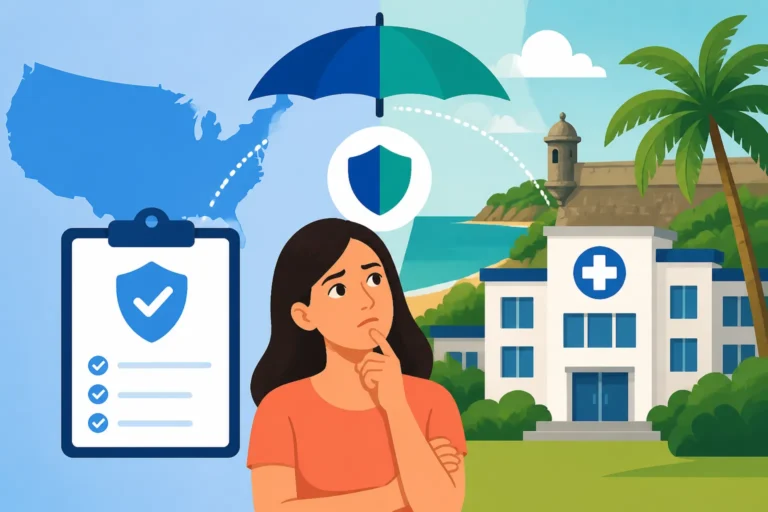
A common mistake newcomers make is assuming their mainland U.S. PPO will work seamlessly here. While some providers accept "Blue Cross Blue Shield" or "UnitedHealthcare," many local mental health clinics are not set up to bill these mainland entities directly. You may be required to pay the full fee upfront and then file for reimbursement yourself.
For digital nomads or those in the "liminal space" of moving, SafetyWing can be a lifesaver. While standard travel insurance focuses on emergencies, products like SafetyWing’s Nomad Health provide more comprehensive coverage that can act as a bridge while you establish residency. It’s particularly useful for those who haven't yet qualified for local plans or for those who frequently travel back to the mainland. SafetyWing often provides a smoother claims process for international lifestyles than trying to force a mainland-only state plan to work in a Caribbean territory.
Out of Pocket Costs and Sliding Scales
If you choose to bypass insurance altogether—which many expats do to ensure maximum privacy and faster access—you can expect to pay anywhere from $80 to $200 per session for a private psychologist in areas like San Juan or Dorado. Psychiatrists, who can prescribe medication, generally charge more for the initial evaluation.
Many clinics offer a "sliding scale" (escala móvil) based on your income, though this is more common in community centers than in high-end private practices in Condado. If you are concerned about the financial burden, checking The Cost of Healthcare in Puerto Rico: A Complete Breakdown for Newcomers (2026) will help you budget effectively for long-term care.
| Service Type | Estimated Cost (Out-of-Pocket) | Wait Time | Primary Focus |
|---|---|---|---|
| Private Psychologist | $80 – $150 per session | 1 – 3 weeks | Talk therapy, CBT, EMDR |
| Private Psychiatrist | $150 – $300 (Initial) | 2 – 6 weeks | Medication management |
| Community Clinic (CDT) | $0 – $40 (Sliding Scale) | Walk-in / 4+ weeks | Basic counseling, Crisis |
| Telehealth (Apps) | $60 – $100 per session | 24 – 48 hours | Convenience, General support |
Where to Find Help: Types of Facilities
Puerto Rico doesn't have a single "Mental Health Hub," but rather clusters of care. Depending on whether you need a weekly check-in or more intensive support, you’ll look in different places.
Private Practitioners and Group Practices
In San Juan, you will find several group practices that cater specifically to professionals and the expat community. Neighborhoods like Santurce, Hato Rey, and Guaynabo have the highest density of mental health offices. These group practices are often the easiest to navigate because they have multiple specialists under one roof, making it easier to switch if you don't "click" with your first therapist.
If you are specifically looking for medication, you might find it easier to start by asking, How Do I Find a Psychiatrist in San Juan? Many psychiatrists here work in small, private offices rather than large hospitals. It’s also worth noting that many psychologists work closely with these psychiatrists to co-manage your care, ensuring that your talk therapy and medication are aligned.
Hospitals and Specialized Mental Health Facilities
For more acute needs, Puerto Rico has several dedicated psychiatric hospitals and units within general hospitals. Facilities like the San Juan Capestrano Hospital are well-known across the island for providing inpatient and intensive outpatient programs (IOP).
If you are facing a crisis that requires immediate stabilization, knowing which hospitals have the best psychiatric emergency rooms is vital. Often, a general emergency room will stabilize you and then transfer you to a specialized facility. For more on choosing the right facility, see our guide on The Guide to Choosing a Private Hospital in Puerto Rico. Remember that in an emergency, you should always utilize the local emergency infrastructure.
Support Groups and Community Care
Sometimes, you don't need a clinical setting; you need a community. There are several NAMI (National Alliance on Mental Illness) chapters in Puerto Rico that offer support groups in both English and Spanish. Additionally, the expat community often organizes informal "coffee meetups" or wellness retreats in towns like Rincon and Luquillo.
These community-based options are excellent for addressing the "isolation" aspect of moving. Living in a new culture can feel lonely, and talking to others who have navigated the same hurdles can be just as therapeutic as a formal session. If you are on the government health plan, you might also look into Understanding the Vital Plan (Government Health Plan) in Puerto Rico (2027) to see what community wellness programs are available to you.
Crisis Support and Emergency Services
If you or someone you know is in an immediate mental health crisis, you need to know exactly who to call. The systems in Puerto Rico are robust but function differently than on the mainland.
The PAS Line and 9-8-8
Puerto Rico operates the Línea PAS (Programa de Ayuda Sicosocial), which is available 24/7. This is the island’s primary crisis hotline, staffed by professionals who can help with everything from depression to suicidal ideation. You can reach them at 1-800-981-0023.
Additionally, the national 9-8-8 Suicide & Crisis Lifeline is fully operational in Puerto Rico. When you dial 9-8-8 from a local area code, you are routed to local crisis centers. These services are free, confidential, and available in both languages. They are an essential resource for anyone who feels overwhelmed by the pressures of relocation or personal trauma.
Emergency Hospital Admissions
In the event of a severe crisis, you may need to visit a "Sala de Emergencia Psiquiátrica." Unlike a standard ER, these are specifically designed to handle mental health breaks. San Juan Capestrano and the University of Puerto Rico's psychiatric units are the primary destinations for these needs.
It is a good idea to have your insurance information and a list of current medications ready at all times. If you are covered by SafetyWing, keep your digital ID card easily accessible on your phone, as this can speed up the intake process if you are being admitted to a private facility. For more details on what to expect in these situations, consult Emergency Medical Care in Puerto Rico: What Every Resident Needs to Know.
Telehealth and Digital Options
Since the pandemic, telehealth has exploded in Puerto Rico. Many local doctors now use platforms like Diversaview or simple Zoom calls to conduct sessions. This is a game-changer for those living in more remote areas like the mountains of Utuado or the islands of Vieques and Culebra.
Telehealth allows you to maintain a consistent schedule even if you are traveling. It also opens up the possibility of seeing a therapist based in San Juan while you are sitting on your balcony in Rincon. When considering this route, ask your provider if Can I Get Counseling or Therapy in Puerto Rico? via telehealth is covered by your specific insurance plan, as some still have "in-person" requirements for certain types of billing.
Specialized Mental Health Needs
Not all mental health journeys are the same. Some require specialized care that goes beyond general counseling, particularly for families and those struggling with addiction.
Services for Children and Adolescents
If you are moving with a family, finding a pediatrician who understands mental health is a great first step. Children often experience the "move" as a significant trauma or loss. There are specialized child psychologists and psychiatrists on the island, though they are in high demand.
The school system also plays a role here. Private schools in Puerto Rico often have robust counseling departments that can help transition your child into their new environment. If you are looking for specific providers, you might start by researching How Do I Find a Pediatrician in Bayamon? or other metropolitan areas where child specialists tend to congregate.
Addiction and Substance Abuse Recovery
Puerto Rico has a wide network of recovery resources, including AA and NA meetings that are held in English in areas with high expat populations (like San Juan and Rincon). ASSMCA also provides public detox and rehabilitation services.
For those looking for private, luxury, or "resort-style" rehab, there are fewer options on the island compared to Florida or California, but several high-quality private clinics offer intensive outpatient care. When dealing with these issues, it is critical to know What Health Plans Cover Pre-Existing Conditions in Puerto Rico? to ensure that your path to recovery is financially sustainable.
Support for the Expat and Digital Nomad Community
Digital nomads face a unique set of mental health challenges: the lack of a "home base," the pressure to be constantly productive while "on vacation," and the difficulty of forming deep roots.
Using a service like SafetyWing is often popular in this community because it understands the transient nature of the lifestyle. Beyond insurance, many nomads find that joining co-working spaces in Santurce or Dorado provides the social structure needed to stave off the "nomad blues." Mental health in Puerto Rico isn't just about doctors; it's about building a sustainable life on the island.
Practical Steps to Booking Your First Appointment
Ready to take the first step? Here is how to actually get your foot in the door without losing your mind in the process.
- Check Your Insurance: Call the number on the back of your card and ask specifically for "Salud Mental." Ask if they use a provider like APS Healthcare.
- Gather Your Docs: You will likely need a photo ID and your insurance card. If you are a new resident, having your What Documents Do I Need to See a Doctor in Puerto Rico? ready will prevent delays.
- The "Scouting" Call: When you call a clinic, ask "Habla Inglés?" (Do you speak English?). If they don't, ask if there is someone in the office who does. Be patient; the medical system here moves at a different pace.
- Verify the Referral: Ask the clinic if they require a referral from a Primary Care Physician (PCP). If they do, book that PCP appointment first.
- Consider Telehealth First: If wait times are long, ask if an initial telehealth consultation is available. This can often happen much faster than an in-person visit.
- Safety Net: If you are between plans or your mainland plan is failing you, consider a nomad-friendly option like SafetyWing to ensure you have coverage for any unexpected crises during your transition period.
Moving to Puerto Rico is a marathon, not a sprint. Taking care of your mental health is the "fuel" that will help you finish the race. Don't wait until you are in a crisis to start looking for a provider. Start your research today so that when the "island stress" inevitably hits, you already have a professional in your corner.
Disclaimer
This guide is for informational purposes only and does not constitute medical or legal advice. Mental health needs are highly individual; please consult with a licensed healthcare professional regarding your specific situation. If you are experiencing a life-threatening emergency, please call 9-1-1 or the PAS line at 1-800-981-0023 immediately. The author and this website are not responsible for the services provided by any third-party organizations mentioned.