Can a US Citizen Live in Puerto Rico Without a Visa?
Oh, the question of visas for U.S. citizens moving to Puerto Rico! It’s one of the first things that pops into everyone's head, often leading to a mixture of confusion and relief. Trust me, when I first started exploring the idea of making this beautiful island my home, I had a million questions swirling around, half of them about paperwork and permissions. This guide is here to clear the air, confirm the straightforward answer, and then delve into the real administrative journey that awaits you beyond that initial "yes."
The Simple Answer: No Visa Required for US Citizens
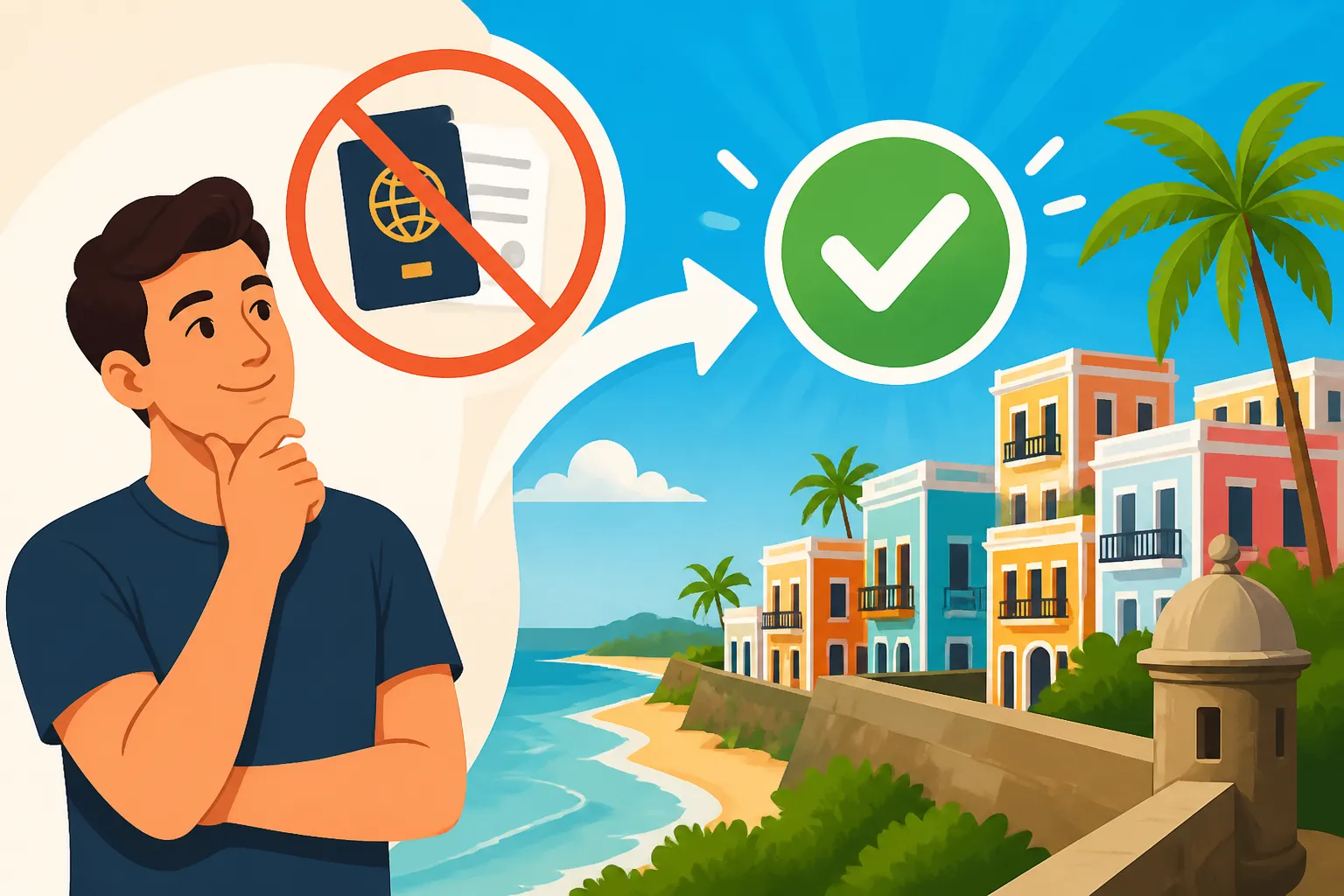
Let's cut right to the chase, because I know you're eager for this: As a U.S. citizen, you absolutely do not need a visa or a passport to live, work, or establish residency in Puerto Rico. Period. Full stop. Puerto Rico is a U.S. territory, and its residents are U.S. citizens. This fundamental fact simplifies what would otherwise be a monumental undertaking, removing the complex immigration hurdles that come with moving to a foreign country.
What US Citizenship Means for Your Move
Being a U.S. citizen moving to Puerto Rico is essentially like moving from, say, California to Florida, or New York to Texas. You retain all your constitutional rights, your citizenship status, and your ability to move freely within the United States and its territories. This means no lengthy visa applications, no interviews at an embassy, no worries about sponsorship or complex immigration forms. You can pack your bags, hop on a plane, and land here without any customs or immigration checks beyond standard TSA security. It's a huge relief, especially for those of us who have friends who've navigated the visa maze for other countries – that alone can take months, sometimes years, and cost a small fortune. For us, it's just not a factor, and that's a blessing many don't fully appreciate until they start comparing relocation experiences.
The Contrast with Foreign Nationals
Now, this freedom is a stark contrast to the experience of foreign nationals who wish to live in Puerto Rico. For non-U.S. citizens, the process is exactly the same as if they were moving to any U.S. state. They would need to secure the appropriate U.S. visa (e.g., work visa, family visa, investor visa) or Green Card, follow federal immigration laws, and undergo all the stringent processes managed by U.S. Citizenship and Immigration Services (USCIS). They face extensive background checks, prove financial stability, and adhere to specific visa categories and quotas. This distinction really highlights the unique position U.S. citizens are in when considering a move to our lovely island. While you and I can just show up, a foreign national needs to secure all the necessary permissions well in advance, and those can be incredibly tough to obtain. It's truly an apples-and-oranges comparison.
Beyond the "No Visa": Establishing Bona Fide Residency
While the visa question is straightforward, don't mistake "no visa" for "no paperwork." The real challenge, and the true administrative journey, begins when you need to establish "bona fide residency" in Puerto Rico. This isn't about immigration; it's about proving to the U.S. federal government and the Puerto Rico Treasury Department (Hacienda) that you genuinely intend to make Puerto Rico your permanent home. This is especially crucial for anyone looking to benefit from the island's tax incentive laws, like Act 60, but it's important for everyone who wants to fully integrate into the local system.
Understanding the Three Residency Tests
The IRS has three main tests to determine bona fide residency, and you need to satisfy all of them. This isn't a quick checkbox exercise; it requires a genuine commitment and tangible actions.
The Presence Test
This one's pretty simple on paper: you must be present in Puerto Rico for at least 183 days during the tax year. However, "simple on paper" and "simple in reality" are two different beasts! This isn't just about showing up; it's about documenting your presence. Keep meticulous records of your travel – flight itineraries, ferry tickets, even hotel stays if you're house-hunting. Every time you leave the island, for even a quick weekend trip, that counts against your 183 days. I recommend a spreadsheet, friends, or a dedicated app to track your days in and out. It might sound excessive, but believe me, when Hacienda asks, you want to have concrete proof. It's easy to lose track, especially when you're caught up in the excitement of a new place and exploring the surrounding islands. You don't want to find yourself scrambling at tax time, trying to remember if that trip to St. Thomas was in March or April!
The Tax Home Test
Your "tax home" generally refers to your main place of business or employment, regardless of where you maintain your family home. To pass this test, your tax home must be in Puerto Rico for the entire tax year. This means if you're employed, your principal place of work needs to be on the island. If you're self-employed or a business owner, your primary business operations should be based here. For remote workers, this means clearly demonstrating that your center of operations is Puerto Rico – setting up a dedicated home office, registering your business locally if applicable, and ensuring your employment contracts reflect Puerto Rico as your base. This also implies not having a principal place of business in the mainland U.S. You can't just be living here while your main economic activity is clearly anchored somewhere else. For those with complex financial situations or businesses spanning multiple locations, it’s really vital to consult with a tax professional who understands both U.S. federal and Puerto Rico tax laws. This isn't something to guess at.
The Closer Connection Test
This is often the most subjective test, and in many ways, the most important for truly feeling like a resident. It asks where you have a "closer connection" to, and it looks at a whole host of factors beyond just physical presence. This is where you really need to plant roots. Think about changing your driver's license to Puerto Rico, registering to vote here, enrolling your children in local schools, joining community groups, opening bank accounts with local institutions like Banco Popular or Oriental Bank, changing your mailing address, and even transferring your professional licenses if applicable. The more ties you sever with your previous mainland residence and establish here, the stronger your case. It's about demonstrating intent and actual integration. You need to show that your life is truly centered in Puerto Rico. For example, if you're still getting all your mail at your old mainland address, keeping your mainland voter registration, and your main social circle is still primarily off-island, you might have a hard time proving a "closer connection" to Puerto Rico, even if you meet the 183-day rule. Remember, it's about quality and quantity of connections. Check out our detailed guide on How to Establish Bona Fide Residency in Puerto Rico (2027) for more on this.
Practicalities of Your Move: What to Prepare For
Okay, so the visa isn't a headache. Great! But the move itself still requires careful planning, especially if you're relocating your entire life from the mainland. From utilities to banking, there's a whole new system to navigate.
Document Checklist for Your New Life
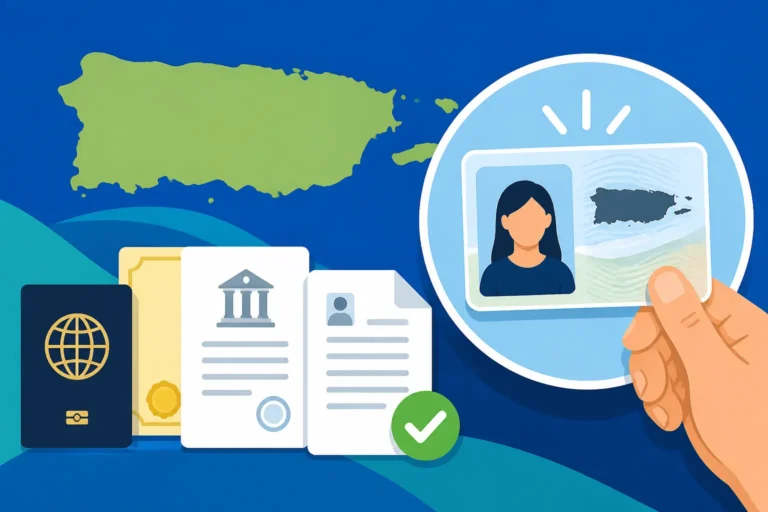
Even without a visa, you'll need a robust set of documents to establish your new life here. Think of it as building your new identity from the ground up on the island.
| Document Type | Purpose | Where to Obtain/Use |
|---|---|---|
| Official IDs | Driver's License/State ID (PR), Social Security Card, Birth Certificate, U.S. Passport (useful for travel outside PR). | CESCO (Puerto Rico's DMV equivalent), Social Security Administration (federal), your local municipality for birth cert. |
| Proof of Residency | Utility bills (LUMA, AAA), Lease Agreement/Property Deed, Bank Statements, Voter Registration (PR), School Enrollment Records. These help establish your "Closer Connection." | Utility providers, landlord/seller, local banks, Comisión Estatal de Elecciones (State Elections Commission), local schools. |
| Financial Records | Bank statements (mainland and new PR accounts), Credit Reports, Tax Returns (past 2-3 years), Employment Verification/Offer Letter, Pay Stubs, Investment Account Statements. | Your current banks, credit agencies, IRS (federal), Hacienda (PR), employer. |
| Medical Records | Vaccination records, full medical history, current prescriptions, dental records. Essential for setting up new healthcare. | Your previous doctors, pharmacies, and dentists. |
| Vehicle Documents | Car title, registration, proof of insurance, driver's history. Needed for registering a car in PR and transferring your license. | Your previous state's DMV, insurance provider, CESCO. |
| Other Important Docs | Marriage Certificate, Divorce Decrees, Children's Birth Certificates, Pet Vaccination Records, School Transcripts. | Relevant government agencies, vets, schools. |
Gathering these documents before you arrive will save you immense headaches. Make copies, keep digital backups, and have the originals securely organized. You'll thank yourself later when you're dealing with a government office that asks for something obscure.
Moving Logistics and Initial Setup
This is where the rubber meets the road. Moving to an island presents unique logistical challenges compared to a cross-country move on the mainland. You'll need to think about shipping your belongings, setting up utilities, and finding a place to live.
Shipping Your Belongings
Deciding what to bring and how to ship it is a major undertaking. Will you ship a car? How much furniture? Many people find it easier to sell most of their bulky furniture and buy new or used items on the island, given the cost and complexity of shipping. For those considering shipping their entire household, getting multiple quotes from reputable moving companies is essential. Platforms like Sirelo can be incredibly useful for comparing options and finding movers experienced with the mainland-to-Puerto Rico route. They can help you understand the nuances of ocean freight, customs declarations (even though it's domestic, there are still processes), and delivery on the island. Remember, lead times can be longer than a mainland move, so plan well in advance. And prepare for a few bumps and bruises on some items – it's just the reality of shipping.
Setting Up Utilities and Services
Once you've secured your new home, the next big hurdle is getting your utilities connected. This includes electricity (LUMA Energy), water (Autoridad de Acueductos y Alcantarillados, or AAA), and internet/cable. The process can sometimes be a test of patience, often involving visits to physical offices, long wait times, and needing specific documents like your lease agreement or property deed, and a valid ID. It's often helpful to have a local friend or a bilingual contact assist you, especially if your Spanish isn't quite fluent yet. I remember my first time trying to set up LUMA, and it was a saga, to say the least! The systems are improving, but expecting a smooth, instant connection like you might on the mainland can lead to frustration. Be proactive, call ahead, and have all your paperwork in order. For more detailed steps, check out our guide, The Newcomer's Guide to Setting Up Utilities (LUMA/AAA) in Puerto Rico.
Banking and Financial Transition
Opening a local bank account is a critical step in establishing your financial footprint in Puerto Rico. While you can certainly use your mainland bank accounts for a while, having a local account with institutions like Banco Popular or Oriental Bank makes everyday life much smoother. It simplifies bill payments, direct deposits for local employment, and using local payment apps like ATH Móvil, which is ubiquitous here. You'll typically need a valid ID (your new Puerto Rico driver's license once you get it!), proof of address (a utility bill is perfect for this), and your Social Security number. The process is generally straightforward but might take a bit longer than you're used to, with a few more forms to fill out.
Life on the Island: Adjusting to Your New Home
Moving to Puerto Rico, even without the visa hassle, is a significant cultural and lifestyle shift. It’s not just a change of scenery; it's a new way of life that requires an open mind and a good dose of patience.
Embracing the Culture and Language
While English is widely spoken in tourist areas and business circles, especially in San Juan, Spanish is the dominant language and the language of daily life. Making an effort to learn and use Spanish will significantly enrich your experience, ease administrative tasks, and help you connect with the local community. Don't be shy about practicing! Puerto Ricans are generally very welcoming and appreciate the effort. Beyond language, you'll encounter a vibrant culture with a slower pace of life, strong family ties, and a deep appreciation for music, food, and celebration. Embrace the relajo (relaxed atmosphere) and resolviendo (finding a way to make things work) mentality. Things might not always happen on "mainland time," and that's just part of the charm – and sometimes, the challenge!
Navigating Healthcare and Services
One area where many newcomers have questions is healthcare. As a U.S. citizen, you're still part of the U.S. federal healthcare system. However, specific plans and networks might differ. You'll want to explore your options, whether it's understanding Health Insurance in Puerto Rico: Plans, Costs and Options Explained (2026) or looking into private plans. Some expats opt for international health insurance providers like Cigna Global if they travel frequently or want specific types of comprehensive coverage, even though many local and U.S. national plans are available. It's crucial to understand how specialist referrals work, what your co-pays and deductibles will be, and how to find English-speaking doctors if that's a priority for you. Don't wait until you're sick to figure this out! Our comprehensive guide on The Complete Guide to Healthcare in Puerto Rico for New Residents (2027) is a great starting point.
Getting Around: Driving and Transportation
Getting your Puerto Rico driver's license is one of the first things you should tackle. You can usually transfer your mainland license within a certain timeframe, but it's a crucial step for establishing your bona fide residency and for daily life. The process involves a visit to CESCO (Centro de Servicios al Conductor), which can be an experience in itself – prepare for lines and potentially multiple visits. Having a car is almost a necessity outside of very specific urban areas like parts of San Juan where the Tren Urbano exists. Public transportation options are limited, and the island is best explored by car. Be prepared for aggressive driving styles, narrow roads, and a different set of road rules and etiquette than you might be used to. Check out our detailed article, Driving in Puerto Rico: Licenses, Registration and Rules for Newcomers (2027), to prepare yourself.
Conclusion: A New Chapter Awaits
So, can a U.S. citizen live in Puerto Rico without a visa? An emphatic "yes!" This is your golden ticket to experiencing Caribbean life while retaining your U.S. citizenship benefits. However, don't let the lack of immigration hurdles lull you into thinking it's just like moving to the next state over. There's a whole new world of administrative processes, cultural adjustments, and logistical challenges waiting for you.
Establishing bona fide residency, navigating local bureaucracy, and truly integrating into island life requires patience, persistence, and a willingness to embrace the unique rhythm of Puerto Rico. But for many of us who have made the leap, the rewards – the vibrant culture, the stunning natural beauty, the warmth of the people, and the chance to live a different kind of life – far outweigh the initial bumps in the road. Welcome to the adventure!
Disclaimer
The information provided in this guide is for general informational purposes only and does not constitute legal, tax, or professional advice. While we strive to provide accurate and up-to-date information, laws, regulations, and procedures in Puerto Rico can change frequently. Readers are strongly advised to consult with qualified legal, tax, and relocation professionals for advice tailored to their specific situation before making any decisions related to moving to or establishing residency in Puerto Rico.