Understanding the Documents Needed to Move to Puerto Rico
Moving to Puerto Rico, with all its promises of sunshine and vibrant culture, can feel like a dream, but let's be real: the administrative side of things can quickly turn that dream into a bureaucratic labyrinth. One of the biggest hurdles newcomers face is figuring out exactly which documents they need, and trust me, it’s not always straightforward. This guide is here to untangle that mess, giving you a clear, empathetic roadmap to gather all the essential paperwork for a smooth transition to our beautiful island.
Essential Personal Identification and Civil Records
When you first arrive, or even when you're just starting to plan your move, your personal identification documents are your absolute bedrock. These aren't just for showing at the airport; they're the foundational pieces for everything from setting up utilities to getting your driver's license. Without these in order, you'll hit roadblocks at every turn, and believe me, you want to minimize those.
Valid Photo Identification and Birth Certificates
Your primary forms of identification are non-negotiable. Think of these as your golden tickets to proving who you are. For U.S. citizens, this typically means a valid U.S. passport or an enhanced driver's license, alongside your original birth certificate. While Puerto Rico is a U.S. territory, and many things operate under federal guidelines, local agencies often require original documents or certified copies for verification. Don't be surprised if the local CESCO office, for instance, asks for your original birth certificate even if you've been using a passport for years. It’s their way of cross-referencing, and while it might seem redundant, it’s just how things are done here. Make sure any birth certificates are official, certified copies – photocopies, even notarized ones, often won't cut it for critical processes like getting a local ID.
It's also a smart move to have certified copies of your marriage certificate, divorce decrees, or any official name change documents if applicable. You might not think you'll need them, but when you're trying to update your last name on a utility bill or a bank account, they become incredibly important. Imagine showing up to a bank, ready to open an account, only to find out you can't because your name on your passport doesn't perfectly match your maiden name on your birth certificate without a marriage certificate to bridge the gap. That’s a common frustration, and one you can easily avoid by having everything meticulously organized from the start.
Social Security Card and Other Federal IDs
Your Social Security card is another critical piece of identification. While you might keep it tucked away for years on the mainland, here in Puerto Rico, you'll find yourself needing it more often than you expect. It's essential for employment, tax purposes, and even some government services. When you interact with agencies like Hacienda (Puerto Rico's Treasury Department) or apply for any form of assistance, your Social Security Number (SSN) is a key identifier.
Beyond your SSN, having other federal IDs like a Real ID-compliant driver's license or state ID from the mainland can be helpful. While you'll eventually want to get a Puerto Rico driver's license or a local non-driver ID, these initial federal IDs serve as strong proof of identity and citizenship during your first few weeks or months. For instance, when you're trying to figure out "The Newcomer's Guide to Opening a Bank Account in Puerto Rico", having these various forms of ID can make the process smoother. The more official, government-issued IDs you can present, the less likely you are to encounter skepticism or delays, which can be a real blessing in a new environment. Keep these documents in a secure, waterproof pouch, and always have scanned digital copies stored safely in the cloud, just in case.
Documents Proving Your Intent to Establish Residency
Moving to Puerto Rico isn't just about showing up with your bags; it's about establishing a new life and, critically, a new legal residency. This distinction is vital for everything from taxes to accessing local services. Proving your intent to make Puerto Rico your permanent home involves more than just physically being here; it requires a paper trail that demonstrates your deeper connection to the island.
Proof of Domicile and Presence
To truly establish residency for tax purposes and to fully integrate, you'll need to demonstrate both physical presence and the intent to make Puerto Rico your permanent home – what the IRS refers to as "bona fide residency." The most straightforward way to do this is to keep meticulous records of your time on the island. This means saving airline tickets, boarding passes, and even rental car receipts that show your arrival dates. When it comes to proving you've passed the 183-day rule, these small pieces of paper become invaluable.
Beyond physical presence, proving domicile is about showing a "closer connection" to Puerto Rico than to any other place. This includes mundane but crucial documents like utility bills in your name, a local address, and voter registration. Seriously, having your electricity bill from LUMA or your water bill from AAA in your name is a powerful piece of evidence. This is especially true when you're exploring how to establish bona fide residency in Puerto Rico, where every piece of evidence counts. Remember, the more ties you cut with your previous residence and the more you establish here, the stronger your case for bona fide residency becomes.
Lease Agreements or Property Deeds
Your housing situation is perhaps the most significant piece of evidence for establishing domicile. Whether you're renting or buying, your lease agreement or property deed is paramount. A long-term lease (say, a year or more) demonstrates a clear commitment to living on the island, rather than just an extended visit. Make sure your lease agreement is officially signed, dated, and ideally, if it's for an apartment in a managed building, it should be a standard Puerto Rico lease. If you’ve decided to buy a piece of paradise, your property deed (escritura) is even stronger proof.
These documents are not just for showing your landlord or the bank. They are frequently requested by government agencies, schools, and even when setting up your internet service. They show a verifiable, long-term commitment to a physical address here. So, when you're looking for that perfect spot in Condado or Rincon, make sure you get all your rental paperwork in order. This is a crucial step for setting down roots and showing that you're not just passing through.
Financial Preparedness and Tax Documents
Financial stability is key to a smooth move, and getting your financial documents in order is a major part of that. Puerto Rico has its own tax system, separate from the mainland U.S. in many aspects, so understanding what you need to declare and where is vital. This section dives into the documents that will help you manage your money and navigate the local tax landscape.
Bank Statements and Proof of Funds
Opening a bank account in Puerto Rico can sometimes be a bit of a dance, especially as a newcomer. Local banks like Banco Popular or Oriental Bank often require a few months' worth of bank statements from your mainland accounts to prove your financial history and source of funds. This is part of their due diligence and anti-money laundering regulations. So, bring statements that show a consistent financial flow and a reasonable balance.
Beyond just opening an account, having proof of funds is essential if you're planning on a significant purchase, like buying a home, or if you're coming to the island under the Act 60 incentives. These documents demonstrate your ability to support yourself and contribute to the local economy. It’s also wise to have a letter of good standing from your previous bank, vouching for your account history. This can help build trust with new financial institutions and demonstrate that you are a reliable client. For a deeper dive, check out "The Newcomer's Guide to Opening a Bank Account in Puerto Rico".
Previous Tax Returns and Employer Information
Navigating the tax system here can be confusing, especially if you’re transitioning mid-year. You'll definitely want to have copies of your last few years' federal tax returns (Form 1040) and state tax returns (if applicable). These documents provide a comprehensive overview of your financial history and income sources, which can be crucial when you begin filing your Puerto Rico tax return (planilla) with Hacienda. You'll want to review "The Complete Guide to Taxes in Puerto Rico for New Residents (2026)" to understand the full scope.
If you're moving for work, bring your W-2s or 1099s from previous employers, along with letters of employment or contracts. These documents help establish your income history and can be required by potential employers or for certain professional licenses. For self-employed individuals, having your Schedule C from previous years is equally important. These records help paint a picture of your earning potential and financial background, which can influence everything from loan applications to qualifying for local benefits or even understanding your payroll taxes and withholding for employees in Puerto Rico if you're starting a business.
Housing and Utilities Documentation
Once you've got your personal identity and financial ducks in a row, the next big hurdle is getting settled in your new home. This means more than just finding an apartment; it's about getting the lights on, the water running, and the internet connected. Each of these steps requires specific documentation that proves your right to occupy the property and your ability to pay.
Utility Account History and Deposits
Setting up utilities in Puerto Rico, specifically electricity with LUMA Energy and water with AAA (Autoridad de Acueductos y Alcantarillados), can sometimes test your patience. Many newcomers are surprised to learn that you might need a letter of good standing or proof of a positive payment history from your previous utility providers on the mainland. This isn't always a strict requirement, but having it can sometimes help waive or reduce the hefty security deposits that LUMA and AAA often ask for from new customers without established credit history on the island.
Imagine finally getting the keys to your new place in Old San Juan, only to find out you need to pay a couple hundred dollars in deposits for each utility because you can't prove you're a reliable bill-payer. It's an unexpected cost that can sting! Beyond that, you'll always need your lease agreement or property deed to prove you are authorized to set up service at that specific address. For a detailed walkthrough, make sure to check out "The Newcomer's Guide to Setting Up Utilities (LUMA/AAA) in Puerto Rico". It's a lifesaver.
Rental History and Credit Reports
Landlords and property management companies, especially in popular expat areas like Dorado or Rincón, will almost certainly ask for your rental history and a credit report. This is standard practice, just like on the mainland. So, gather contact information for previous landlords and be ready to provide a recent credit report from one of the major bureaus (Experian, Equifax, TransUnion). While some local landlords might not pull a credit report from the mainland, having one ready to present can give you an edge, particularly in competitive rental markets.
If your credit history is limited or if you’ve recently moved from another country, a letter of recommendation from a previous landlord can be incredibly helpful. It might also be a good idea to bring several months of bank statements to show consistent rent payments. Many property owners here, particularly those catering to new residents, understand the transition process and appreciate transparency. This is also where an international moving company like Sirelo might offer resources or advice on preparing for such requests, as they often deal with clients relocating globally.
Transportation and Vehicle Documents
Getting around Puerto Rico usually means having a car, especially outside of the heavily trafficked urban centers of San Juan. Navigating the CESCO (Department of Transportation and Public Works) system to get your driver's license and register your vehicle can be a process, but having the right documents upfront makes it significantly less painful.
Valid Driver's License and Driving Records
Your current, valid driver's license from the mainland U.S. is perfectly acceptable for the first few months you’re here. However, to truly establish residency and avoid potential issues, you’ll eventually need to transfer it to a Puerto Rico driver's license. To do this, you'll need your current physical driver's license, your Social Security card, your birth certificate, and proof of address in Puerto Rico (like those utility bills we talked about!). Some CESCO locations might also ask for your driving record from your previous state, so it's a good idea to obtain a certified copy before you move.
Don't underestimate the CESCO process; it can be lengthy and requires patience. Having all your documents neatly organized and knowing exactly what’s expected will save you multiple trips. Seriously, people are sometimes sent home because they forgot one tiny piece of paper, only to have to wait another month for an appointment. Being prepared here is not just a suggestion; it's a strategic move. For a comprehensive guide, check out "How to Register and Title a Vehicle (DTOP/CESCO) in Puerto Rico".
Vehicle Title, Registration, and Insurance
If you're bringing your car with you or planning to buy one on the island, you'll need a specific set of documents for vehicle registration. For a vehicle shipped from the mainland, you'll need the original title, proof of ownership, and possibly a bill of sale. You'll also need to get it inspected at a local inspection station, known as "inspección." Once it passes, you'll take the inspection certificate, your title, proof of insurance, and your Puerto Rico driver's license to CESCO to get your local registration (marbete) and license plates.
Even if you’re buying a used car here, you’ll need a valid bill of sale and the previous owner's title. Make sure all names and vehicle identification numbers (VINs) match exactly across all documents. Also, remember that all vehicles in Puerto Rico must have basic liability insurance, often provided by the government-run ACAA, as part of your marbete fee. Beyond that, many people opt for additional private insurance. When considering health insurance options for yourself and your family, especially if you travel often, look into international health insurance providers like Cigna Global, who might also have options that integrate with auto-related medical coverage.
Family and Pet-Related Documents
Moving is a big step, and if you're bringing your loved ones—whether they have two legs or four—you’ll have additional documentation needs. Ensuring your family members and furry friends are properly documented prevents delays and ensures they can access necessary services quickly.
Children's Birth Certificates and School Records
If you're relocating with children, their birth certificates are essential for everything from proving parentage to enrolling them in school. Just like your own, these should be original, certified copies. You'll also need their previous school records, including academic transcripts, immunization records, and any special education plans (IEPs) if applicable. Puerto Rico schools, both public and private, require proof of vaccination and academic history for enrollment.
Imagine trying to enroll your child in a school in Guaynabo without their immunization records – it just won't happen until you get those shots administered and documented. Having these documents ready saves you the stress and time of chasing down records from afar. For families exploring educational options, "How to Enroll Your Child in a Puerto Rico School" can provide much-needed guidance. It's a good practice to have multiple copies, both physical and digital, of these critical documents.
Pet Health Records and Import Permits
Bringing your beloved pets to Puerto Rico requires careful planning and a specific set of documents. Your pet will need an up-to-date rabies vaccination certificate, signed by a licensed veterinarian, and a general health certificate issued within 10 days of your travel date. This health certificate confirms your pet is free from contagious diseases and fit for travel.
Additionally, depending on the type of animal, you might need an import permit from the Puerto Rico Department of Agriculture. While generally straightforward for common pets like cats and dogs, it’s crucial to check current regulations before you travel, as they can change. Microchipping your pet is also highly recommended and sometimes required, as it provides a permanent form of identification. Don’t forget to pack any necessary medications and their prescriptions. For a comprehensive guide on making sure your furry family members make it safely and legally, refer to "How to Move Your Pets to Puerto Rico".
Organizing Your Documents for the Move
Now that you know what you need, the next step is getting it all organized. This isn't just about having the documents; it's about having them in an accessible, secure, and logical manner. Trust me, future you will thank present you for this.
Creating a Master Document Checklist
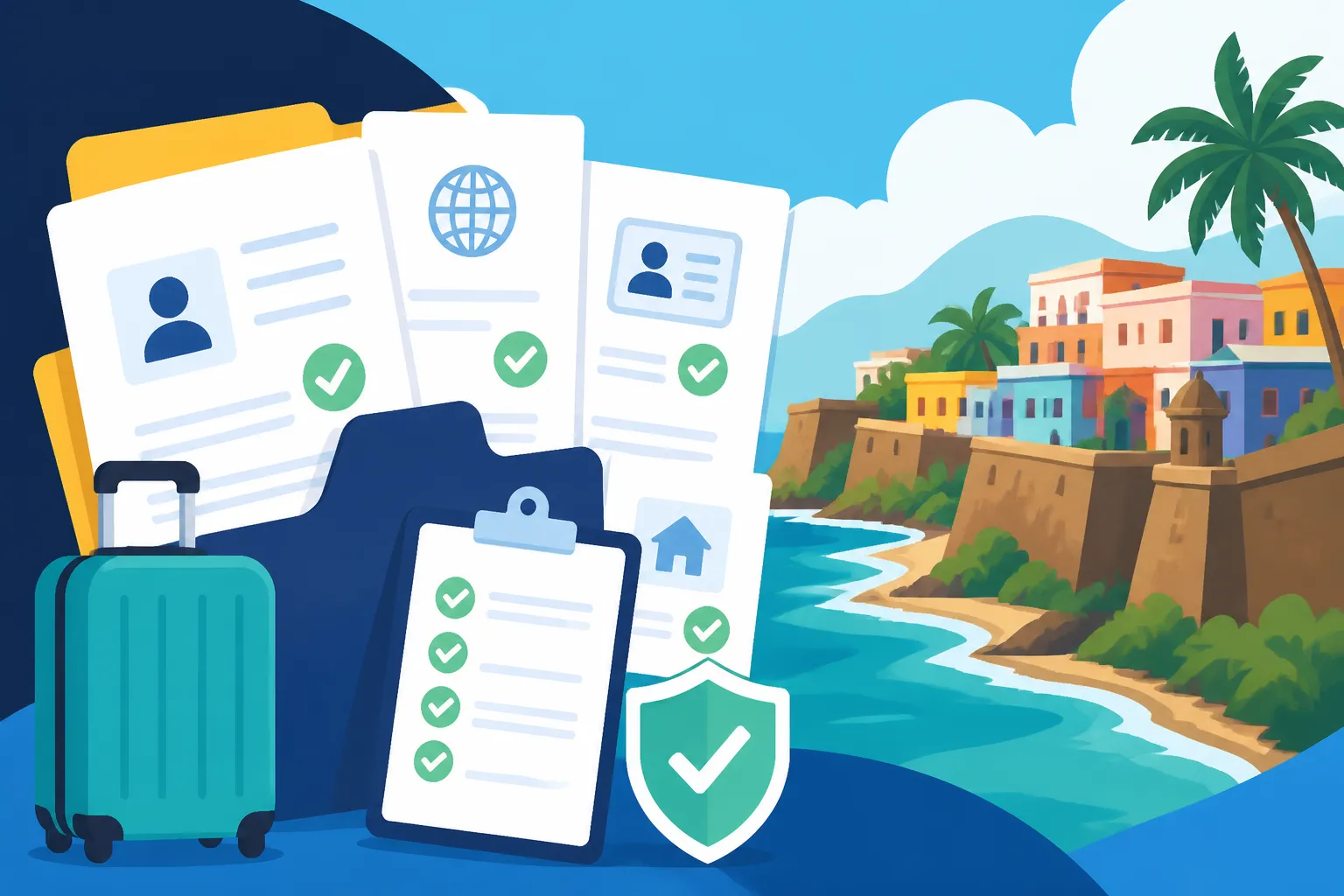
Before you pack a single box, create a master checklist of all the documents you need. Categorize them (e.g., Personal IDs, Financial, Housing, Vehicle, Family) and mark them off as you collect them. This prevents that terrifying "Did I forget something?" feeling when you're halfway through your journey. For those planning a bigger move, a company like Sirelo often offers comprehensive checklists as part of their relocation services, which can be an excellent starting point.
Go through each item and ensure it’s an original or a certified copy where required. Make several photocopies of everything. Seriously, keep one set of photocopies separate from the originals, and another set scanned and saved in a secure cloud storage service. This way, if your physical documents are lost or damaged during transit, you have backups.
Secure Storage and Accessibility
During your move, your physical documents should be kept in a waterproof, fireproof, and easily accessible folder or small safe. This is not something you want to pack away in a moving box that goes into a shipping container. Keep this vital document folder with you at all times – carry it on the plane, keep it in your personal vehicle, whatever it takes.
Once you arrive in Puerto Rico and get settled, find a secure place in your new home for your originals. A small fireproof safe is an excellent investment. For your digital copies, use a reputable cloud service with strong encryption and two-factor authentication. Share access to these digital copies with a trusted family member or friend, just in case of an emergency where you might need someone else to retrieve them for you. The peace of mind this brings is truly invaluable when you're navigating the initial chaos of setting up a new life.
Final Preparations and Contingency Planning
You’ve gathered your documents, you’ve organized them, but there’s one last step before you truly feel ready: preparing for the unexpected. Because let’s face it, moving to a new place, especially an island, can sometimes throw curveballs.
Professional Consultations
Before making your final move, it’s a wise investment to consult with professionals who understand the nuances of relocating to Puerto Rico. This might include a tax advisor specializing in U.S. and Puerto Rico tax laws, an immigration attorney if you’re a foreign national, or a relocation specialist. They can review your specific situation and ensure you haven't overlooked any crucial documents or legal requirements. This is particularly important for those considering incentives like Act 60, where every detail matters.
An expert can help you confirm your bona fide residency status and prepare for how Puerto Rico taxes work: Federal vs Local (Hacienda) Explained (2026). They can provide guidance tailored to your income sources, family structure, and personal assets. While this guide covers the general needs, individual circumstances can always present unique challenges, and a professional can help you navigate those with confidence.
Emergency Contacts and Contingency Copies
Make a list of essential emergency contacts – both on the mainland and in Puerto Rico. This includes doctors, banks, your U.S. embassy or consulate (if applicable), and local friends or contacts. Keep this list with your important documents and also saved digitally.
As mentioned, having digital copies of all your documents is critical. Email them to yourself, store them on a secure cloud server, and maybe even put them on a password-protected USB drive. The goal is to have multiple, accessible backups. This way, if you find yourself in an unexpected situation where you need a specific document but don't have the physical original immediately available, you're not completely stranded.
Disclaimer
Please remember that this guide provides general information based on common experiences of expats moving to Puerto Rico. Laws, regulations, and administrative requirements can change. Always consult with relevant government agencies, legal professionals, or tax advisors for the most current and personalized advice regarding your specific situation before making any decisions related to your move.