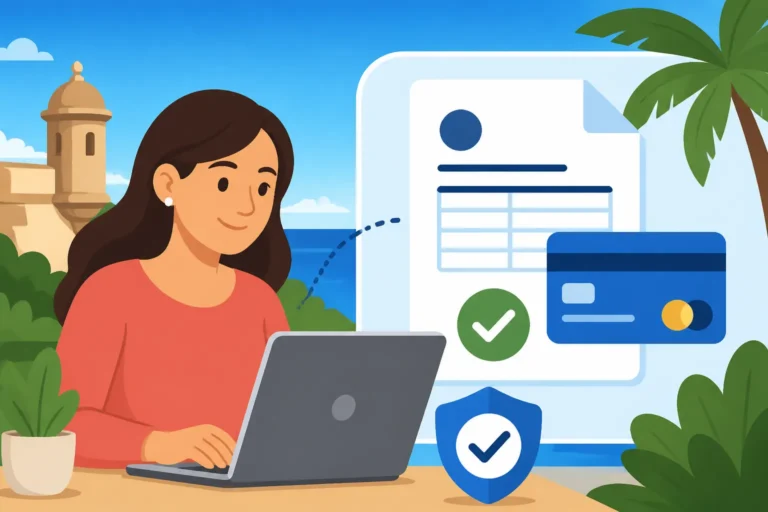
What Tax Records Do I Need to Keep as a Resident of Puerto Rico?
Moving to Puerto Rico can feel like stepping into a beautiful, sun-drenched paradise, but let's be real: the administrative side of things, especially taxes, often feels like navigating a dense, tropical jungle. Many of us arrive thinking our mainland record-keeping habits will suffice, only to realize Puerto Rico's Hacienda has its own distinct expectations. This guide is here to untangle the confusion, helping you understand precisely what tax records you need to keep as a resident to ensure a smooth, compliant financial life on the island.
The Foundation: Why Record-Keeping is Your Best Friend in Puerto Rico
When you first arrive, the last thing on your mind is often a receipt from the grocery store or a utility bill. You're probably too busy trying to figure out how to order café con leche in rapid-fire Spanish or marveling at the vibrant flora. But trust me, as an expat who's been here a while, meticulous record-keeping is not just good practice; it's your absolute best defense and peace of mind when it comes to navigating the Puerto Rico tax system. It’s about building a robust narrative of your financial life on the island, piece by painstaking piece.
Navigating Hacienda's Expectations
Unlike the IRS on the mainland, Hacienda – Puerto Rico's Treasury Department – operates with its own set of rules and a particular fondness for documentation. They are incredibly thorough, and the burden of proof always falls on the taxpayer. This means that if you claim a deduction, an exemption, or even your residency status, you need to have the paper (or digital) trail to back it up. We’ve all heard stories of friends who had to scramble for records years later, creating unnecessary stress and often leading to fines or disallowed claims. Don’t let that be you!
Imagine you've claimed certain business expenses, for example, on your annual planilla, which is your Puerto Rico income tax return. Hacienda might randomly select you for an audit, and they'll want to see detailed comprobantes (receipts), invoices, and bank statements matching those claims. If you don't have them, those deductions can be denied, and you could be facing additional taxes, interest, and penalties. It’s not about mistrust; it’s simply how the system here ensures compliance. Understanding this from day one, and getting familiar with portals like SURI (Sistema Unificado de Rentas Internas), Hacienda's online tax platform, will save you a world of headaches down the line. It's a proactive measure that prevents small issues from escalating into significant problems, offering you a clearer path to manage your finances here. For a broader overview, you might find this guide helpful: How Puerto Rico Taxes Work: Federal vs Local Hacienda Explained (2026).
Beyond Just Filing: Proof of Bona Fide Residency
This is perhaps the most critical aspect of record-keeping for many newcomers, especially those seeking the often-discussed tax incentives. Simply living here isn't enough; you need to prove you are a bona fide resident for tax purposes, particularly if you're taking advantage of the unique tax structure where certain Puerto Rico-sourced income may be exempt from federal income tax. The IRS and Hacienda both have tests for this, and your records are the undeniable evidence.
The concept of "bona fide residency" hinges on several tests, including the presence test (generally, spending 183 days or more in Puerto Rico during the tax year), the tax home test, and the closer connection test. Each of these requires a paper trail. Think about it: how do you prove you were physically present on the island for 183 days? Flight records, utility bills from your local address, credit card statements showing local transactions, and even cell phone records that ping local towers. The seemingly minor details become monumental. Without these records, proving your residency can be incredibly difficult, jeopardizing your tax status and any benefits you might be seeking. This is why a simple lease agreement or your first LUMA bill isn't just a formality; it's a foundational document for your entire tax residency claim. If you're wondering how this all connects, check out Bona Fide Residency in Puerto Rico: The Definitive Tax Guide (2027).
Essential Tax Records for Every Puerto Rico Resident
Let's get down to the nitty-gritty of what records you should be diligently collecting and safeguarding from the moment you unpack your bags. This isn't just a suggestion; it's a vital part of successfully integrating your financial life into your new island home. Think of these as the building blocks for your annual tax declaration and your long-term financial stability in Puerto Rico.
Income Documentation: Keeping Track of Your Earnings
This is probably the most obvious category, but it bears repeating, especially with the nuances of PR-sourced versus non-PR-sourced income. Whether you're employed, self-employed, or living off investments, every dollar that comes in needs to be accounted for.
If you’re employed by a Puerto Rico company, you'll receive a Form 499R-2/W-2PR, which is the equivalent of a W-2. This document summarizes your wages and taxes withheld by your employer for Puerto Rico tax purposes. You absolutely need to keep this. For those of us who are self-employed, you'll be dealing with forms like 480.6A/B for income subject to withholding, and you’ll need meticulous records of all your invoices, client payments, and any 1099-NEC equivalents you might receive. Beyond these official tax forms, keep all bank statements that show direct deposits from employment, investment payouts, or client payments. If you receive income from investments, such as dividends or interest, hold onto all statements from your brokerage accounts or banks. For comprehensive information on how your income might be treated, especially if it's PR-sourced, a read through Understanding Why PR-Source Income Is Exempt from Federal Tax could be very enlightening.
It's crucial to differentiate between income sourced from Puerto Rico and income sourced from the mainland or internationally. This distinction impacts how you're taxed at both federal and local levels. Even if certain income isn't taxed by Hacienda, you still need records to prove its source, especially if you're claiming an exemption from federal tax. This often means keeping clear records of your contracts, service agreements, and geographical location of clients or business activities.
Expense and Deduction Records: Maximizing Your Savings
One of the beautiful things about navigating the tax system, even in Puerto Rico, is the opportunity to reduce your taxable income through legitimate deductions. But to claim them, you need the proof. This category is where many people fall short, leaving money on the table.
Think of every expense that could potentially be tax-deductible. For instance, if you're self-employed, every business-related receipt – office supplies, internet service, professional development courses, travel for work – needs to be saved. If you pay for health insurance premiums out-of-pocket, or have significant medical expenses like co-pays and deductibles, those are often deductible. Keep all invoices and payment confirmations. Charitable contributions to local Puerto Rico non-profits are also often deductible, so hold onto those donation receipts. Educational expenses, especially for continuing education, can sometimes be claimed. And, of course, your property tax receipts (CRIM) are essential, which we'll delve into more later. The general rule of thumb is: if you spend it and think it might be deductible, keep the receipt, a note of its purpose, and the date. This diligence can significantly lower your tax burden when you prepare your planilla. For more details on the filing process, refer to How to File Your Annual Income Tax Return Planilla in Puerto Rico.
Residency Proof: More Than Just Your Address
As mentioned earlier, proving bona fide residency is paramount. The government wants to see that you're not just vacationing here for tax breaks but genuinely establishing your life on the island. This means accumulating a variety of documents that collectively paint a picture of your residential ties.
Start with the most obvious: your lease agreement or property deed if you own a home. This establishes your physical address. Beyond that, keep all your utility bills (LUMA for electricity, AAA for water) in your name at your Puerto Rico address. These show continuous presence and responsibility. Your Puerto Rico driver's license or non-driver ID card is a strong piece of evidence. If you registered to vote here, keep a record of your voter registration. Bank statements from local Puerto Rico banks like Banco Popular or Oriental Bank, showing transactions and a Puerto Rico address, are also critical. Furthermore, flight itineraries and boarding passes, especially if you travel frequently, can help document your days spent on and off the island for the 183-day rule. Consider even keeping cell phone bills that demonstrate usage on local networks. The more documentation you have tying you to the island, the stronger your case for bona fide residency. If you're still working on establishing this foundation, this guide offers practical steps: How Do I Establish Residency in Puerto Rico?.
Special Scenarios and Additional Records to Consider
While the general categories cover most residents, certain situations require an even more granular approach to record-keeping. These specific scenarios, often involving substantial financial benefits or assets, naturally come with increased scrutiny. Being prepared is not just smart; it’s essential for long-term compliance and peace of mind.
Act 60 Beneficiaries: A Different Level of Scrutiny
If you're one of the many individuals who have moved to Puerto Rico to take advantage of Act 60 tax incentives, your record-keeping requirements are amplified. This isn't just about filing your taxes; it's about maintaining your decree and demonstrating ongoing compliance with its strict terms. The tax benefits are significant, but so are the responsibilities.
For Act 60 Individual Resident Investors (formerly Act 20/22), you'll need meticulous records of your qualified investments, any charitable donations made to local non-profits as required by your decree, and proof of your continued bona fide residency. This includes not just the basic residency proofs mentioned earlier, but potentially more detailed travel logs, engagement with local businesses, and community involvement. For businesses operating under Act 60 Export Services, the records are even more extensive, encompassing employment data, service agreements proving export services, and adherence to local business regulations. It's a high-reward, high-responsibility situation. Many individuals and businesses rely on specialized tax advisory services, like Taxes for Expats, who are intimately familiar with the intricacies of Act 60 compliance and the rigorous record-keeping it demands. They can help ensure every 'i' is dotted and 't' is crossed to safeguard your decree. To understand the full scope of these incentives, read Understanding Act 60 Tax Incentives in Puerto Rico: The Full Guide.
Property Owners: Keeping Your Real Estate Affairs in Order
Owning property in Puerto Rico brings its own set of tax record requirements, whether it’s your primary residence, a vacation home, or an investment property. These records are critical not only for annual tax filings but also for future transactions like selling the property.
Firstly, keep your property deed (escritura) safe and sound. This is your ultimate proof of ownership. Annually, you'll receive property tax bills from the Municipal Revenue Collection Center (CRIM), and you must retain receipts of all payments. These are deductible on your Puerto Rico tax return. If you have a mortgage, keep all your mortgage statements, as the interest paid is often deductible. Don't forget any invoices for significant home improvements or renovations. These aren't just for insurance; they can increase your cost basis, potentially reducing capital gains tax if you sell the property in the future. Furthermore, keep records of any insurance policies, especially hurricane and flood insurance, which are crucial here. If you're renting out your property, meticulously track all rental income and associated expenses, like maintenance, repairs, property management fees, and depreciation. For more on property taxes, check out Understanding Property Tax CRIM for Homeowners in Puerto Rico.
Managing Finances Across Jurisdictions: The Mainland Connection
For many expats, the move to Puerto Rico doesn't mean a complete severing of financial ties with the mainland. You might still have mainland bank accounts, investments, or even income sources. This dual financial life introduces additional record-keeping complexities, particularly regarding reporting requirements.
If you hold financial accounts outside of Puerto Rico with an aggregate value exceeding $10,000 at any point during the calendar year, you are likely required to file an FBAR (Foreign Bank and Financial Accounts Report) with the U.S. Treasury Department. While Puerto Rico is a U.S. territory, for FBAR purposes, mainland U.S. accounts are considered "foreign" if you are a bona fide resident of Puerto Rico. Keep meticulous records of all your mainland bank and investment statements to accurately report these. Additionally, if you have income from mainland sources (e.g., a pension, rental income from a mainland property, or remote work for a mainland employer), you will need to keep all associated documentation. This income might still be subject to federal tax, even if you're a bona fide resident of Puerto Rico. To manage these cross-border transactions efficiently and keep track of your money movement, services like Wise can be incredibly helpful, providing clear transaction histories that serve as valuable records. Maintaining a clear separation and documentation for both Puerto Rico and mainland income and assets is vital to avoid issues with both Hacienda and the IRS. This article delves into how to handle such a situation: How to File Taxes If You Have Both Mainland and PR Income.
Best Practices for Organizing and Storing Your Tax Records
Collecting all these documents is only half the battle; knowing how to organize and store them effectively is equally important. In a world where paperwork can easily pile up and digital files can get lost in the cloud, having a system is crucial for your sanity and your compliance. Think about the convenience of having everything at your fingertips when tax season rolls around, or, heaven forbid, if Hacienda ever comes knocking.
Digital vs. Physical: Finding Your Balance
In today's age, you have options for how you keep your records, and most people find a hybrid approach works best. For physical documents, consider a dedicated filing cabinet or accordion folder, clearly labeled by year and category (e.g., "202X Income," "202X Expenses," "Property Deeds"). A fireproof safe or safety deposit box is a wise investment for original irreplaceable documents like property deeds or birth certificates.
For digital records, the key is consistency and security. Invest in a good scanner (even your phone can work with the right app!) and scan every important document as it comes in. Organize these digital files into folders on your computer, again, labeled clearly by year and category. Crucially, back these up! Use a reliable cloud storage service (like Google Drive, Dropbox, or OneDrive) and perhaps an external hard drive. This protects you against data loss due to computer failure, theft, or natural disasters – a very real concern in Puerto Rico. The convenience of being able to access a specific receipt from your phone while sitting with your tax advisor is priceless, and it simplifies the process significantly when you're preparing your Filing Your Puerto Rico Tax Return with Hacienda: The Complete Walkthrough.
How Long to Keep Records in Puerto Rico
This is a question I hear all the time! The general rule of thumb for most tax documents, similar to the IRS, is to keep them for at least three to seven years from the date you filed your tax return. Hacienda generally has a three-year statute of limitations for audits for most individual income tax returns. However, there are exceptions. For example, if you underreport your income by a significant percentage, the limitation period can extend.
For critical documents like property deeds, marriage certificates, birth certificates, and records related to the cost basis of property or major assets (like those home improvement invoices), you should keep them indefinitely. These records are vital for proving ownership, calculating gains or losses when you sell, or simply for proving who you are. The rule of thumb: when in doubt, keep it longer. It’s always better to have too many records than not enough.
Professional Assistance: When to Call in the Experts
Let's face it, while this guide aims to demystify tax record-keeping, the system in Puerto Rico can still be incredibly complex, especially if you have unique financial situations, significant assets, or are an Act 60 beneficiary. This is where professional help becomes invaluable.
A local CPA or a tax advisor specializing in Puerto Rico tax law and U.S. expat taxation can provide tailored advice, help you understand specific deductions, and ensure you're keeping all necessary records for your unique circumstances. They can also represent you in case of an audit. Don't wait until you're in hot water to seek their guidance. Engaging a professional early, even for a consultation, can set you on the right path and save you significant stress and potential penalties. They can also help you with the initial steps of registration, for example, by guiding you through How Do I Register with Hacienda in Puerto Rico?. Firms like Taxes for Expats specialize in understanding the intersection of U.S. federal and Puerto Rico tax laws, which is particularly useful for those of us navigating a new financial landscape here.
Here's a quick summary table of key records:
| Record Type | Purpose | Retention Guideline | Importance for Residency |
|---|---|---|---|
| Income Documents | Proof of earnings, tax withheld (W-2 PR, 480.6A/B, bank statements) | 7 years | High |
| Expense Receipts | Justify deductions (business, medical, charitable) | 7 years | Moderate |
| Residency Proof | Establish bona fide residency (lease, utility bills, PR ID) | Indefinite/As long as resident | Critical |
| Property Deeds | Proof of ownership, cost basis for future sale | Indefinite | High |
| CRIM Receipts | Proof of property tax payments | 7 years | High |
| Mortgage Statements | Deductible interest, loan details | 7 years (active loan: indefinite) | High |
| Act 60 Compliance | Proof of investment, donations, residency compliance | Indefinite/As long as decree active | Critical (for beneficiaries) |
| Mainland Account Stmts | FBAR compliance, proof of non-PR sourced income (if applicable) | 7 years | High |
| Travel Records | Verify physical presence for 183-day test | 7 years | High |
Disclaimer
The information provided in this article is for general informational purposes only and does not constitute financial, legal, or tax advice. Tax laws and regulations in Puerto Rico are complex and subject to change. It is essential to consult with a qualified tax professional or legal advisor experienced in Puerto Rico tax matters for advice tailored to your specific situation.