How Do I Access My Medical Records in Puerto Rico?
Moving to Puerto Rico often feels like a romantic escape until you have to navigate the administrative machinery of the healthcare system. One of the most common headaches for new residents is figuring out how to consolidate their medical history across disparate providers. This guide provides a clear roadmap for accessing, requesting, and transferring your medical records within the Puerto Rican system.
Understanding Your Legal Right to Medical Records in Puerto Rico
If you are coming from the mainland, you might assume that the process of getting your files is identical to what you experienced in Florida or New York. While the overarching federal protections are the same, the local implementation in Puerto Rico has its own unique flavor. You have a legal right to your information, but exercise that right requires knowing which laws to cite and which doors to knock on.
HIPAA Laws on the Island
Puerto Rico is a U.S. territory, which means the Health Insurance Portability and Accountability Act (HIPAA) is the supreme law regarding medical privacy and data access. Under HIPAA, any "covered entity"—which includes your primary care physician, specialists, and hospitals—must provide you with access to your records within 30 days of a written request.
In my experience, many small clinics in towns like Isabela or Rincon may not have a dedicated "Compliance Officer" like a large mainland hospital. You might find yourself explaining HIPAA to a receptionist who has worked there for thirty years. It is important to remain firm but polite. Remind them that your "récord médico" belongs to you, and while they own the physical paper or the digital server space, the information is your legal property. Understanding How Puerto Rico's Health System Works: Public vs Private Explained (2027) is crucial here because private offices often have more streamlined HIPAA protocols than the underfunded public clinics.
Puerto Rico Law 194 the Patients Bill of Rights
Beyond federal law, Puerto Rico has its own local statute known as the Patient's Bill of Rights and Responsibilities (Ley 194). This law is actually quite robust and, in some cases, offers more specific localized protections than federal law. It explicitly states that patients have the right to receive a copy of their medical record and that the facility cannot withhold these records even if you have an outstanding balance on your account.
This is a common point of friction. Expats are sometimes told they cannot have their records because they owe a $20 co-pay from a visit six months ago. Legally, they cannot do that. You still owe the money, but they cannot hold your health data hostage. If you find yourself in this situation, mentioning "Ley 194" usually clears up the "misunderstanding" rather quickly. It is all part of Navigating the Puerto Rico Healthcare System: A Newcomer's Roadmap (2027) and learning how to stand your ground in a new administrative environment.
The Step by Step Process for Requesting Records
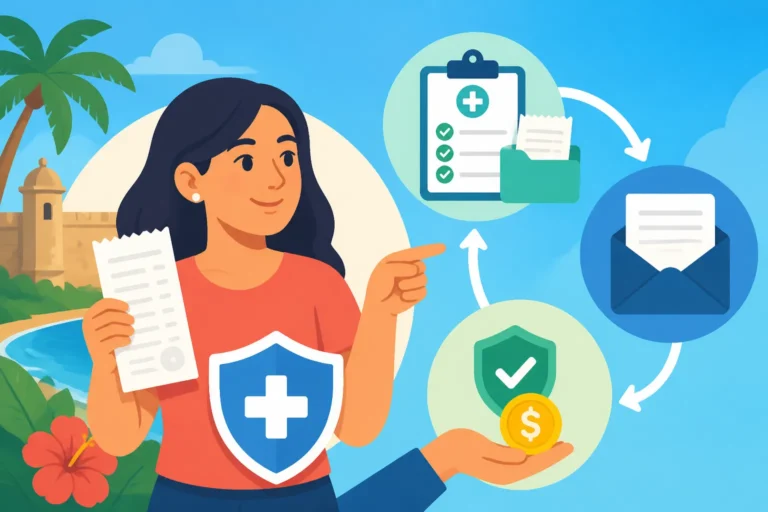
Don't expect a one-click digital solution for everything. While the island is modernizing, much of the medical infrastructure still relies on physical signatures and, occasionally, the dreaded fax machine. You need to be prepared for a multi-step process that requires physical presence or certified mail.
Contacting Private Clinics and Specialist Offices
Most expats will interact with private specialists in areas like Condado, Santurce, or Guaynabo. These offices often operate as independent small businesses. To get your records, your first step should be a phone call to the "Secretaria" or the office manager. Ask specifically for the "encargado de récords."
In many cases, they will ask you to come in person to sign a release form. If you have already moved to a different part of the island, ask if they accept a scanned authorization via email. However, don't be surprised if they insist on a "firma original" (original signature). This is where having a reliable local contact or a dedicated afternoon for "trámites" (errands) becomes necessary. This is a key part of What Documents Do I Need to See a Doctor in Puerto Rico? and staying organized.
Dealing with CDTs and Public Hospitals
Centros de Diagnóstico y Tratamiento (CDTs) are the backbone of local healthcare in smaller municipalities. These are public or semi-public clinics that handle everything from flu shots to minor emergencies. Accessing records from a CDT can be more challenging because the staff is often overwhelmed.
When dealing with a CDT or a large public hospital like Centro Médico in Río Piedras, you should bring a formal written request. Include your full name, date of birth, social security number (or the last four digits), and the specific dates of service you are looking for. Because these facilities are high-volume, your request can easily get lost in a pile. I always recommend getting a "sello de recibido" (a received stamp) on a copy of your request so you have proof of the date you asked for the files.
The Formal Written Request Template
While some offices have their own forms, many do not. You should have a template ready to go. A professional request should be in both English and Spanish if possible, though Spanish is the primary language of administration. Your request must state: "Solicito copia íntegra de mi récord médico bajo las disposiciones de HIPAA y la Ley 194."
This translates to "I request a full copy of my medical record under the provisions of HIPAA and Law 194." Be specific about what you need: do you want the doctor's notes, the lab results, or the imaging (X-rays/MRIs)? If you need imaging, they will likely give you a CD or a USB drive rather than a printed sheet. If you are using a service like SafetyWing for your international health coverage during your transition, they may require these specific documents for reimbursement or for coordinating care with mainland providers.
Digital vs Paper Navigating Electronic Health Records
Puerto Rico is currently in a state of "digital transition." You will find world-class digital portals at some hospitals and dusty cardboard folders at others. Knowing which one you are walking into helps manage expectations.
Popular Patient Portals in Puerto Rico
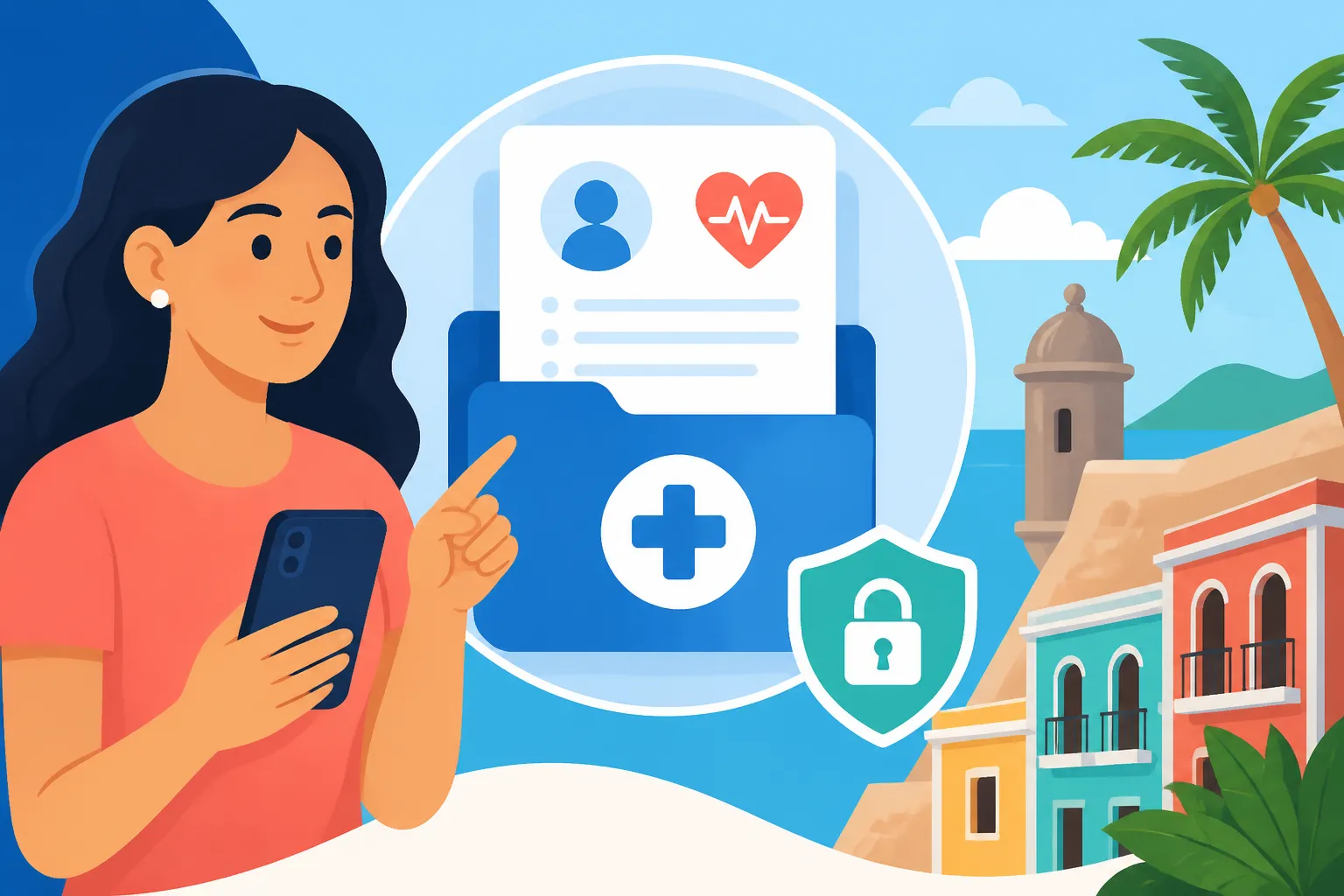
Large hospital systems like Auxilio Mutuo, Ashford Presbyterian, and the various Pavia Health locations have invested heavily in Electronic Health Records (EHR). When you register as a patient, always ask the front desk: "¿Tienen un portal para el paciente?" (Do you have a patient portal?).
These portals are your best friend. They allow you to download lab results and summaries of your visits directly to your laptop. If you are working with The Guide to Choosing a Private Hospital in Puerto Rico, the quality of their digital portal should be a major factor in your decision. Being able to access your records while traveling—perhaps while covered by SafetyWing—ensures that if an emergency happens off-island, your history is only a login away.
The Paperwork Reality When Digital Fails
Despite the push for digitalization, many "viejito" doctors (the older, highly experienced generation) still prefer paper. I have visited specialists in Hato Rey whose offices are lined floor-to-ceiling with manila folders. In these instances, there is no "download" button.
You will have to wait for them to photocopy the file. This can take time. If the record is hundreds of pages long, they might ask you to come back in a week. If you are moving back to the mainland or to a different town, do not leave this until the last minute. Start the request at least a month before your move date. It is much easier to carry a heavy envelope than to try and coordinate a cross-ocean mailing of sensitive documents.
Costs and Timeframes for Medical Record Retrieval
Nothing is free, and medical records are no exception. However, there are strict limits on what a provider can charge you for the "privilege" of accessing your own data.
Standard Fees for Copies
Under HIPAA, a provider can only charge a "reasonable, cost-based fee." This is supposed to cover the cost of the paper, toner, and the labor of the person making the copies. It is not supposed to be a profit center for the clinic.
| Type of Record | Typical Cost Range | Format |
|---|---|---|
| Standard Lab Results | $0 – $10 | Paper or PDF |
| Full Medical History (Paper) | $0.25 – $0.75 per page | Physical Copy |
| Imaging (X-Ray/MRI) | $15 – $30 | CD or USB |
| Digital Summary | $0 (Usually free) | Patient Portal |
In Puerto Rico, I’ve found that many offices will give you a few pages for free as a courtesy, but once you get into a full surgical history or chronic care file, the per-page fees kick in. Always ask for an estimate before they start clicking "print." If you are managing costs, you might want to look at How Much Does a Private Doctor Visit Cost in Puerto Rico? to see how these administrative fees fit into your overall healthcare budget.
Legally Mandated Response Times
As mentioned, the 30-day rule is the standard. If a doctor’s office tells you it will take two months, they are in violation of federal law. If they are truly struggling, they can request a one-time 30-day extension, but they must notify you in writing of the reason for the delay.
If you hit a wall, you can file a complaint with the Office for Civil Rights (OCR) or the Puerto Rico Patient Advocate (Procurador del Paciente). Usually, just mentioning that you are aware of the 30-day HIPAA deadline is enough to move your file to the top of the pile. This is especially important if you need a How Specialist Referrals Work Under Puerto Rico Health Plans and your new specialist won't see you without your previous history.
Practical Tips for New Residents and Expats
Navigating the system as a newcomer requires a mix of mainland assertiveness and island diplomacy. Here are a few "boots on the ground" tips I’ve learned after years of living here.
Transferring Records from the Mainland
If you just moved to the island, your first priority is getting your mainland records into the Puerto Rican system. Don't wait until you get sick. Many doctors on the island will ask you to bring your records on a USB drive or as a hard copy to your first appointment.
The mainland hospital might tell you they will "fax it over," but in the transition between mainland systems and Puerto Rican offices, faxes frequently disappear into the ether. I always recommend getting a complete digital copy of your records from your mainland providers before you leave. Put them on a secure, encrypted cloud drive or a physical thumb drive. When you go to see a doctor for the first time, you can provide the files immediately. This helps with Understanding the Pharmacy System and Generic Drugs in Puerto Rico because your new doctor will see exactly what you were prescribed previously.
Handling Language Barriers in Administrative Offices
While many doctors in Puerto Rico are bilingual (having trained in the states), the administrative staff might only speak Spanish. If your Spanish is still a work in progress, this can make requesting records stressful.
When you call, start with a polite "Hola, no hablo mucho español, ¿alguien habla inglés?" Most offices have at least one person who can help. If not, use Google Translate to write your request and bring it in person. The phrase "Vengo a buscar mi récord médico" (I’ve come to get my medical record) is your key. If you are feeling overwhelmed, remember that this is a common hurdle, and almost every expat has gone through it. Having a plan for How to Find and Register with a Primary Care Doctor in Puerto Rico should include an assessment of how easy it is to communicate with their records department.
Final Considerations for Long-Term Management
Once you have your records, the battle is only half won. You need to keep them organized. The "Island Binder" is a real thing—most experienced expats keep a physical folder of every lab result, every prescription, and every specialist note they receive on the island.
Systems here can be fragmented. Your primary care doctor in San Juan might not be able to see the results from the laboratory in Caguas. By keeping your own copies, you become the bridge between your healthcare providers. This level of self-advocacy is what ensures you get high-quality care. If you are moving frequently or spend time traveling back to the mainland, consider maintaining an active SafetyWing policy to cover the gaps where local insurance might not follow you, and always keep your digital "Island Binder" updated in the cloud.
Disclaimer
This guide is for informational purposes only and does not constitute legal or medical advice. Healthcare laws and administrative procedures in Puerto Rico can change. Always verify current requirements with the Puerto Rico Department of Health or a qualified legal professional specializing in healthcare law.