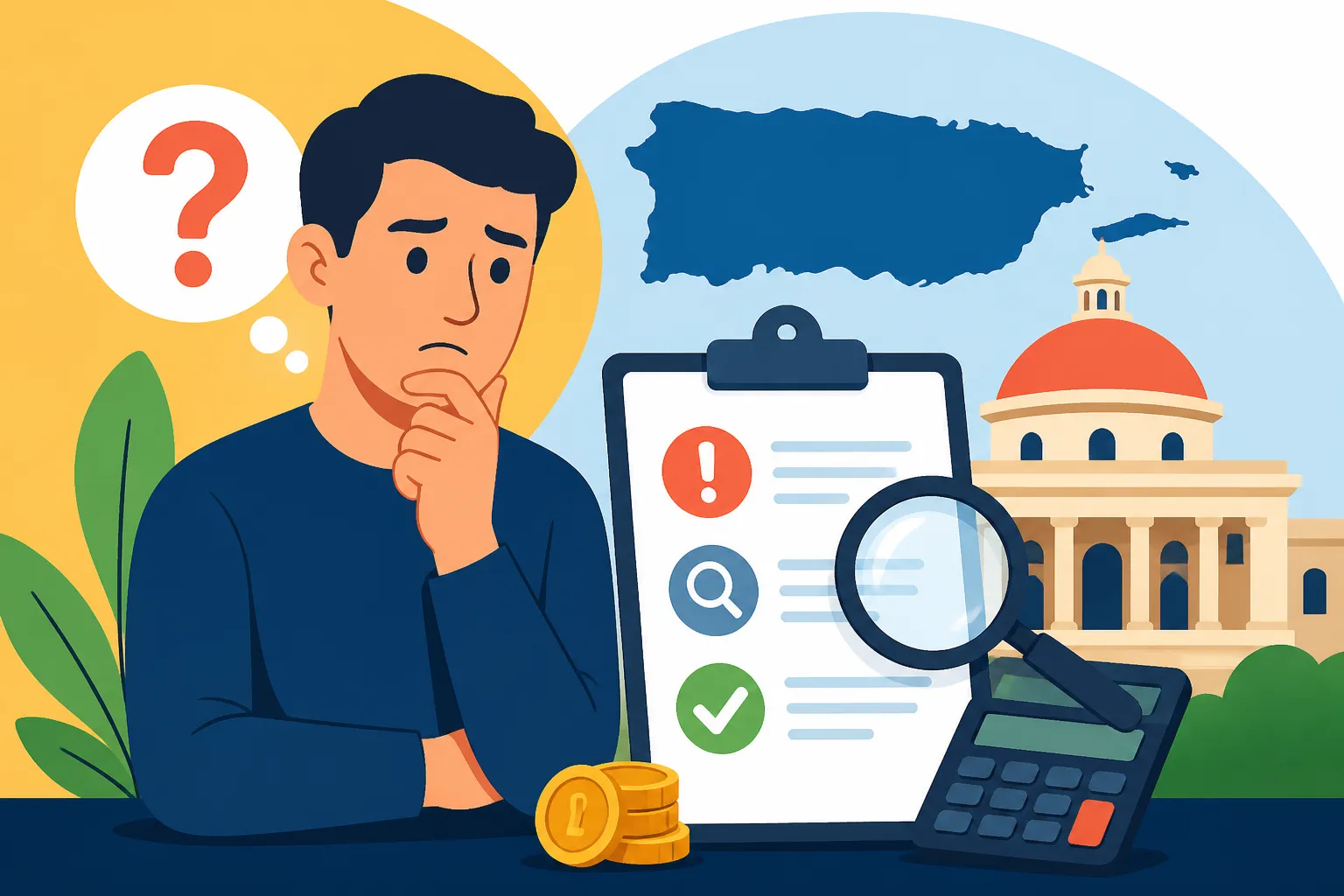
How Do I Check If I Owe Back Taxes to Hacienda in Puerto Rico?
Moving to Puerto Rico, or even just living here for a while, can often bring with it a unique set of administrative challenges, especially when it comes to taxes. It's not uncommon for expats, whether new arrivals or long-time residents, to feel a knot of anxiety about whether everything is in order with Hacienda, the island's Treasury Department. Navigating the local tax system can be quite different from what you're used to on the mainland, leading to questions like "Do I owe back taxes?" or "How do I even check?" This guide is designed to walk you through the process of determining if you have any outstanding tax obligations with Hacienda in Puerto Rico, and what steps to take if you do.
Understanding Hacienda and Your Tax Obligations in Puerto Rico
Before we dive into the nitty-gritty of checking for back taxes, it's crucial to understand who Hacienda is and what your general tax obligations entail as a resident of Puerto Rico. Many newcomers assume their federal tax situation remains identical to what it was on the mainland, and while there are indeed federal overlaps, Puerto Rico has its own distinct tax authority. This dual system can be a source of confusion and, occasionally, unexpected tax liabilities.
What Exactly is Hacienda?
Hacienda, or the Department of the Treasury of Puerto Rico (Departamento de Hacienda de Puerto Rico), is the primary government agency responsible for the administration and collection of local taxes on the island. Think of it as Puerto Rico's equivalent to a state tax department, but with a broader scope due to the island's unique commonwealth status. They handle everything from individual income tax (known as planilla) and sales and use tax (IVU) to corporate taxes and property taxes. Their systems and procedures often have their own quirks, which can be a steep learning curve for those accustomed to the IRS or state-level tax filings. Understanding how Puerto Rico Taxes Work: Federal vs Local (Hacienda) Explained (2026) is truly foundational for anyone living here.
Common Reasons for Unexpected Back Taxes
It's easy to fall behind or accrue unexpected tax debt with Hacienda, even with the best intentions. Many of these issues stem from a lack of familiarity with Puerto Rico's specific tax codes. For instance, if you're self-employed or run a business, you might not have correctly registered for and remitted the Sales and Use Tax (IVU), or made quarterly estimated tax payments. If you're an employee, perhaps there was an issue with your employer's withholding, or you simply didn't file your annual planilla because you assumed your federal filing covered everything.
Another common pitfall involves income sourced from outside Puerto Rico. While the general rule is that bona fide residents of Puerto Rico don't pay federal income tax on Puerto Rico-sourced income, the rules surrounding mainland-sourced income, or how to properly establish bona fide residency, can be complex. Sometimes, the issue might be as simple as an old address on file leading to notices being sent to the wrong place, or an administrative error on Hacienda's part. It's also possible that if you received a Comprobante de Retención (similar to a W-2) but didn't file, Hacienda might have a record of income for you that isn't reconciled.
Methods to Check Your Back Tax Status with Hacienda
Okay, so you've got that nagging feeling, or maybe you've just received a cryptic letter in Spanish that looks suspiciously official. It's time to figure out if you owe Hacienda money. There are a few primary ways to go about this, and depending on your comfort level with technology and Spanish, some might be more straightforward than others.
Using SURI: The Online Portal
The most modern and, frankly, often the most convenient way to check your tax status is through SURI (Sistema Unificado de Rentas Internas), Hacienda's online unified internal revenue system. This portal is designed to manage various tax types, from individual income tax to sales and use tax for businesses. However, like many government online platforms, it can sometimes be a bit clunky, especially for first-time users or those who don't have a strong grasp of Spanish. The learning curve can be steep, but it's worth it for the convenience it offers once you're set up.
First, you'll need to register for an account if you haven't already. This typically involves providing your Social Security Number (SSN), a valid email address, and creating a strong password. If you've ever filed taxes in Puerto Rico, you might already have an account or a partial record. Once logged in, you'll usually navigate to a section related to your tax accounts or "cuentas." Here, you should be able to see a summary of your tax liabilities, filings, and any outstanding balances. Look for sections like "Estados de Cuenta" (Account Statements) or "Deudas Pendientes" (Pending Debts). This is where Hacienda will list any tax periods for which they believe you owe money. You can learn more about this system in our detailed guide, Understanding SURI (Hacienda's Online Tax Portal) in Puerto Rico. Sometimes, professional services like Taxes for Expats can assist you in navigating SURI if you're finding it particularly challenging or if your situation is complex.
Visiting a Hacienda Office In-Person
For those who prefer a more direct, face-to-face approach, or if you're having trouble with SURI, visiting a Hacienda office (sometimes located within a CESCO, the equivalent of the DMV in Puerto Rico, or standalone tax offices) is an option. This can be particularly helpful if you have specific questions or need clarification on a notice you've received. Be prepared for potentially long wait times, even if you arrive early. It's the nature of government offices here, so bring a book, stay hydrated, and practice your patience.
When you go, make sure you bring all relevant documentation. This includes your Social Security card, a valid photo ID (like your Puerto Rico driver's license or passport), and any tax notices you've received. If you have copies of past tax filings (planillas) or other financial records, bring those too. The more information you can provide, the easier it will be for the Hacienda agent to assist you. Ask for an "estado de cuenta" (account statement) for your tax records. Be aware that while many government employees speak English, particularly in larger urban centers like San Juan, it's not guaranteed, so having a Spanish-speaking friend or a translation app can be invaluable. This can also be a good opportunity to learn how to Register with Hacienda and Get a Tax Account in Puerto Rico if you haven't already.
Contacting Hacienda by Phone or Mail
Calling Hacienda is another option, though it often requires a good deal of persistence. The main Hacienda contact number for taxpayer services is generally available on their official website. Be prepared to navigate an automated system, often entirely in Spanish, before reaching a human. Once you do, you'll need to provide personal identifying information to verify your identity. Just like in person, having all your documents and questions ready will streamline the process.
Sending a written inquiry by mail is also possible, especially if you need to formally dispute a charge or request specific records. However, this is typically the slowest method, and response times can vary wildly. It's usually best reserved for situations where other methods have failed, or if you need a paper trail for legal reasons. Always send important documents via certified mail with a return receipt requested, so you have proof of delivery.
Deciphering Hacienda Notices and What to Do Next
So, you've checked, and indeed, Hacienda has sent you a notice, or you've found an outstanding balance on SURI. Don't panic! The key is to understand what these notices are trying to tell you and then take immediate, informed action.
Understanding the Language of Hacienda Notices
Hacienda notices, much like tax documents anywhere, can be dense and intimidating, especially when they're in Spanish. They often use specific legal and tax terminology that even native Spanish speakers might find challenging. Common notices you might receive include:
- Aviso de Deficiencia (Notice of Deficiency): This indicates that Hacienda believes you owe more tax than you reported, or that you failed to report income.
- Aviso de Requerimiento de Pago (Demand for Payment Notice): This is a straightforward bill for outstanding taxes, often with penalties and interest already accrued.
- Notificación de Determinación (Determination Notice): This could be a formal assessment of a specific tax liability, or a response to an appeal you filed.
- Aviso de Embargo (Notice of Lien/Levy): This is a more serious notice, indicating Hacienda intends to seize assets or garnish wages if the debt isn't settled.
If you receive any of these, especially one you don't understand, do not ignore it. Ignoring tax notices is one of the quickest ways to escalate a manageable problem into a severe one. If the Spanish is proving to be a barrier, find a trusted bilingual friend, an attorney, or a tax professional who can translate and explain the contents. Services like Taxes for Expats specialize in situations like these and can help bridge the language and knowledge gap.
Initial Steps After Confirming a Debt
Once you've confirmed you owe back taxes and understand the nature of the debt, the next steps are crucial.
- Verify the Information: Before anything else, carefully review the Hacienda notice against your own records. Do you agree with the amount? Is the tax period correct? Sometimes, errors occur on Hacienda's part, or they might not have received a payment or filing you sent. If you believe there's an error, gather your proof. This is where your meticulous record-keeping comes into play – copies of past tax returns, payment receipts, bank statements, or Comprobante de Retención forms. Our guide on Filing Your Puerto Rico Tax Return with Hacienda: The Complete Walkthrough (2027) includes tips on record-keeping.
- Act Promptly: Hacienda, like any tax authority, appreciates prompt communication. There are often deadlines for responding to notices or appealing assessments. Missing these deadlines can waive your rights or lead to further penalties.
- Don't Hesitate to Seek Professional Advice: For anything beyond the most straightforward, easily verifiable debt, consulting with a tax professional specializing in Puerto Rico tax law is highly recommended. This is particularly true if you have significant debt, complex income sources (e.g., if you need to How to File Taxes If You Have Both Mainland and PR Income), or if you're dealing with issues related to Understanding Act 60 Tax Incentives in Puerto Rico: The Full Guide (2026). They can help you understand your options, verify the debt, and represent you in communications with Hacienda.
Addressing Your Back Tax Debt: Options and Resources
Facing a tax debt can feel overwhelming, but Hacienda, like other tax authorities, usually offers avenues for resolution. Understanding these options can help you navigate the process more smoothly.
Payment Plans and Negotiation
If you genuinely owe the back taxes and can't pay the full amount immediately, Hacienda generally offers payment plan options. These are often called "planes de pago" or "acuerdos de pago." You'll typically need to contact them directly (either through SURI, phone, or in-person) to discuss setting up an installment agreement. Be prepared to provide financial information to demonstrate your ability to make regular payments. The terms, including interest rates and the length of the plan, will depend on the amount owed and your financial circumstances. It's always better to proactively reach out and arrange a payment plan than to wait for Hacienda to take collection actions.
In some cases, if the debt is very old or if you can demonstrate significant financial hardship, it might be possible to negotiate a lower settlement through an "Oferta de Transacción" (Offer in Compromise), similar to the IRS's OIC program. This is a complex process and almost always requires the assistance of a qualified tax professional.
Seeking Professional Help
For many expats, especially those new to Puerto Rico, the complexities of Hacienda's system, combined with the language barrier, make professional assistance invaluable. Tax attorneys, Certified Public Accountants (CPAs), or specialized tax services that understand both U.S. federal and Puerto Rico local tax laws can be a lifesaver. Firms like Taxes for Expats often have experience with this specific dual-jurisdiction challenge, guiding you through verification, negotiation, and compliance. They can help you:
- Confirm the accuracy of the debt.
- Understand the applicable penalties and interest.
- Communicate with Hacienda on your behalf.
- Negotiate payment plans or settlements.
- Ensure future compliance to prevent recurrence.
Choosing the right professional is critical. Look for someone with demonstrable experience in Puerto Rico tax law, and ideally, someone who is bilingual or has bilingual staff. Their expertise can save you significant stress, time, and potentially money in the long run.
Preventing Future Back Tax Issues
Once you've resolved any current back tax issues, your focus should shift to preventing them from happening again.
- Understand Your Filing Requirements: Make sure you know exactly what taxes you're liable for in Puerto Rico and when they're due. This includes annual income tax (planilla), estimated taxes if you're self-employed, and any business-related taxes. Refer to resources like The Complete Guide to Taxes in Puerto Rico for New Residents (2027).
- Keep Meticulous Records: This cannot be stressed enough. Keep copies of all income statements, expense receipts, tax filings, and correspondence with Hacienda. Digital copies are great for backup.
- Stay Up-to-Date on Tax Law Changes: Tax laws can change, and Puerto Rico is no exception. Follow reliable news sources or tax professionals who provide updates on Hacienda regulations.
- Consider Quarterly Estimated Payments: If your income sources are not subject to sufficient withholding, such as from freelance work or investments, learn How to Pay Estimated Taxes as Self-Employed in Puerto Rico to avoid a large tax bill and penalties at year-end.
- Use SURI Regularly: Once you've navigated the initial setup, make it a habit to log into SURI periodically to check your account status. It's a proactive way to catch potential issues early.
- Review Your Comprobante de Retención: If you receive a Comprobante de Retención from an employer or client, ensure it accurately reflects your income and withholding, and always file your planilla to reconcile it, even if you think you don't owe.
Managing Payments and Transfers
If you find yourself needing to make payments to Hacienda, especially if you're managing finances between the mainland and Puerto Rico, consider efficient ways to transfer funds. Traditional bank transfers can sometimes be slow or costly. Services like Wise (formerly TransferWise) offer competitive exchange rates and lower fees for international money transfers, which can be useful if you're moving funds from an overseas account to your Puerto Rico bank to cover tax obligations. Many local banks in Puerto Rico, like Banco Popular or Oriental Bank, also offer online payment options for Hacienda directly from your accounts once you've set up online banking.
Here’s a quick summary of Hacienda contact options:
| Method | Best For | Considerations |
|---|---|---|
| SURI Online Portal | Checking account balances, filing, payments | Requires registration, some Spanish knowledge helpful, 24/7 access |
| In-Person Office | Complex inquiries, document submission, appeals | Potentially long wait times, bring all documents, Spanish helpful |
| Phone Call | General inquiries, quick clarifications | Automated system, potential for long holds, Spanish often required |
| Formal disputes, specific record requests | Slowest method, use certified mail for important documents |
Remember, addressing tax issues can be stressful, but with the right information and, if necessary, professional support, you can resolve them and maintain good standing with Hacienda.
Disclaimer
The information provided in this article is for general informational purposes only and does not constitute professional tax, legal, or financial advice. Tax laws in Puerto Rico and the United States are complex and subject to change. It is crucial to consult with a qualified tax professional or legal expert familiar with Puerto Rico tax law for advice tailored to your specific situation. Reliance on any information provided in this article is solely at your own risk.