How Do I Get a Doctor’s Note for Sick Leave in Puerto Rico?
Waking up with a tropical fever or a sudden bout of "gastro" is stressful enough when you are in a new environment, but the added pressure of navigating the Puerto Rican medical system to satisfy your employer's HR department can feel overwhelming. Whether you are working for a local company or a mainland firm with island operations, understanding the specific legal requirements and local customs for securing an "excusa médica" (medical excuse) is essential to protecting your job and your peace of mind. This guide provides a step-by-step roadmap to obtaining a doctor's note, navigating local clinics, and understanding your rights under island labor laws.
Understanding Puerto Rico Labor Laws and Sick Leave Requirements
Before you even step foot in a clinic, it is vital to understand that Puerto Rico operates under its own distinct set of labor regulations that differ significantly from many states on the mainland. The island is known for having robust worker protections, but these come with specific administrative hurdles. In 2017, the Labor Transformation and Flexibility Act (commonly known as Act 4) changed some of the rules regarding how sick leave is accrued and documented, so it is important to stay updated.
Generally, if you are an employee in the private sector, you accrue sick leave at a rate of one day per month, provided you work at least 115 hours in that month. However, the requirement to provide a medical excuse usually kicks in after the second consecutive day of absence. Many employers include a clause in their handbook stating that if you are out for more than two days, a note is mandatory to receive pay for those days. Some stricter employers may even require a note for a single day if it falls before or after a holiday or weekend. Understanding Puerto Rico Labor Law and Worker Rights (2027) can help you determine if your employer’s demands align with current statutes.
Beyond standard sick leave, the island also has a temporary disability program known as SINOT (Seguro de Incapacidad No Ocupacional Temporal). If your illness or injury is more severe and will keep you out of work for an extended period, the documentation process becomes more rigorous. This involves specific forms that your doctor must fill out to ensure you receive a portion of your salary through the government-mandated insurance. For a deep dive into these specifics, you should review Understanding Sick Leave and Disability (SINOT) in Puerto Rico.
Where to Go to Obtain a Medical Excuse
When you are sick, the last thing you want to do is drive around searching for a clinic. Depending on your insurance status and where you live, you have several distinct options. For many expats and new residents, the first instinct is to find a private office, but in Puerto Rico, the "médico primario" or primary care physician is the gatekeeper of the system.
Primary Care Physicians and Private Offices
If you have already established residency and have a local health plan, your best bet is your primary care doctor. These offices are typically smaller, often located in professional buildings or "centros médicos." The challenge here is that many primary care doctors operate on a first-come, first-served basis in the mornings, or they require appointments weeks in advance. If you have a sudden flu, calling your primary care doctor might result in them telling you to visit an urgent care center instead.
If you are still in the transition phase of your move and do not yet have local insurance, you might be worried about the high costs of private visits. This is where having a flexible plan like SafetyWing can be incredibly helpful, especially for digital nomads or those waiting for their employer-sponsored plans to kick in. SafetyWing often provides the bridge needed to cover unexpected medical consultations while you are still figuring out the local provider networks. If you find a private doctor who speaks English, you can often pay a "cash" rate for the visit to get your note, and then seek reimbursement later.
CDTs and Public Clinics
For those living in more rural areas or looking for a more cost-effective option, the Centro de Diagnóstico y Tratamiento (CDT) is a staple of Puerto Rican healthcare. These are government-affiliated or community-based clinics that offer everything from general consults to emergency services. If you are in the central mountains, you might ask, Where Is the Nearest CDT or Public Clinic in Caguas? to find a local spot.
Be prepared for a wait. CDTs are known for long queues, but they are very efficient at providing the standardized medical excuses that local employers expect. They are used to the high volume of "excusa médica" requests. When you check in at the "admisión" desk, clearly state that you are there for a consultation and will need an excuse for work.
Urgent Care Centers and "Sala de Emergencia"
If you are in a high-traffic area like San Juan, Guaynabo, or Carolina, private urgent care centers are your fastest option. They look and feel much like the urgent care centers on the mainland. They usually accept most local insurance plans and major US-based carriers. If your mainland insurance is still active, you should check Does My Mainland Health Insurance Work in Puerto Rico? to see if you can avoid paying the full out-of-pocket cost. These facilities are generally open late and on weekends, making them the primary choice for workers who get sick outside of standard business hours.
The Step-by-Step Process to Getting Your Note
Once you have chosen a facility, the process requires a bit of administrative diligence. You cannot simply walk in and ask for a note; you must be seen by a licensed professional. In Puerto Rico, the medical excuse is a legal document, and doctors take the signing of it seriously.
Documentation and Check-In
When you arrive, you will need your photo ID. A mainland driver's license is usually acceptable, but having a local ID or a passport is better. You will also need to provide your insurance card. If you are using a global travel medical insurance like SafetyWing, keep your digital ID card ready on your phone, as many modern clinics are comfortable with digital proof of coverage.
During the check-in, the receptionist will ask for the reason for your visit. Use the term "enfermedad" (illness) or specify your symptoms like "fiebre" (fever). It is crucial to mention now that you will need a work excuse. Some clinics have a specific workflow for this and may give you a form to fill out that includes your employer’s name. For more on the paperwork side of things, read What Documents Do I Need to See a Doctor in Puerto Rico?.
The Consultation and the "Excusa"
When the doctor sees you, they will perform a standard exam. Be honest about your symptoms and how they prevent you from performing your specific job duties. If you work in a kitchen, for example, a gastrointestinal issue is a major health safety concern, and the doctor will likely be more inclined to give you several days off.
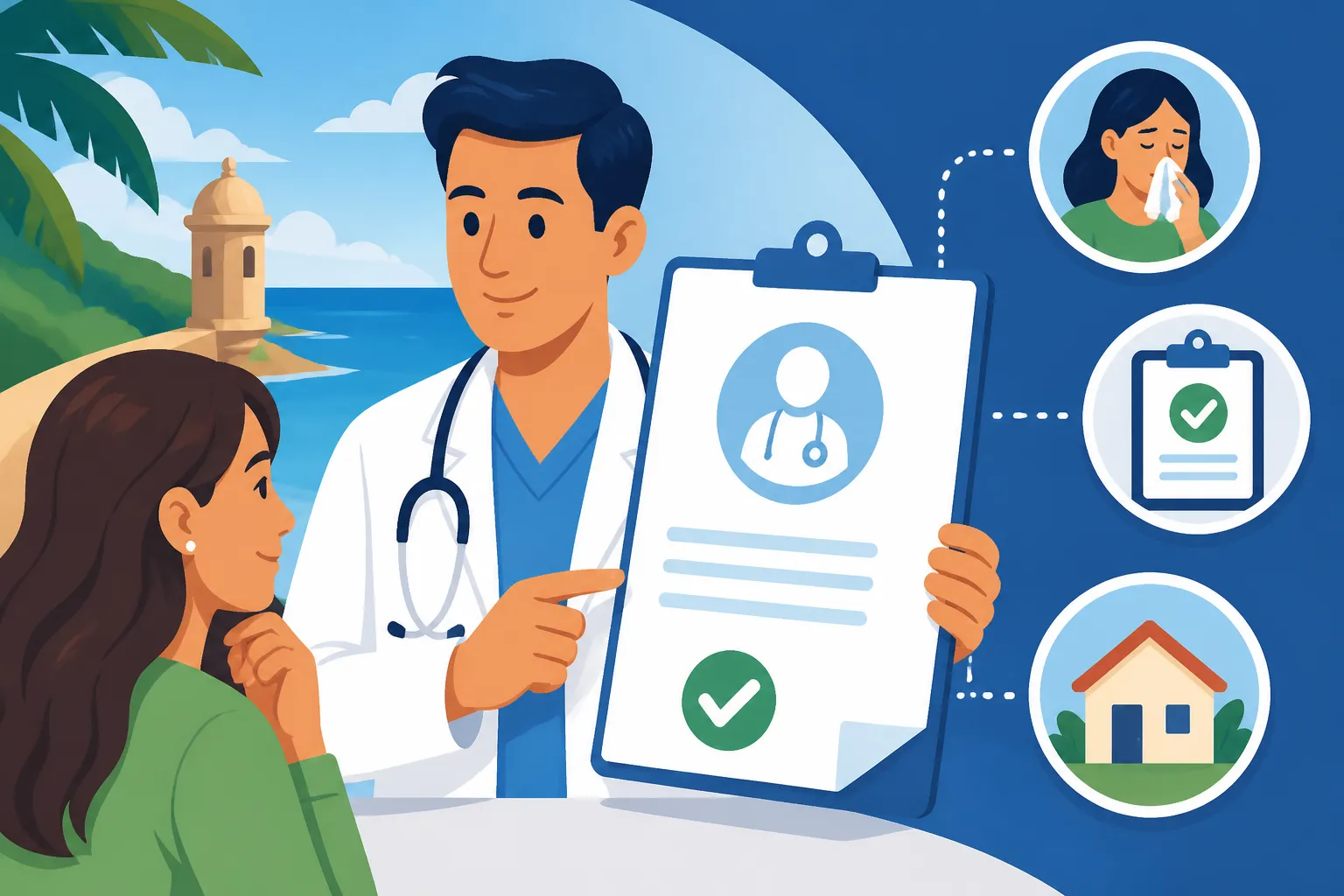
The "excusa médica" is usually a small, printed slip of paper or a handwritten note on a prescription-sized pad. It must contain:
- The doctor’s name and medical license number.
- The date of the visit.
- The date(s) the doctor recommends you stay out of work.
- The date you are cleared to return to work.
- The doctor’s signature and, ideally, an official office stamp (sello).
Without that official stamp or the license number, some HR departments might question the validity of the note. Ensure everything is legible before you leave the exam room.
| Facility Type | Typical Wait Time | Cost (No Insurance) | Best For |
|---|---|---|---|
| Primary Care Doctor | 1–3 Hours | $60–$100 | Established residents with local plans |
| CDT (Public Clinic) | 2–6 Hours | $20–$50 | Budget-conscious or rural residents |
| Private Urgent Care | 1–2 Hours | $100–$250 | Fast service in San Juan/Metro area |
| Telemedicine | 15–30 Mins | $40–$80 | Minor illnesses and quick excuses |
Telemedicine: The Modern Shortcut for Expats
In recent years, telemedicine has exploded in popularity in Puerto Rico. This is a game-changer for someone who is too sick to drive or simply wants to avoid a germ-filled waiting room. Many local insurance providers now have their own apps that connect you with a doctor via video call. These doctors can issue a digital "excusa médica" that you can simply email to your boss or HR representative.
If you are wondering, Can I Get a Telehealth Appointment in Puerto Rico?, the answer is a resounding yes. However, you must ensure the platform you use is licensed to provide services in the territory. Using a mainland-only telehealth service might result in a note that your local employer rejects because the doctor is not licensed by the Puerto Rico Medical Licensing and Discipline Board.
For expats using SafetyWing, their global network often includes access to telehealth consultations that can bridge the gap. Just ensure that when you speak to the doctor, you emphasize that you are currently in Puerto Rico and need the note to reflect local requirements.
Cultural Nuances and Language Barriers
While many doctors in the metro areas of San Juan and Condado speak excellent English, you may encounter language barriers in smaller clinics or rural areas. It is helpful to know a few key phrases:
- "Necesito una excusa médica para mi trabajo" (I need a medical excuse for my work).
- "¿Por cuántos días es la excusa?" (How many days is the excuse for?).
- "¿Cuándo puedo regresar a trabajar?" (When can I return to work?).
If you are nervous about the language barrier, you can search for a provider beforehand using a guide like How to Find an English-Speaking Doctor in Puerto Rico. Most doctors are very sympathetic to expats and will go out of their way to ensure you understand the instructions, but the administrative staff at the front desk may only speak Spanish.
One cultural aspect to keep in mind is the "island pace." Things in a medical office may move slower than you are used to in New York or Chicago. Bringing a book and some water is a veteran move. Don't be surprised if the waiting room is full of people chatting; it’s part of the social fabric here. Staying patient and polite will usually get you your note much faster than appearing frustrated.
What to Do If Your Note is Rejected
It is rare, but occasionally an employer might challenge a medical excuse, especially if it comes from a source they don't recognize or if the dates seem "convenient" (like around a holiday). Under Puerto Rican law, the employer has the right to verify the note, but they cannot force you to disclose your specific diagnosis due to privacy laws similar to HIPAA.
If your employer rejects a note, your first step should be to ask for the specific reason in writing. If it’s a missing stamp or license number, you can usually head back to the clinic and have them fix it. If the employer is being difficult regarding your right to leave, you may want to look into Understanding Vacation and Sick Leave Accrual in Puerto Rico to ensure you are being treated fairly.
If you are a new resident and haven't yet secured a local job but are working remotely, your mainland employer might have different standards. However, if they have a business nexus in Puerto Rico, they generally must follow island labor laws for their employees residing here. Navigating these waters is a part of the "newcomer tax"—the learning curve we all face when we first move to this beautiful island.
Handling the Costs of Unplanned Medical Visits
Getting sick is never in the budget. A visit to a private doctor without insurance can run anywhere from $70 to $200 depending on the complexity. If you need tests like a flu swab or a blood panel, the price climbs quickly. For those without a local plan, you should check How Much Does a Private Doctor Visit Cost in Puerto Rico? to get a realistic idea of the "cash" prices.
This is where supplemental coverage or a nomad-friendly policy becomes essential. Using SafetyWing can mitigate these "surprise" expenses, allowing you to focus on recovery rather than the hit to your bank account. Always keep your receipts (facturas) and the medical excuse, as you may need them for tax purposes or insurance reimbursement later.
Securing a medical excuse in Puerto Rico is a manageable task once you know the landscape. Whether you choose the local CDT, a high-end urgent care in Condado, or a digital telehealth session, the key is to be proactive. Don't wait until the third day of your illness to seek help; the law and your employer are much more accommodating when you have your documentation in hand from day one.
Disclaimer
This guide is provided for informational purposes only and does not constitute legal or medical advice. Labor laws and medical regulations in Puerto Rico are subject to change. Always consult with a qualified attorney regarding labor disputes or a licensed medical professional for health concerns.