Do I Qualify for the Vital Government Health Plan in Puerto Rico?
Moving to Puerto Rico brings an incredible change of pace, but it also drops you right into a healthcare maze that can feel overwhelming, especially if you are used to the mainland's employer-based systems. Many newcomers find themselves in a coverage gap, wondering if they can access the local public safety net. This guide clarifies exactly who qualifies for the Vital Plan, helps you navigate the complex eligibility rules, and provides a realistic roadmap for securing coverage in your new home.
Understanding the Foundation of the Vital Plan
The Vital Plan, often referred to as the Government Health Plan (GHP) or "Plan Vital," is Puerto Rico's primary solution for providing healthcare to its most vulnerable residents. It is essentially the island's version of Medicaid and the Children’s Health Insurance Program (CHIP). Unlike the mainland, where Medicaid is managed individually by each state with varying degrees of federal matching, Puerto Rico operates under a block grant system that often makes its public health funding more volatile. The system has undergone several branding shifts, but the core mission remains the same: ensuring that low-income individuals, families, and those with specific medical needs do not go without basic care.
When you first arrive, you might hear locals referring to it as "La Reforma" or simply "La Tarjeta de Salud." It is a managed care system, meaning the government contracts with private insurance companies—such as Triple-S, First Medical, or MMM—to administer the benefits. This is a crucial distinction for anyone Navigating the Puerto Rico Healthcare System: A Newcomer's Roadmap (2027) because it means that even under a public plan, your actual day-to-day experience will involve dealing with a specific private insurer's network.
For many expats, the initial shock comes from realizing that How Puerto Rico's Health System Works: Public vs Private Explained (2027) is quite different from what they left behind. On the mainland, Medicaid eligibility can sometimes extend quite far up the income ladder depending on the state. In Puerto Rico, because the cost of living and average wages are statistically lower, the income thresholds for the Vital Plan are significantly tighter. You are not just dealing with federal guidelines; you are dealing with a local administrative body called ASES (Administración de Seguros de Salud) that sets the bar based on the island’s unique economic reality.
Financial Eligibility and the Income Gap
The primary hurdle for any applicant is the financial requirement. To qualify for Vital, your household income must fall below specific limits based on the Federal Poverty Level (FPL) as adjusted for Puerto Rico. It is vital to understand that the "poverty level" in San Juan or Dorado is viewed differently by the government than it is in New York or Florida. If you are moving here under a high-paying remote work contract or as part of a tax incentive program, it is highly unlikely you will qualify for Vital. However, for those who have moved for a lifestyle change and are currently between jobs or working in lower-wage local sectors, the plan is a literal lifesaver.
The income calculation used is the Modified Adjusted Gross Income (MAGI). This takes into account your total household income, including any mainland-sourced income, social security, or freelance earnings. When I first started helping friends with their How to Get Health Insurance When You Move to Puerto Rico questions, the most common mistake was underestimating how strictly the local Medicaid office audits these figures. They will look at your tax returns, recent pay stubs, and even bank statements to ensure you meet the criteria.
If you find that your income is just slightly above the threshold for Vital, you might feel like you are stuck in "no man's land." You aren't wealthy enough to easily afford a top-tier private plan, but you aren't "poor enough" for the government plan. In these transitional phases, many expats look for flexible solutions. A provider like SafetyWing can be an excellent stop-gap for those who are still establishing their local income or waiting for a permanent residency status to be reflected in their paperwork. SafetyWing offers a level of flexibility that traditional local plans sometimes lack during that first 90-day transition period.
| Eligibility Category | Typical Income Requirement | Primary Benefit |
|---|---|---|
| Children (CHIP) | Up to 200% of PR FPL | Full pediatric and dental care |
| Pregnant Women | Up to 138% of PR FPL | Prenatal, delivery, and postpartum |
| Low-Income Adults | Roughly 100% of PR FPL | Primary care and hospitalization |
| Medically Needy | Based on medical expenses | Coverage for chronic conditions |
Categorical Eligibility and Special Groups
Beyond just the raw numbers in your bank account, Vital uses "categorical eligibility" to prioritize certain groups. If you fall into one of these categories, your path to enrollment is often much smoother. Children under the age of 19 are almost always the highest priority. The island places a significant emphasis on pediatric care, and the income limits for children (under the CHIP umbrella) are generally more generous than they are for single adults. If you are a parent, Understanding Childhood Vaccination Requirements in Puerto Rico is an essential part of the process, and having Vital can make those mandatory school check-ups much more manageable.
Pregnant women also receive expedited processing. If you are expecting, the government views your care as a matter of public urgency. This includes not just the birth itself, but comprehensive prenatal vitamins, screenings, and postnatal follow-ups. For those weighing their options, Understanding Maternity Care and Coverage in Puerto Rico will show that the public system is surprisingly robust in terms of basic maternal health, though many expats still prefer private hospitals for the added comfort and English-speaking staff.
The "Medically Needy" category is a third, often misunderstood path. This is for individuals who might have an income slightly above the limit but face astronomical medical bills due to chronic illnesses like cancer, end-stage renal disease, or HIV/AIDS. The system allows you to "spend down" your income on medical expenses until you reach the eligibility threshold. It is a bureaucratic nightmare to document, but for those facing life-threatening conditions without private insurance, it provides a crucial safety net. This is where Understanding the Vital Plan (Government Health Plan) in Puerto Rico (2027) becomes a technical exercise in record-keeping.
Residency Requirements and the "Bona Fide" Factor
You cannot just step off a plane at Luis Muñoz Marín International Airport and apply for the Vital Plan. To qualify, you must be a resident of Puerto Rico. This means you must have a physical address on the island and the intent to remain here. For US citizens moving from the mainland, this is relatively straightforward, but it still requires documentation. You will need a utility bill in your name (LUMA or AAA), a lease agreement, or a voter registration card.
For the government to process your application, you essentially need to prove you are no longer a resident of a mainland state. This ties deeply into the concept of Bona Fide Residency in Puerto Rico: The Definitive Tax Guide (2027). While the tax office and the health office are separate entities, they both look for the same "closer connection" to the island. If your ID still says "Texas" and your bank account is tied to an address in Austin, the local Medicaid office will likely reject your application, assuming you should be covered by your previous state's programs.
Non-US citizens face a much steeper climb. Generally, you must be a "qualified alien," which usually involves having a green card and, in many cases, having been a resident for at least five years. There are some exceptions for refugees or those granted asylum, but for the average foreign national moving to the island for work or retirement, the Vital Plan is usually out of reach. In these cases, maintaining international health insurance or choosing a plan like SafetyWing is not just a good idea—it is a necessity to avoid being hit with massive out-of-pocket costs at a private hospital. SafetyWing is particularly popular among the "digital nomad" crowd who may be living in Puerto Rico for a year but haven't yet secured the permanent residency status required for local public programs.
Navigating the Application Bureaucracy
Let’s be honest: applying for government assistance in Puerto Rico requires the patience of a saint. The local Medicaid offices (known as oficinas de Medicaid) are often crowded, and while there is an online portal, it frequently suffers from technical glitches. You should expect to make at least two or three trips to your local office. My best advice? Bring a Spanish-speaking friend if your "Spanglish" isn't quite up to par yet, as many administrative workers in the smaller municipal offices may not be fluent in English.
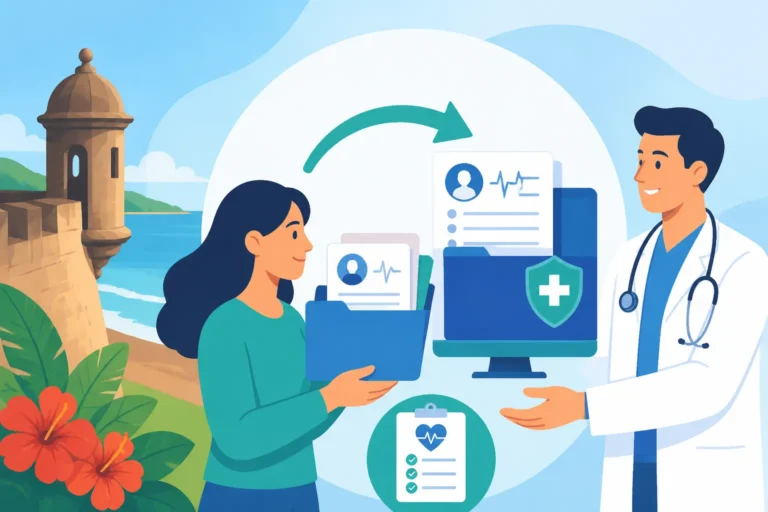
You will need an extensive folder of documents. This includes your birth certificate, Social Security card, proof of income for the last three months, and proof of residency. If you are self-employed, Understanding Health Coverage for the Self-Employed in Puerto Rico involves providing a profit and loss statement or a copy of your Merchant Registration (Registro de Comerciante). The system is designed to be thorough to prevent fraud, which unfortunately means it can feel quite invasive.
Once you submit your application, the waiting period begins. It can take anywhere from 30 to 90 days to receive your card. During this time, you are effectively uninsured unless you have a back-up plan. This is a dangerous window. Newcomers can get into a minor car accident or come down with a tropical virus like Dengue during this waiting period, only to find themselves facing thousands of dollars in emergency room bills. Having a temporary policy through SafetyWing can bridge this gap, ensuring that you have coverage for emergencies while the ASES bureaucrats process your Vital application.
Comparing Vital to Private Health Insurance
Even if you qualify for Vital, you should carefully consider if it meets your specific needs. The Vital Plan is excellent for primary care and emergency services at public hospitals, but the network of specialists can be limited. Wait times for a specialist referral can be months long. If you have a specific condition that requires frequent visits to a top-tier cardiologist or endocrinologist in San Juan, you might find the Vital network frustratingly slow.
In contrast, Health Insurance in Puerto Rico: Plans, Costs and Options Explained (2026) offers a much broader range of providers. Most private plans allow you to see specialists without a primary care referral, which is a major time-saver. Furthermore, many of the island’s best private hospitals, such as Auxilio Mutuo or Ashford Presbyterian, have specific wings or services that are primarily geared toward private insurance holders. If your budget allows for it, a private plan—even a basic one—can significantly improve your quality of life.
Another factor is Understanding the Difference Between Mainland and Puerto Rico Health Plans. Many people moving from the mainland assume their current insurance will work here. While some PPO plans have "out-of-network" coverage for the island, they often require you to pay upfront and seek reimbursement, which is a financial nightmare. Vital is a local solution, but it is not "transferable" back to the mainland. If you travel frequently between Puerto Rico and the states, you may find that a hybrid approach—or a global plan like SafetyWing—offers better protection for your lifestyle than the geographically locked Vital Plan.
Critical Considerations for Medicare Recipients
If you are a retiree moving to the island, your relationship with the Vital Plan is a bit different. Most seniors will be looking at Understanding Medicare and Medicare Advantage in Puerto Rico (2027) as their primary source of coverage. However, if you are a "dual-eligible" individual—meaning you qualify for both Medicare and Medicaid—you can actually receive additional benefits through the Vital Plan that Medicare alone doesn't cover, such as certain long-term care services or lower prescription co-pays.
The "Platinos" plans are a unique feature of the Puerto Rican system. These are Medicare Advantage plans that coordinate with the Vital Plan for low-income seniors. They often offer $0 premiums and very low out-of-pocket costs. If you are moving here on a fixed Social Security income, exploring the Platino options is essential. It provides a level of coverage that is often superior to what is available to low-income seniors on the mainland.
However, be aware that the enrollment windows for Medicare are strict. If you miss your window when moving to the island, you could face lifetime penalties. Always check how your move affects your Part B and Part D coverage before you pack your bags. For many expats in the 60+ bracket, the goal is to find that perfect balance between federal Medicare benefits and the local support provided by the Vital infrastructure.
Disclaimer
This guide is intended for informational purposes only and does not constitute legal, financial, or medical advice. Health insurance regulations, income thresholds for the Vital Plan, and residency requirements in Puerto Rico are subject to change by the government of Puerto Rico and federal authorities. Always consult with the Puerto Rico Health Insurance Administration (ASES) or a licensed insurance professional to confirm your specific eligibility and coverage options.