What Happens If I Get Sick Before My Insurance Starts in Puerto Rico?
Moving to Puerto Rico is a whirlwind of sun, salt air, and unfortunately, a mountain of administrative hurdles that can leave you feeling exposed. One of the most stressful "what-if" scenarios for any newcomer is facing a sudden illness or injury during that awkward transition period after arrival but before your local policy is active. This guide explains exactly how to navigate the healthcare system, manage costs, and find immediate care while you are in the insurance gap.
The Reality of the Insurance Gap for Newcomers
When you first land on the island, there is often a deceptive period of "medical limbo." You might be waiting for your employer-sponsored plan to kick in on the first of the following month, or perhaps you are a freelancer still navigating the paperwork for a private policy. This gap is not just a theoretical risk; it is a common reality for expats who find that the pace of local administration—often referred to as "Puerto Rico time"—is significantly slower than what they are used to on the mainland. During this window, you do not have the protection of a local provider network, and your mainland insurance may only offer limited, out-of-network emergency coverage, if it works at all.
The frustration of being "uncovered" is compounded by the fact that you are likely still learning the geography of your new neighborhood. I remember my first week in San Juan, feeling a fever spike and realizing I didn't even know where the nearest pharmacy was, let alone which clinic would accept a cash payment without an hours-long wait. It is a vulnerable position to be in, but it is manageable if you know the local landscape. You need to understand How to Get Health Insurance When You Move to Puerto Rico as your ultimate goal, but for the immediate present, you need a tactical plan for the "right now."
Many digital nomads and early-stage movers mitigate this specific risk by utilizing temporary solutions like SafetyWing. This type of coverage acts as a vital bridge, ensuring that if you stumble into a "medical gap" while waiting for your permanent residency paperwork to clear, you aren't stuck paying thousands out of pocket for a simple diagnostic test or an overnight observation stay. Having a fallback like SafetyWing allows you to focus on getting settled rather than panicking over a potential ER bill.
Where to Go When You Need Medical Attention Immediately
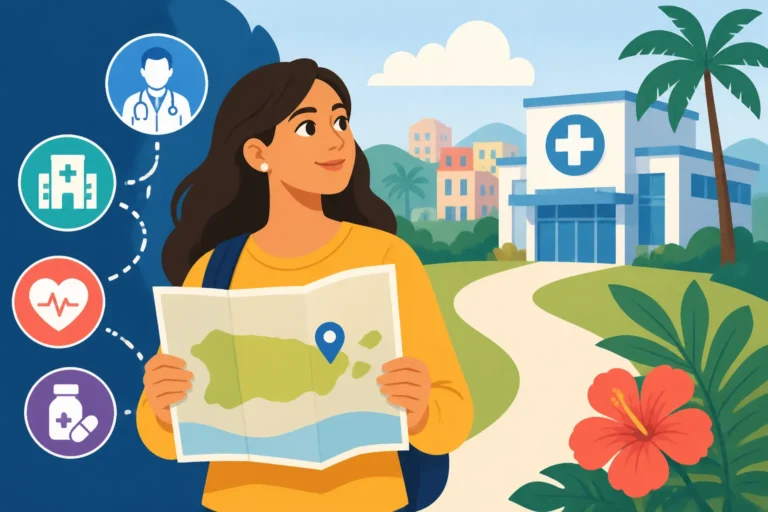
If you wake up with a persistent cough or a mounting infection before your local plan is active, your first instinct might be to head to the nearest hospital. However, in Puerto Rico, the emergency room should be your last resort unless the situation is truly life-threatening. For non-emergencies, the island utilizes a system of CDTs (Centros de Diagnóstico y Tratamiento). These are essentially community health centers or urgent care clinics that are equipped to handle everything from stitches and asthma attacks to basic lab work. They are significantly more affordable for those paying "pago directo" (cash pay) than a full-scale hospital.
When choosing a facility, it is helpful to look for private options if your budget allows. Places like Ashford Presbyterian in Condado or the Auxilio Mutuo in Hato Rey are well-regarded by the expat community for their efficiency and English-speaking staff. You should read up on The Guide to Choosing a Private Hospital in Puerto Rico (2027) to familiarize yourself with these institutions before you actually need them. If you are in a situation where you need to walk in without a local insurance card, be prepared to provide a photo ID (your mainland license is fine) and an initial deposit.
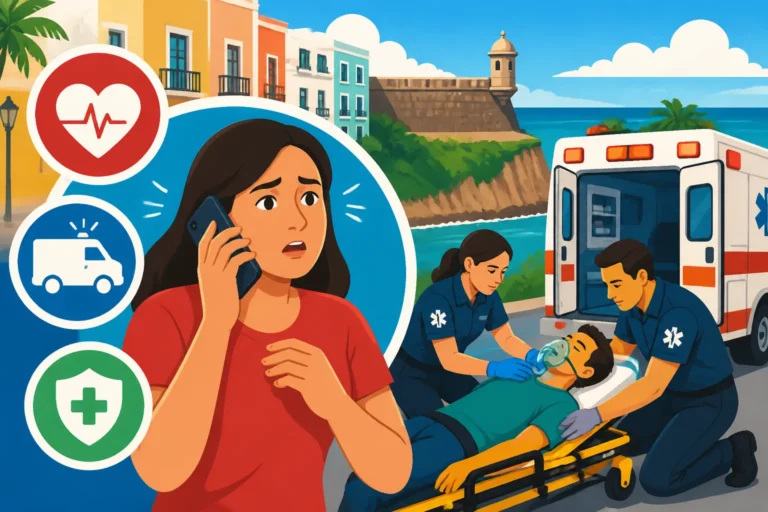
If you are dealing with a more serious crisis, you need to know Emergency Medical Care in Puerto Rico: What Every Resident Needs to Know. In these instances, do not wait for insurance confirmation. Puerto Rico hospitals are required by law to stabilize patients in emergency situations regardless of their insurance status. While the billing process later might be a headache, your immediate health is the priority. For those still in their first month on the island, having a policy through SafetyWing can provide a huge sigh of relief, as they are accustomed to handling international claims that local clinics might find confusing.
Understanding the Costs of Cash-Pay Medical Care
One of the few pleasant surprises for newcomers is that out-of-pocket medical costs in Puerto Rico are often lower than cash prices in major mainland cities like New York or Miami. However, "lower" does not mean "cheap." Without a negotiated insurance rate, a simple specialist consultation can cost anywhere from $100 to $250, and diagnostic imaging like an MRI can easily climb into the high hundreds. If you are uninsured, you are effectively a "private patient," and you will be expected to pay at the time of service.
The pharmacy system is another area where you will notice a difference. While many mainland chains like Walgreens and CVS are ubiquitous on the island, their pricing for those without a local plan can be steep. Always ask for the "precio de farmacia" or check if there is a generic version available. It is also wise to keep all your receipts. Even if your local insurance hasn't started yet, some mainland plans or supplemental policies like SafetyWing might offer reimbursement for "urgent care" expenses incurred during transit, provided you have the proper documentation and a medical report in hand.
To give you a better idea of what to expect while you are in the gap, here is a breakdown of estimated cash-pay costs for common medical services in 2026:
| Service Type | Estimated Cash Cost (USD) | Common Facility |
|---|---|---|
| General Practitioner Visit | $70 – $120 | Private Clinic / CDT |
| Specialist Consultation | $150 – $300 | Private Office |
| Urgent Care Visit (Basic) | $100 – $200 | CDT / Urgent Care |
| Emergency Room (Level 1) | $400 – $800 | Hospital ER |
| X-Ray (Single View) | $60 – $150 | Diagnostic Center |
| Blood Work (Standard Panel) | $50 – $120 | Laboratorio |
Before you head out, it is worth checking How Much Does an Emergency Room Visit Cost in Puerto Rico?) for a more granular look at hospital billing. Knowing these numbers ahead of time helps remove the "sticker shock" that often adds to the stress of being sick in a new environment.
Bridging the Gap and Transitioning to Local Coverage
The most important thing you can do while sick and uninsured is to document everything. When you eventually apply for your permanent island policy, having a record of what happened can be helpful, especially when discussing pre-existing conditions or "waiting periods." You should also start the process of finding a permanent physician immediately. Do not wait until you are healthy to look into How to Find and Register with a Primary Care Doctor in Puerto Rico. Many of the best doctors have waiting lists, and being an "established patient" makes a world of difference when you need a last-minute appointment.
While you are navigating this transition, you must also understand Understanding the Difference Between Mainland and Puerto Rico Health Plans. Many expats assume their Blue Cross or Aetna from the mainland will work seamlessly here. In reality, while some providers will "accept" it, they often treat it as out-of-network, requiring you to pay upfront and file for reimbursement yourself—a process that can take months. This is why having a local "Triple-S," "MCS," or "Humana" plan is the gold standard for living on the island long-term.
If you are currently feeling under the weather and panicking about your lack of a local card, take a deep breath. Focus on getting stabilized at a CDT or a reputable private clinic. If you haven't moved yet and are reading this as part of your research, consider signing up for a month of SafetyWing to cover your arrival window. It is a small price to pay for the peace of mind that comes with knowing you won't be wiped out financially before you even get your first electric bill. Once you are back on your feet, prioritize Navigating the Puerto Rico Healthcare System: A Newcomer's Roadmap (2026) to ensure you never find yourself in this "medical limbo" again.
Final Steps for the Uninsured Newcomer
If your condition is worsening and you are unsure where to turn, San Juan has the highest concentration of facilities. If you are in the metro area, you should specifically look into What Should I Do in a Medical Emergency in San Juan?) to identify the fastest routes to care. Remember that language can sometimes be a barrier in public clinics, so if your Spanish is still in the "beginner" phase, bringing a friend or using a translation app can help ensure your symptoms are accurately described to the triage nurse.
Once you have received care, the next logical step is to secure your future. Look into How Much Does Health Insurance Cost in Puerto Rico in 2026?) to budget for your permanent plan. Living in Puerto Rico is an incredible adventure, but it requires a different kind of preparedness than living on the mainland. The healthcare system is robust and the doctors are highly skilled, but the "entry gates" are guarded by a unique set of bureaucratic rules. By understanding the gap, utilizing temporary bridges like SafetyWing, and knowing your local CDTs, you can handle a surprise illness with the confidence of a seasoned local.
Disclaimer
This guide is for informational purposes only and does not constitute professional medical or legal advice. Healthcare regulations and insurance policies in Puerto Rico can change frequently. Always consult with a qualified insurance broker or medical professional regarding your specific situation and coverage needs. If you are experiencing a life-threatening medical emergency, call 911 immediately or proceed to the nearest emergency room.