Understanding Provider Networks and In-Network Care in Puerto Rico
Most newcomers arrive in Puerto Rico assuming their health insurance will function exactly as it does on the mainland, only to be met with a confusing "no aceptamos ese plan" at the doctor's office. This guide demystifies the island's unique provider networks, helping you navigate in-network care to avoid massive out-of-pocket expenses while ensuring your medical needs are met seamlessly.
What Are Provider Networks in Puerto Rico
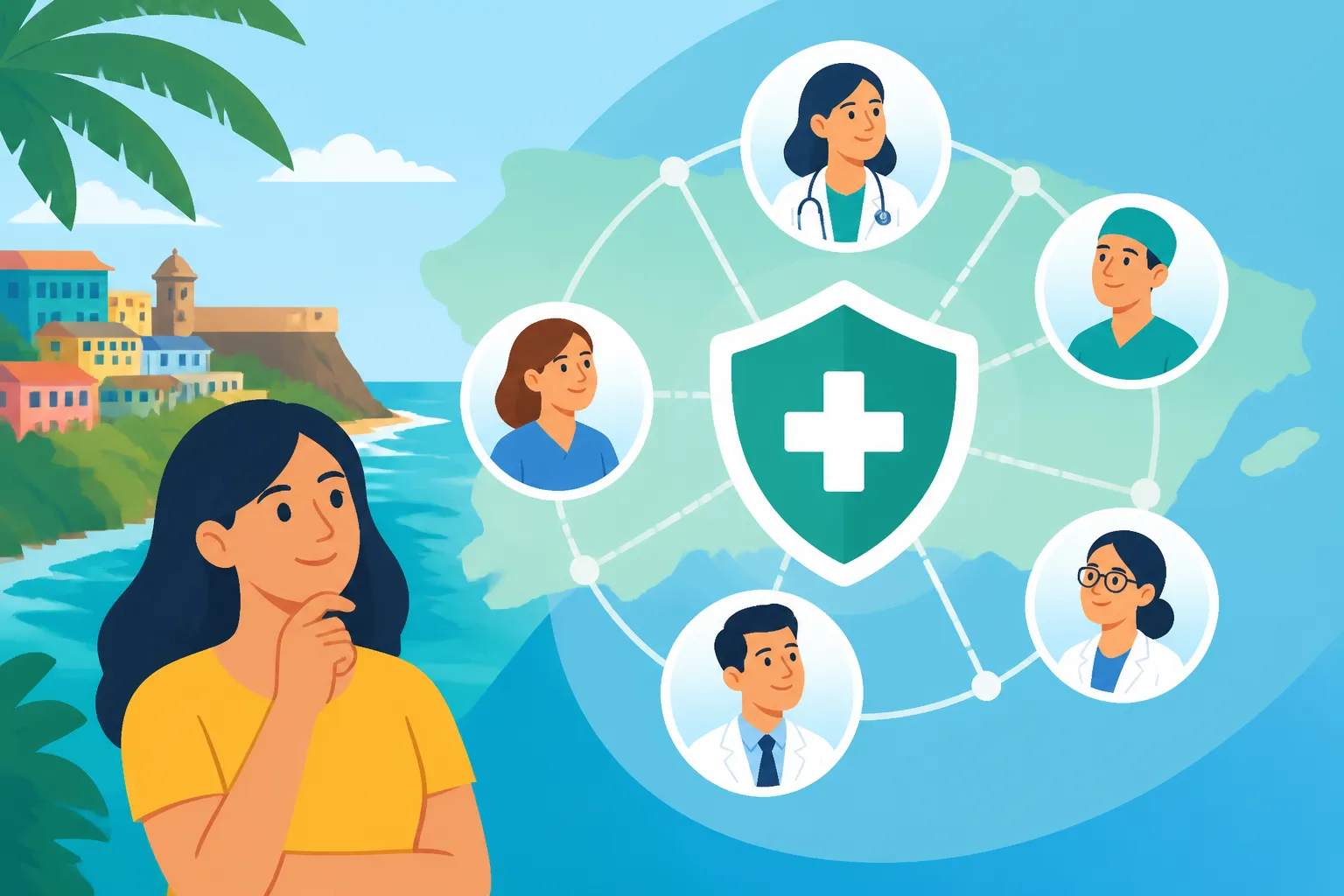
When we talk about a "provider network" in the context of Puerto Rican healthcare, we are referring to the specific group of doctors, specialists, hospitals, laboratories, and pharmacies that have a formal contract with a particular insurance company. On the island, these are often referred to as the Red de Proveedores. Unlike some broad PPO plans you might find in the States, networks here can be surprisingly localized and rigid. Understanding how they operate is the first step toward avoiding a financial headache.
The Concept of the Contracted Provider
In Puerto Rico, a doctor is not simply "a doctor." They are a participant in a complex web of negotiated rates. When a physician joins a network, they agree to accept a pre-negotiated fee for their services, which is usually significantly lower than their "rack rate." For you, the patient, this means the insurance company covers the lion's share of the bill, leaving you only with a predictable co-pay. If you step outside this network, the doctor has no obligation to honor those rates, and your insurance may provide zero coverage, leaving you with the full bill.
The administrative burden on the island is high, and many doctors choose their networks carefully based on how quickly the insurer pays claims. This means that even a highly reputable surgeon might be in-network for Triple-S but completely out-of-network for MCS. It is a fragmented landscape that requires constant vigilance from the patient. For a deeper look at the foundational elements, check out How Puerto Rico's Health System Works: Public vs Private Explained (2027).
Why Networks Are More Rigid Than on the Mainland
One of the biggest culture shocks for expats is realizing that the flexibility of "out-of-network benefits" is largely a myth here, unless you have a very high-end, expensive plan. Most local plans are HMO-style, meaning there is virtually no coverage if you go to a non-participating provider. This rigidity stems from the island's unique economic position and the way the Puerto Rico Insurance Commissioner regulates local carriers.
Because the cost of care is generally lower than on the mainland, insurers keep premiums down by tightly controlling which providers their members can see. This is why Understanding the Difference Between Mainland and Puerto Rico Health Plans is so critical; the "in-network" requirement is not a suggestion—it is a strict financial boundary. If you are a digital nomad or a new arrival waiting for your local residency to be established, you might find that using a global provider like SafetyWing helps bridge the gap, as they offer more flexibility during those initial months of administrative limbo.
The Impact of Geographic Clusters
In Puerto Rico, network availability can change drastically as you move from San Juan to the western side of the island. A provider network might be robust in the metro area but have significant "provider deserts" in places like Rincon or Isabela. This geographic clustering means that being in-network isn't just about the name of your insurance; it is about whether that insurance has actually managed to sign contracts with doctors in your specific municipality.
Many expats move to the west coast only to find that their "top-tier" San Juan plan has very few participating specialists nearby. You might find yourself driving two hours back to the metro area just to stay within your network. This is a logistical nightmare that can be avoided by researching which carriers have the strongest presence in your specific town before you sign up for a plan.
Navigating In-Network vs Out-of-Network Care
Staying in-network is the single most important rule for managing your medical costs in Puerto Rico. When you stay within the lines, your financial responsibility is usually limited to a co-pay, which might be as low as $10 or $20 for a primary care visit. However, the moment you cross that line, you are essentially a "cash patient," and the costs can escalate quickly, especially for diagnostic tests like MRIs or specialized surgeries.
Financial Consequences of Stepping Outside the Network
If you visit an out-of-network provider, you will likely be asked to pay the full price of the consultation upfront. While you can technically file a claim for reimbursement with your insurer, the success rate for this in Puerto Rico is notoriously low for standard local plans. Most local insurers will simply deny the claim because the provider was not part of their authorized panel.
Understanding the nuances of Understanding Co-Pays, Deductibles and Premiums in Puerto Rico will show you that even a "small" out-of-network lab test can end up costing hundreds of dollars more than the in-network version. It is not just the doctor's fee you have to worry about; it is the fact that out-of-network providers may order tests from out-of-network labs, creating a domino effect of unexpected bills that can ruin your monthly budget.
The Mandatory Referral System
In many Puerto Rican provider networks, you cannot simply call up a specialist and make an appointment, even if they are in-network. You are often required to have a "referido" (referral) from your Primary Care Physician (PCP). This piece of paper is the "key" that unlocks the specialist's network rates. Without it, the specialist's office may refuse to see you, or they may treat the visit as out-of-network, regardless of your insurance card.
This system is designed to control costs, but for the expat, it feels like an unnecessary hurdle. You have to learn How Specialist Referrals Work Under Puerto Rico Health Plans to navigate this effectively. Always ensure your PCP is in-network and that they are willing to provide referrals to the specialists you prefer. If you are using a flexible plan like SafetyWing for international coverage, these referral requirements are often much looser, which can be a breath of fresh air for those used to more direct access to care.
Pre-Authorization Hurdles
Beyond the referral, many in-network services require "pre-authorization" or "precertification." This is common for elective surgeries, high-cost medications, and advanced imaging. Even if the hospital and the doctor are both in-network, the specific procedure must be "blessed" by the insurance company before it happens.
Failing to get pre-authorization is a common trap. I remember a friend who went in for what they thought was a routine in-network procedure, only to find out later that the insurance company denied the claim because the paperwork wasn't filed 72 hours in advance. Always ask the provider's billing coordinator: "Has this been authorized by my plan?" Never take for granted that because the doctor is in-network, the procedure is automatically covered.
Major Health Insurance Carriers and Their Networks
Puerto Rico’s insurance market is dominated by a few major players. Each has its own distinct network philosophy and "footprint" on the island. Knowing the reputation of these networks can help you decide which plan is actually functional for your lifestyle.
Triple-S and MCS: The Heavyweights
Triple-S (a Blue Cross Blue Shield affiliate) and MCS (Medical Card System) are the two giants of the island. Triple-S generally boasts the largest provider network in Puerto Rico, making it the "gold standard" for those who travel frequently between different municipalities. If a doctor accepts insurance at all, they almost certainly accept Triple-S.
MCS is a close second and is particularly popular among professionals and those in the metro area. Their networks are extensive, and they often offer "Classic" or "Personal" plans that have very high acceptance rates. If you are looking for How to Access Specialist Care Through Private Hospitals in Puerto Rico, you will find that both of these carriers have strong ties to the best facilities in San Juan, such as Ashford Presbyterian or Auxilio Mutuo.
Humana and First Medical
Humana has a significant presence, especially through employer-sponsored plans and Medicare Advantage. Their network is solid but can sometimes feel more restrictive in terms of which pharmacies or labs you can use. First Medical is another local favorite, often used by government employees and smaller businesses. While their network is comprehensive, it is sometimes perceived as having more administrative "red tape" than the big two.
For those who are self-employed or waiting for their local coverage to kick in, How Much Does Health Insurance Cost in Puerto Rico in 2026? provides a breakdown of how these major players price their various network tiers. During this waiting period, a SafetyWing policy can provide essential emergency coverage, especially since it doesn't tie you to the specific regional restrictions of a local Puerto Rican HMO while you are still getting settled.
The Role of the "Libre Selección" (Open Selection)
Some higher-tier plans offer what is called "Libre Selección." This is the closest thing Puerto Rico has to a mainland PPO. It allows you to see providers outside the core network, but you will still pay a significantly higher co-insurance (often 20-30% of the total cost). These plans are significantly more expensive but are highly valued by expats who want to keep their options open or who have a specific doctor they refuse to leave.
Even with an open selection plan, you must still be careful. The "allowed amount" the insurance pays might be much lower than what the doctor actually charges, leaving you to pay the "balance bill." This is why even with premium coverage, we always recommend trying to stay in-network whenever possible.
Practical Tips for Verifying Your Doctor’s Status
The biggest mistake you can make is relying on an old provider directory or a sticker on a doctor's door. The medical landscape in Puerto Rico is fluid; doctors retire, move to the mainland, or drop specific insurance contracts every single month.
Using Provider Directories Correctly
Every insurance company provides an online "Directorio de Proveedores." While these are helpful starting points, they are rarely 100% accurate. Use them to create a "shortlist" of potential doctors, but never assume the information is current. When searching, pay close attention to the specific plan name. A doctor might accept "Triple-S Direct" but not "Triple-S Vital" (the government plan).
If you are just starting your search, knowing How to Find and Register with a Primary Care Doctor in Puerto Rico is essential. Use the directory to find someone near your home or office, but then move to the next, more important step: the phone call.
The "Call First" Golden Rule
Always, without exception, call the doctor’s office before your visit to confirm they are still in-network for your specific plan. Use very specific language. Don't just ask, "Do you take Triple-S?" Ask, "Are you currently a participating provider for the [Specific Name of Your Plan] plan, and are you accepting new patients under this network?"
The receptionist is your best source of truth. They are the ones who process the claims and know if the contract has recently changed. This is also a great time to ask about What Documents Do I Need to See a Doctor in Puerto Rico?. Usually, you will need your insurance card and a photo ID, but some offices are now requiring a physical copy of your referral or a specific authorization number for the first visit.
Verifying at the Time of Service
When you arrive at the clinic, present your card again and confirm one last time. It sounds redundant, but there are cases where a contract ends between the time the appointment was made and the day of the visit. If the office says they no longer take your plan, you have the choice to leave or pay as a "private" (cash) patient.
Having a backup plan is wise. For example, if you find yourself in a situation where no local doctors in your area are taking new patients under your network, having a global travel medical policy like SafetyWing can be a lifesaver. It allows you to seek care and deal with the reimbursement process later, which is often easier than fighting with a local HMO's administrative office.
Emergency Care and Network Exceptions
The rules for provider networks often change when you are in a true medical emergency. In a life-or-death situation, the priority is stabilization, not checking an insurance card. However, the aftermath of an emergency visit can be a bureaucratic nightmare if you aren't prepared.
The Emergency Room Reality
Under federal and local law, any hospital with an emergency room must stabilize you, regardless of your insurance. However, "stabilization" is a specific legal term. Once you are stable, the hospital may want to transfer you to an in-network facility. If you choose to stay at an out-of-network hospital for your entire recovery, you could be looking at a bill in the tens of thousands of dollars.
It is vital to know Emergency Medical Care in Puerto Rico: What Every Resident Needs to Know. In many cases, the ambulance (especially if called via 911) will take you to the nearest facility, which may or may not be in your network. This is where a policy like SafetyWing shines, as it is designed to handle emergency medical expenses globally, providing an extra layer of protection when local network boundaries are blurred by an urgent crisis.
In-Network Hospitals vs. Out-of-Network Doctors
One of the strangest traps in the healthcare system is when you go to an in-network hospital, but the specific specialist who treats you (like an anesthesiologist or a radiologist) is not in-network. This is a common problem on the mainland, and it happens in Puerto Rico too.
To mitigate this, when planning a procedure, you must ask The Guide to Choosing a Private Hospital in Puerto Rico specifically about their "contracted groups." Ask if the anesthesiology group and the pathology lab used by the hospital are in-network for your plan. Most major hospitals in San Juan try to ensure their staff is covered by the big insurers, but it is never a guarantee.
Seeking Care Outside of Puerto Rico
If you have a local Puerto Rican plan and you travel to the mainland U.S., you might be surprised to find that your "network" is very limited. Most local plans only cover true emergencies while you are off-island. If you want to see a specialist in Florida or New York using your Puerto Rico insurance, you usually need a specific "PPO" rider or a plan that explicitly includes a mainland network (like the BlueCard program via Triple-S).
For those who split their time between the island and the mainland, navigating these cross-border networks is tricky. Many residents find it easier to maintain a global policy like SafetyWing for their travels, as it avoids the headache of "out-of-area" denials that are so common with regional Puerto Rican plans.
Provider Network Comparison Table
| Feature | Triple-S (SSS) | MCS (Medical Card System) | Humana | First Medical |
|---|---|---|---|---|
| Network Size | Largest on island | Very Large (Metro focus) | Medium/Large | Robust (Local focus) |
| Mainland Coverage | BlueCard (Select plans) | Limited Emergency | Humana US Network | Very Limited |
| Referral Needed? | Usually (HMO plans) | Yes (Standard plans) | Yes | Almost Always |
| Digital Tools | Good Mobile App | Excellent Portal | Solid App | Basic |
| Best For | Island-wide residents | Professionals/San Juan | Corporate employees | Budget-conscious |
Special Considerations for English-Speaking Residents
For many expats, "in-network" isn't the only requirement; "English-speaking" is equally important. Finding a provider who satisfies both criteria can be a challenge, particularly outside of the San Juan metro area.
Finding English-Speaking In-Network Doctors
Many doctors in Puerto Rico were trained on the mainland and are perfectly bilingual. However, the front desk staff might not be. When you are looking for How to Find an English-Speaking Doctor in Puerto Rico, start by searching the in-network directory and then look for providers with offices in Condado, Santurce, or Guaynabo. These areas have the highest concentration of bilingual medical professionals.
Don't be afraid to ask, "Does the doctor speak English?" when you call to verify the insurance. Most are happy to accommodate, but having this confirmed before you arrive will save you a lot of stress during the consultation. I have found that specialists in private hospitals tend to have higher bilingual rates than those in public clinics (CDTs).
Navigating the Language Barrier in Billing
Even if your doctor is bilingual, the billing department and the insurance company’s customer service line might predominantly speak Spanish. This can make resolving network disputes or "balance billing" issues incredibly frustrating. If your Spanish is still a work in progress, consider having a local friend or a professional "gestor" help you with insurance claims.
Understanding how to communicate your needs is a skill you will develop over time. In the beginning, it can be overwhelming. This is another reason why new arrivals often prefer the customer support of international brands like SafetyWing during their transition period—having 24/7 English-speaking support for medical queries can be a massive relief when you are still trying to figure out how to say "deductible" in Spanish.
The Importance of Patient Advocacy
In Puerto Rico, you have to be your own best advocate. The system is heavily skewed toward the insurers, and mistakes in network classification happen often. If you receive a bill that seems wrong, don't just pay it. Call your insurance company and ask for an "Explicación de Beneficios" (EOB).
Check if the provider was truly out-of-network or if the office simply used the wrong billing code. Sometimes, a provider is in-network, but the specific office location hasn't been updated in the system yet. Being persistent and polite can often result in a bill being re-processed at the in-network rate, saving you hundreds of dollars.
Disclaimer
This guide is for informational purposes only and does not constitute legal, financial, or medical advice. Healthcare laws, provider networks, and insurance regulations in Puerto Rico are subject to frequent change. Always verify your coverage details directly with your insurance provider and consult with a licensed insurance professional or medical coordinator before making healthcare decisions. Stay informed by checking official government resources and current plan documents for the most up-to-date information.