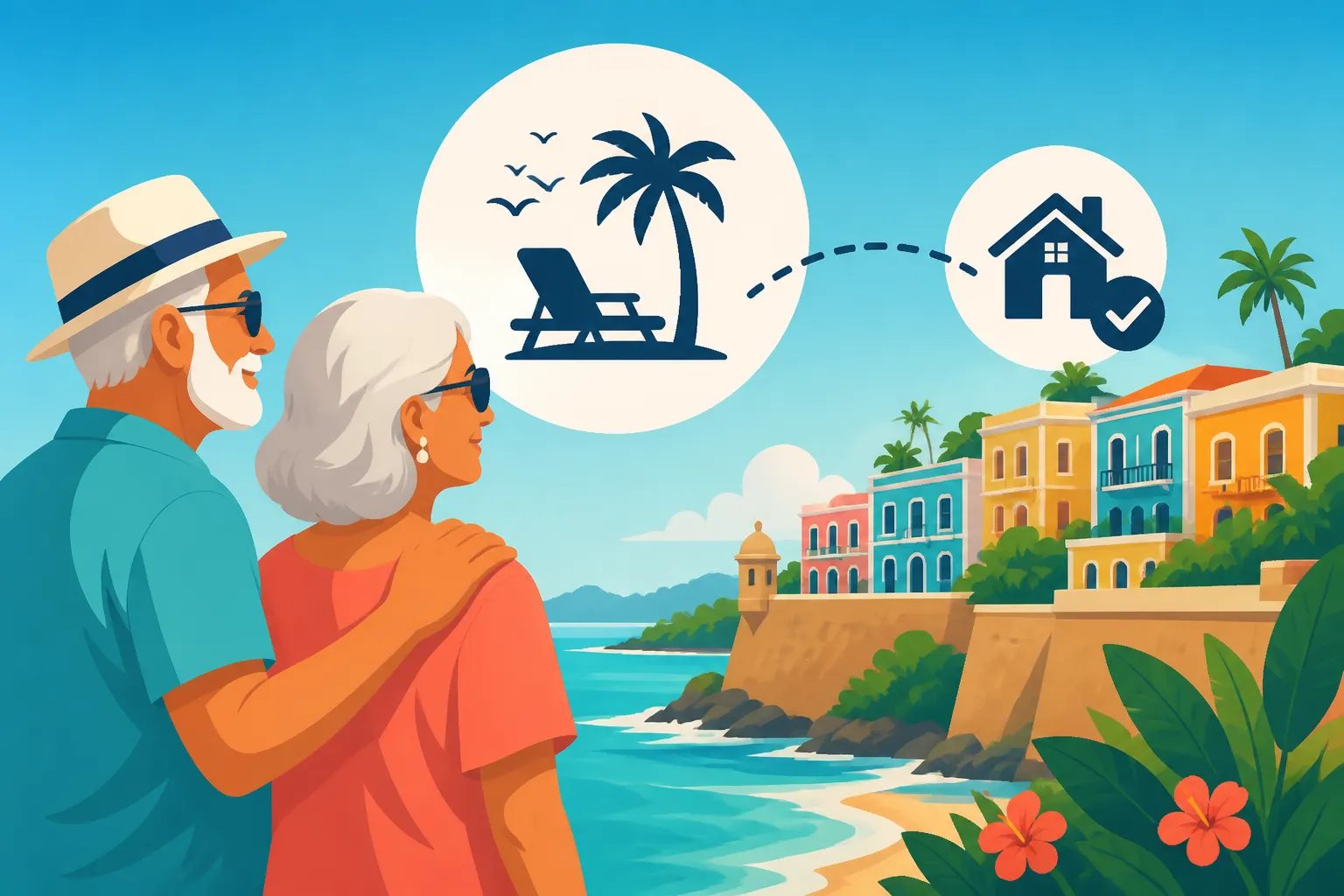
Can I Retire and Establish Residency in Puerto Rico?
Moving to a new place for retirement is a huge step, and for many, Puerto Rico offers a dream come true with its warm climate, vibrant culture, and the ease of being a U.S. territory. However, the path to establishing residency as a retiree here isn't always as simple as packing a suitcase and showing up. There are specific IRS rules around "bona fide residency" and practical steps you need to take to truly make Puerto Rico your home, especially if you want to enjoy potential tax benefits. This guide will walk you through everything you need to know about retiring and establishing residency in Puerto Rico, from legal definitions to daily life, ensuring you have a realistic and comprehensive understanding.
Understanding Bona Fide Residency for Retirees in Puerto Rico
The concept of "bona fide residency" is absolutely crucial if you're considering moving to Puerto Rico for retirement, especially from a tax perspective. The IRS has very specific criteria that determine whether you're genuinely a resident of Puerto Rico or just a long-term visitor. Many people initially misunderstand this, assuming that simply spending most of their time here automatically makes them a bona fide resident. Unfortunately, it’s not quite that simple, and getting it wrong can lead to serious headaches with your tax filings.
The IRS Bona Fide Resident Tests
To qualify as a bona fide resident of Puerto Rico for any given tax year, you generally need to meet three distinct tests: the Presence Test, the Tax Home Test, and the Closer Connection Test. Think of these as a checklist the IRS uses to make sure your move isn't just for show.
The Presence Test is the one most people immediately think of, and it's fairly straightforward: you must be present in Puerto Rico for at least 183 days during the tax year. This means physically being on the island for more than half the year. It's not just about owning property here; it's about being here. For retirees, this often feels like the easiest hurdle to clear, as you're likely planning to spend the majority of your time enjoying the island. However, it's vital to keep careful records of your travel dates, as this is often the first thing the IRS will scrutinize. If you're someone who likes to spend long summers off-island visiting family or traveling, you'll need to meticulously track your days. For more detailed guidance, you can read about How to Establish Bona Fide Residency in Puerto Rico (2027).
Next is the Tax Home Test. This means your "tax home" must be in Puerto Rico for the entire tax year. Your tax home is generally considered the place of your principal place of business, employment, or post of duty, regardless of where you maintain your family home. Now, for retirees, this often causes confusion because many don't have a "principal place of business." In this case, your tax home is considered your regular place of abode in a real and substantial sense. Essentially, if you're truly retired, your tax home becomes where you genuinely live. You can't maintain a significant income-generating business or full-time employment elsewhere and still claim Puerto Rico as your tax home, even if you meet the 183-day rule. It's about demonstrating that your economic center of gravity has shifted to the island.
Finally, the Closer Connection Test is often the most subjective but equally important. This test requires that you don't have a "closer connection" to the U.S. or a foreign country than to Puerto Rico. This is where the IRS looks at the totality of your circumstances. They want to see genuine ties to the island and a clear break from your previous residency. For retirees, this means things like: where your bank accounts are primarily held, where your doctor and dentist are, where your car is registered, where you vote, where your children go to school (if applicable), and where you have professional licenses. If you still have a mainland home that you visit frequently, multiple bank accounts there, and all your doctors are still stateside, the IRS might argue you have a closer connection to the mainland. You need to actively sever those mainland ties and build new ones here on the island.
The "Year of Move" and Transitioning Residency
The year you move is often the most complex for establishing bona fide residency. You might not meet all the tests for the full year. The IRS has specific rules for the "year of move" that can allow you to still qualify as a bona fide resident, even if you weren't present for 183 days of that specific year. However, this relies on a clear intention to remain in Puerto Rico for the foreseeable future and meeting the tests in the subsequent years. It's critical to start gathering documents and making deliberate choices that clearly show your intent to make Puerto Rico your permanent home from day one. Many retirees find professional help invaluable during this transitional period to ensure they are compliant.
Navigating the Practicalities of Establishing Residency as a Retiree
Once you understand the "bona fide residency" definition, the next step is to actually put it into practice. Moving to a new place, even one that's part of the U.S., involves a lot of administrative legwork, and for retirees, some aspects can be particularly challenging. You're not just moving house; you're moving your entire life, and that requires updating a lot of official records.
Essential Administrative Steps: Driver's License, Voter Registration, and Utilities
One of the first things you'll want to do upon arrival is to update your official identification. If you plan to drive, you'll need to transfer your mainland driver's license to a Puerto Rico one. This process happens at the CESCO (Centro de Servicios al Conductor) offices. It’s often a multi-step process, requiring a medical certificate, proof of address, and other documents. Don't expect it to be a quick in-and-out visit; patience is key. Having a local driver's license is a strong indicator of your intent to reside permanently and helps with the Closer Connection Test. For more information, check out The Guide to Getting Your Puerto Rico Driver's License and ID (2027).
Registering to vote in Puerto Rico is another clear sign of establishing domicile. Even if you don't participate in local elections, having your voter registration here is a tangible link to the community and further supports your residency claim.
Setting up utilities like electricity (LUMA Energy), water (AAA – Autoridad de Acueductos y Alcantarillados), and internet is also crucial. These accounts, under your name and at your Puerto Rico address, serve as undeniable proof of your physical presence and establishment. While getting them set up can sometimes feel like navigating a maze, it's an essential step. Our guide on The Newcomer's Guide to Setting Up Utilities (LUMA/AAA) in Puerto Rico can provide a more in-depth look at this process.
Banking and Financial Accounts
Shifting your primary banking relationships to Puerto Rico is another important step. While you can certainly maintain mainland accounts, having local accounts at banks like Banco Popular, Oriental Bank, or FirstBank for your day-to-day expenses, bill payments, and direct deposits of any local income is vital. It shows that your financial life is centered on the island. Opening a new account might require specific documentation, so be prepared. You can find more details in Banking in Puerto Rico: A Complete Guide for Newcomers (2027). This move reinforces your "closer connection" to Puerto Rico.
Healthcare Considerations for Retirees: Medicare and Beyond
Healthcare is a paramount concern for many retirees, and Puerto Rico has its own unique healthcare landscape. For U.S. citizens and residents, Medicare works in Puerto Rico, but with a few nuances. Original Medicare (Parts A and B) generally covers services on the island, but many mainland Medicare Advantage plans do not. You’ll likely need to enroll in a Puerto Rico-specific Medicare Advantage plan or a local Medicare Supplement plan (Medigap) to ensure comprehensive coverage. It's vital to research these options thoroughly before or immediately after your move. Our article on Understanding Medicare and Medicare Advantage in Puerto Rico (2027) provides a deep dive into this topic.
For those retiring early and not yet eligible for Medicare, or for those who desire additional coverage, exploring private health insurance options is crucial. Companies like Cigna Global offer international health plans that can provide peace of mind, especially if you anticipate travel between Puerto Rico and the mainland or other countries. It’s always best to have your healthcare sorted before any unexpected medical needs arise.
Financial Considerations and Potential Incentives for Retirees
Retirement is all about managing your finances wisely, and Puerto Rico’s unique tax structure can be a draw for some, but it’s crucial to understand how it truly applies to your situation as a retiree.
The Tax Landscape for Retirees: Social Security and Pensions
One of the most appealing aspects for many contemplating retirement in Puerto Rico is the tax treatment of certain income streams. For bona fide residents of Puerto Rico, income derived from sources within Puerto Rico is generally exempt from federal income tax. This is a significant distinction.
So, how does this affect your retirement income? Social Security benefits are generally not taxed by Puerto Rico. They are also typically exempt from federal income tax for bona fide residents of Puerto Rico. This can be a substantial benefit.
Pension income can be more complex. If your pension is from a U.S. mainland employer or government and is considered U.S.-sourced income, it may still be subject to U.S. federal income tax, even if you are a bona fide resident of Puerto Rico. However, some private pensions might qualify for favorable treatment under Puerto Rico law if they are considered Puerto Rico-sourced. This is an area where consulting with a tax professional experienced in both U.S. federal and Puerto Rico tax law is non-negotiable. They can help you determine the source of your pension income and its taxability.
Interest and dividend income from Puerto Rico sources are also generally exempt from federal income tax for bona fide residents. However, income from investments held on the mainland might still be federally taxable. Understanding How Puerto Rico Taxes Work: Federal vs Local (Hacienda) Explained (2027) is critical.
Act 60 Tax Incentives: A Note of Caution for Retirees
Many people hear about the Act 60 tax incentives (formerly Act 20 and Act 22) and immediately assume they apply to all new residents, including retirees. While these incentives offer significant tax benefits, especially for individual investors (Act 60 Individual Investor decree holders) and export services businesses (Act 60 Export Services decree holders), they are generally not designed for the average retiree living solely on Social Security and a traditional pension.
The Act 60 Individual Investor incentive, for example, requires the decree holder to be a bona fide resident of Puerto Rico and generally provides a 0% tax rate on Puerto Rico-sourced capital gains and dividends for those who receive the decree. However, it usually involves specific investment requirements and an annual donation to a Puerto Rico non-profit. Most retirees' primary income streams (Social Security, traditional pensions) don't typically fall under the scope of what Act 60 is designed to incentivize. While it's worth understanding the program, as our guide on Understanding Act 60 Tax Incentives in Puerto Rico: The Full Guide (2026) explains, it’s not a universal benefit for all retirees. Don't assume you'll automatically qualify or benefit from it unless your financial situation involves significant Puerto Rico-sourced investment income.
Cost of Living Implications
While there can be tax advantages, it's essential to understand the overall The Complete Guide to Cost of Living in Puerto Rico (2026). While some things like property taxes might be lower than in some mainland states, other costs, such as electricity, imported groceries, and certain goods, can be surprisingly high. Rent in popular areas like San Juan, Dorado, or Rincon can rival or exceed prices in many U.S. cities. You need to create a realistic budget based on your expected retirement income and the actual costs of living on the island. Don't just rely on anecdotes; do your research!
Life as a Retiree in Puerto Rico: Community and Lifestyle
Beyond the legal and financial aspects, moving for retirement is fundamentally about lifestyle. Puerto Rico offers a rich, vibrant, and unique cultural experience, but it’s also important to be realistic about the adjustments you'll need to make.
Integrating into the Community: Language and Culture
One of the biggest factors in a successful retirement relocation is integration into the local community. While English is spoken in many tourist areas and by a segment of the population, especially younger generations and professionals, Spanish is the dominant language. Daily life, particularly outside of San Juan's metropolitan areas, will almost certainly involve speaking Spanish. Learning at least conversational Spanish will significantly enhance your experience, allow you to navigate daily errands with greater ease, and truly connect with the culture. Otherwise, you might find yourself feeling isolated or constantly relying on others.
Puerto Rican culture is vibrant, family-oriented, and often moves at a different pace than what many mainlanders are accustomed to. Embracing "island time" and learning to navigate the local customs and bureaucracy with patience and a smile will go a long way. The food, music, and traditions are incredibly rich and welcoming, but it does require an open mind and a willingness to adapt.
Finding Support Networks and Social Life
As a retiree, building a new social network is essential. There are expat groups across the island, particularly in areas like San Juan, Dorado, and Rincon, where many newcomers have settled. These groups can be a fantastic resource for advice, friendship, and cultural exchange. Joining local clubs, volunteer organizations, or taking classes (language, art, cooking) can also help you meet both fellow expats and local Puerto Ricans. Many retirees find solace and community in church groups, golf clubs, or even simply through regular visits to local coffee shops or parks.
Remember that moving is a big undertaking, and there will be days that feel challenging. Having a strong support network, whether it's through online forums, local meet-ups, or simply making friends with your neighbors, will be invaluable in making Puerto Rico truly feel like home. Many newcomers find the assistance of relocation services like Sirelo helpful in managing the logistics of moving their belongings and getting settled, which frees up mental energy for building their new life.
Daily Life and Enjoyment
For many, retiring to Puerto Rico means a slower pace of life, beautiful beaches, and outdoor activities year-round. Whether it's morning walks on the beach, exploring the rainforest, golfing, or simply enjoying a cafecito on your balcony, the island offers endless opportunities for enjoyment. However, it's also important to be prepared for realities such as inconsistent electricity (though improving), occasional water outages, and slower service delivery for some things. These are part of island life and require a certain level of flexibility and a good sense of humor. Having a clear plan, like our How to Plan Your Move to Puerto Rico Step by Step (2027), can help manage expectations.
Summary of Key Residency and Retirement Considerations
Here’s a quick overview of some key points to consider when planning your retirement and residency in Puerto Rico:
| Aspect | Key Considerations for Retirees in Puerto Rico |
|---|---|
| Bona Fide Residency | Must meet IRS Presence (183 days), Tax Home, and Closer Connection Tests. Document everything meticulously. |
| Driver's License | Transfer your mainland license at CESCO. Proof of local residency and medical certificate required. |
| Voter Registration | Register to vote in Puerto Rico to demonstrate intent to reside permanently. |
| Utilities | Set up LUMA (electricity) and AAA (water) in your name. Essential for proof of address. |
| Banking | Establish primary bank accounts with local institutions (e.g., Banco Popular, Oriental Bank). |
| Healthcare | Medicare Parts A & B generally work, but you'll likely need a Puerto Rico-specific Medicare Advantage or Medigap plan. Consider Cigna Global for other plans. |
| Social Security Tax | Generally exempt from both federal and Puerto Rico income tax for bona fide residents. |
| Pension Income Tax | Can be complex. U.S.-sourced pensions may still be federally taxable. Seek expert tax advice. |
| Act 60 Benefits | Not typically for traditional retirees. Primarily for investors/businesses with specific income types. Do not assume eligibility. |
| Cost of Living | Be realistic about expenses. Some costs (electricity, imported goods) can be higher than on the mainland. |
| Language & Culture | Spanish is dominant. Learning the language greatly enhances integration and daily life. Embrace "island time." |
| Community | Seek out expat groups, local clubs, and activities to build your social network. |
Ultimately, retiring and establishing residency in Puerto Rico is entirely possible and deeply rewarding for many. It requires thorough planning, patience, and a genuine commitment to making the island your home. By understanding the rules, preparing for the practicalities, and embracing the unique culture, you can absolutely create a fulfilling retirement here.
Disclaimer
The information provided in this article is for general informational purposes only and does not constitute legal, financial, or tax advice. While we strive to provide accurate and up-to-date information, laws and regulations in Puerto Rico and the United States can change rapidly. It is highly recommended to consult with qualified legal, tax, and financial professionals experienced in Puerto Rico and U.S. federal regulations before making any relocation or financial decisions.