Understanding Childhood Vaccination Requirements in Puerto Rico
Moving your family to the Caribbean sounds like a dream until you encounter the local administrative hurdles that can bring your school enrollment plans to a screeching halt. Many parents arrive on the island thinking their mainland immunization records are sufficient, only to discover that Puerto Rico requires a specific, government-validated document known as the "Green Paper" or P-VAC-3. This guide breaks down exactly how to navigate the Department of Health’s requirements so your children can start their island education without delay.
Why Puerto Rico’s Vaccination Rules Feel Different
If you are moving from a state with relatively relaxed school entry requirements, the strictness of Law 25 in Puerto Rico might come as a surprise. Here, the government views vaccination not just as a recommendation but as a prerequisite for participating in any organized educational or daycare activity. This applies to both public and private schools, as well as licensed daycare centers. Many families get frustrated when a prestigious private school in Condado or Guaynabo refuses to let a child attend the first day of class because their immunization record wasn't transcribed onto the local system.
The Legal Framework and Law 25
The backbone of childhood health on the island is Law 25, the "Immunization Act for Students and Children in Daycare." This law mandates that no child can be admitted to a school or daycare facility unless they are fully immunized according to the Department of Health's schedule. What makes this challenging for newcomers is that the law specifically requires the P-VAC-3 form, which is a physical green document generated from the Puerto Rico Immunization Registry (PRIR). Even if your child is fully up-to-date according to the CDC, the school’s registrar cannot legally accept a printout from a doctor in Florida or New York. You must have that data entered into the local system by a provider authorized in Puerto Rico.
In my experience, the administrative bottleneck is often the most stressful part of Navigating the Puerto Rico Healthcare System: A Newcomer's Roadmap (2027). You might find yourself in a situation where you have the records, but your local pediatrician’s office is backed up, or the system is down. It’s essential to start this process the moment you land, rather than waiting for the week before school starts in August.
Navigating the Cultural Approach to Public Health
Public health is taken very seriously in Puerto Rico, often with a more communal focus than on the mainland. You will notice that vaccination campaigns are highly visible in local media and through community clinics known as CDTs (Centros de Diagnóstico y Tratamiento). While you might be used to a private, quiet office visit, many families here utilize these community centers for their basic health needs.
Understanding the culture of the local clinic is part of the transition. There is often a lot of paperwork, and things move at "island time," but the staff are generally very dedicated to children’s welfare. If you are still waiting for your local insurance to kick in, you might consider travel or transition insurance like SafetyWing to cover other medical needs while you focus on getting your mandatory vaccines sorted at a local clinic. SafetyWing can be a lifesaver for digital nomad families who are in that "in-between" stage of residency.
The Mandatory Vaccination Schedule for Children
Puerto Rico generally follows the Advisory Committee on Immunization Practices (ACIP) and CDC guidelines, but there are specific intervals and requirements that the Department of Health enforces strictly for the P-VAC-3. If you are coming from abroad, you should review The Complete Guide to Healthcare in Puerto Rico for New Residents (2027) to understand how these requirements fit into the broader medical landscape.
Early Childhood and Toddler Requirements
For children aged 0 to 6, the requirements are extensive. Before entering daycare or kindergarten, children must have completed the primary series for several diseases. This includes Hepatitis B, DTaP (Diphtheria, Tetanus, and Pertussis), Hib, Polio (IPV), and PCV (Pneumococcal). One area where parents often get caught off guard is the requirement for the second dose of MMR (Measles, Mumps, and Rubella) and Varicella (Chickenpox).
In Puerto Rico, the school will look for these doses to be completed before the child enters the "Pre-K" or Kindergarten level. If your child had a different schedule on the mainland, a local doctor will have to reconcile those dates. If there are missing doses, your child will be issued a "Provisional" Green Paper, which allows them to start school but gives you a strict deadline (usually 30 to 60 days) to get the remaining shots.
School-Age and Adolescent Boosters
As children grow, the requirements don’t stop. For students entering the sixth or seventh grade (usually around age 11 or 12), Puerto Rico requires a Tdap booster, a Meningococcal vaccine, and the HPV vaccine. The HPV requirement has been a point of discussion for some families, but it is currently mandated for school attendance in Puerto Rico, unlike in many mainland states.
If you are unsure if your child’s current records meet these standards, it is worth checking What Vaccinations Are Required for Children in Puerto Rico Schools? for a more granular breakdown. Adolescents moving in high school will also need to show proof of a second Meningococcal dose if they are 16 or older. The goal is to ensure that by the time a student reaches graduation, they have a complete record in the PRIR system.
Getting the Form P-VAC-3 (The Green Paper)
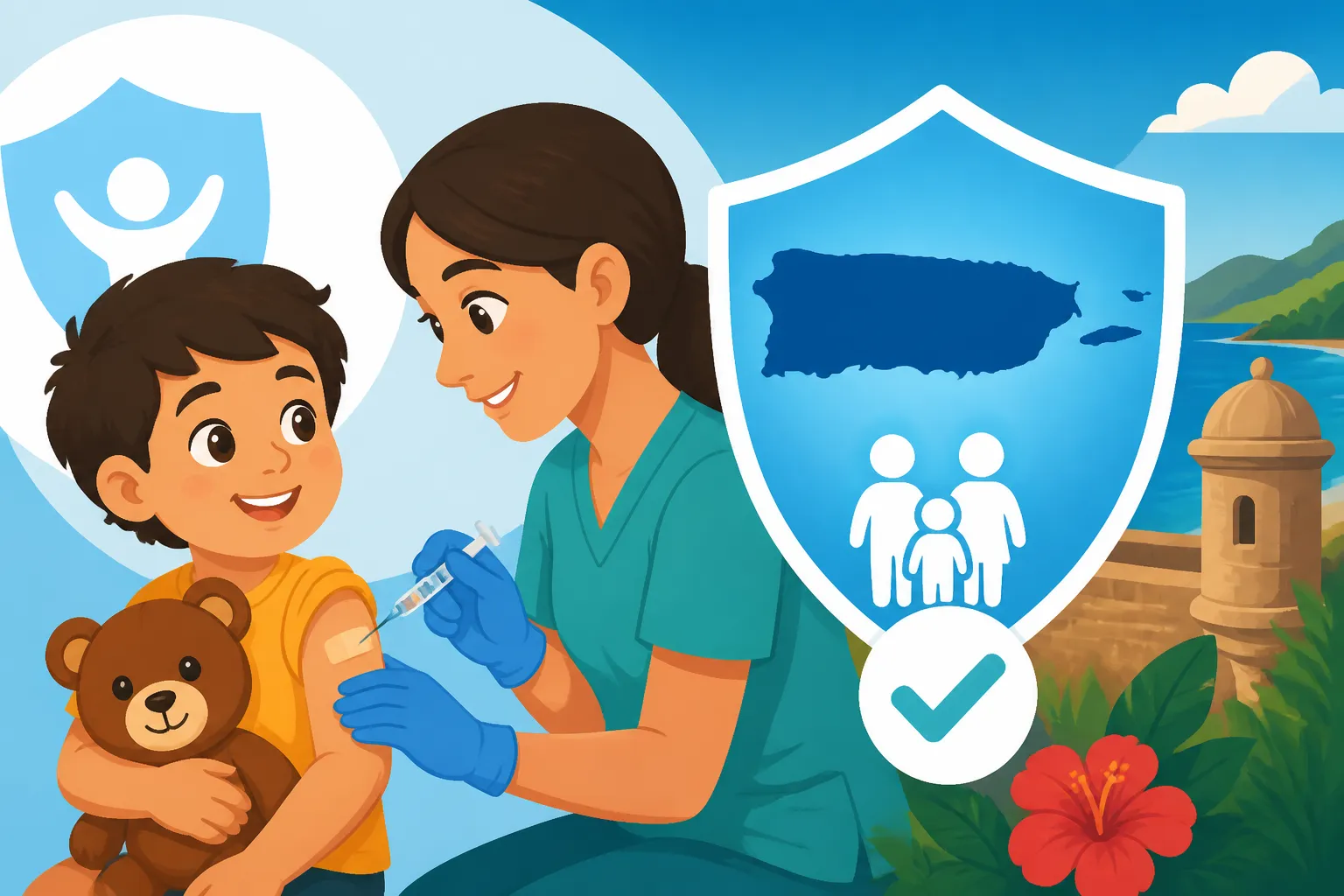
This is the "Golden Ticket" of the Puerto Rican school system. Without the P-VAC-3, your child technically does not exist in the eyes of the school's health records. The document is printed on specialized green paper (though some offices now use a digital version with a specific barcode) and lists every vaccine the child has received, along with the date and the provider's signature.
Why Your Mainland Records Aren't Enough
Many parents ask, "Why can't I just show my CDC card?" The answer lies in the PRIR—the Puerto Rico Immunization Registry. This is a centralized database that allows the Department of Health to track vaccination rates across the island. Schools are required to report their compliance rates to the government, and they can only do that using data that is already in the PRIR.
When you arrive, you must take your existing records to a local provider. That provider will then manually enter your child’s entire history into the PRIR. This can be time-consuming, and some doctors charge a small administrative fee for this "transcription" service. This is a common part of How to Find and Register with a Primary Care Doctor in Puerto Rico. Do not lose your original mainland records; the local doctor needs them to verify the dates and lot numbers of the vaccines previously administered.
Where to Find a Provider to Issue the P-VAC-3
You have three main options for obtaining this form:
- Private Pediatricians: Most expats choose this route. A private pediatrician in San Juan or Guaynabo will handle the entry and print the form during your initial wellness visit.
- CDTs (Community Clinics): These are public/private hybrid clinics found in almost every municipality. They are often more affordable if you are paying out of pocket, but wait times can be significant.
- Vaccination Centers: During the summer months, the Department of Health often sets up "Back to School" fairs at malls like Plaza Las Américas. These are convenient but extremely crowded.
If you are in the process of moving and haven't settled on a permanent doctor yet, you might still be using a global health plan like SafetyWing for your family's unexpected illnesses, but for the P-VAC-3, you must visit a locally licensed Puerto Rican provider.
Navigating Clinics and Pharmacies in Puerto Rico
The experience of getting a vaccine in Puerto Rico can vary wildly depending on where you go. If you are used to a high-end suburban clinic in the States, a local CDT might feel a bit more utilitarian. However, the medical standard of care is high.
Public Clinics (CDTs) vs. Private Pediatricians
Choosing between a public CDT and a private pediatrician often comes down to your insurance and your patience. If you have a local private plan, like Triple-S or MCS, a private pediatrician is the way to go. You’ll have a scheduled appointment and a more personalized experience. However, be aware that many private pediatricians in Puerto Rico do not keep all vaccines in stock. They may give you a prescription to pick up the vaccine at a local "Farmacia de Comunidad" (community pharmacy) and then bring it back to the office to be administered.
This "buy and bill" or "prescription" model is very common here but can be confusing for newcomers. You go to the doctor, they give you a script, you go to the pharmacy to get the vaccine (which must be kept cold!), and then you rush back to the doctor's office. This is one of the many quirks of Understanding the Pharmacy System and Generic Drugs in Puerto Rico.
What to Expect During an Appointment
When you go to get your child’s P-VAC-3 or their shots, you must bring:
- Your child’s birth certificate (original and a copy).
- Your child’s social security card.
- The parent or legal guardian's ID.
- All previous immunization records.
- Your local insurance card or proof of coverage.
Expect to spend a few hours at the office, especially if it’s your first visit. The staff will need to verify every single date on your mainland records. If a date is illegible or a signature is missing from your old records, they may not be able to enter it into the PRIR, which might mean your child needs a "catch-up" dose. This is why it’s vital to ensure your records are pristine before you leave the mainland.
Handling Insurance and Costs for Vaccines
Vaccines are generally covered by insurance in Puerto Rico under the Affordable Care Act (ACA) mandates, but the way they are paid for can be a maze. If you are curious about broader costs, check out The Cost of Healthcare in Puerto Rico: A Complete Breakdown for Newcomers (2026).
Using Local vs. Mainland Insurance
If you are still using a mainland US insurance plan (like a BCBS plan from a former employer), you may find that local providers are "out of network." While they might accept the insurance for the office visit, they may not be able to process the vaccine claim directly. In these cases, you might have to pay out of pocket and seek reimbursement.
This is where having a transitional plan can help. While SafetyWing is primarily for travel and international health needs, it provides a safety net for families who are still waiting for their local Puerto Rico employer-based coverage to start. Always verify with the clinic beforehand if they can "bill" your specific insurance for the P-VAC-3 administrative fee.
Out-of-Pocket Costs and Assistance Programs
If you are uninsured or your insurance doesn't cover certain shots, the "Vaccines for Children" (VFC) program is available in Puerto Rico. This federal program provides vaccines at no cost to children who are Medicaid-eligible, uninsured, or underinsured. Many CDTs are VFC providers.
| Vaccine Category | Typical Age | Requirement Level |
|---|---|---|
| Primary Series (HepB, DTaP, Polio) | 0-6 Years | Mandatory for Daycare/Kinder |
| MMR & Varicella (Dose 2) | 4-6 Years | Mandatory for School Entry |
| Tdap & Meningococcal | 11-12 Years | Mandatory for Middle School |
| HPV (Human Papillomavirus) | 11-12 Years | Mandatory (with exemptions) |
| COVID-19 / Flu | Various | Recommended (Check current mandates) |
Even with free vaccines, you may still pay an administrative fee for the P-VAC-3 printout. This fee is usually between $20 and $50 per child if it’s not covered by insurance. Understanding How to Claim Reimbursement from Your Health Insurer in Puerto Rico can help you recoup these small but annoying costs.
Practical Tips for New Families Moving to the Island
The logistics of moving can be overwhelming, but childhood health is one area where you cannot afford to be disorganized. It is wise for families to create a dedicated "Puerto Rico Health Folder" before they even board the plane.
Preparing Your Records Before You Leave
Before you leave your current home, visit your pediatrician and ask for a certified copy of the immunization record. Specifically, ask for a "comprehensive" printout that includes the brand names and lot numbers of the vaccines. This makes the data entry into the Puerto Rican PRIR much smoother. If the local clerk can't read the handwriting of your doctor in Topeka, they won't enter the data, and your child will be flagged as "non-compliant."
Also, check if your child is due for any shots in the next six months. It is significantly easier to get those shots done with your familiar doctor on the mainland than to navigate the How to Find and Register with a Primary Care Doctor in Puerto Rico process while also trying to find a house and set up utilities.
Dealing with Language Barriers in the Medical System
While many doctors in Puerto Rico are bilingual (having studied on the mainland), the administrative staff at the front desk or the nurses at a local CDT may primarily speak Spanish. This can lead to misunderstandings about whether your child is "up to date."
If your Spanish is limited, consider bringing a local friend or using a translation app to ensure you understand exactly what the requirements are. Most "Green Paper" issues arise from a simple lack of communication between the parent and the data entry clerk. Be patient, bring a book, and remember that everyone is working toward the same goal: keeping the island's children healthy. If you’re ever in a pinch and need medical advice in English, Where Can I Find an English-Speaking Doctor in San Juan? is a great resource to have bookmarked.
Transitioning to life in Puerto Rico is a marathon, not a sprint. Getting your children's vaccinations and the P-VAC-3 form is one of those early "tests" of residency. Once you have that green paper in hand and your kids are successfully enrolled in school, you'll feel like you've truly conquered one of the island's most notorious administrative hurdles. And remember, during this transition, keeping a flexible health option like SafetyWing in your pocket ensures that while you're focused on the paperwork, your family's actual health is never at risk.
Disclaimer
This guide is for informational purposes only and does not constitute medical or legal advice. Vaccination requirements and Department of Health policies in Puerto Rico can change frequently. Always consult with a licensed medical professional in Puerto Rico and verify current requirements with the Department of Health or your child's school before making healthcare decisions.