How Do I Update My Address with the IRS After Moving to Puerto Rico?
Your stimulus letter, refund check or CP2000 notice is still going to your old apartment in Orlando or Chicago, and the new tenant is either forwarding it late or tossing it. If you’ve just moved to Puerto Rico, this guide explains how to update your address with the IRS correctly, which forms to use, and how to make sure federal mail actually reaches your island mailbox.
Why the IRS Needs Your New Puerto Rico Address
I’ll be honest. In my first few months in Puerto Rico, the IRS was the last thing on my mind. I was dealing with LUMA, hunting for an apartment with a cistern, and learning that “ahorita” can mean anything from five minutes to next Tuesday. Changing my federal address felt optional. It isn’t, and the reason has little to do with paperwork for its own sake.
What the IRS Actually Uses Your Address For
The IRS sends nearly everything that matters by physical mail. That includes refund checks, notices about math errors, requests for more information, identity verification letters, audit correspondence, and Identity Protection PIN letters if you’re enrolled in that program. Many of these letters come with response deadlines. If one sits in a mailbox in Ohio for three weeks before someone forwards it, you can lose your chance to respond before the IRS acts on its own.
Here’s a scenario often plays out. A remote worker moves from Atlanta to Dorado in the spring. Her return was filed in February with the Atlanta address. In the summer, the IRS flags a discrepancy between her reported income and a 1099 from a former client and mails a proposed adjustment. The letter goes to Atlanta. By the time her old landlord’s property manager forwards it, the response window has nearly closed, and she spends a stressful week on hold trying to sort it out. One form, filed in her first month on the island, would have avoided the whole thing.
There’s also a quieter reason. Your address on file is one of the data points the IRS uses to check your identity when you call or log in. If your records still show an old mainland address, verification calls go worse, especially when you’re trying to show that your life has actually moved to Puerto Rico. For more on what a move like this means federally, see Do I Need to Notify the IRS When I Move to Puerto Rico?
The IRS and Hacienda Are Two Separate Systems
This is where newcomers get confused. Puerto Rico has its own tax agency, the Departamento de Hacienda, which runs its own portal called SURI and its own income tax return, the Planilla. The IRS is the federal agency. The two do not share an address database in any way you can rely on.
Changing your address with the IRS does nothing to your Hacienda records, and changing your address in SURI does nothing to your IRS records. Form 8822 is a federal form that goes to the IRS. Hacienda has its own process through SURI. If you’re establishing yourself as a local taxpayer for the first time, start with How Do I Register with Hacienda in Puerto Rico? and keep your address current there separately.
It also helps to know which federal obligations continue after the move. Depending on your income sources, you may still be filing a federal return every year, which means the IRS will keep writing to you. See Do I Still File a Federal Tax Return If I Live in Puerto Rico? for how that works for people who earn mainland income, run businesses, or have federal withholding.
Your Options for Changing Your Address with the IRS
The IRS gives individuals several ways to update an address. None of them is complicated, but they differ in speed, reliability, and how much of a paper trail they leave. When I moved, I combined two of them, and I’d suggest you do the same.
Filing Form 8822, Change of Address
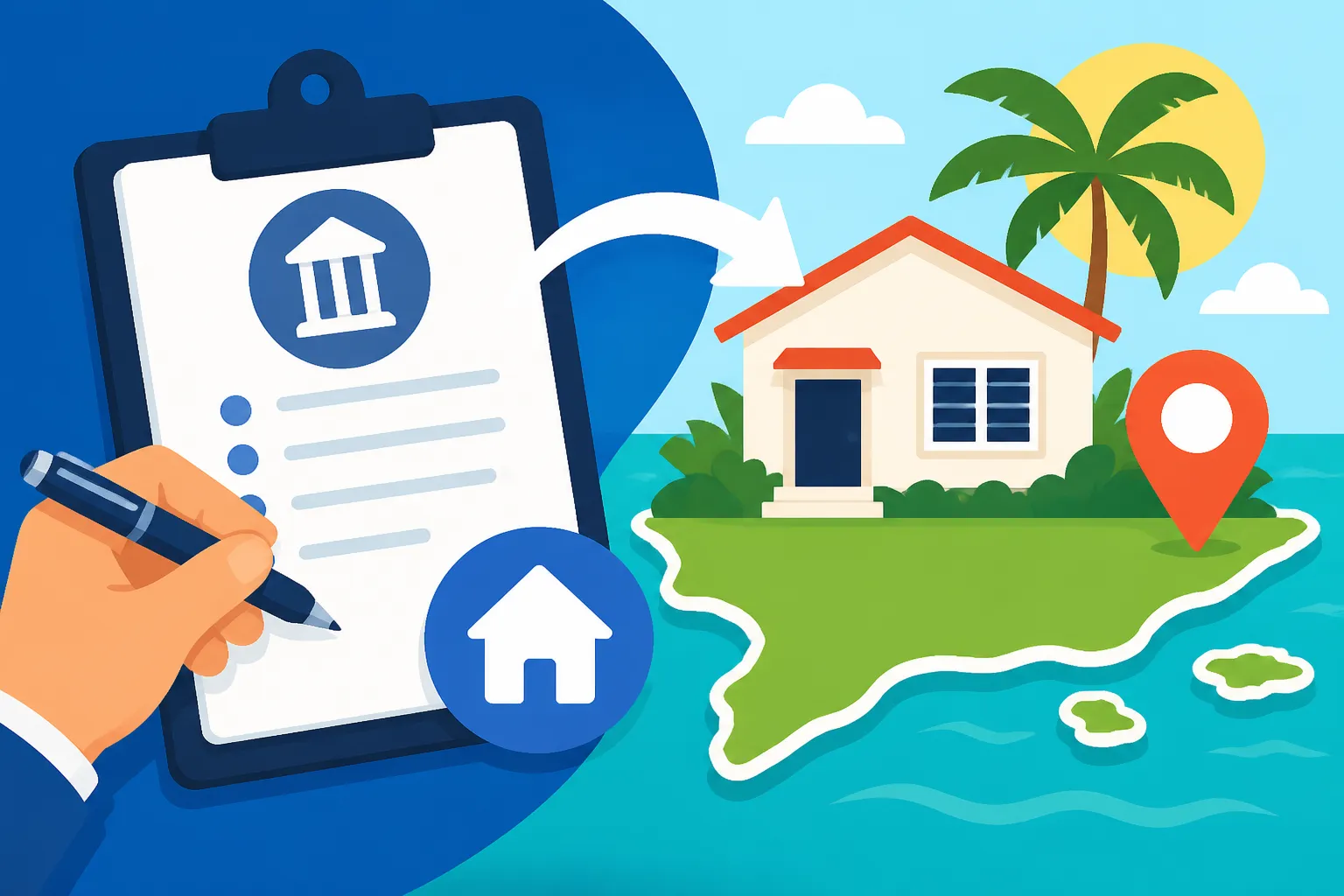
Form 8822 is the IRS’s official change-of-address form for individuals. It’s a one-page form you download from the IRS website, fill in, sign, and mail to the IRS address listed in the instructions. That address depends on where your old home address was, so check the chart in the instructions rather than guessing.
The biggest advantage of Form 8822 is that it’s a standalone, dated, signed document. If a dispute ever comes up about whether you told the IRS you moved, a copy of your signed form and your mailing receipt are strong evidence. For anyone building a record of their move to Puerto Rico, particularly people working on bona fide residency, that paper trail is valuable in itself.
The downside is that it’s paper. You can’t e-file Form 8822 on its own, and the IRS needs processing time before the change shows up in its systems. Don’t attach it to your tax return. The instructions say to mail it separately, and if you bundle it with something else it can get delayed or overlooked.
Using Your Next Federal Tax Return
The simplest method is to put your new Puerto Rico address on the next federal return you file. When the IRS processes the return, it generally updates your address of record to match. If you move in January and file in March, this may be all you need for the return itself.
The catch is timing. If you move in May and won’t file again until the following spring, your old address stays on file for most of a year. Anything the IRS mails in that gap goes to the wrong place. That’s why I treat the return as a backup method and not the main one, unless the move and the filing happen close together.
One more point: if you file a joint return and you and your spouse have both moved to the same Puerto Rico address, the return updates you both. If you’ve separated and are living at different addresses, each of you should notify the IRS on your own.
Written Statement or Phone Call
The IRS also accepts a signed written statement in place of Form 8822. The statement must include your full name, your old address, your new address, your Social Security number or ITIN, and your signature. If you filed jointly, include both spouses’ names and numbers, and have both of you sign if you’re both moving. You mail it to the same place you’d send Form 8822. In practice, the form is easier because it prompts you for everything, but the letter works.
You can also call the IRS and ask to update your address. You’ll need to verify your identity, so have your Social Security number, your last filed return, and your old address ready. Phone wait times can be long. I’d only use this route if you’re already on the phone with the IRS about something else, and I’d still follow up with Form 8822 in writing for the paper trail.
| Method | How You Submit It | Best For | Main Drawback |
|---|---|---|---|
| Form 8822 | Paper form mailed to the IRS address in the instructions | Anyone who moved mid-year and wants a signed record | Paper only, needs processing time |
| New address on your federal return | Enter your Puerto Rico address when you file | People who move close to filing season | Old address stays on file until you file |
| Signed written statement | Mailed letter with name, old and new address, SSN, signature | People who prefer a letter or can’t print the form | Easy to leave out a required detail |
| Phone call | Call the IRS and verify your identity | People already on the line about another issue | Long waits and no paper trail |
Step-by-Step: Completing Form 8822 for a Puerto Rico Address
This section walks through the form the way I wish someone had explained it to me, sitting at a plastic table in a half-furnished Carolina apartment with the fan on high.
Before You Start Gather These Details
You’ll save yourself a second attempt if you gather everything first. Have these ready:
- Your full legal name exactly as it appears on your most recent federal return
- Your Social Security number, and your spouse’s if you filed jointly
- The old address the IRS has on file, which is normally the one on your last return
- Your new Puerto Rico mailing address, written the way the postal service delivers to it
- Any name change since your last return, because the form has a spot for prior names
One thing to sort out before you write anything: is your new address where you sleep, or where you get mail? In Puerto Rico these are often different. Many people in rural areas, or in urbanizaciones with unreliable delivery, use a PO box at the local post office or a private mailbox service. The IRS cares about where mail will reliably reach you. If you haven’t settled your mail setup yet, read How to Set Up Your Mailing Address and USPS in Puerto Rico before filling out the form, so you don’t have to file a second change a month later.
Filling It Out Line by Line
Form 8822 is short. Here’s how to go through it in order:
- At the top, check the box that shows you’re changing the address for individual income tax returns. There’s a separate box for gift, estate, or generation-skipping transfer tax returns, which most people moving for work or lifestyle won’t need.
- Enter your name and Social Security number. If you filed jointly and your spouse is moving with you, enter their name and number as well.
- If you’ve changed your name since you last filed, list the prior name in the space provided, so the IRS can match your record.
- Enter your old address, the one on your last filed return. If you and your spouse had different old addresses, there’s space for both.
- Enter your new Puerto Rico address in full, including the urbanization name if your address uses one.
- Sign and date the form. If it covers a joint return, both spouses should sign.
- Make a copy or a clear phone photo of the completed, signed form before it leaves your hands.
Don’t use the individual form for a business. A business that changes its mailing address, location, or responsible party uses a different form, which I cover below.
Writing a Puerto Rico Address So the IRS Systems Read It Correctly
This is the part specific to the island, and it causes more returned mail than anything else. Puerto Rico addresses often depend on the urbanization name, the “Urb.” line, because the same street name can appear several times within one ZIP code. Calle 1 might exist in five different urbanizaciones in Bayamón. Leave the urbanization off and the mail carrier may have no idea which one you mean.
Puerto Rico addresses go in the regular domestic address fields, with “PR” as the state abbreviation and your five-digit ZIP code. Don’t put them in a foreign address section. A typical layout looks like this:
- Your name
- Urb. (urbanization name)
- (house number) Calle (street name)
- (municipality), PR (ZIP code)
If you live in a condo, include the building name or tower and the apartment number. If you use a PO box, write it in the format your post office gives you, such as “PO Box (number),” then the municipality, PR, and the ZIP code assigned to that box. PO box ZIP codes sometimes differ from street-delivery ZIP codes in the same town, so use the one the post office assigns to the box.
My own mistake: I wrote my first address in the order I’d use on the mainland and left off the urbanization because the landlord’s lease didn’t list it. Two pieces of mail came back undeliverable before a neighbor explained the format. Ask your landlord, your neighbors, or the post office counter exactly how mail should be addressed to you, then write it the same way on every form.
Mailing It and Following Up
Check the instructions for the IRS mailing address that matches your old home address and mail the form there. Since this document may matter later, I recommend paying for a mailing method with tracking or proof of mailing. Keep the receipt with your copy of the form.
Then be patient. The IRS takes time to process address changes, and there’s no instant confirmation. If you’re expecting a refund or have an open notice, keep an eye on your old address during the transition. Ask the new occupants or a trusted neighbor to hold anything addressed to you, and set up mail forwarding as a safety net. The postal service also shares change-of-address data with the IRS, so forwarding helps in two ways. See How Do I Forward My Mail When Moving to Puerto Rico? for setting that up from the mainland side.
Some IRS correspondence is marked do-not-forward, so forwarding alone won’t catch everything. That’s why the direct notice to the IRS matters.
Related Federal and Local Updates to Handle at the Same Time
The address change is rarely the only piece of paperwork a move to Puerto Rico triggers. Doing these related tasks in the same week, ideally at the same kitchen table with the same pile of documents, saves a lot of repeat effort.
Form 8898 and Becoming a Bona Fide Resident
If your move means you’re becoming a bona fide resident of Puerto Rico for tax purposes, Form 8822 is not the only IRS form to think about. The IRS uses Form 8898 for people who begin or end bona fide residency in a US territory, including Puerto Rico. Whether you have to file it depends on your worldwide gross income for the year relative to a threshold the IRS sets, so check the current form instructions.
Form 8898 and Form 8822 do different jobs. Form 8822 tells the IRS where to send your mail. Form 8898 tells the IRS that your tax residence has changed. Filing one doesn’t take care of the other. People moving for Act 60 or simply to make Puerto Rico home often file both in their move year, and a tax professional familiar with Puerto Rico can confirm whether you’re required to.
Residency itself depends on the presence test, the tax home test, and the closer connection test, not on any single form. See Understanding the Three Residency Tests (Presence, Tax Home, Closer Connection) for how they fit together. If you arrived partway through the year, the timing gets more involved, and Can I Become a Puerto Rico Resident Mid-Year? covers that. A current address on file with the IRS is one small but real piece of evidence that your life has actually moved.
Businesses Use Form 8822-B Instead
If you own an LLC, a corporation, or a sole proprietorship with its own Employer Identification Number, and the business is moving its mailing address or location to Puerto Rico, the individual form isn’t enough. Businesses use Form 8822-B, which covers changes to a business mailing address, business location, or the identity of the responsible party.
Say you’re a freelance designer with a single-member LLC formed in Texas, and you’ve moved both yourself and the business operations to San Juan. You’d file Form 8822 for your personal address and Form 8822-B for the business. If the LLC’s responsible party hasn’t changed but the business address has, the form has a section just for that. Again, keep copies of both.
Business owners usually have a local layer too, including Hacienda registration, a merchant registration, and the municipal patente, all separate from anything federal. Keep a list so nothing slips through.
Hacienda, USPS and Everyone Else
Once the IRS is handled, work through everyone else who mails you anything important. Here’s the list I used, roughly in the order I’d do it again:
| Who to Notify | What It Covers | How It Is Done |
|---|---|---|
| IRS | Federal income tax notices, refunds, identity letters | Form 8822, signed statement, phone, or your next federal return |
| Departamento de Hacienda | Puerto Rico income tax, the Planilla, local refunds | Through your SURI account or Hacienda’s own procedures |
| US Postal Service | Forwarding from your old mainland address | Official change-of-address request with USPS |
| Social Security Administration | Benefit statements and payments | Directly with SSA, separate from the IRS |
| Banks and brokerages | Tax forms such as 1099s and statements | Each institution’s online account or branch |
| Health and other insurers | Policy documents and claims correspondence | Each insurer’s member portal or customer service |
That fifth row matters more than people expect. Your bank and brokerage send the 1099s you’ll need at filing time. If they still show a Florida or New York address, the forms may be issued with the wrong state, which can complicate how you file on both sides. Update those accounts in the same week you file Form 8822. Insurers belong on the list too. If you’re carrying international private medical cover from a provider such as Cigna Global through your transition, update your address in their member portal so policy documents and claim letters don’t end up on the mainland.
For the full list of federal agencies, including Social Security, Medicare, Veterans Affairs, and the State Department for passport records, see How to Update Your Address with Federal Agencies After Moving to Puerto Rico. The rule that saved me the most frustration: the government doesn’t talk to itself as much as you’d hope, so notify each agency directly.
Fitting This Into Your Moving Timeline
When should you file Form 8822? The cleanest answer is as soon as you have a stable Puerto Rico mailing address you’ll keep for the foreseeable future. If you’re in a short-term rental in Isla Verde while you look for something permanent, it may be better to wait until you sign a lease, or to use a PO box you can keep through more than one move.
Moving is chaotic, and the IRS form is easy to forget while you’re coordinating shipping containers and arguing with a property manager about a deposit. I added Form 8822 to the same checklist as my shipping paperwork. If you’re still choosing how to get your belongings to the island, a comparison platform like Sirelo can help you look at international and long-distance movers side by side, and How Do I Find a Reliable Moving Company to Puerto Rico? explains what to ask before you commit. People who use Sirelo or a similar tool often end up with a clear move date, which also tells you when to plan the address change.
Here’s a sequence that has worked for me and for friends who moved after me:
- Before you leave the mainland, set up USPS forwarding from your old address so nothing is lost in the gap.
- In your first weeks on the island, settle your Puerto Rico mailing address, whether a street address with the correct urbanization line or a PO box.
- File Form 8822 with the IRS using that address, keep a copy, and use tracked mail.
- Update your address with Hacienda through SURI if you’re registered there, or as part of registering.
- Work through banks, brokerages, insurers, and other federal agencies in the same week.
- If you’re becoming a bona fide resident, ask a Puerto Rico tax professional about Form 8898 before the filing season for your move year.
- When you file your next federal return, use the same Puerto Rico address so every record matches.
For the bigger picture of everything else to handle in your first months, from your driver’s license to voter registration, The Complete Relocation Checklist for Moving to Puerto Rico (2027) puts it all in one place.
This isn’t glamorous work. It won’t feel like island living the way a Sunday at Playa Luquillo or a bowl of mofongo in Piñones does. But once your IRS address is right, a whole category of potential problems goes away, and you can get back to the parts of the move you actually came here for.
Disclaimer
This article is for general informational purposes only and does not constitute professional advice. Laws, prices and regulations vary by location and change over time. Consult a qualified professional for guidance on your specific situation.