How Do I Set Up TV and Streaming in My Puerto Rico Home?
Moving to Puerto Rico means adjusting to a new rhythm of life, and sometimes, that means your favorite shows and streaming habits get thrown for a loop. It’s incredibly frustrating to finally get settled in your new home, only to realize that getting your familiar entertainment set up isn’t as straightforward as it was back on the mainland. This guide will walk you through everything you need to know about setting up TV and streaming services in your Puerto Rico home, helping you bypass common headaches and get back to your binge-watching in no time.
Understanding Your Options: Traditional TV Providers in Puerto Rico
When you first arrive, you might assume it's just like back home, with a plethora of choices. While many of the big names are here, the landscape often feels a bit more concentrated, especially when it comes to wired services. You've got your main players, and understanding their offerings is the first step.
Cable TV: The Dominant Players
The cable TV market in Puerto Rico is primarily dominated by a couple of major players: Liberty Puerto Rico and Claro Puerto Rico. These aren't just TV providers; they're often bundled with internet and phone services, which can be a convenient (or sometimes frustrating) package deal for new residents.
Liberty Puerto Rico, formerly part of the mainland's various cable companies, is generally considered the largest cable and internet provider on the island. They offer a range of TV packages, from basic local channels to extensive premium channel lineups, including popular sports, movie, and international channels. Their service footprint is quite broad, covering most urban and suburban areas. When you're looking at their packages, be sure to ask about any promotional rates for new customers, as these can significantly reduce your initial costs. However, be wary of the "introductory price" trap; many expats find that the price jumps significantly after the first 6 or 12 months, so always clarify the long-term cost. Installation with Liberty usually involves a technician visit, and while they generally schedule within a reasonable timeframe, "island time" can sometimes mean a slight delay.
Claro Puerto Rico, a subsidiary of the Mexican telecommunications giant América Móvil, is another major player. While they are perhaps best known for their mobile phone services, Claro also offers robust internet and TV packages. Their TV service, much like Liberty's, provides a variety of channels, and they often compete fiercely on pricing and bundled offers. You'll find that many smaller towns and rural areas might have better coverage or more competitive offers from Claro, especially if their fiber optic network has expanded into those regions. It's always a good idea to check both providers against your specific address, as coverage and service quality can vary even within the same municipality. Comparing their channel lineups for your must-have programs is crucial, as some specific channels might be exclusive to one provider or the other.
Satellite TV: Beyond the Cables
For those living in areas where traditional cable infrastructure is less developed, or if you simply prefer satellite technology, Dish Network and DirecTV are your primary satellite TV options in Puerto Rico. These providers offer a good alternative, often reaching homes that cable lines might not.
Dish Network and DirecTV operate similarly to their mainland counterparts. They beam their programming directly to a satellite dish installed on your home. This can be a fantastic solution if you've moved to a more rural part of the island, a charming campo house in the mountains, or an area where the existing cable lines have been slow to recover from hurricane damage. The channel lineups are typically very comprehensive, often mirroring what you'd find in the U.S., which is a huge comfort for many expats craving familiarity. They also tend to have strong offerings for international programming, including a wide array of Spanish-language channels that go beyond local Puerto Rican broadcasts, as well as English-language options.
The installation process for satellite TV involves a technician mounting a dish and running cables into your home. This can sometimes be a bit more involved than cable installation, especially if you have a tricky roof or specific aesthetic preferences. However, once installed, satellite service is generally quite reliable, though heavy rain or strong winds can occasionally interfere with the signal. Keep in mind that contracts with satellite providers can be quite stringent, often requiring a two-year commitment with significant early termination fees, so read the fine print carefully. If you're a digital nomad or someone who travels frequently, having a reliable eSIM like those offered by Airalo can be incredibly helpful for maintaining connectivity on the go, whether you're off-island or just exploring remote parts of Puerto Rico where traditional internet might be spotty.
Deciding Between Cable and Satellite: What to Consider
The choice between cable and satellite largely boils down to your location, your priorities, and your budget. There's no one-size-fits-all answer here, and what works for your neighbor might not be the best fit for you.
Location, Location, Location: This is often the biggest factor. If you're in a dense urban area like San Juan, Caguas, or Ponce, cable TV from Liberty or Claro is likely readily available and might offer better internet bundling deals. However, if your beautiful new home is nestled in the hills of Rincón or a more remote part of the island, satellite might be your only reliable option for traditional TV. Always check both providers' coverage maps and call them directly with your specific address.
Bundling Opportunities: Cable providers excel at bundling. You can often get your internet, phone, and TV services all from one company, which simplifies billing and sometimes offers cost savings. However, make sure you understand the pricing structure of these bundles; sometimes, the "savings" are only for a limited introductory period. If you're keen on managing your overall utilities, understanding How Do I Set Up Internet in My Puerto Rico Home? is a great next step, as internet is almost always a prerequisite for streaming, and often bundled with TV.
Channel Lineup and Preferences: Do you have specific sports teams, news channels, or international programming that you absolutely can't live without? Carefully compare the channel lists of both cable and satellite providers. Satellite often has a slight edge in sheer number of channels and niche international programming, while cable might have stronger local channel integration and faster channel switching.
Installation and Equipment: Cable installation can sometimes be quicker if your building is already wired. Satellite requires a dish, which can be an aesthetic consideration for some, and might take a bit longer to install. Both will require set-top boxes for each TV, which usually come with rental fees.
Customer Service and Reliability: This is where experiences can vary wildly, and local anecdotes are invaluable. Ask your new neighbors or local expat groups about their experiences. Post-hurricane, both types of services faced significant challenges, but recovery efforts continue. General infrastructure improvements across the island, including those related to power, will inevitably impact TV service reliability.
Here's a quick comparison table to help visualize the differences:
| Feature | Cable TV (Liberty, Claro) | Satellite TV (Dish, DirecTV) |
|---|---|---|
| Availability | Strong in urban/suburban areas, dependent on infrastructure | Wide reach, good for rural/remote areas |
| Bundling | Excellent for internet, phone, TV bundles | Primarily TV, sometimes limited internet bundling options |
| Channel Count | Good, strong local integration | Very comprehensive, often more niche/international channels |
| Installation | Usually quicker if premises are pre-wired, technician visit | Requires dish installation (can be more involved), technician visit |
| Signal Reliability | Generally stable, but can be affected by local outages | Can be affected by severe weather (heavy rain, strong winds) |
| Contract Length | Varies, often 1-2 years for best rates | Often 2-year contracts with early termination fees |
| Local Programming | Strong integration of local Puerto Rican channels | Includes local channels, but sometimes less emphasis |
Ultimately, take your time, get quotes from both types of providers, and don't be afraid to negotiate, especially if you're bundling multiple services.
Navigating the Streaming Landscape in Puerto Rico
Even with traditional TV options, let's be real – streaming is where it's at for many of us, especially expats. We've gotten used to having our shows on demand, personalized recommendations, and the flexibility to watch anywhere. Puerto Rico is mostly integrated into the global streaming ecosystem, but there are a few local quirks and common expat frustrations you need to be aware of.
Common Streaming Services and Local Content
Good news! Most of the major streaming services you’re familiar with on the mainland are readily available in Puerto Rico. Think Netflix, Hulu, Amazon Prime Video, Max (formerly HBO Max), Disney+, Apple TV+, and YouTube TV. You can subscribe to these services using your U.S. accounts and payment methods, and they generally function without issue.
However, there are a few important caveats:
- Content Libraries: While you'll have access to the service, the content library might differ slightly from what you're used to in the mainland U.S. Due to licensing agreements, certain shows or movies available stateside might not be available in Puerto Rico, and vice versa. This can be a minor annoyance, especially if you're following a specific series.
- Local Flavor: On the flip side, streaming services in Puerto Rico often offer a richer selection of Latin American and Caribbean content, which can be a fantastic way to immerse yourself in the local culture. You'll find more Spanish-language films, telenovelas, and regional documentaries.
- Pricing: The pricing for these services is generally comparable to mainland U.S. rates, billed in USD.
- Niche Services: Smaller, more niche streaming services might have varying availability. It’s best to check their specific websites or customer service to confirm if they support Puerto Rico addresses or IP ranges before you get too excited.
Beyond the big names, remember that many local Puerto Rican TV channels also offer their own streaming apps or websites. While these might not be as polished as the international giants, they are excellent for staying connected to local news, sports, and entertainment, and often come free with your internet service or as standalone apps. For instance, WAPA-TV, a major local broadcaster, has its own digital presence that can keep you updated on what's happening on the island.
Internet Speed: Your Streaming Backbone
Let's be blunt: your streaming experience lives or dies by your internet connection. In Puerto Rico, internet service has seen significant improvements, especially in urban centers, but it's still something you need to pay close attention to. For a truly seamless streaming experience, especially if you have multiple devices connected, you're going to need a robust connection.
Providers like Liberty and Claro offer various internet plans, from basic speeds suitable for light browsing to high-speed fiber optic connections that can handle 4K streaming and multiple concurrent users. When choosing a plan, consider how many people will be streaming simultaneously and at what quality. For a single user streaming HD, 50 Mbps might be sufficient, but for a family with multiple devices streaming 4K content, you'll want at least 200-300 Mbps, if not more. Don't forget that internet service can be bundled with TV, as highlighted in The Newcomer's Guide to Setting Up Utilities (LUMA/AAA) in Puerto Rico.
- Fiber vs. Cable: Where available, fiber optic internet (often branded as "Fiber Optic" or "FiOS" by providers) will offer the most stable and fastest speeds. Cable internet can also be very good, but performance can sometimes fluctuate more during peak usage times in heavily populated areas.
- Reliability: While speeds have improved, outages can still occur, particularly during severe weather or localized infrastructure issues. Having a backup plan, like a mobile hotspot or a robust data plan on your phone (like those enhanced by Airalo for flexibility), can be a lifesaver during unexpected internet interruptions.
When you're comparing internet providers, don't just look at the advertised "up to" speeds; ask about average speeds, customer support response times, and read reviews specific to your neighborhood. A good internet connection isn't just a luxury; it's an essential utility for modern living and streaming in Puerto Rico.
Geo-Restrictions and VPNs: The Expat's Dilemma
Ah, the dreaded geo-restriction. This is a common pain point for expats everywhere, and Puerto Rico is no exception. Even though Puerto Rico is a U.S. territory, some streaming services and websites still differentiate it from the mainland U.S., leading to content blocks or different libraries.
- The Problem: You might encounter a "This content is not available in your region" message, or find that a service you expect to work just fine thinks you're in a different country altogether. This is because streaming services often use your IP address to determine your geographical location.
- The Solution: VPNs (Virtual Private Networks): A VPN can be your best friend in this scenario. By connecting to a VPN server located in the mainland U.S., you can mask your actual IP address and make it appear as though you're browsing from, say, Florida or New York. This can unlock content libraries that are otherwise restricted in Puerto Rico.
- Choosing a VPN: Not all VPNs are created equal. You'll want a reputable, paid VPN service with a strong track record, plenty of U.S. servers, and good connection speeds. Free VPNs often come with data limits, slower speeds, and potential security risks. ExpressVPN, NordVPN, and Surfshark are popular choices known for their reliability with streaming services.
- Legality and Terms of Service: While using a VPN for privacy and security is generally legal, bypassing geo-restrictions can sometimes be against a streaming service's terms of service. Be aware that services can try to detect and block VPN usage, so it's a constant cat-and-mouse game. However, for most expats just wanting to access their familiar content, it's a widely used practice.
Before you invest in a year-long VPN subscription, consider trying a free trial or a short-term plan to ensure it works effectively with the specific streaming services you plan to use from Puerto Rico. And remember, a VPN isn't just for streaming; it adds an extra layer of security and privacy to your online activities, which is always a good thing!
Setting Up Your System: Step-by-Step and Troubleshooting
Once you've decided on your providers and armed yourself with the knowledge of streaming, it's time to actually get everything hooked up. This is where patience often becomes your most valuable asset.
Installation and Activation Process
Getting your TV and internet services installed in Puerto Rico typically follows a standard procedure, but with a local flavor that can sometimes mean "things happen when they happen."
- Ordering Service: Your first step is to contact your chosen provider(s) – Liberty, Claro, Dish, or DirecTV. You'll need to provide your exact address, choose your package (TV, internet, or a bundle), and set up an installation appointment. Be prepared to provide identification (often a valid driver's license or passport) and your new Puerto Rico address. They might also ask for your social security number or a utility bill to verify your identity and address. If you're wondering How Do I Set Up Water Service (AAA) in Puerto Rico?, getting that done early will provide useful documentation.
- Scheduling the Appointment: This is where "island time" can sometimes come into play. While providers aim for timely installations, delays can occur. Try to schedule your appointment for a day when you have a flexible schedule. Confirm the time window and ensure you have a contact number for the technician if possible. Many expats swear by trying to schedule first thing in the morning to avoid afternoon delays.
- The Technician Visit: A technician will come to your home to run cables, install the necessary equipment (modems, routers, set-top boxes, satellite dishes), and activate your services. Be present during the entire visit. Ask questions, make sure all your TVs are connected, and have them test the internet speed before they leave. Don't be shy about ensuring everything is working to your satisfaction. Verify the remote controls are paired and you can access all your channels.
- Self-Installation for Streaming: For streaming services, activation is usually instant once you subscribe online. Download the apps on your smart TV, streaming device (Roku, Apple TV, Fire Stick), computer, or mobile device, log in with your credentials, and you're good to go. Just ensure your internet is live and performing well, as discussed in What Is the Best Internet Provider in Puerto Rico?.
Troubleshooting Initial Setup:
- No Signal/No Internet: First, check all cables and power connections. If still no luck, restart your modem/router and TV boxes. If the problem persists, call customer service.
- Missing Channels: Confirm your package details and make sure the technician activated everything correctly.
- Slow Internet: Run a speed test. If it's significantly lower than what you're paying for, contact your internet provider. Sometimes, a simple router reset or a firmware update can help.
Managing Bills and Customer Service (The Puerto Rico Way)
Dealing with utility bills and customer service in any new country can be a hurdle, and Puerto Rico is no different. The key here is patience, persistence, and knowing what to expect.
Billing:
- Paper vs. Digital: While most providers offer online billing, you might still receive paper statements, especially initially. Confirm your billing preferences during setup.
- Payment Methods: You can typically pay your bills online through the provider's portal, via phone, or in person at their customer service centers or designated payment locations (often pharmacies or supermarkets). Setting up auto-pay is highly recommended to avoid late fees and the hassle of remembering due dates. You can also explore options for How Do I Set Up Auto-Pay for My LUMA and AAA Bills, and often your TV/internet provider will have similar mechanisms.
- Understanding Your Bill: Scrutinize your first few bills. Ensure all charges are correct, especially after an introductory promotion ends. Don't hesitate to call if something looks off. Hidden fees, equipment rental charges, and taxes can add up.
Customer Service:
- Language: While English is widely understood, especially in major call centers, having some Spanish phrases ready can be very helpful. Many customer service representatives are bilingual, but occasionally you might encounter someone more comfortable in Spanish.
- Patience is Key: Call wait times can sometimes be long. Prepare for this by calling when you have time to spare, or try using online chat features if available.
- Documentation: Always take notes of who you spoke to, the date and time of the call, and any reference numbers provided. This documentation can be invaluable if you need to follow up on an issue.
- In-Person Visits: For complex issues, sometimes an in-person visit to a customer service center (like a Liberty or Claro store) is the most effective way to resolve problems. Be prepared for a wait, but face-to-face interaction can often cut through red tape.
Managing your services effectively means being proactive about understanding your bills and persistent when dealing with customer support. It's part of the expat experience!
Essential Accessories and Smart Home Integration
Beyond the core services, a few accessories and smart home considerations can significantly enhance your entertainment setup in Puerto Rico.
- Surge Protectors: This is a non-negotiable item. Puerto Rico's power grid can be prone to fluctuations and outages, especially during storms. Investing in good quality surge protectors for all your valuable electronics (TVs, streaming devices, modems, routers) is crucial to protect them from power surges. Even better, consider uninterruptible power supplies (UPS) for your modem and router to keep your internet running for a short period during brief power flickers.
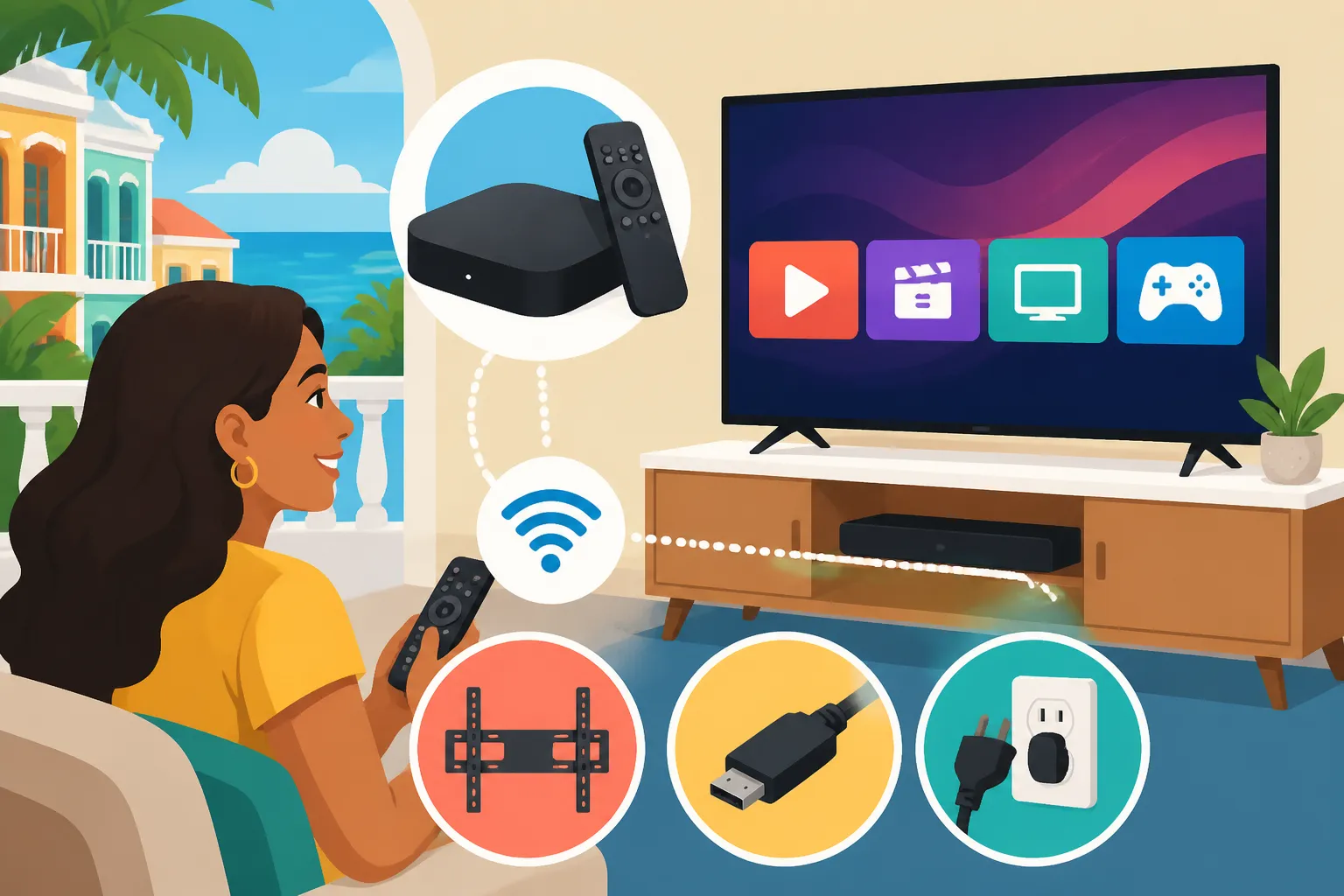
- Streaming Devices: While many smart TVs have built-in apps, dedicated streaming devices like Roku, Amazon Fire Stick, Apple TV, or Google Chromecast often offer a smoother experience, more apps, and regular updates. They are also portable, so you can easily move them between rooms or even take them with you when you travel.
- Mesh Wi-Fi Systems: If you have a larger home or multiple floors, a standard router might not provide adequate Wi-Fi coverage everywhere. A mesh Wi-Fi system can significantly improve your home's Wi-Fi signal, ensuring strong connections for all your streaming devices, no matter where they are. Brands like Eero, Google Nest Wifi, and TP-Link Deco are popular choices. This is especially relevant in some Puerto Rican homes with thick concrete walls that can act as Wi-Fi signal killers.
- Smart Home Integration: If you're into smart home tech (smart lights, smart speakers like Amazon Echo or Google Home), ensure your internet and Wi-Fi setup is robust enough to handle the increased traffic. Most smart home devices are compatible in Puerto Rico, but for voice commands, you'll find that English commands are usually fine, but local search results or specific Spanish commands might be limited. Integrating your streaming services with voice control can be a very convenient way to manage your entertainment, allowing you to say "Hey Google, play The Office on Netflix" and have it happen.
Thinking about these accessories upfront can save you headaches down the line and truly make your Puerto Rico home feel like your entertainment hub.
Costs and Contracts: What to Expect
Let's talk about the bottom line. Understanding the financial commitment for your TV and streaming services is paramount, as unexpected costs can quickly sour the expat experience. While Puerto Rico generally has a lower cost of living than many mainland U.S. cities, entertainment services are often comparable in price, sometimes even a bit higher due to the island's unique market dynamics. For a broader financial picture, you might want to delve into The Complete Guide to Cost of Living in Puerto Rico (2026).
Breaking Down the Monthly Bill
Your monthly bill for traditional TV and internet can be a bit of a labyrinth. It’s rarely just the advertised package price. Here’s what usually makes up the total:
- Base Package Price: This is the advertised cost for your chosen TV and/or internet plan. Be incredibly diligent about understanding if this is an introductory rate, and if so, for how long it lasts and what the price will jump to afterwards. Many expats get caught off guard when their bill suddenly increases after 6 or 12 months.
- Equipment Rental Fees: You will almost certainly pay monthly fees for your cable boxes, satellite receivers, modems, and Wi-Fi routers. These can add $10-20 per piece of equipment per month. Some providers might offer to let you purchase your modem/router outright, which can save money in the long run.
- Additional Channel Packages: Want premium movie channels, extra sports packages, or international programming? These will be add-ons to your base package and will increase your monthly cost.
- Taxes and Fees: Like anywhere, expect local and federal taxes to be applied. There might also be specific regulatory fees or administrative charges unique to Puerto Rico’s telecommunications market. Don't be surprised by a Universal Service Fund fee, for example.
- Installation Fees: While some promotions waive these, initial setup often comes with an installation fee, which can range from $50 to $150 or more.
- Optional Services: Things like whole-home DVR, additional outlets, or advanced technical support can also carry monthly charges.
Streaming Service Costs: These are usually more straightforward. You pay a flat monthly fee for each service (Netflix, Hulu, etc.), and you can cancel anytime. There are no equipment rental fees, though you might invest in a streaming device, as mentioned earlier. These costs add up, so budget accordingly for all your desired platforms.
Contractual Commitments and Early Termination Fees
This is a critical area where many new residents trip up. Traditional TV and internet providers in Puerto Rico often require contracts, especially for their best promotional rates.
- Contract Length: Expect to see contracts ranging from 12 to 24 months. These contracts are legally binding.
- Early Termination Fees (ETFs): If you cancel your service before the contract term is up, you will almost certainly be charged an early termination fee. These fees can be substantial, sometimes hundreds of dollars, and are designed to recoup the provider's installation and equipment costs. If you are uncertain about your long-term plans or might need to move again within a year or two, consider asking for month-to-month options, even if they come at a slightly higher price.
- Promotional Offers: The best prices often come with the longest contracts. Weigh the savings against your commitment level. Read every single word of the contract before signing, paying particular attention to the term length, the standard rate after any promotional period, and the early termination fee structure.
For those planning a move to Puerto Rico, services like Sirelo can assist with understanding the logistics of relocation, which includes managing utility transfers and understanding local contractual norms. It’s always best to be informed before you commit.
Budgeting for Entertainment
To avoid sticker shock, it’s wise to create a realistic budget for your entertainment expenses.
- Calculate Total Monthly Costs: Add up your chosen cable/satellite package (including all fees and rentals), plus all your streaming subscriptions.
- Factor in Promotional Expiration: Know exactly when your promotional rates end and what your new, higher monthly bill will be. Account for this increase in your long-term budget.
- Consider Equipment Purchases: If buying your modem/router saves you money over two years of rental fees, factor that upfront cost into your initial setup budget.
- Emergency Fund: It's a good idea to have a small buffer for unexpected costs, like a technician visit fee for an issue not covered by your service plan, or the cost of a surge protector.
By taking the time to understand the nuances of the TV and streaming landscape in Puerto Rico, including the potential for geo-restrictions and the importance of internet speed, you can set yourself up for a smooth and enjoyable entertainment experience in your new island home.
Disclaimer
This article is for general informational purposes only and does not constitute professional advice. Laws, prices and regulations vary by location and change over time. Consult a qualified professional for guidance on your specific situation.