Do I Need Flood Insurance for a Home in Puerto Rico?
Living on our beautiful island of Puerto Rico comes with so many joys—the vibrant culture, the incredible food, the warm sunshine. But let's be real, paradise also has its challenges, and one of the biggest, especially for new homeowners, is protecting your investment from our sometimes-furious weather. Many newcomers often assume their standard homeowner's insurance will cover everything, only to face a rude awakening when a tropical depression turns into a deluge. This guide is here to walk you through the absolute necessity of flood insurance for your home in Puerto Rico, clarifying what you need to know to truly safeguard your slice of heaven.
Understanding Puerto Rico's Flood Risk: It's More Than Just Hurricanes
When people think of flooding in Puerto Rico, their minds often jump straight to hurricanes, and for good reason. We’ve certainly had our share of unforgettable storms that have brought catastrophic flooding. But the truth is, the risk of water damage here extends far beyond just major hurricanes. It's a year-round concern that every homeowner, especially us expats, needs to grasp fully.
The Geography of Risk: Coastal vs. Inland
It’s easy to assume that if you're not right on the beach, you’re safe from flooding. Oh, if only that were true! While coastal properties absolutely face a heightened risk from storm surge during hurricanes, much of Puerto Rico’s topography means that inland areas are just as, if not more, susceptible to different types of flooding. Think about it: we have a mountainous interior, and when heavy rains hit, all that water has to go somewhere. It rushes down rivers, carves out new paths through neighborhoods, and overwhelms drainage systems.
For instance, if you're looking at a charming home in the heart of Caguas or even a beautiful property tucked away in the foothills of El Yunque, you might think you’re far from the ocean’s wrath. But these areas can experience severe riverine flooding, where rivers overflow their banks, or flash floods in low-lying areas. Even neighborhoods that seem elevated can be vulnerable if they're at the bottom of a natural water flow path. The run-off from concrete and paved surfaces in urban zones like San Juan, Guaynabo, or Carolina exacerbates this, as water has fewer places to soak into the ground. It's not just about the ocean; it's about the entire hydrological system of the island.
Beyond the Storm: Heavy Rains and Urban Flooding
Now, let's talk about the everyday reality. You don't need a named hurricane to experience significant flooding here. We often get intense tropical waves, cold fronts, or just plain old heavy downpours that can last for hours, or even days. These events, while less dramatic than a Category 5 hurricane, are frequent and can cause immense damage.
Streets in seemingly dry areas of San Juan turn into canals after just an hour or two of intense rain. Drains get clogged with debris, low-lying underpasses become impassable, and water rapidly invades ground-floor apartments or homes with inadequate drainage. If you’ve ever found yourself driving through what feels like a small lake on Avenida Ashford in Condado after a thunderstorm, you know exactly what I’m talking about. Basements, if your home even has one, or even garages and ground-level living spaces, are prime targets for this kind of urban flooding. It's the cumulative effect of rain hitting hard surfaces and having nowhere to go. This isn’t a rare occurrence; it's just part of life here, and something you must account for when protecting your property. For those getting settled, understanding The Newcomer's Guide to Setting Up Utilities (LUMA/AAA) in Puerto Rico can also help you understand some of the infrastructure challenges we face.
The Crucial Difference: Homeowners Insurance vs. Flood Insurance
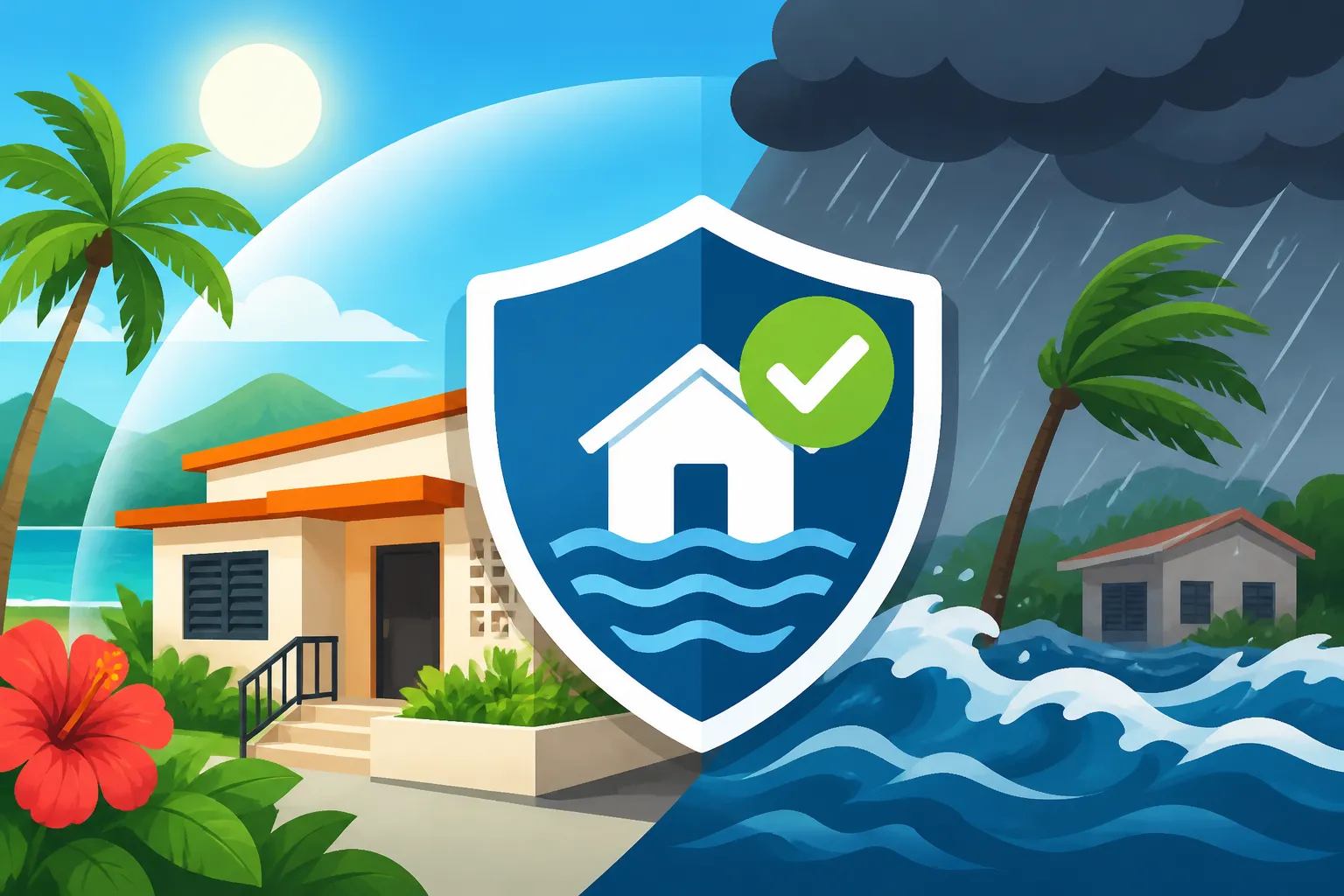
This is where many new residents, especially those coming from the mainland U.S. where flood risks might seem less pervasive, get tripped up. There’s a widespread misunderstanding about what a standard homeowners insurance policy actually covers. Trust me, you do not want to learn this lesson the hard way. The distinction between homeowners and flood insurance is not just a technicality; it’s the difference between financial recovery and ruin after a water event.
What Standard Homeowners Policies (H0-3, H0-6) Typically Cover (and Don't)
A typical homeowners insurance policy here in Puerto Rico, whether it's an HO-3 for a house or an HO-6 for a condo, is designed to protect you from a wide range of perils. This usually includes damage from fire, theft, vandalism, and certain types of water damage – but there's a critical caveat. They generally cover water damage that originates within the home, like a burst pipe, an overflowing washing machine, or even damage from rain that enters through a damaged roof or window after wind has created an opening. This is often referred to as "sudden and accidental" water damage.
However, almost universally, standard homeowners policies exclude damage from floods. What constitutes a flood? Generally, it's defined as an overflow of inland or tidal waters, or the unusual and rapid accumulation or runoff of surface waters from any source. This means if rainwater comes in through your front door because the street outside is submerged, or if a nearby river overflows into your yard and home, your standard policy won't cover a single penny of that damage. It’s a bitter pill to swallow when you realize your "full coverage" doesn't cover the most common natural disaster we face here. So, while How to Get a Mortgage to Buy a Home in Puerto Rico might require you to have some form of insurance, it's crucial to understand what kind.
Why NFIP or Private Flood Policies are Non-Negotiable
Given the reality of Puerto Rico's climate and geography, a flood insurance policy isn’t a luxury; it’s an absolute necessity. If your property is located in a high-risk flood zone (which we'll discuss more in a bit), and you have a federally backed mortgage, federal law mandates that you carry flood insurance. But even if you don't have a mortgage, or if your property is in a low-to-moderate risk zone, you would be absolutely foolish to skip it. Remember, over 20% of flood claims come from properties outside of high-risk zones. The term "low-risk" here just means a lower statistical probability, not immunity.
Flood insurance covers direct physical loss to your home and its contents from flooding. This means damage to your foundation, structural elements, utility systems, appliances, and even personal belongings. Without it, you’re looking at paying for everything out of pocket, which, as anyone who has experienced it can tell you, can easily amount to tens of thousands, if not hundreds of thousands, of dollars. FEMA estimates that just one inch of water can cause $25,000 in damage to a home. That's a sum most of us simply can't absorb without serious financial hardship. When you’re researching How to Buy Property in Puerto Rico: The Full Guide (2027), be sure to factor flood insurance into your budget from day one.
Here’s a simple table to illustrate the difference:
| Feature | Standard Homeowners Insurance (HO-3/HO-6) | Flood Insurance (NFIP/Private) |
|---|---|---|
| Typical Coverage | Fire, theft, vandalism, windstorm, lightning, hail, internal water leaks (burst pipe), accidental damage. | Direct physical loss from overflow of water, surface water runoff, storm surge. |
| Water Damage | Generally covers water damage originating inside the home, or rain entry after structural damage. | Specifically covers damage from water originating outside the home. |
| Flood Events | EXCLUDES damage from floods (e.g., river overflow, street flooding, storm surge). | INCLUDES damage from floods. |
| Mandatory? | Often required by mortgage lenders. | Mandated for federally-backed mortgages in high-risk flood zones. |
| Provider | Private insurance companies. | Primarily National Flood Insurance Program (NFIP), also private insurers. |
Navigating Flood Insurance Options in Puerto Rico
Alright, so we've established that you need flood insurance. Now, how do you actually get it here on the island? It’s not as straightforward as just checking a box on your homeowners policy application, but it's also not rocket science. You essentially have two main avenues: the National Flood Insurance Program (NFIP) or a growing market of private flood insurance providers.
The National Flood Insurance Program (NFIP) on the Island
The NFIP, managed by the Federal Emergency Management Agency (FEMA), is the primary source of flood insurance for most Americans, including those of us in Puerto Rico. It’s important to understand that the NFIP isn't directly sold by the government. Instead, it's administered through a network of private insurance companies that act as agents, collecting premiums and issuing policies on behalf of the NFIP. This means you’ll still go through a local insurance agent to get an NFIP policy.
Key things to know about NFIP in Puerto Rico:
- Availability: If your community participates in the NFIP (and most do here), you can get a policy regardless of whether your property is in a high-risk or low-risk flood zone.
- Coverage Limits: NFIP policies have maximum coverage limits: $250,000 for residential building coverage and $100,000 for personal contents. For many homes in Puerto Rico, especially those purchased recently, these limits might not be enough to fully rebuild or replace all belongings. This is a common point of frustration, as rebuilding costs can easily exceed these caps.
- Waiting Period: There’s typically a 30-day waiting period from the date of purchase before the policy becomes effective. Don't wait until hurricane season is upon us to buy it!
- Cost: Premiums are determined by FEMA and are based on your property's flood risk, the amount of coverage you choose, and your deductible. Your specific flood zone designation is a major factor.
Exploring Private Flood Insurance Alternatives
In recent years, the private flood insurance market has really started to grow, offering an alternative to the NFIP. These policies are offered directly by private insurance companies, sometimes as an add-on to your existing homeowners policy or as a standalone policy.
Why consider private flood insurance?
- Higher Coverage Limits: This is often the biggest draw. Private policies can offer much higher building and contents coverage limits, which is vital if your home's value or rebuilding cost exceeds NFIP's caps.
- Potentially Broader Coverage: Some private policies might offer coverage for things NFIP doesn't, like additional living expenses if you're displaced, or even business interruption if you operate a home-based business.
- Faster Claims Processing: While not guaranteed, some private insurers might offer a more streamlined or quicker claims process than the NFIP, which can be a lifeline after a disaster.
- Different Pricing Models: Private insurers use their own underwriting and pricing models. This means that depending on your specific property and risk profile, a private policy might actually be more affordable than an NFIP one, especially if your property is mapped into a high-risk zone. Conversely, it could also be more expensive.
- Shorter Waiting Periods: Some private policies might have shorter waiting periods than the NFIP's 30 days, which can be an advantage if you’re purchasing close to hurricane season.
Brands like Chubb, which operate in the high-net-worth space, or even some local carriers that work with reinsurers, might offer these private options. It really pays to shop around and compare.
What to Consider When Getting a Quote
When you're calling agents for quotes, make sure you're asking the right questions and providing accurate information. You’ll want to give them your property address so they can pull up its flood zone designation. If you've been working with a relocation service like Sirelo for your move, they might have insights into local service providers, but ultimately, the choice of insurance is deeply personal.
Here’s what to confirm with your agent:
- Flood Zone: What is your property's specific FEMA flood zone? This is paramount for pricing and requirements.
- Coverage Amounts: Are the building and contents limits sufficient for your home's value and your belongings?
- Deductibles: What are the deductibles for both building and contents? Remember, higher deductibles usually mean lower premiums, but a higher out-of-pocket cost if you file a claim.
- Waiting Period: How long is the waiting period before the policy goes into effect?
- Exclusions: Are there any specific exclusions you should be aware of in the policy?
- Claims Process: Ask about their claims process. How do they handle a flood claim? What's the typical timeline?
Don't be afraid to ask for quotes from both an NFIP provider and a private insurer. It’s the only way to truly compare coverage and cost.
Steps to Secure Your Home: Getting the Right Coverage
Now that you understand the "why" and the "what," let's talk about the "how." Getting flood insurance isn't just about picking a policy; it's about making informed decisions to ensure your home is genuinely protected. This means understanding your property's specific risk and working with professionals who understand the nuances of the Puerto Rico market.
Identifying Your Flood Zone and Its Impact
The single most significant factor influencing your need for and the cost of flood insurance is your property's flood zone designation. FEMA creates these flood maps, called Flood Insurance Rate Maps (FIRMs), and they classify areas into different zones based on their risk of flooding. You can check your property's flood zone by entering your address on the FEMA Flood Map Service Center website. This is an absolutely crucial first step before you even think about buying a home here. If you are still in the house-hunting phase, ensure you understand Understanding Property Ownership and Titles in Puerto Rico and factor in flood zone research.
Common Flood Zones in Puerto Rico:
- High-Risk Zones (e.g., A, AE, VE): These are areas with a 1% or greater annual chance of flooding (also known as a 100-year flood plain). If your property is in one of these zones and you have a federally backed mortgage, flood insurance is mandatory. Rates in these zones are typically higher.
- Moderate-to-Low Risk Zones (e.g., B, C, X): These areas have a less than 1% annual chance of flooding. While flood insurance isn't federally mandated here, it's still highly recommended. Remember, many claims originate from these zones. Premiums are significantly lower, making it a no-brainer for peace of mind.
- Undetermined Zones (e.g., D): These are areas where flood hazards haven't been determined. If you're in one, it's a good idea to still consider flood insurance, as the risk is unknown rather than non-existent.
Understanding your flood zone helps you make a truly informed decision. Don't rely solely on what a seller or real estate agent tells you; verify it yourself on the FEMA website.
Working with Local Agents and Understanding Your Policy
Finding a good, knowledgeable local insurance agent in Puerto Rico is key. They understand the specific risks of the island, the local regulations, and can guide you through both NFIP and private options. When you're new here, everything feels a bit like navigating a maze, so having an agent who speaks your language (literally, if your Spanish isn't fluent yet!) and can explain things clearly is invaluable.
When you connect with an agent:
- Be Transparent: Provide all the details about your property, including its elevation, any previous flood history (if you know it), and any flood mitigation efforts you’ve made (e.g., elevating utilities).
- Ask for Multiple Options: Request quotes for both NFIP and any private flood insurance policies they offer or can recommend. Compare them side-by-side.
- Review the Policy: Don’t just sign on the dotted line. Read through the policy carefully, paying attention to the declarations page (which outlines your coverage limits and deductibles) and any exclusions. Understand what "direct physical loss" means in the context of your policy.
- Consider Additional Coverage: Beyond the standard building and contents, ask about coverage for additional living expenses if you have to evacuate, or for debris removal costs after a flood. These can add significant value.
Remember, after a major event like a hurricane, resources can be strained. Having your insurance ducks in a row before you need them is paramount. Even small details, like making sure your Understanding How to Prepare Your Home for Hurricane Season in Puerto Rico plan includes having copies of your insurance documents stored digitally off-island, can make a huge difference. For those planning a move and needing to organize a lot, services like Sirelo can help coordinate, ensuring all your home protection plans are in place. And for communication during emergencies, having a local SIM or even an eSIM from a provider like Airalo can ensure you can contact your insurer or family.
Ultimately, the question isn’t if you need flood insurance for your home in Puerto Rico, but which policy is right for you. Given our beautiful but volatile climate, it's one of the most important investments you'll make to protect your home and your peace of mind.
Disclaimer
The information provided in this guide is for general informational purposes only and does not constitute professional advice. While we strive to provide accurate and up-to-date information, local laws, regulations, and insurance policies can change. It is essential to consult with qualified insurance professionals, legal advisors, and financial experts in Puerto Rico to discuss your specific situation and needs. We recommend doing your own thorough research and seeking personalized advice before making any decisions related to purchasing property or insurance.