Understanding the Vital Plan (Government Health Plan) in Puerto Rico (2027)
Moving to a new island involves a mountain of paperwork, but few things are more stressful than realizing your mainland health insurance does not provide the coverage you expected in a tropical territory. This guide explains exactly how the Vital Plan, Puerto Rico’s government-funded healthcare system, operates to ensure you and your family maintain access to essential medical services without financial ruin.
What is the Vital Plan and How Does It Function
The Vital Plan, formally known as the Plan de Salud del Gobierno (PSG), is the backbone of the public healthcare system in Puerto Rico. Managed by the Puerto Rico Health Insurance Administration (ASES), this program provides comprehensive medical coverage to over a million residents. For many newcomers, the realization that healthcare here operates differently than on the mainland can be a shock. Vital is essentially Puerto Rico’s version of a Managed Medicaid program, but it has its own unique cultural and administrative flavor.
The History and Purpose of Vital
Originally born from the healthcare reform of the 1990s—often referred to locally as "La Reforma"—the program has evolved significantly. By 2026, it has become a streamlined "single-region" model. In the past, the island was divided into geographical zones, which made it difficult for a patient in Rincon to see a specialist in San Juan without a headache of paperwork. Today, the Vital Plan allows beneficiaries to access providers across the entire island, provided those doctors are part of the network. The goal was to eliminate the inequality of care based on where you chose to live, whether that’s a high-rise in Condado or a farm in the mountains of Utuado.
As a veteran expat, I have seen the system undergo many growing pains. You might hear locals still call it "La Reforma" or simply "la tarjeta de salud." It was designed to be a safety net for the island's most vulnerable, but it also serves a massive portion of the population who are working-class or in transition. Understanding this history helps you appreciate why certain offices might still feel stuck in the past while the digital portals are pushing toward the future.
How the Managed Care Model Works
Vital operates under a Managed Care Organization (MCO) model. This means that while the government (ASES) funds the program, private insurance companies actually handle the administration, doctor networks, and claims. When you enroll, you choose from several competing insurers—such as MMM, First Medical, or Plan de Salud Menonita—who all provide the same basic benefits package mandated by the government but might offer slightly different "value-added" perks.
This structure is meant to encourage competition among insurers to provide better service, but it can be confusing for a newcomer. You aren’t just "on the government plan"; you are a member of a specific private network funded by the government. This is a crucial distinction when you are looking for a doctor. You’ll often find yourself asking, "Do you take Vital?" only to be asked in return, "Which insurer?" This is one of those Navigating the Puerto Rico Healthcare System: A Newcomer's Roadmap (2027) moments where knowing the lingo saves you a lot of time at the reception desk.
The Landscape for Government Health Care
The Vital Plan has integrated more technology into its operations than ever before. We now have centralized digital records to some extent, and the SURI system (more commonly used for taxes) has counterparts in the health department for verifying income and residency. However, the island still faces a shortage of medical professionals. Many specialists have left for the mainland, meaning that even with a "Vital card" in your hand, you might face significant wait times.
The government has tried to mitigate this by increasing reimbursement rates for doctors, hoping to keep them on the island. For an expat, this means that while the plan is robust on paper, the "on-the-ground" reality involves a lot of patience. If you are moving here and haven't yet established the residency requirements for Vital, you might consider a temporary solution like SafetyWing to cover your initial months. It provides that essential cushion while you are waiting for your local paperwork to clear the bureaucratic hurdles of the Medicaid office.
Eligibility and Who Can Apply for Vital
One of the most common frustrations I hear from new residents is the confusion over who actually qualifies for the Vital Plan. Since it is a needs-based program funded by both federal and local dollars, the rules are strict, and the documentation process is notoriously pedantic. You cannot simply walk in and say you live here; you have to prove it with a paper trail that would make a librarian blush.
Income Thresholds and Financial Requirements
Because Vital is a Medicaid-based program, your Modified Adjusted Gross Income (MAGI) is the primary gatekeeper. Puerto Rico uses specific income limits that are generally lower than those on the US mainland, reflecting the local economy. In 2026, these thresholds are adjusted periodically for inflation, but they remain aimed at individuals and families who fall below a certain percentage of the Federal Poverty Level as applied to the territory.
If you are a high-net-worth individual moving under Act 60, you likely won't qualify for Vital, and you should look into Health Insurance in Puerto Rico: Plans, Costs and Options Explained (2026). However, if you are a student, a freelancer just starting out, or someone who has moved here without a secured high-paying job, you might find yourself within the eligibility window. It is important to note that "income" includes all sources—rentals from the mainland, dividends, and any remote work. Hacienda and the Department of Health are increasingly sharing data, so transparency is your best friend during the application.
Residency and Citizenship Status
To qualify for Vital, you must be a "Bona Fide" resident of Puerto Rico. This isn't just about spending a few weekends in a beach Airbnb. You need to show that Puerto Rico is your primary home. For US citizens, this is relatively straightforward but requires documentation like a utility bill in your name (LUMA or AAA), a rental contract, or a Puerto Rico driver's license. If you are still in the process of moving, you might wonder, Do I Need Health Insurance to Live in Puerto Rico? The answer is yes, but Vital won't cover you until you can prove you’ve planted roots.
For foreign nationals who are not US citizens, the rules are much more complex. You generally need to have a legal immigration status that allows for federal benefits, such as a Green Card. If you are a digital nomad on a tourist visa or a temporary work permit, Vital is likely off-limits to you. In these cases, a global travel medical insurance policy like SafetyWing is often the most logical and affordable choice to bridge the gap while you are on the island.
Special Groups: Pregnant Women, Children, and the Elderly
The Vital Plan has expanded eligibility for certain vulnerable groups. Pregnant women, for example, have higher income thresholds for eligibility because the island is prioritizing maternal health. If you are expecting, you should apply immediately, as the coverage for prenatal care, delivery, and postpartum support is quite comprehensive under Vital. I’ve known many expats who were surprised at the high quality of care in the private hospitals that accept Vital for maternity cases.
Children are also covered under the CHIP portion of the program, which often has even more flexible income requirements than the adult Medicaid portion. For the elderly, Vital often works in tandem with Medicare. If you are "dual-eligible," Vital can act as a secondary insurance, covering the co-pays and deductibles that Medicare leaves behind. Understanding Medicare and Medicare Advantage in Puerto Rico (2027) is essential if you are moving here as a retiree, as the interplay between the two systems is a dance that requires some practice to master.
The Coverage: What Does Vital Actually Pay For
Once you have that card in your wallet, you need to know what it actually does. The Vital Plan is surprisingly comprehensive, often covering things that mainland private plans might fight you on. However, the catch is always the "Network." You have to use doctors who are contracted with your specific MCO under the Vital umbrella.
Primary Care and Preventative Services
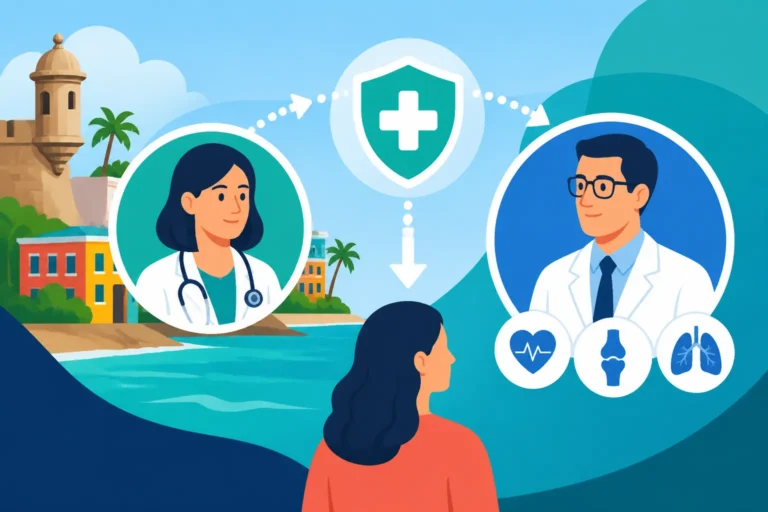
The core of the Vital Plan is the "Primary Medical Group" (PMG). Every beneficiary is assigned to a primary care physician (PCP). This doctor is your gatekeeper. Want to see a dermatologist for a weird mole? You usually need to see your PCP first for a referral. While this can feel like an extra step if you're used to PPO plans on the mainland, it's how the system controls costs.
The plan covers 100% of most preventative services. This includes annual physicals, immunizations (essential for school-aged kids), and screenings like mammograms or colonoscopies. There has been a massive push for "Tele-salud" (telehealth). Many Vital insurers now offer a 24/7 nurse line or video calls with doctors for minor issues like a sinus infection or a rash. This is a godsend when you consider the traffic in San Juan or the winding roads of the interior.
Specialized Care and Hospitalization
If you need surgery or specialized treatment for a chronic condition, Vital provides coverage at participating hospitals and clinics. Most of the major hospital systems on the island, such as Pavia or Auxilio Mutuo, have departments or wings that accept Vital patients. However, you must be aware of the "Prior Authorization" process. For non-emergency surgeries, your insurer must give the green light before you head to the operating room.
Emergency room visits are covered, but here is a veteran tip: only go to the ER for true emergencies. For minor stitches or a high fever, look for a "CDT" (Centro de Diagnóstico y Tratamiento). These are community medical centers that are much faster and are designed to handle the "in-between" cases. If you find yourself in a situation where you need immediate care but aren't near a Vital-approved facility, having a backup like SafetyWing can sometimes help with costs if you're forced to use an out-of-network private clinic in a pinch, though primarily it’s there for when you’re traveling off-island.
Prescription Drugs and the Vital Formulary
Puerto Rico uses a "Formulario Formulario Terapéutico Central" (Central Therapeutic Formulary). This is a list of medications that the government has pre-approved for all Vital patients. If your doctor prescribes something on this list, your co-pay is usually very low—sometimes as little as $0 to $4. This is a massive benefit, as prescription costs on the mainland can be astronomical.
However, if you need a "brand-name" drug that isn't on the formulary, your doctor will have to file a justification for a medical exception. This can take time and involves a fair amount of back-and-forth between the pharmacy and the insurance company. It’s always a good idea to check Prescription Medications and Pharmacies in Puerto Rico: The Complete Guide to understand how to manage your refills, especially if you take maintenance medications for blood pressure or diabetes.
Navigating the Enrollment Process
Applying for Vital is often the first "Welcome to the Island" moment where you realize that "Island Time" applies to government offices too. It is a test of patience, but if you go in prepared with the right folders and copies, you can avoid the dreaded "come back tomorrow" speech.
Required Documentation for Newcomers
Before you even think about heading to the Medicaid office, you need to gather your "expediente" (file). You will need:
- Proof of identity (US Passport or Birth Certificate).
- Social Security card (the actual physical card, not just the number).
- Proof of residency (a utility bill or a certified lease).
- Proof of income (the last three months of pay stubs, or a tax return).
- A "Certificación de Composición Familiar" (if you are applying for a family).
One thing that trips up many people is the utility bill. If the electricity is still in your landlord's name, you will need a notarized letter from them stating that you live there and are responsible for the bills. This is the kind of hyper-local detail that matters. For more on this, see The Complete Guide to Healthcare in Puerto Rico for New Residents (2027).
Where and How to Apply: Online vs. In-Person
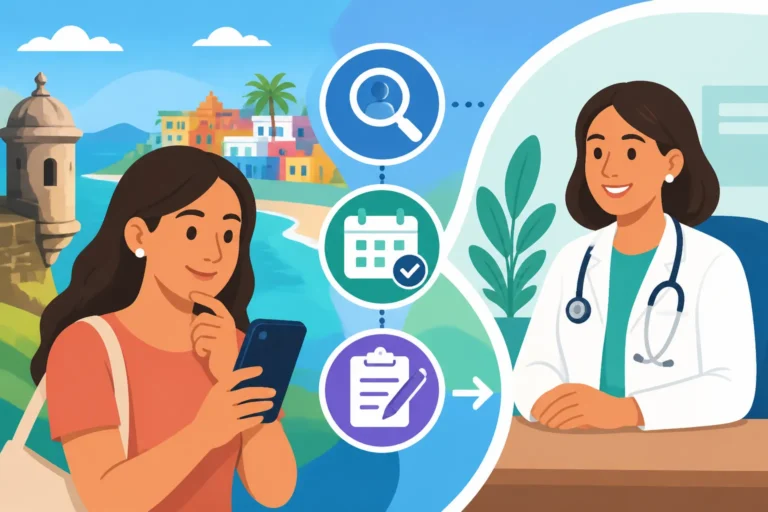
There is a digital portal for applications, which is a huge improvement. You can upload your documents and wait for a callback. However, the system is prone to glitches, and many old-school residents still prefer the "viva voz" (in-person) method. If you choose to go to a local Medicaid office, get there early—I’m talking 6:00 AM early.
The offices are scattered across the island, usually located in the "Centro de Gobierno" of each town. Bring a book, a portable charger, and some snacks. When your name is finally called, be polite and patient. The clerks are often overworked, and a little "buenos días" goes a long way in making the process smoother. If you’re still waiting for your appointment and worried about a gap in coverage, SafetyWing offers a quick online sign-up that can give you peace of mind while the wheels of the government turn slowly.
Choosing an Insurer (MCO) within Vital
Once you are deemed eligible, you will be asked to choose an insurer. This is a critical decision. Not all insurers have the same relationship with every doctor. If you already have a doctor you like, ask them, "Which Vital plan do you prefer working with?" Some insurers are known for faster authorizations, while others might have a larger network in certain parts of the island, like the west coast vs. the metro area.
You typically have a 90-day window after enrollment to switch your MCO if you find that your favorite specialist doesn't take the one you first picked. After that, you are generally locked in until the open enrollment period, unless you have a qualifying life event. It’s worth doing a bit of homework on Understanding Medicaid and the Vital Program in Puerto Rico before you check that box on the application form.
| Feature | Vital Plan (Public) | Private Insurance (Local) | SafetyWing (Travel/Nomad) |
|---|---|---|---|
| Eligibility | Low-income residents | Anyone who can pay | Nomads/Travelers |
| Cost | $0 or very low co-pays | Monthly premiums + co-pays | Low monthly subscription |
| Doctor Choice | Within assigned MCO network | Larger private networks | Any private provider |
| Referrals | Required from PCP | Usually not required | Not required |
| Coverage Area | Puerto Rico only | PR and sometimes US/Global | Worldwide (including PR) |
| Best For | Lower income or families | Professionals/Act 60 | Newcomers in transition |
Challenges and Realities for Expats and Newcomers
I would be doing you a disservice if I painted a picture of a perfect system. The Vital Plan is a lifeline, but it comes with significant "Puerto Rico hurdles" that can be jarring if you are used to the efficiency of private mainland healthcare.
The Wait Times and Access Issues
The biggest challenge is undoubtedly the wait time. Because the plan covers such a large portion of the population, the waiting rooms at specialists’ offices are often packed. It is not uncommon to wait three to four months for an appointment with a popular cardiologist or endocrinologist. Even on the day of your appointment, a "10:00 AM" slot might actually mean you see the doctor at 2:00 PM.
This is a cultural shift. In Puerto Rico, doctors often spend more time talking with their patients, which is great for care but terrible for the schedule. You have to learn to plan your day around a medical visit. This is where How to Find an English-Speaking Doctor in Puerto Rico becomes useful, as those doctors often cater to a mix of private and Vital patients and might have slightly better scheduling systems.
Language Barriers in the Public System
While many doctors in Puerto Rico are trained in the US and speak excellent English, the administrative staff at the Medicaid offices and the receptionists at the local clinics might only speak Spanish. If your Spanish is "un poco oxidado" (a little rusty), you might find the enrollment process and the scheduling of appointments to be incredibly stressful.
It is wise to bring a local friend or a translator if you aren’t confident in your Spanish. The forms are in Spanish, the automated phone lines are in Spanish, and the nuances of "prior authorization" are hard to navigate in a second language. This is another reason some expats keep a plan like SafetyWing—their customer support is in English and available 24/7, which provides a psychological safety net when you’re feeling overwhelmed by the local bureaucracy.
Why You Might Need a Backup Plan
Because of the specialist shortage and the wait times, some residents choose to have a "hybrid" approach. They use Vital for their primary care and prescriptions but keep some savings aside—or a separate travel policy—to pay out-of-pocket for a private consultation if they need to be seen immediately.
If you are a resident who travels back to the mainland frequently, remember that Vital does not cover you once you leave the island, except for very specific emergency situations that are a nightmare to claim. For those trips back to see family in Florida or New York, having Emergency Medical Care in Puerto Rico: What Every Resident Needs to Know as a reference is good, but having an active policy like SafetyWing for those travel days is essential to avoid being stuck with a $50,000 US hospital bill.
Comparing Vital with Private Health Insurance
For many newcomers, the question isn't just "How do I get Vital?" but "Should I get Vital or pay for a private plan?" This depends entirely on your financial situation, your health needs, and your tolerance for administrative friction.
Cost-Benefit Analysis of Going Public
If you qualify for Vital, the financial "pro" is massive. You could essentially have zero monthly premiums and almost zero out-of-pocket costs for everything from labs to major surgeries. For a family on a tight budget, this is the difference between staying on the island and having to move back. The "cost" is your time and the limited choice of providers.
Private plans, on the other hand, can cost anywhere from $200 to $600 a month for an individual, depending on the coverage. With a private plan, you generally get access to the "luxury" clinics and shorter wait times. You are paying for convenience and speed. If you have a chronic condition that requires frequent specialist visits, the investment in a private plan like Triple-S or Humana might be worth it. Check out How to Get Health Insurance When You Move to Puerto Rico for a deeper dive into these options.
Network Restrictions and Provider Access
The Vital network is large, but it is not all-encompassing. Some of the top specialists on the island simply do not accept government insurance because the reimbursement rates are lower than they can get from private patients. If you have your heart set on a specific surgeon or a boutique birthing center, you need to verify their participation in Vital before you commit to the plan.
Private plans often have "PPO" options that allow you to see doctors outside of the network for a higher co-pay. Vital does not have this flexibility. If you go to a doctor who doesn't take your Vital MCO, you will be paying 100% of that bill out of your own pocket. This is why it’s so important to ask every time you make an appointment.
The Hybrid Approach for Digital Nomads
If you are living the "laptop life" and moving between Puerto Rico, the mainland, and other islands, you are in a unique spot. You might not stay in PR long enough to satisfy the Bona Fide residency for Vital, or your income might be just high enough to disqualify you but not high enough to make a $500/month private local plan feel comfortable.
This is where SafetyWing shines for the nomad community. It’s built for people who don't fit into the traditional "I live in one house and work at one office" mold. You can use it as your primary coverage while you’re "scouting" the island, and if you eventually decide to settle down and go through the Vital application process, you can keep it as a secondary layer for when you travel. It bridges the gap between the rigid public system and the expensive private sector.
Mental Health and Dental Services Under Vital
One of the most overlooked benefits of the Vital Plan is that it includes dental and mental health coverage, which are often separate and expensive "add-ons" for private insurance on the mainland.
Accessing the APS Network for Mental Health
Mental health services in the Vital Plan are typically managed through a specialized network called APS Healthcare. If you need therapy or psychiatric care, your primary care doctor will give you a referral to APS. They have clinics across the island that handle everything from routine counseling to crisis intervention.
The reality of mental health care in PR is that demand is very high, and there can be a wait for non-emergency therapy sessions. However, the fact that it is included at no extra cost is a significant plus. For those who prefer a specific private therapist who doesn't take APS, you'll be looking at out-of-pocket costs ranging from $75 to $150 per session.
Routine and Emergency Dental Coverage
Vital includes basic dental care for all beneficiaries, which is a rarity for public plans. This covers:
- Twice-yearly cleanings.
- X-rays.
- Fillings.
- Extractions.
For children, the coverage is even more extensive, including sealants and some orthodontic work if it is deemed medically necessary. Adults have more limited options for things like crowns or bridges, which often require a significant co-pay or aren't covered at all. If you have major dental issues, you might want to look at How Much Dental Treatment Cost in Puerto Rico Without Insurance? to compare the costs of paying cash at a high-end dentist in San Juan.
Vision and Optical Benefits
The plan also provides basic vision care, usually one eye exam per year and a modest allowance for glasses. Don't expect to get designer frames with your Vital card—the selection is usually limited to a "standard" range. But for kids who are growing and constantly breaking their glasses, having this coverage is a life-saver. For adults who want lasik or high-end contacts, those are almost always out-of-pocket expenses.
Practical Tips for Maximizing Your Vital Benefits
Living with the Vital Plan requires a bit of "island savvy." You have to learn the tricks of the trade to make the system work for you rather than against you.
Finding a Participating Doctor
Don't rely on the printed directories the insurance companies send you; they are often out of date by the time they hit your mailbox. The best way to find a doctor is to use the insurer's mobile app or website, but even then, call the office to confirm. When you call, ask specifically: "Are you accepting new Vital patients under [Your Insurer's Name]?" Sometimes a doctor takes Vital but has reached their "cap" for how many government-insured patients they can handle.
Handling Referrals and Prior Authorizations
Always keep copies of your referrals. If your doctor gives you a paper referral, take a photo of it immediately. Papers get lost in the shuffle of busy clinics. When it comes to prior authorizations for things like MRIs or specialized blood work, be your own advocate. Call the insurance company three days after your doctor submits the request to make sure it's moving through the system. If you just wait for a letter in the mail, you might be waiting for weeks.
What to Do in an Emergency
In a true medical emergency, dial 911. Puerto Rico's emergency response has improved significantly by 2026, though response times can still vary in rural areas. Every hospital ER is required by law (EMTALA) to stabilize you regardless of your insurance. Once you are stabilized, they will check your Vital card to see if they are in your network. If they aren't, they may coordinate a transfer to a participating facility once it's safe to move you. Understanding the Emergency Medical Care in Puerto Rico: What Every Resident Needs to Know can help you stay calm in these high-stress moments.
Health and Medical Disclaimer
The information provided in this guide is for educational and informational purposes only and does not constitute professional medical or legal advice. Healthcare laws, income thresholds for the Vital Plan, and insurance regulations in Puerto Rico are subject to frequent changes. While we strive to keep this information up to date, you should always consult with the Puerto Rico Health Insurance Administration (ASES), a qualified insurance broker, or a legal professional regarding your specific eligibility and coverage. Use of any third-party services mentioned, such as SafetyWing, is subject to their own terms and conditions. Always seek the advice of your physician or other qualified health provider with any questions you may have regarding a medical condition.