How to File Your First Planilla After Moving to Puerto Rico
Moving to Puerto Rico is a grand adventure, a dream for many, but let's be real: setting up your new life here comes with its own unique set of administrative hurdles. One of the biggest head-scratchers for newcomers, especially those of us who’ve grown accustomed to the mainland U.S. tax system, is figuring out how to handle taxes with Hacienda – Puerto Rico's Treasury Department. This guide is going to walk you through the ins and outs of filing your very first local income tax return, affectionately known as the Planilla, so you can navigate this process with confidence, not confusion.
The Initial Hurdles: Why Your First Planilla Feels Different
Oh, the joys of moving to a new place! Just when you think you’ve got a handle on everything from finding your favorite panadería to deciphering the marbete process for your car, along comes tax season. And let me tell you, filing your first Planilla in Puerto Rico isn't just about plugging in numbers; it’s about understanding a fundamentally different tax landscape. It’s a rite of passage, for sure, but one that can feel like trying to solve a Rubik's Cube blindfolded at first. Don't worry, we've all been there.
The Dual Tax System: Federal vs. Local
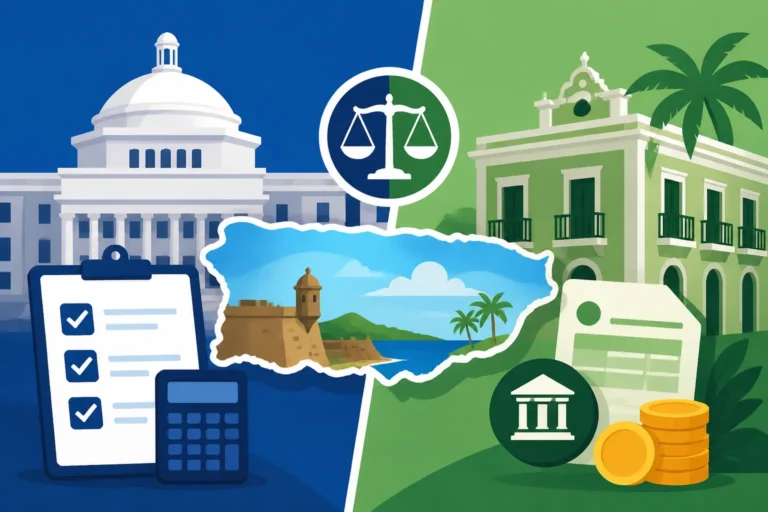
One of the first, and often most confusing, things to wrap your head around is Puerto Rico's unique dual tax system. As U.S. citizens (or bona fide residents), you might think your federal tax obligations follow you everywhere. And to an extent, they do. However, thanks to some special provisions, income sourced within Puerto Rico is generally exempt from federal income tax. Yes, you read that right – exempt! This is a huge draw for many, especially those looking at opportunities like Act 60.
But here’s the kicker: while your PR-sourced income might be off the federal hook, it's absolutely on the hook for local taxes. This means you still have a responsibility to file an income tax return with Hacienda, which is our local version of the IRS. The confusion often arises because mainland tax software and even some mainland tax professionals aren't fully versed in these intricacies. You’re not just filing one return; you're dealing with two distinct, though related, systems. It's not uncommon for expats to accidentally mix these up, leading to unnecessary stress or, worse, compliance issues. Understanding this distinction is absolutely crucial for your Planilla and avoiding any unexpected surprises.
The "Year of Move" Conundrum
Your first year in Puerto Rico is often the most complex for tax purposes, and it’s aptly nicknamed the "year of move." Why? Because you likely had income from both the mainland U.S. and Puerto Rico. This isn't just a simple matter of adding up everything and throwing it onto one form. You have to carefully differentiate between your mainland-sourced income and your Puerto Rico-sourced income.
For instance, if you worked in Florida for six months before moving to Fajardo, that income earned in Florida is likely still subject to federal tax. However, any income you earned from a job in Puerto Rico after your move, or from a business established here, would generally be considered Puerto Rico-sourced. This transition period requires meticulous record-keeping. Imagine trying to explain to a tax auditor that your consulting income from a New York client was actually earned while sitting on your balcony overlooking Luquillo Beach after you established your tax home here. It’s not impossible, but it needs clear documentation. This is where the concept of income sourcing becomes critically important. Did you get paid for a job performed on the mainland or for services rendered while you were physically present and working in Puerto Rico? The answer profoundly impacts what you report on your Planilla and, in turn, your federal return (if you even need to file one).
Understanding Your Tax Residency Status (Bona Fide Resident)
Before you even think about numbers, you absolutely must solidify your understanding of what it means to be a "bona fide resident" of Puerto Rico. This isn’t just a fancy title; it's the cornerstone of your tax situation here. Without meeting the criteria for bona fide residency, you might find yourself still on the hook for federal taxes on all your income, regardless of where it was sourced. Believe me, you don't want that surprise. This is often the first thing a tax advisor will ask you about, and for good reason. For a deeper dive, check out our comprehensive guide on Bona Fide Residency in Puerto Rico: The Definitive Tax Guide (2027).
The 183-Day Rule and Its Importance
The most well-known, and often the simplest, test for establishing bona fide residency is the "presence test," commonly referred to as the 183-day rule. Simply put, to be considered a bona fide resident for a tax year, you generally must be present in Puerto Rico for at least 183 days during that calendar year. This isn't just about having a fun vacation; it's about establishing your physical presence here as your home.
This seemingly straightforward rule is foundational. If you don't meet this, it’s incredibly difficult to argue for bona fide residency, which then impacts your ability to exclude PR-sourced income from your federal tax return. It also flags you differently for Hacienda purposes. So, when you're thinking about your first Planilla, this 183-day mark is non-negotiable. I can't stress enough the importance of documenting your days in Puerto Rico. Keep those flight records, ferry tickets, hotel receipts from any off-island trips, and even just a personal calendar noting your presence. Utility bills, rental agreements, and local credit card statements also help paint a picture of continuous presence. This documentation will be invaluable if Hacienda or the IRS ever comes knocking. If you want to dive deeper into this specific rule, take a look at our article on Understanding Bona Fide Residency and the 183-Day Rule in Puerto Rico.
Beyond the Days: Tax Home and Closer Connection Tests
While the 183-day rule gets a lot of attention, it’s crucial to remember that it's only one leg of a three-legged stool. To truly be a bona fide resident, you also need to satisfy two other tests: the "tax home test" and the "closer connection test." These are where things can get a bit more nuanced, but they're equally vital for your Planilla and overall tax status.
Your "tax home" generally refers to the main place of your business or employment, regardless of where you maintain your personal residence. If you’re working for a company based in San Juan, or running your own business from your home office in Rincon, your tax home would clearly be Puerto Rico. However, if you’re, say, working remotely for a company in New York, and that company is your only significant source of income, proving your tax home is in Puerto Rico can require additional documentation, such as proving a significant portion of your income is sourced from within Puerto Rico through other means.
The "closer connection test" is perhaps the most subjective of the three, but it's about demonstrating that your primary social, economic, and family ties are stronger with Puerto Rico than with any other place. This involves things like obtaining a Puerto Rico driver's license, registering to vote here, opening local bank accounts, enrolling your children in local schools, joining local clubs or organizations, and having your personal belongings in your home here. Essentially, it’s about proving that Puerto Rico is not just where you are, but where you live. Failing to meet any of these three tests – presence, tax home, or closer connection – can undermine your bona fide residency claim. So, while you're tallying those 183 days, make sure you're also actively building your life and connections here on the island. For a detailed exploration of all three requirements, you can refer to Understanding the Presence, Tax Home and Closer Connection Tests in Puerto Rico.
Getting Your Hacienda Affairs in Order: The SURI Portal and Tax Account
Alright, you’re here, you’re establishing bona fide residency, now it’s time to get down to business with Hacienda. Think of Hacienda as Puerto Rico’s version of the IRS. Just like you need a Social Security Number or an ITIN for federal taxes, you'll need to set up your account with Hacienda to file your Planilla. This isn't something you want to put off, as delays here can easily push back your ability to file on time.
Registering with Hacienda and Getting Your Account
The first real step for any newcomer filing their Planilla is registering with the Puerto Rico Treasury Department, Hacienda. For individuals, this means getting your proper tax identification number and creating your profile within their system. While U.S. citizens often use their Social Security Number (SSN) for identification, you still need to be properly registered with Hacienda to ensure your income is tracked and you can file your local returns.
Typically, you'll need to provide documentation such as your Social Security card, a valid photo ID (like your Puerto Rico driver's license), and proof of address. If you're self-employed, you'll also need to get a "Registro de Comerciante" (Merchant's Registration Certificate) and potentially an Employer Identification Number (EIN) if you have employees or a formal business structure. It's a foundational step that many newcomers overlook, assuming their federal ID is enough. It’s not. Don't let this be a last-minute scramble when tax season hits. Getting this done early means one less headache later on. You can find more detailed instructions on this process in our guide, How to Register with Hacienda and Get a Tax Account in Puerto Rico.
Navigating SURI: Your Online Tax Hub
Once you’re registered with Hacienda, your next big step is becoming intimately familiar with SURI. SURI, which stands for Sistema Unificado de Rentas Internas (Unified System of Internal Revenues), is Hacienda's online portal, much like the IRS's online services. This is where virtually all of your interactions with Hacienda will happen, from filing your Planilla to making payments, checking your refund status, and managing any tax obligations for businesses you might own.
Registering for SURI involves creating an online account and then linking it to your individual tax identification number you obtained from Hacienda. The process can feel a bit clunky at times, and sometimes requires an extra verification step, but it is absolutely essential. Once you’re in, you’ll find sections for individual tax returns, sales and use tax (IVU), property tax (CRIM), and various other declarations. For newcomers, SURI will be your primary tool for electronically filing your Planilla, making quarterly estimated tax payments if you're self-employed, and generally keeping track of your tax compliance. Getting comfortable with SURI is key, and if you need more guidance, our article on Understanding SURI Hacienda's Online Tax Portal in Puerto Rico can help. Many newcomers spend frustrating hours trying to figure out which button to click. Take your time, and don’t be afraid to reach out for help if you get stuck.
Navigating the Planilla: Key Forms and Considerations for Newcomers
Now that you're registered with Hacienda and have access to SURI, it’s time to tackle the Planilla itself. This is Puerto Rico’s individual income tax return, and it has its own set of forms, rules, and nuances that differ significantly from the IRS Form 1040 you might be used to. Approaching it with an open mind and a willingness to learn is half the battle.
The Main Forms: Individual Income Tax Return (Formulario 482)
For most individual newcomers, your journey into filing your Planilla will revolve around Formulario 482. This is the main individual income tax return form for Puerto Rico. It’s structured to capture all your Puerto Rico-sourced income, calculate your deductions, and ultimately determine your tax liability to Hacienda. You’ll find sections for wages, self-employment income, rental income from PR properties, interest, dividends, and other types of income.
One key difference from federal forms is how the income is reported and categorized specific to the island’s tax code. It might look somewhat familiar at first glance, but the devil is in the details – specifically, the instructions provided by Hacienda. Take your time to review the various schedules that might need to be attached, depending on your income sources (e.g., Schedule B for interest and dividends, Schedule D for capital gains/losses, Schedule K for self-employment). Unlike federal returns where you might use a standard deduction without much thought, understanding the available deductions and how to claim them on Formulario 482 is crucial to minimize your tax burden.
Sourcing Your Income: What's PR-Source and What Isn't
This is perhaps the most critical concept for newcomers to master for their Planilla. As we touched upon earlier, what determines if income is Puerto Rico-sourced is fundamental to both your local and federal tax obligations. Generally, income is considered Puerto Rico-sourced if it arises from:
- Services performed within Puerto Rico: This includes wages from a job physically located on the island, or income from a freelance business where you perform the services from Puerto Rico.
- Property located in Puerto Rico: Think rental income from a house or apartment you own in San Juan, or capital gains from the sale of real estate on the island.
- Business operations carried out in Puerto Rico: If you run a retail store in Mayagüez or a tech startup based in Santurce, the profits are PR-sourced.
The challenge comes when your income isn't so clearly defined. For example, if you work remotely for a mainland company. If your employment contract and work activities are entirely based out of your home in Puerto Rico, and you meet the bona fide residency tests, that income can be considered PR-sourced, even if the employer is on the mainland. However, it's a nuanced area, and simply receiving a paycheck from a mainland company doesn't automatically make it non-PR-sourced if your actual work is performed here. This is especially important for those who transition their existing mainland employment to a remote setup in Puerto Rico. You'll need to demonstrate your physical presence here and that the income-generating activity occurs on the island.
For your Planilla, you only report the income that is Puerto Rico-sourced. Income that is clearly mainland-sourced (e.g., from a job you left before moving, or investments in mainland-only funds) is not reported on your Planilla. However, remember that if you haven’t fully established bona fide residency for federal purposes, or if you have certain types of non-PR-sourced income, you might still have a federal filing obligation. This distinction is vital, especially in the year of your move. For more on navigating this, see our article, How to File Taxes If You Have Both Mainland and PR Income.
Deductions and Credits You Should Know
Just like on the mainland, Puerto Rico offers various deductions and credits that can reduce your taxable income or directly lower your tax bill. As a newcomer, it’s worth familiarizing yourself with these so you don't leave money on the table. Hacienda’s tax code is different, so don’t assume the deductions you used to claim will automatically apply or work the same way.
Common deductions that often apply to individuals on the Planilla include:
- Mortgage Interest: If you bought property and have a mortgage in Puerto Rico, the interest paid can be deductible.
- Student Loan Interest: Payments on qualified student loans can often be deducted.
- Charitable Contributions: Donations to qualified charitable organizations in Puerto Rico are deductible.
- Medical Expenses: Certain medical and dental expenses exceeding a percentage of your adjusted gross income can be deducted.
- Retirement Contributions: Contributions to eligible retirement plans.
- Personal Exemptions: There are standard personal exemptions and exemptions for dependents.
Additionally, Puerto Rico has various tax credits that can directly reduce your tax liability dollar-for-dollar. These might include credits for higher education expenses, certain types of investments, or even credits for specific industries. It’s absolutely essential to keep meticulous records for all deductions and credits you plan to claim. Receipts, statements, and any other supporting documentation are your best friends. Don't be that friend.
Here's a quick comparison of general income tax filing differences:
| Feature | Mainland U.S. (IRS) | Puerto Rico (Hacienda) |
|---|---|---|
| Primary Form | Form 1040, U.S. Individual Income Tax Return | Formulario 482, Planilla de Contribución sobre Ingresos de Individuos |
| Taxing Authority | Internal Revenue Service (IRS) | Departamento de Hacienda de Puerto Rico |
| Key Residency Test | Substantial Presence Test (for non-citizens/residents), Domicile | Bona Fide Resident (Presence, Tax Home, Closer Connection) |
| Federal Tax on PR Income | Generally exempt from federal tax if bona fide resident | Not applicable (local tax authority) |
| Online Portal | IRS.gov, various tax software | SURI (Sistema Unificado de Rentas Internas) |
| Language of Forms | English | Spanish (often with English translations available) |
| Estimated Tax Payments | Form 1040-ES | Formulario 480.1 (Declaration of Estimated Tax) |
Common Mistakes and How to Avoid Them on Your First Filing
Making mistakes on your first Planilla is surprisingly easy, mainly because the Puerto Rico tax system is distinct and often misunderstood by those new to the island. But a little foresight can save you a lot of grief (and money) down the line. It's not about being perfect, but about being informed and diligent.
Misclassifying Income and Residency Errors
One of the most frequent and costly errors newcomers make is incorrectly classifying their income or misunderstanding their residency status. It's a double whammy: you could end up paying more tax than necessary, or worse, facing penalties from either Hacienda or the IRS.
For example, a remote worker might assume that because their employer is on the mainland, their income is automatically mainland-sourced. However, if they perform all their duties from their home in Puerto Rico, and have met the bona fide residency tests, that income could be considered Puerto Rico-sourced. Conversely, some might mistakenly believe that all their income is exempt from federal tax just because they live here, without fully understanding the bona fide residency requirements or that certain non-PR-sourced income may still be federally taxable.
The biggest error here is failing to properly establish and document your bona fide residency. If you don't meet the 183-day, tax home, and closer connection tests, the IRS could challenge your exclusion of PR-sourced income, leading to significant back taxes and penalties. This often happens when people spend too much time off-island, maintain strong ties to their former mainland residence, or haven't formally changed their domicile to Puerto Rico. Take the time to understand the nuances, document everything, and if in doubt, get professional advice.
Overlooking Key Deductions or Credits
Another common pitfall is simply overlooking deductions and credits that you're legitimately entitled to. When you're used to a different tax system, it’s easy to assume that certain deductions won't apply or to simply not know they exist. Because the Planilla and its accompanying schedules are in Spanish (though English translations are often available), it can be daunting to comb through every line item.
Many newcomers fall into the trap of rushing through the forms or using general tax software that isn't optimized for Puerto Rico’s unique tax code. This can lead to missed opportunities for reducing your taxable income or getting a larger refund. For instance, did you know about the specific tax credits for certain energy-efficient home improvements in Puerto Rico, or specific deductions for self-employed individuals that might differ from mainland rules? It's all in the details. This is why having a local perspective, or at least taking the time to thoroughly review Hacienda’s instructions, is so important. Don't assume your mainland experience translates directly; it almost certainly doesn't.
Late Filing or Payment Penalties
Deadlines are deadlines, no matter where you live. Just like the IRS, Hacienda has strict deadlines for filing your Planilla and paying any taxes due. Typically, the individual income tax return (Formulario 482) is due on April 15th for the preceding tax year, though it's always wise to confirm the exact date for the current year, as it can sometimes shift due to holidays or special circumstances.
Missing these deadlines can result in penalties for late filing, late payment, or both. These penalties can add up quickly, especially if you owe a significant amount of tax. If you anticipate that you won't be able to file on time, Hacienda does offer extensions. However, an extension to file is not an extension to pay. If you expect to owe taxes, you should still pay an estimated amount by the original due date to avoid late payment penalties. Many people get caught by this, thinking an extension means they can hold off on payment, only to find themselves facing unexpected fees. Plan ahead, keep track of the dates, and if you’re self-employed, remember those quarterly estimated payments! For more information on your local tax return, see How to File Your Annual Income Tax Return Planilla in Puerto Rico.
Seeking Professional Help and Resources
Let’s be honest, deciphering tax codes in a new place, especially one with a unique federal-local dynamic like Puerto Rico, can feel overwhelming. While this guide aims to equip you with essential knowledge, there will likely be moments when you need a little (or a lot) more help. And that's perfectly okay. Smart expats know when to call in the cavalry.
When to Hire a Local Tax Professional
For your first Planilla, and honestly, for the first few years, I cannot recommend highly enough seeking guidance from a local tax professional. This isn't just about someone who can fill out forms; it's about finding someone intimately familiar with Puerto Rico's specific tax laws, regulations, and the quirks of dealing with Hacienda. A tax professional who understands both the federal implications for U.S. citizens in Puerto Rico and the local Planilla requirements is invaluable.
Look for a Certified Public Accountant (CPA) in Puerto Rico, or a tax attorney with expertise in local tax law. They can help you:
- Determine your bona fide residency status: This is foundational and they can ensure you meet all three tests and have the proper documentation.
- Properly source your income: Especially crucial if you have mainland and PR-sourced income, or are a remote worker.
- Identify all eligible deductions and credits: They know the nuances of the Puerto Rico tax code and can ensure you don't miss out.
- Navigate the SURI portal: While you should learn it, they can guide you through the trickier parts or handle filings on your behalf.
- Provide strategic advice: If you’re self-employed, have complex investments, or are considering Act 60 benefits, their expertise is essential.
You might want to explore services like Taxes for Expats, who specialize in helping U.S. citizens living abroad with their tax obligations. They often have experience with the unique situation of Puerto Rico and can offer a bridge between your federal and local needs. Don't view this as an expense, but as an investment in your peace of mind and financial compliance.
Utilizing Online Resources and Community Support
Beyond professional help, there's a wealth of information and support available online. Hacienda's official website is always your first stop for official forms, instructions, and announcements. While sometimes a bit clunky to navigate, it contains the most up-to-date information directly from the source. The SURI portal itself has various guides and FAQs that can clarify specific processes.
Expat forums and social media groups dedicated to moving to Puerto Rico are also fantastic resources for shared experiences and informal advice. You'll find many people who have gone through the exact same struggles you’re facing, and they can offer tips, recommend local professionals, or simply commiserate with the administrative hurdles. While these communities are incredibly helpful for anecdotal information and support, remember that personal tax advice should always come from a qualified professional. What worked for one person might not apply to your specific situation, and tax law can be quite complex. Use these resources to gather general knowledge and support, but always consult with a tax expert for definitive answers regarding your Planilla.
Disclaimer
The information provided in this guide is for general informational purposes only and does not constitute financial, legal, or tax advice. While we strive to provide accurate and up-to-date information, tax laws and regulations are complex and subject to change. Each individual's situation is unique, and you should consult with a qualified tax professional or legal advisor licensed in Puerto Rico for advice tailored to your specific circumstances. We are not responsible for any actions taken or not taken based on the information presented herein.