How Do I Get a Professional License in Puerto Rico?
You’ve just landed in San Juan with a mainland nursing license, an engineering stamp, or a cosmetology certificate. Then someone at a job interview asks, “Y su licencia de Puerto Rico?” Suddenly you realize your hard-earned credential may not let you work here yet. This guide explains how professional licensing works on the island, step by step, so you can get licensed without losing months.
How Professional Licensing Works in Puerto Rico
When I first moved here, I assumed that because Puerto Rico is a US territory, my license would simply carry over the way a driver’s license sort of does. It doesn’t. Puerto Rico regulates professions much like a state does, but with its own laws, its own boards, its own paperwork culture, and very often its own language requirements. Once you understand who holds the keys, the process becomes far less mysterious.
Who Issues Licenses: The Examining Boards
Licenses in Puerto Rico are issued by examining boards, known locally as Juntas Examinadoras. Each regulated profession has its own board, and that board sets the education requirements, the exams, the renewal rules, and the disciplinary process. There is no single licensing office where you can walk in and handle everything at once.
The boards are grouped under different government umbrellas, and this is the first thing that confuses newcomers:
- Health professions such as nursing, pharmacy, physical therapy, dentistry, psychology and many others mostly fall under the Oficina de Reglamentación y Certificación de Profesionales de la Salud, usually called ORCPS, within the Department of Health.
- Physicians are licensed through the Junta de Licenciamiento y Disciplina Médica, which operates separately from most other health boards.
- Many non-health professions such as engineering, architecture, accounting, cosmetology, electrical work and plumbing are handled by boards administered through the Departamento de Estado.
- Lawyers answer to the Supreme Court of Puerto Rico, which oversees bar admission.
- Real estate brokers and salespeople are licensed through their own examining board.
- Teachers in the public system are certified by the Departamento de Educación.
The practical lesson is to identify your exact board before you gather a single document. Calling the wrong office can waste a full day, especially if you drive into Old San Juan or Hato Rey only to be told politely that “eso no es aquí.”
Which Jobs Actually Require a License
Not every job here needs a license, and plenty of newcomers worry about this unnecessarily. If you work in software, marketing, customer support, sales or most corporate roles, you generally need no professional license at all. As a US citizen you also need no work permit, which Can I Work in Puerto Rico as a US Citizen Without a Visa? covers in more detail.
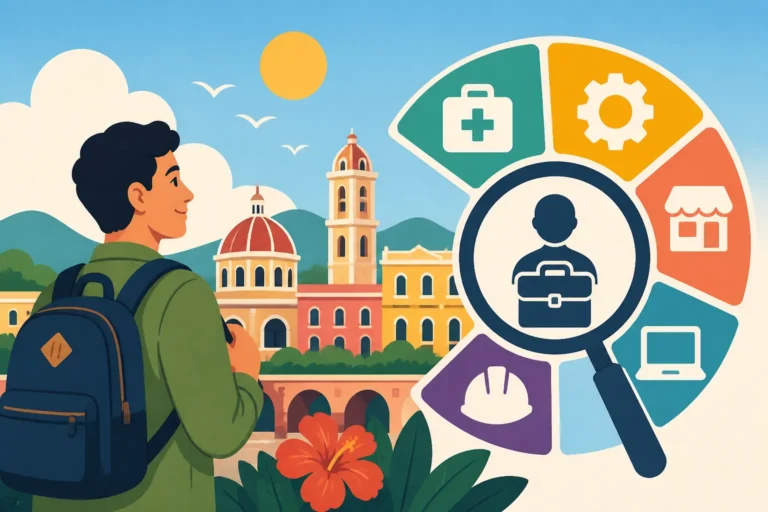
Licensing applies when the work affects public health, safety, money or legal rights. That includes medicine, nursing and allied health, law and notarial work, engineering and architecture, accounting at the CPA level, real estate, electrical and plumbing trades, beauty and barbering, and public school teaching. Some roles sit in a gray zone. A pharma company may hire you as a “quality engineer” without requiring a Puerto Rico engineering license, but signing off on certain construction plans absolutely does.
Here’s a scenario I see often. Maria, a licensed counselor from Orlando, accepts a remote job with a Florida clinic and assumes she can see Puerto Rico clients through telehealth from her apartment in Guaynabo. In most professions, the license that matters is tied to where the client is located. If she treats Puerto Rico residents, she needs Puerto Rico licensure. If she only treats Florida clients, her Florida license and that state’s rules govern. Always ask your board directly about cross-border practice before taking on clients.
How Puerto Rico Licensing Differs from the Mainland
Three things make the island different. First, a lot of the process happens in Spanish. Forms, board communications, regulations, and in many professions the exams themselves are in Spanish. Some boards accept documents in English, but others want certified translations.
Second, Puerto Rico relies heavily on government certifications that prove you are in good standing locally, such as a criminal background certificate and tax filing certifications. You’ll collect these from several agencies, and most can now be requested online.
Third, reciprocity is inconsistent. Some boards offer licensure by endorsement for people already licensed in another US jurisdiction, while others require you to sit for a local exam no matter how many years you’ve practiced. Law is the clearest example. There is no waiver into the Puerto Rico bar for mainland attorneys. To check your own profession’s rules before you plan your move around a job, see How Do I Find Out If My Mainland License Transfers to Puerto Rico?
Step-by-Step: Getting Your Professional License
Every board has its quirks, but the overall path looks remarkably similar across professions. I’ve helped friends through this in nursing, real estate and cosmetology, and the pattern repeats. Here is the general sequence, followed by the details that trip people up.
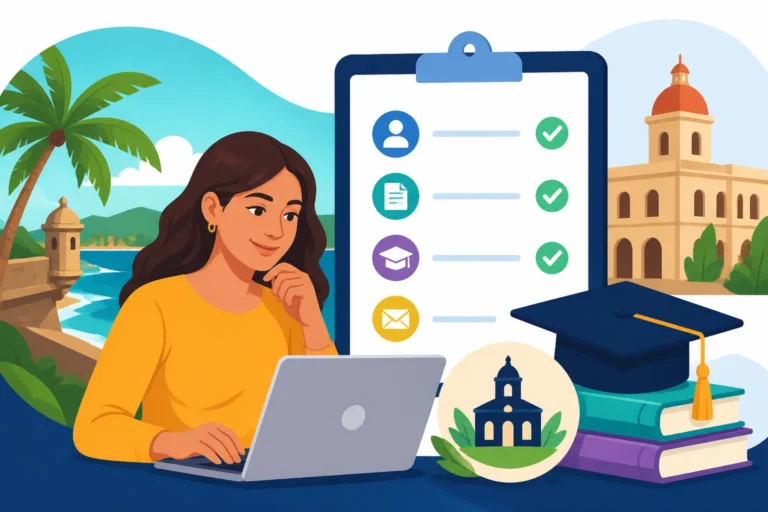
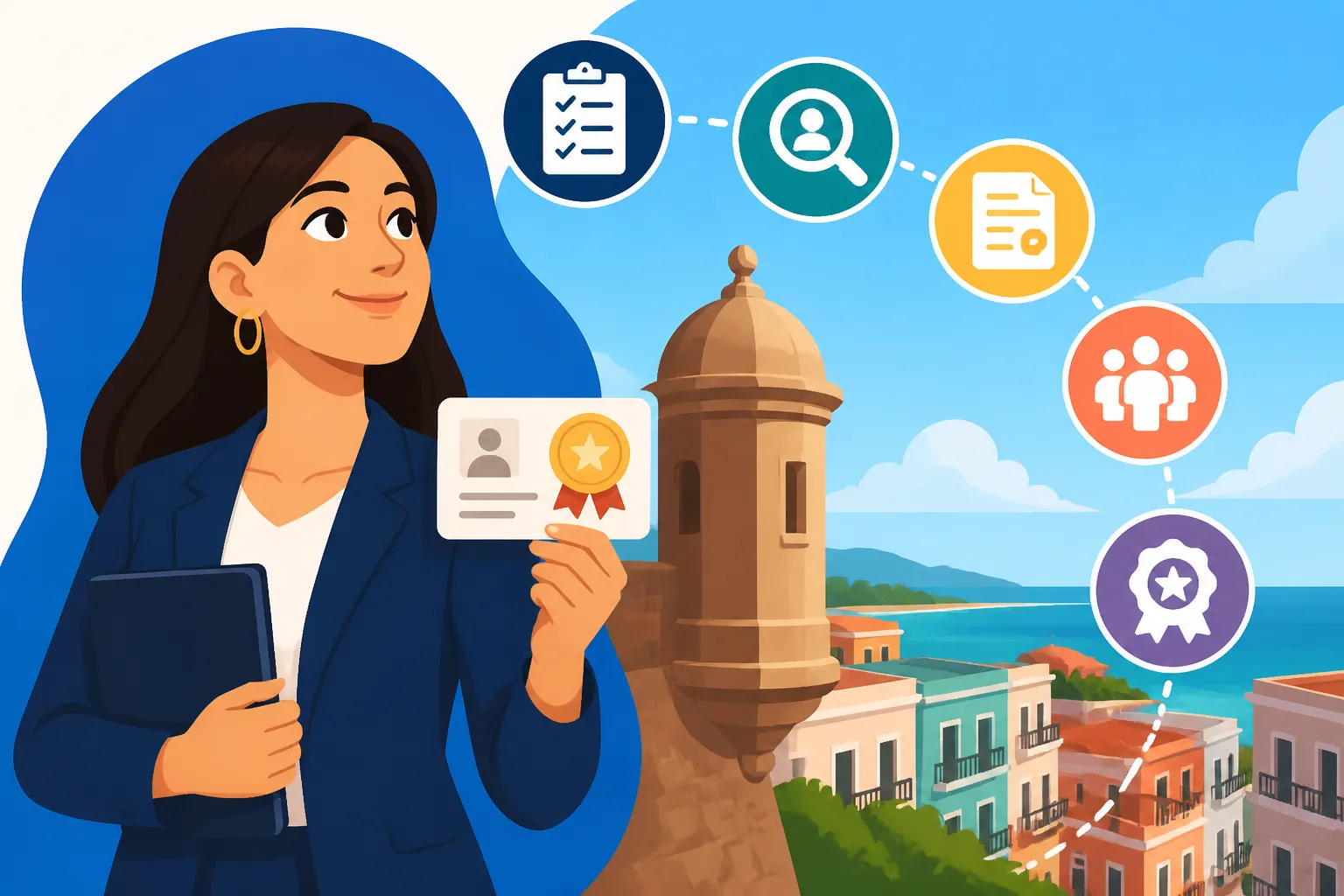
- Identify your specific board and download its current application checklist.
- Confirm whether you qualify by endorsement or reciprocity, or whether you must take an exam.
- Request official transcripts and license verifications from your school and your current licensing state.
- Gather Puerto Rico government certifications such as your criminal background certificate and tax filing certification.
- Arrange certified translations or notarizations where the board requires them.
- Submit the application, either online or in person, and pay the fees by the method the board specifies.
- Register for and pass any required exam, interview or jurisprudence test.
- Receive your license, then note your renewal date and continuing education obligations.
Gathering the Standard Document Package
Most boards ask for a core set of documents. Getting these early is the single best way to speed things up, because waiting on a school registrar back home is usually the slowest part.
The usual package includes:
- A completed application form, often signed in front of a notary.
- A birth certificate or passport, plus a government photo ID.
- Official transcripts sent directly from your school to the board, not handed over by you.
- License verification from every state where you’ve held a license, usually through that state’s verification system or a national database for your profession.
- A Certificado de Antecedentes Penales, which is Puerto Rico’s police background certificate. You can request it online through the government’s CESCO Digital platform, and it usually arrives quickly as a PDF.
- A certification from ASUME, the child support administration, showing you have no outstanding child support debt.
- A certification from Hacienda showing you’ve filed your Puerto Rico income tax returns, or an explanation if you’re too new to have filed.
- Passport-style photos, sometimes a specific number and size.
That Hacienda certification is a classic newcomer headache. If you arrived recently, you may never have filed a Puerto Rico return. In that case, boards generally want a certification stating that, and you’ll likely need to register on Hacienda’s SURI portal first. If you also have income from the mainland in the same year, the filing picture gets complicated. A specialist firm such as Taxes for Expats can help you sort out returns when your income spans both jurisdictions.
A note on notaries: a Puerto Rico notary is a licensed attorney, not a bank clerk with a stamp. Notarization here costs more and takes more time than on the mainland, so ask your board exactly which documents require it. Don’t notarize everything out of caution.
Submitting Your Application and Paying Fees
More boards now accept online submissions, though some still prefer paper delivered in person. When I helped a friend with her real estate application, the board accepted the forms digitally but still asked her to come in for a short identity check. Expect a hybrid process and keep both digital and printed copies of everything.
Fees are set by each board and change from time to time. Payment is commonly made online, by money order, or with a Hacienda payment voucher known as a comprobante, which you can buy at Colecturías and some banks. Always confirm the method before you go. Showing up with a credit card when the office only takes a comprobante is a rite of passage nobody needs.
After you submit, follow up politely and regularly. Puerto Rico offices respond well to courtesy and persistence, and a short phone call in Spanish asking “Quería verificar el estatus de mi solicitud” often gets faster results than a stream of emails. Write down the name of everyone you speak with and the date. If a document goes missing, that record is gold.
Exams, Interviews and the Spanish Factor
Exam requirements depend entirely on your profession and your path. Some professions use national standardized exams that you may have already passed, such as the Uniform CPA Examination for accountants or the NCEES exams for engineers. Others require a Puerto Rico-specific exam, a jurisprudence test on local law, or an oral interview with board members.
Language is where many newcomers feel the most anxiety, and that’s understandable. Local exams and interviews are frequently conducted in Spanish, and even when an English option exists, the regulations you’re tested on are written in Spanish. If your Spanish is conversational but not professional, start preparing technical vocabulary months before your exam. A tutor on iTalki can run mock oral interviews with you and drill the terminology your field uses, whether that’s clinical vocabulary or construction terms. For a broader plan to build workplace language skills, see How to Improve Your Spanish for the Puerto Rico Workplace.
One practical trick: ask the board whether it publishes a study guide or lists the laws and regulations covered on the exam. Reading those documents in Spanish does double duty. You learn the content and the formal register at the same time.
Licensing Paths for Common Professions
Every profession has its own path, but understanding the general shape of yours helps you plan realistic timelines and budgets. The table below summarizes the typical route for some common licensed careers. Your board’s current rules always take priority over any general overview.
| Profession | Governing Body | Typical Path for Newcomers | Language Considerations |
|---|---|---|---|
| Physician | Junta de Licenciamiento y Disciplina Médica | National exam history reviewed, plus local application and documentation | Board communications largely in Spanish |
| Registered Nurse | Junta Examinadora de Enfermería under ORCPS | Application with license verification; exam requirements depend on your history | Forms and regulations mainly in Spanish |
| Attorney | Supreme Court of Puerto Rico | Puerto Rico bar exam required; no admission on motion | Exam and practice heavily in Spanish |
| Notary | Supreme Court of Puerto Rico | Must be an admitted Puerto Rico attorney, plus a separate notarial exam | Spanish |
| Engineer | Board for engineers and surveyors under the Departamento de Estado | NCEES-based exams with possible endorsement for licensed engineers | Mixed; local rules in Spanish |
| CPA | Junta de Contabilidad | Uniform CPA Examination plus experience and local requirements | Mixed |
| Real Estate Broker or Salesperson | Real estate examining board | Required pre-licensing coursework and a local exam | Coursework and exam commonly in Spanish |
| Public School Teacher | Departamento de Educación | Teacher certification, usually including the PCMAS certification exams | Mainly Spanish, except English teaching areas |
| Electrician or Plumber | Trade examining boards under the Departamento de Estado | Documented training or experience plus a local exam | Mainly Spanish |
| Cosmetologist or Barber | Beauty specialists examining board | Approved training hours plus theory and practical exams | Mainly Spanish |
Health Professions
Health care is the most common licensed field I see newcomers navigate, partly because Puerto Rico has a real need for clinicians. The process generally runs through ORCPS, and it is document-heavy. Expect to verify your education, every license you’ve held, and sometimes your clinical hours. Boards may also ask for proof of specific certifications such as CPR.
Physicians deal with the Junta de Licenciamiento y Disciplina Médica, which reviews your national exam history and training. If you trained abroad, add another layer of credential evaluation. Nurses should expect their path to depend on where they were educated and whether they’ve practiced elsewhere. A step-by-step walkthrough for nursing is available in How Do I Validate My Nursing License in Puerto Rico?
Take Daniel, a respiratory therapist from Texas who moved to Carolina. He started his application three months before his planned start date, and his Texas verification arrived on time. His trouble came from a transcript his college sent to the wrong address. Requesting a second copy cost him five weeks. The lesson: confirm the board’s exact mailing address or electronic delivery channel before you request transcripts, and ask your school for tracking.
Law, Engineering and Accounting
Lawyers face the steepest climb. Puerto Rico follows a civil law tradition with Spanish roots, mixed with US federal law, and it does not grant admission on motion to mainland attorneys. You’ll need to sit for the Puerto Rico bar exam, which tests local civil law and is largely in Spanish. Notaries are a separate category. Only admitted Puerto Rico lawyers can become notaries, and they must pass a notarial exam. If you’re an attorney hoping to keep working while you prepare, consider roles in federal practice areas or as in-house counsel. Those roles have different rules, so check carefully before relying on them.
Engineers and architects generally go through a board administered by the Departamento de Estado, and the exams align with national NCEES models. Licensed engineers from other jurisdictions may qualify through endorsement, but the board will review your education and experience closely. Engineering on the island also has a strong professional association, the Colegio de Ingenieros y Agrimensores de Puerto Rico. Ask the board whether membership is part of practicing in your specialty.
Accountants pursuing CPA licensure use the Uniform CPA Examination, which is good news if you’ve already passed it. You’ll still need to satisfy the Junta de Contabilidad’s education, experience and ethics requirements. Many accountants arriving from the mainland find that their exam credit carries over, but their experience documentation needs reformatting to meet local expectations.
Trades, Real Estate and Teaching
Skilled trades are where Puerto Rico can surprise people. Electricians and plumbers must hold local licenses issued by their respective examining boards, and these boards typically require documented training or supervised experience plus a local exam. Many electricians here also belong to the Colegio de Peritos Electricistas. If you’re a journeyman electrician from Ohio, don’t assume you can start wiring houses in Ponce the week you arrive.
Real estate is tightly regulated too. Salespeople and brokers need pre-licensing coursework from approved schools, then a board exam. The coursework and exam often run in Spanish, which suits people planning to work with local buyers. If you hope to mainly serve mainland clients buying in Dorado or Rincon, you still need the local license to earn commissions.
Teachers in public schools need certification from the Departamento de Educación, and the process usually includes the PCMAS certification exams. English teaching positions can be more accessible to newcomers, but certification still applies in the public system. Private schools set their own hiring standards and sometimes accept mainland teaching credentials, which makes them a common bridge for teachers who need to start working while they pursue local certification.
After You Are Licensed: Staying Compliant
Getting the license feels like crossing the finish line, but it is really the start of an ongoing relationship with your board. The professionals I know who struggle years later usually didn’t keep up with renewals or continuing education. Staying organized from day one saves a lot of stress.
Renewals and Continuing Education
Every board sets a renewal cycle and continuing education requirements. Health professionals in particular face mandatory continuing education, often with specific topics required by local law, such as ethics or certain public health subjects. Make sure your courses come from providers your board recognizes. Courses that counted in your home state may not count here.
I recommend creating a simple folder, digital and physical, for each licensing cycle. Save every certificate of completion, every payment receipt, and every renewal confirmation. When renewal time comes, you’ll likely need fresh copies of some of the same government certifications you provided originally, such as your background certificate and Hacienda filing certification. Request those a few weeks early.
Also check your mailing address. Boards send renewal notices and occasionally audit requests, and a notice sent to your old apartment can lead to a lapsed license. Update your address with the board every time you move, even within the same municipality.
Colegios and Professional Associations
Puerto Rico has a strong tradition of professional colegios: associations for lawyers, engineers, physicians, accountants and others. Their legal status and whether membership is required have shifted over the years in some professions. Ask your board directly whether membership is part of practicing in your field right now.
Even when membership is voluntary, colegios can be worthwhile. They offer continuing education, networking, and a fast way into local professional circles. Newcomers often land their first clients through colegio events that they would be unlikely to find through mainland-style online networking. Mixing with colleagues also improves your professional Spanish and teaches you the unwritten rules of your field on the island.
Setting Up to Work Under Your License
Once you’re licensed, how you use the license matters. If you join an employer, your path is fairly simple. If you plan to practice independently, as many therapists, accountants, engineers and contractors do, you’ll need to set up your business correctly. That usually means a merchant registration with Hacienda, a municipal license known as a patente, and possibly a corporation or LLC. For the full business setup, see Self-Employment in Puerto Rico: Registering a Business and Getting Licensed (2027), and for the Hacienda registration specifically, see How to Get a Merchant Registration (Registro de Comerciante) in Puerto Rico.
Taxes become more involved once you bill clients directly. Freelance professionals need to understand estimated payments and withholding on payments they receive. The practical steps are covered in How Do I Register My Freelance Income for Tax in Puerto Rico? If you still have mainland clients or income, a cross-border service like Taxes for Expats can help you avoid filing mistakes in your first few years.
Finally, think about where the jobs are. Licensed professionals are in demand in some sectors and regions and harder to place in others. Before you invest in a lengthy licensing process, research local demand in your field. Understanding the Puerto Rico Job Market for Newcomers (2027) gives a good overview of which sectors are hiring.
Practical Tips from Someone Who Has Been Through It
Before I close, here are the lessons my friends and I learned the hard way. None of them appear on any official checklist, and all of them would have saved us time.
Start Before You Move
If you know you’re relocating, start your licensing process while you still live on the mainland. Requesting transcripts and license verifications is far easier when you can call your old school during its business hours and in the same time zone. Many boards will accept an application before you arrive, although some Puerto Rico certifications will have to wait until you’re here. For a wider look at moving credentials across jurisdictions, see How to Validate Mainland or Foreign Credentials in Puerto Rico.
Build a Bridge Job
Licensing can take longer than you expect, so plan a bridge. Many newcomers work in adjacent roles that don’t require licensure while they wait. A licensed counselor might teach workshops, an engineer might take a project management role, and a teacher might start at a private school. A bridge job protects your income and helps your Spanish. Keep practicing with an iTalki tutor in the evenings, and by exam day you’ll have both the vocabulary and real workplace experience.
Treat the Paperwork Like a Project
Make a spreadsheet with every document, who issues it, when you requested it, when it arrived, and when it expires. Some certifications, such as background checks, are only valid for a limited period after issuance, so timing matters. If you gather everything too early, you may have to request certificates again. Gather the slow items first and the quick government certifications last.
Ask for Help When You Need It
There’s no shame in hiring help. Licensing consultants, translators, and local attorneys exist because the process is complex. If your profession is high-stakes, such as law or medicine, an hour of advice from someone who has guided others through your board can be worth every cent. For a broader overview of licensing across different professions, see How to Get a Professional License to Work in Puerto Rico.
Getting licensed in Puerto Rico takes patience, organization and some Spanish, but it’s achievable. Every licensed newcomer I know says the same thing: the process felt overwhelming at first, then turned into a series of manageable steps once they understood the board’s expectations. Take it one document at a time, stay polite and persistent, and you’ll be practicing your profession on the island sooner than you think.
Disclaimer
This article is for general informational purposes only and does not constitute professional advice. Laws, prices and regulations vary by location and change over time. Consult a qualified professional for guidance on your specific situation.