What Is the Stamp and Voucher Cost on a Deed in Puerto Rico?
Oh, the joys of buying property in Puerto Rico! Just when you think you’ve got a handle on the legal jargon, someone mentions "stamps and vouchers on a deed," and your eyes glaze over. Believe me, I’ve been there, staring blankly at paperwork, wondering if I'd accidentally signed away my firstborn. Navigating the unique closing costs here, especially those related to the actual deed registration, can feel like deciphering an ancient scroll. This guide is here to demystify those often-confusing stamp and voucher costs, explaining exactly what they are, why they're required, and how they factor into your property purchase here on the island.
Deconstructing Deed Costs: What Are Stamps and Vouchers in Puerto Rico?
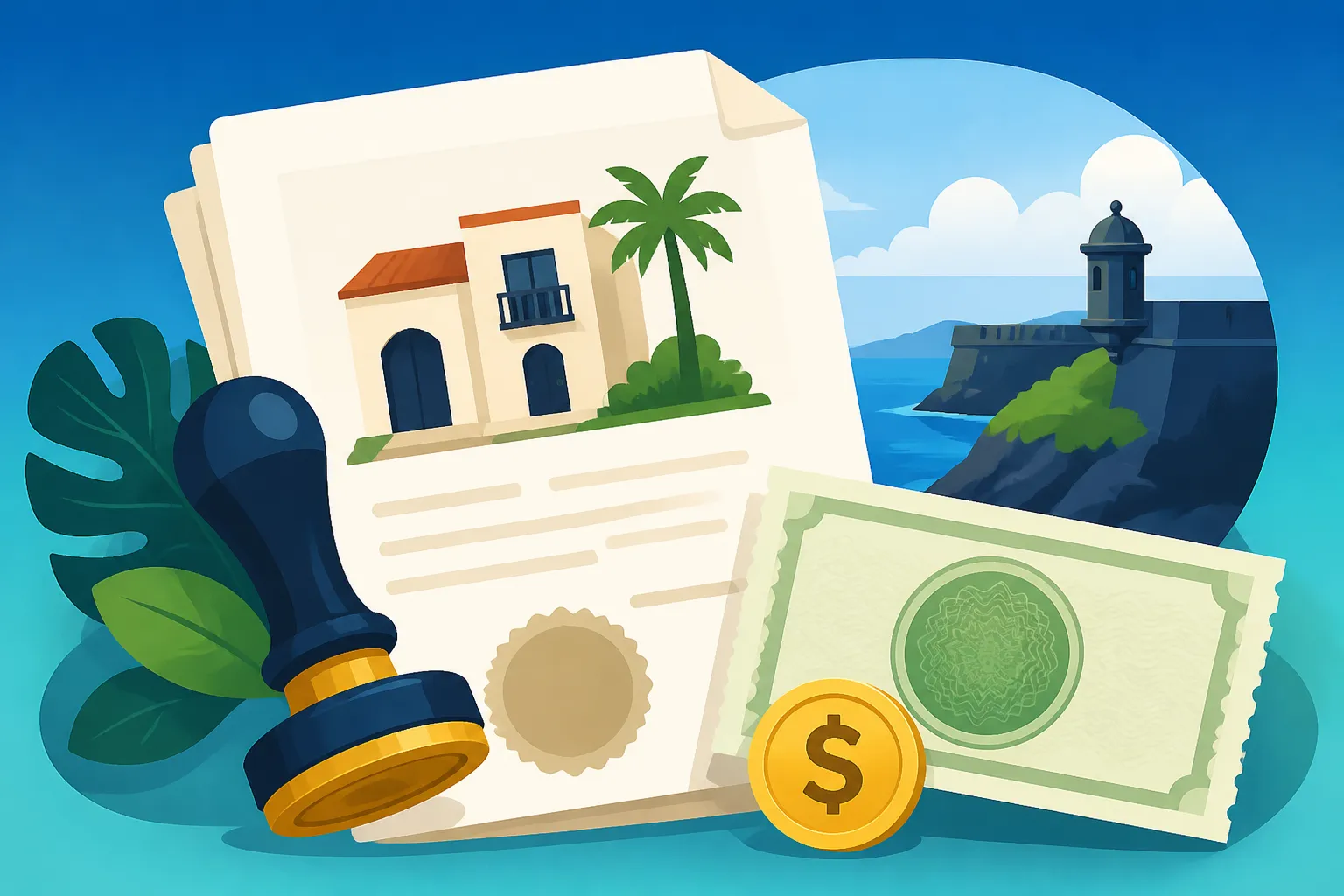
When you’re buying property anywhere, there are always these little fees that pop up, right? In Puerto Rico, two specific items that often catch newcomers off guard are the "stamps" (sellos) and "vouchers" (comprobantes) required for your property deed. These aren't just decorative bits of paper; they’re integral to the legal process and are essentially payments to the government for the processing and recording of your official documents. Think of them as revenue stamps and official payment receipts that validate your legal transactions and ensure they are properly recorded.
What Exactly Are Sellos and Comprobantes?
Let’s break it down:
- Notarial Stamps (Sellos Notariales): These are revenue stamps that must be affixed to any public instrument executed before a Notary Public in Puerto Rico. And when you're buying property, your deed (escritura) is absolutely a public instrument. These stamps aren't just for show; they signify that the document has undergone a legal review by a licensed notary and that the appropriate government fees for this legal service have been paid. The Notary Public is legally required to ensure these stamps are properly placed and canceled. It’s a mechanism for the government to collect a fee for legal transactions, and it ensures that the document is valid for recording. The value of these stamps is tied to the value of the transaction itself, making them a significant part of your closing costs.
- Registry Vouchers (Comprobantes del Registro de la Propiedad): These are essentially payment receipts for services rendered by the Property Registry Office (Registro de la Propiedad). After your deed is prepared and executed by the notary, it must be presented to the Property Registry to be formally recorded. This is how the public record reflects your ownership. The vouchers cover the costs associated with examining, recording, and indexing your deed in the official government records. Unlike the notarial stamps, which are typically a percentage, these vouchers often involve a combination of flat fees and a tiered percentage based on the property’s value, although they are generally less substantial than the notarial stamps. They ensure your ownership is recognized and protected by the state.
Why Are They Necessary for a Property Deed in Puerto Rico?
You might be wondering why these specific items are so crucial. Well, in Puerto Rico, the legal system places a heavy emphasis on public instruments and their proper recording to ensure legal certainty and transparency in property transactions. Without these stamps and vouchers, your deed simply won't be accepted for registration at the Property Registry.
Here’s why they’re indispensable:
- Legal Validity and Public Record: A property transaction isn't truly complete or legally binding against third parties until it's recorded in the Property Registry. The sellos and comprobantes ensure that this critical step is properly funded and processed. They confirm that the notarial act was legitimate and that the subsequent registration process has been paid for. Without them, your ownership, while possibly established by a signed deed, wouldn't have the full public protection against future claims or disputes. It’s how the government keeps track of who owns what, preventing fraud and ensuring a clear chain of title, which is absolutely vital when you're trying to check a property title in Puerto Rico.
- Government Revenue and Regulatory Compliance: These fees contribute to the operational costs of the Notary Public system and the Property Registry Office. They are a form of tax or fee on legal transactions, funding the institutions that regulate property ownership. Failing to include them isn't just a minor oversight; it's a non-compliance issue that will halt your property registration dead in its tracks. It's just one of the many nuanced aspects of how Puerto Rico taxes work: federal vs local (Hacienda) explained (2027).
- Protection for Buyers and Sellers: While they add to your closing costs, these stamps and vouchers indirectly protect both parties. They ensure that the transaction has passed through the rigorous legal framework of Puerto Rico, reducing the risk of future legal challenges. For a buyer, it means your ownership is officially recognized and enforceable. For a seller, it means the transfer of ownership is clear and documented, absolving them of future responsibilities for the property.
The Specifics: Calculating Your Stamp and Voucher Expenses
Alright, let's get into the nitty-gritty of what these costs actually look like. It’s not always a straightforward percentage across the board, and these are often grouped under "notary fees" in general estimates, which can be confusing. When you’re budgeting for your new home here, knowing these details can save you from some nasty surprises at closing. You're already juggling so much, from finding the right place to setting up electricity (LUMA) in your Puerto Rico home, so understanding these financial details upfront is crucial.
Notarial Stamps (Sellos Notariales)
These are often the more substantial part of the "stamps and vouchers" cost. The sellos notariales are typically calculated as a percentage of the transaction value, which is usually the sale price of the property.
- The Percentage: Generally, these stamps cost 0.5% to 0.75% of the total sale price or transaction value of the property. The exact rate can sometimes vary slightly based on the specific type of deed or instrument, but for a standard purchase and sale deed (escritura de compraventa), this range is a good estimate.
- For example, if you're buying a property for $300,000, your notarial stamps could range from $1,500 (0.5%) to $2,250 (0.75%).
- This amount is mandated by law, and your Notary Public is responsible for calculating and ensuring the correct stamps are affixed to the original deed. They are revenue stamps that literally get stuck onto the pages of the official document.
Registry Vouchers (Comprobantes del Registro de la Propiedad)
These vouchers are what you pay to the Property Registry Office for the act of recording your deed and making your ownership official. The cost structure here is a bit more varied than the notarial stamps.
- Base Fees and Tiered Structure: The Property Registry fees are typically a combination of a base flat fee plus a percentage that increases with the property value. It's not a single, simple percentage like the notarial stamps.
- For instance, there might be a base fee for any deed, and then additional fees are applied for every $1,000 or $5,000 of the property's value. The tiers mean the percentage might be small for the first segment of the value, then slightly higher for the next, and so on.
- While the exact figures can fluctuate slightly and depend on the specific type of transaction (e.g., a simple sale vs. a sale with a concurrent mortgage registration), generally, these comprobantes are less expensive than the notarial stamps. Expect them to typically fall within a range that’s a fraction of the notarial stamps, maybe an additional 0.1% to 0.25% of the property value, plus some fixed fees.
- Using our $300,000 example, you might be looking at an additional $300 to $750 for registry vouchers, plus a few small flat fees on top.
- Other Registry Fees: It's important to note that sometimes your notary will also group other small, fixed fees required by the Property Registry under this umbrella. These could include fees for specific certifications or for the expedited processing of documents, though most common transactions just involve the standard recording fees covered by the vouchers.
Hypothetical Scenario: The Full Picture
Let's imagine you're purchasing a home in Caguas for $250,000. Here’s a rough breakdown of what you might expect for just the stamp and voucher costs:
- Notarial Stamps (0.6% of $250,000): $1,500
- Registry Vouchers (0.15% of $250,000 + $50 fixed fee): $375 + $50 = $425
- Total for Stamps and Vouchers: Approximately $1,925
This is, of course, a simplified example, and your actual costs will be calculated precisely by your Notary Public. This helps illustrate why it’s so important to get a clear, itemized breakdown of all how much are the closing costs to buy a home in Puerto Rico.
Who Pays for These Costs?
In Puerto Rico, it is customary for the buyer to pay the majority of the closing costs, including the notarial stamps and registry vouchers associated with the deed of sale. However, as with many things in real estate, everything is negotiable. While less common for these specific fees, if you're in a strong negotiating position, you might be able to have the seller contribute. It's always best to clarify these expectations with your real estate agent and notary upfront.
The Practical Process: Obtaining and Affixing Your Stamps and Vouchers
The good news is, as the buyer, you typically won't be physically running around trying to buy these stamps and vouchers yourself. This is where your Notary Public truly earns their fee. They are the orchestrators of this part of the process, ensuring everything is correctly procured and affixed. Still, understanding the mechanics can empower you and alleviate some of that "what in the world is happening" feeling.
The Role of the Notary Public
Your chosen Notary Public (who, by the way, is a highly trained lawyer here in Puerto Rico, not just someone who witnesses signatures) is the central figure in preparing and executing your deed.
- Calculation and Collection: The notary will calculate the precise amount required for the notarial stamps and registry vouchers based on the sale price of the property. This amount will be included in the total closing costs they provide to you. You will typically pay this amount to your notary, who then handles the actual purchase of the stamps and vouchers.
- Purchase and Affixation: The notary will purchase the physical sellos (stamps) from the Puerto Rico Treasury Department (Hacienda) or authorized vendors. For the comprobantes (vouchers), these are often generated and paid for through Hacienda's SURI online system or directly at designated government payment centers. Once acquired, the notary is responsible for physically affixing the sellos to the original deed document and detailing the comprobante information within the deed itself. They will then "cancel" the stamps, usually by signing and dating across them, to prevent reuse.
- Presentation to the Registry: After the deed is signed by all parties and properly stamped and vouchered, the notary or their authorized representative will present the original deed to the Property Registry Office for recording. This is the crucial step that officially updates the public record of ownership. This entire process highlights why having a trustworthy and experienced notary is non-negotiable when you’re navigating the complexities of buying property in Puerto Rico: the full guide (2026).
Where to Purchase Them (If You Were Curious)
While your notary handles this, it's good to know the sources:
- Hacienda Offices: The Puerto Rico Treasury Department (Departamento de Hacienda) is the primary issuer of these revenue stamps and vouchers. You can visit their offices, though this is usually for notaries or their staff. You can also learn more about their processes through guides like filing your Puerto Rico tax return with Hacienda: the complete walkthrough (2027) or how to register with Hacienda in Puerto Rico.
- Online Portals (SURI): Hacienda's integrated tax system, SURI (Sistema Unificado de Rentas Internas), allows for the electronic generation and payment of many government fees, including some comprobantes. Your notary will likely use this system.
- Authorized Vendors: Some legal supply stores or even certain financial institutions might be authorized to sell stamps.
Timeline Considerations
The process of purchasing and affixing stamps and vouchers, when handled by an experienced notary, is typically seamless and happens in the days leading up to or on the day of closing. The real "timeline" you need to consider is the subsequent registration of the deed at the Property Registry.
- Deed Registration Time: Once the deed is presented to the Registry, it typically takes several weeks to a few months for it to be fully processed and recorded. This timeline can vary significantly depending on the volume of work at the specific Registry office and the complexity of your deed. During this period, the property is "pending registration" (pendiente de inscripción), and while legally you are the owner, the public record won't reflect it until the process is complete. Your notary will usually provide you with a copy of the deed with the presentation stamp from the Registry, confirming it’s in the queue.
This waiting period can feel a bit nerve-wracking, especially when you’ve already gone through the effort of closing. But rest assured, once your deed is presented with all the proper stamps and vouchers, the wheels are in motion.
Beyond Stamps and Vouchers: Other Closing Costs to Anticipate
While stamps and vouchers are a specific part of your deed costs, they are just one piece of the larger financial puzzle when buying property in Puerto Rico. It’s vital to understand the full scope of what you’ll pay at closing, so there are no last-minute surprises. Remember, being prepared is half the battle when relocating to a new place.
Attorney/Notary Fees (Separate from Stamps)
Beyond the actual cost of the sellos and comprobantes, your Notary Public charges a fee for their professional services. This fee covers the legal research, drafting of the deed, coordination with all parties (lenders, real estate agents, buyers, sellers), execution of the deed, and ensuring its proper presentation to the Property Registry.
- Calculation: Notary fees are often calculated as a percentage of the transaction value, similar to how they would be in the mainland U.S. for real estate attorneys. This can range from 0.5% to 1.5% of the sale price, depending on the complexity of the transaction and the notary's experience. This is a separate charge from the stamps and vouchers, which are government-mandated fees.
Property Registry Fees (Overall Registration Process)
While the comprobantes cover specific voucher costs for the Registry, there might be other minor administrative fees associated with the overall registration process, such as those for certified copies of the deed once it’s recorded. These are usually small, fixed amounts.
Transfer Tax (Law 120 or "Cédula")
Puerto Rico has a transfer tax, often called "Law 120" or "Cédula," which is paid to the municipal government where the property is located.
- The Rate: This tax is typically 0.5% of the purchase price (or a portion of it, depending on the municipality’s specific ordinance). This is a significant cost, separate from the deed stamps and vouchers, and is usually paid by the buyer at closing. It’s part of the general cost of buying a house in Rincon or anywhere else on the island.
Appraisal, Survey, and Title Insurance
Just like on the mainland, you'll have these standard closing costs:
- Appraisal: If you're getting a mortgage, the lender will require an appraisal to ensure the property's value supports the loan amount. This usually costs $400-$700.
- Survey: A land survey verifies the property boundaries. While not always strictly required for condos, it's highly advisable for detached homes. Costs can vary widely depending on the property's size and location.
- Title Insurance: This protects you and your lender from any defects in the property's title. While historically less common or comprehensive in Puerto Rico than on the mainland, it's becoming more prevalent and is strongly recommended. Your Notary Public plays a key role in clarifying understanding property ownership and titles in Puerto Rico and how title insurance fits in.
Mortgage-Related Costs
If you're taking out a mortgage, there will be additional fees related to the loan itself, such as:
- Loan Origination Fees: Charges by the lender for processing your loan.
- Prepaid Interest: Interest that accrues from the closing date to the end of the month.
- Escrow Deposits: Funds held by the lender for future property taxes (the complete guide to property taxes (CRIM) in Puerto Rico (2027)) and homeowner's insurance.
- Mortgage Registry Fees: Similar to the deed registry fees, there are costs to record the mortgage deed itself at the Property Registry. This is a separate document from the sale deed.
Importance of a Closing Statement
Before closing, your notary or lender should provide you with a detailed closing statement (similar to a HUD-1 or Closing Disclosure). This document itemizes every single cost associated with the transaction, including all the stamps, vouchers, notary fees, transfer taxes, and other closing expenses. Review this statement meticulously and ask for clarification on anything you don’t understand. This is your chance to catch any discrepancies before funds are disbursed.
When it comes to the financial side of things, particularly if you’re moving money internationally for a down payment or to cover closing costs, services like Wise can be incredibly helpful for transparent and competitive exchange rates and transfer fees. For those with complex tax situations, especially new residents trying to navigate their first Planilla here, companies like Taxes for Expats specialize in helping individuals manage their obligations in both the mainland U.S. and Puerto Rico, which can be invaluable.
Ultimately, while the stamps and vouchers might seem like minor details, they are critical components of the legal process of purchasing property in Puerto Rico. Understanding them, and all other associated costs, will make your home-buying journey much smoother. So, breathe deep, ask lots of questions, and enjoy the adventure of becoming a property owner on this beautiful island! You’ve got this.
Disclaimer
Please remember that I am an expat blogger and not a legal or financial professional. The information provided in this article is for general informational purposes only and is based on my personal experiences and general understanding of Puerto Rico's real estate and tax laws as of the last update. Laws and regulations can change, and their application may vary depending on individual circumstances. It is essential to consult with qualified local real estate attorneys, notaries, tax advisors, and financial professionals for advice tailored to your specific situation when buying property in Puerto Rico. Always verify current laws and regulations.